 Intellect Plus
History
21,006 cards. Each one is a 40-second story with a five-minute read behind it. Page 199 of 351.
Subtopics: 19th century · 20th century · Africa · Age of Exploration · Ages & eras · Ancient · Ancient China · Ancient egypt · Ancient greece · Ancient rome · Ancient trade · Archaeological discoveries · Archaeology · Astronomy · Australia · Auxiliary historical sciences · Babylon · Basics · Born on this day · Bronze age · Buddhism · Case studies · Chefs, bartenders and winemakers · China · Cities · Climate · Columbus · Contemporary (1945-) · Cosmetics people · Crime · Criminals · Decipherment · Deep time · Disasters · Early modern · Education · Egypt · Empires · Empires & civilisations · Exploration · Explorers · Extinction · Fandom, conventions and festivals · History by continent and large region · History by continent and region · History by country · History by country, small region and city · History by ethnicity · History by subject matter · History by topic · Inca · India · Industrial Revolution · Japan · Kings & queens · London · Mass hysteria · Medicine · Medieval kingdoms · Medieval life · Mediterranean · Mercedes-Benz History · Mesopotamia · Middle ages · Military leaders and theorists · Military leaders, personnel, and theorists · Ming dynasty · Misconceptions · Modern · Modern (1800-1945) · Napoleon · Navigation · North africa · Other · Pacific · Pharaohs · Philippines · Pirates · Post-classical · Prehistory · Propaganda · Public health · Rebels, revolutionaries and activists · Renaissance · Researched · Second world war · Shipwrecks · Silk Road · South america · Tradespeople · UK & Ireland: history · United states · Vikings · Volcanoes · Women in history
 How Rome transformed a collection of warring tribes into a unified Italian nationThe concept of Italy was not a natural birth but a long, complex political construction. Starting as a loose confederacy of disparate tribes and city-states, Rome gradually absorb…
 How a Maoist splinter group evolved into a pillar of Dutch democratic socialismFounded in 1971 as a hardline Marxist-Leninist movement, the Dutch Socialist Party has undergone a radical transformation. Once defined by Maoist principles and a rejection of int…
 How a Belgian town became a sacred site for the British EmpireKnown to British soldiers as Wipers, Ypres was the epicenter of brutal First World War combat. After the city was leveled by artillery, it was transformed into a place of pilgrima…
 The 1828 election transformed American politics through unprecedented mudslinging and a massive voter turnout surge.The 1828 presidential race between John Quincy Adams and Andrew Jackson was a bitter, personal rematch that redefined the American political landscape. As the electorate expanded,…
 How Abraham Lincoln won a presidential election in the middle of a civil warIn 1864, the United States held a presidential election while the American Civil War still raged. Abraham Lincoln, fearing defeat, faced a divided political landscape and a war-we…
- Why the 1868 Election Was a Closer Call Than History RemembersUlysses S. Grant won the 1868 presidency in a landslide electoral victory, but the popular vote was surprisingly narrow. As the first contest following the end of the Civil War an…
 The 1872 election featured a candidate who died after the popular vote was cast.Ulysses S. Grant secured a landslide victory in 1872, but his opponent, Horace Greeley, died just weeks after the polls closed. This unprecedented event forced electors to scrambl…
 Two million people held hands to break the Soviet Union's grip on the Baltics.On August 23, 1989, a human chain spanning 675 kilometers connected Estonia, Latvia, and Lithuania. This peaceful demonstration, marking the 50th anniversary of the Molotov–Ribben…
 How a democratic political party seized total control of Czechoslovakia in 1948Founded in 1921, the Communist Party of Czechoslovakia spent decades operating within a democratic framework before orchestrating a decisive coup. By 1948, the party had dismantle…
 The Fatimid Caliphate: A Revolutionary Dynasty That Challenged the Islamic World OrderBetween 909 and 1171, the Fatimid dynasty built a sprawling empire from North Africa to the Middle East. Claiming divine authority as descendants of the Prophet Muhammad, they sou…
 Why Armenia's national flag was once a source of intense parliamentary debateThe Armenian tricolor of red, blue, and orange is a modern symbol, but its adoption in 1918 was fraught with controversy. Parliament members argued over the colors, with some even…
 Why the Qing Dynasty’s Imperial Dragon Flag Was Born From a Diplomatic CrisisFor centuries, the Qing dynasty ruled without an official national flag. It took a series of naval misunderstandings and international pressure to finally adopt the iconic Yellow …
 Did Witches Really Fly, or Was It Just a Hallucinogenic Dream?European folklore long claimed that witches used mysterious ointments to soar through the night sky to secret gatherings. While some believed in literal flight, others argued thes…
 How a medieval abbey survived civil strife and royal turmoil to become a landmarkGloucester Cathedral stands as a resilient survivor of English history. From its origins as a seventh-century minster to its role as a royal coronation site and a sanctuary during…
 How a clandestine band of radicals forged a socialist federation from the ashes of warBorn in the shadows of a royalist regime, the Communist Party of Yugoslavia evolved from an outlawed underground movement into the architect of a unique socialist state. Led by Jo…
 For four decades, the heart of North America was a Spanish colonial province.Between 1762 and 1801, Spain governed a vast territory stretching from the Mississippi River to the Rocky Mountains. Far from a mere outpost, this province became a strategic hub …
 How Octavia the Younger became Rome's first woman to hold unprecedented public powerAs the sister of Augustus and wife of Mark Antony, Octavia the Younger navigated the volatile transition from Republic to Empire. She was not merely a political pawn; she secured …
 Can one person rule two nations without merging them into a single state?A personal union occurs when multiple sovereign states share the same monarch while maintaining distinct laws, borders, and government institutions. Unlike a federation, these ent…
 The ancient title of Raja echoes through history from Sanskrit roots to Bali's throneThe term Raja is more than a simple royal title. Rooted in ancient Sanskrit and linked to Indo-European cognates like the Latin Rex, it has defined leadership across South and Sou…
 Was the Sanhedrin a supreme court, a political senate, or a religious legislative body?The Sanhedrin remains one of history's most debated institutions. While often described as the supreme Jewish court of antiquity, scholars argue whether it was a political senate,…
 The ancient talent was a heavy unit of weight, not a measure of genius.Before it meant a natural aptitude, the talent was a standard unit of weight for precious metals across the ancient world. From the Hebrew kikkar to the Greek talanton, this measu…
 How a medieval market town became the administrative heart of the West RidingFrom a Viking-era settlement to a powerhouse of the Industrial Revolution, Wakefield has constantly reinvented itself. Once dubbed the Merrie City, it evolved from a wool and grai…
- How a single legislative chamber shaped the democratic structure of New YorkFor centuries, New York's lower house operated under a vastly different electoral logic. Before the mid-19th century, voters didn't just pick one representative; they navigated a …
 The century-long struggle to control the Caribbean's most strategic islandFrom 19th-century purchase attempts to Cold War nuclear standoffs, the relationship between the United States and Cuba has been defined by intense economic interests and political…
 The miraculous physician who survived the iron combs of martyrdomBefore he was a bishop, Saint Blaise was a doctor of remarkable healing powers. From curing a choking child to tending to wild animals, his legendary life transitioned from medica…
 How a wartime food crisis permanently altered the English landscapeThe rolling, springy turf of the South Downs is an iconic sight, but its famous short grass is a fragile remnant. Once covering half the eastern hills, this ancient ecosystem was …
 The goalkeeper who chose goodness over survival in a burning planeIn 1958, a plane crash left a team of footballers in a burning wreckage. While many fled for their lives, goalkeeper Harry Gregg ran toward the flames. He didn't just save his tea…
 The centuries-old lineage of Malaysia's national police forceLong before modern bureaucracy, the foundations of Malaysian policing were laid by royal warriors and village chiefs. From the 15th-century Malacca Sultanate to the present-day Ro…
 The kingdom that traded with kings while others were still fightingWhile much of early medieval Britain was defined by tribal warfare, the Kingdom of Kent was busy building a sophisticated maritime trade network. It became the first Anglo-Saxon r…
 The island town that was once swallowed by the English ChannelOnce an island surrounded by the sea, Rye has spent centuries fighting a losing battle against the tide. From medieval maritime power to a notorious smuggling hub, this East Susse…
 How Roosevelt steered a nation from the Great Depression to global warfareFranklin D. Roosevelt inherited a country in collapse, with 13 million unemployed and banks shuttered. Through a sweeping series of radical experiments and a pivot toward global l…
 How a 1953 intelligence operation transformed a close ally into a bitter adversaryFor decades, the United States and Iran were strategic partners. Yet, a single CIA-backed coup changed the trajectory of the Middle East forever. From the era of the Shah to the 1…
 The tragic mistake behind a common modern idiomWe use the phrase "drinking the Kool-Aid" to describe blind devotion or following a trend. But the idiom's origins are far more sinister than a simple metaphor for popularity, roo…
- The surgeon who wore men's clothing and won the Medal of HonorShe was a pioneer of medical practice and a radical of dress reform. Dr. Mary Edwards Walker defied 19th-century gender norms, serving as a Civil War surgeon while adopting a masc…
 From a colonial racecourse to a $300 million sporting landmarkThe site of Western Sydney Stadium has seen everything from horse racing and motor sports to a grandstand burned to the ground. Today, this 30,000-capacity venue stands as a moder…
 The legendary engineer who died to save his passengersHe was the master of the schedule, a man whose punctuality was so precise that people set their watches by him. But on a foggy night in 1900, Casey Jones faced a collision that no…
 The Irish county once ruled by kings and renamed for a Spanish monarchOffaly's identity is a complex layering of ancient kingdoms and colonial shifts. Once the territory of the Uí Failghe, it was rebranded as King's County to honor Philip II of Spai…
- The title of Serbia's head of government has shifted through five erasWhile we often view political titles as static, the role of Serbia's Prime Minister reveals a complex evolution. From revolutionary councils to communist executive bodies, the nom…
 The mastermind behind the break-ins that brought down a presidentHe was an FBI agent turned political operative whose extreme methods fueled the Watergate scandal. From executing 'dirty tricks' to surviving federal prison, G. Gordon Liddy’s int…
 Lady Mary Wroth’s cryptic monogram shifted from romantic to elegiac meaningBy examining the first known printed book from Lady Mary Wroth's personal library, researchers found that her complex monogram held evolving meanings. Analyzing an edition of Xeno…
 Official heritage status helps boost tourism and local pride in a Chinese villageResearchers studying Nalu Village in China found that being officially designated as a "Chinese Traditional Village" has transformed local livelihoods. The study observed that thi…
 Archaeologists reconstruct the rise of a monumental Swedish power centreResearchers studying the site of Gamla Uppsala have integrated decades of excavations with new findings from 2011 and 2015. By re-evaluating old data alongside recent digs, they h…
 Bone density influences how well proteins survive during human decompositionResearchers studying the decomposition of four human body donors outdoors found that biological and environmental factors significantly impact protein survival. The study observed…
 The paramilitary group that envisioned an ethnic democracy for RussiaIn 1990, amidst the Soviet Union's dissolution, a former commando launched a movement built on 'Russian-Aryan' traditions. While claiming a vast network of branches, the Russian N…
 New formulas improve height and weight estimates for ancient European remainsResearchers who analyzed skeletal remains from the Mesolithic through the 20th century developed more accurate ways to estimate body size. By studying hundreds of individuals acro…
 How an outnumbered RAF prepared to defend Britain in 1940Witness a chronological account of the 1940 contest between British and German air forces. Using unseen footage from the film Battle of Britain, this video explores how a nation p…
 The controversial Tsar who led Bulgaria into a devastating defeatFerdinand I was never fully trusted by the leaders of Europe, yet he became the first king of modern Bulgaria. This video explores his tumultuous reign and the ultimate failure of…
- The Eastern Front's collapse: how Russia's military strength began to unravelAs the German-Austrian offensive surged across the Eastern Front, the Russian Empire faced a catastrophic turning point. With territorial gains erased and casualties climbing into…
 Was the biblical Mount Sinai actually a dormant volcano?For centuries, scholars have searched for the true location of the mountain where Moses received the Ten Commandments. While many point to the Sinai Peninsula, the biblical descri…
 A veteran statistician argues effect size matters more than significanceIn a reflective essay, psychologist Cohen distilled decades of experience applying statistics in psychology and other sociobiomedical sciences. He recommended simpler studies with…
- Enamel proteins reveal the 'Lovers of Modena' were actually two malesResearchers studying the 'Lovers of Modena'—two Late Antique individuals buried hand-in-hand—found they were not a male-female couple as previously assumed. By analyzing proteins …
 A visual archive of early 20th-century Mexican life and landscapesExplore a rare 1933 cinematic record of Mexico captured by the Penn Museum. This reel offers a fleeting glimpse into the daily rhythms, geography, and architecture of a nation in …
- How World War I transformed aircraft and shaped civilian survivalThis episode explores the technological evolution of airplanes into combat machines and the unexpected ways lace making helped sustain Belgian civilians during wartime occupation.
- Was the Children's Crusade a real movement or a historical myth?In the summer of 1212, thousands of young people set out to reclaim Jerusalem. Yet, historians remain divided on whether this was a genuine crusade or a collection of uncoordinate…
 How a Mesopotamian triangle forged a dominant Near Eastern superpowerExplore the ascent of the Neo-Assyrian Empire, a military force that expanded from northern Mesopotamia to control vast territories stretching from Egypt to the Persian Gulf.
 From elite commando to prime minister: the unconventional rise of Naftali BennettBefore navigating the complexities of Israeli politics, Naftali Bennett operated behind enemy lines. A former commando in elite IDF units, he transitioned from high-tech entrepren…
 How information networks spread news of the Haitian RevolutionResearchers examining historical records found that people of African descent used diverse social channels to spread news of the Haitian Revolution. By tracing communication acros…
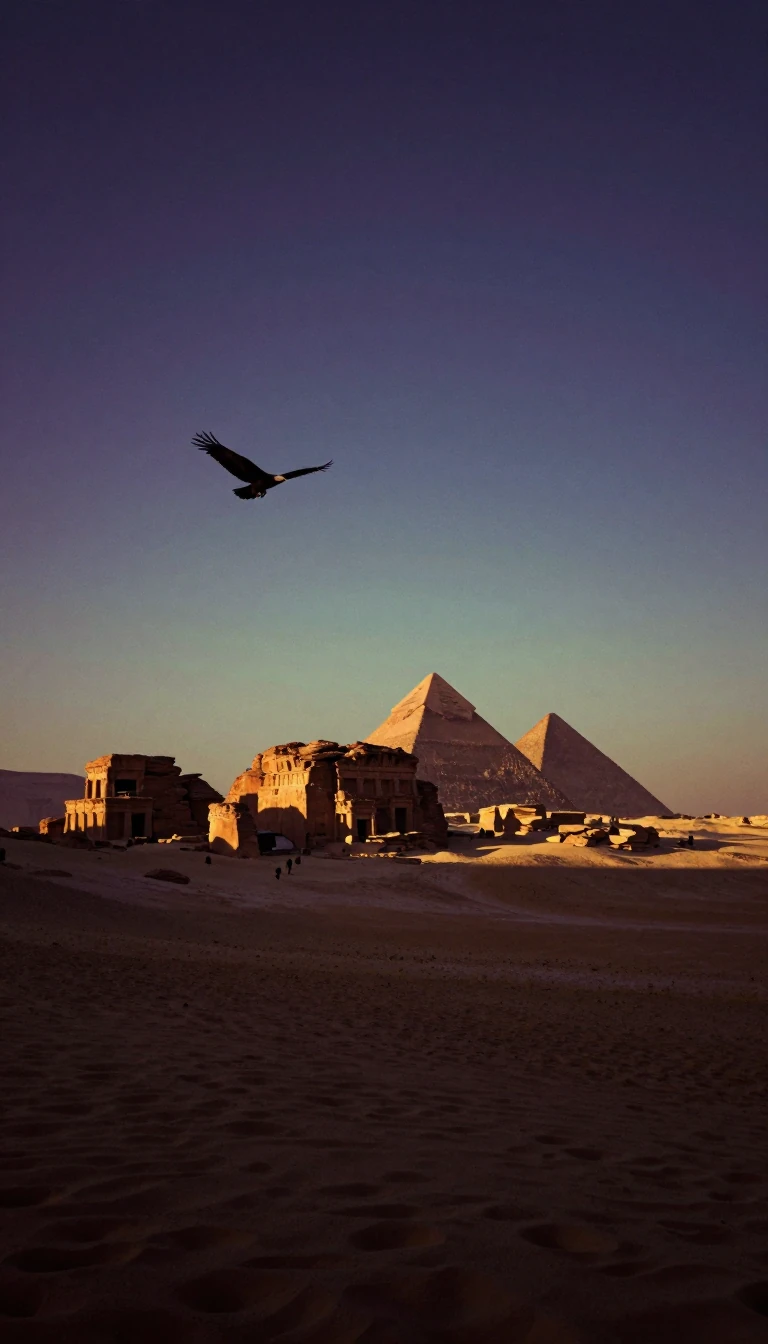 The airline that survived wars, mergers, and name changesFrom a 1930s private venture to a state-owned giant, EgyptAir’s history is a map of Middle Eastern geopolitics. It has navigated regional conflicts, absorbed competitors, and rebr…
- From Ponzi scheme leader to the head of a breakaway republicBefore rising to power in the Donetsk People's Republic, Denis Pushilin was a key figure in a notorious pyramid scheme. His journey from a failed Ukrainian parliamentary candidate…
 How a manufactured threat helped a leader dismantle a democracyIn 1937, Brazil transitioned from a fragile republic to the authoritarian Estado Novo. Driven by the sudden revelation of the 'Cohen Plan'—an alleged communist uprising—President …