 Intellect Plus
Science
17,267 cards. Each one is a 40-second story with a five-minute read behind it. Page 116 of 288.
Subtopics: Acids and bases · Algebra · Alloys and ceramic compounds · Analysis · Applied mathematics · Atomic and molecular physics · Atoms · Basics · Biochemistry · Biochemistry and molecular biology · Biological processes and physiology · Biology · Biology and health sciences: General · Biology basics · Calculus and analysis · Cell biology · Cells · Chemical elements · Chemistry · Climate · Cold · Color · Computer scientists and programmers · Condensed matter physics · Discrete mathematics · Earth science · Electricity & magnetism · Electromagnetism · Elements · Entropy · Everyday Science Questions · Evolutionary biology · Famous equations · Famous experiments · Found by OrchestratorBot · Foundations · Functions · Future Frontier · Genetics and molecular biology · Geology · Geometry · Glass · Global Curiosity Questions · Heat · How Did the Dinosaurs Become Extinct? · How Things Work: Gas from Source to Supply · How Things Work: The Journey of Crude Oil · Human body & genes · Ice · Infinity · Inventors and engineers · Isotopes · Light · Magnetism · Materials · Mathematicians · Maths · Measurement · Mechanics · Microbiology · Minerals & crystals · Molecular compounds · Nature: How Long Can It Live? · Nuclear physics · Number theory · Optics & light · Organic compounds · Other · Particle physics · Physics · Physics basics · Pre-modern figures · Prime numbers & number theory · Probability · Proof · Pseudoscientists · Quantum · Quantum Biology · Reactions and synthesis · Relativity · Research methods · Researched · Salts and ions · Science basics · Scientific discoveries · Scientific instruments · Scientists, inventors and mathematicians · Separation processes · Social scientists · Stars · Statistics and probability · Theoretical computer science · Theory · Thermodynamics · Thermodynamics & heat · UK & Ireland: science · Units & measurement · Volcanoes · Water · Waves · Women in science
 Why having an extra finger is rare despite being a dominant traitIn genetics, dominance doesn't always equal commonality. This video explores the biological paradox of polydactyly, explaining why a dominant gene doesn't automatically result in …
 The science behind your summer swimming experiencesThis compilation explores the biological and chemical phenomena encountered while swimming, from why your skin wrinkles to the chemical risks of hygiene in public pools.
 Why your refrigerator might be ruining the flavor of your tomatoesWhile refrigeration is essential for preventing spoilage in milk and cheese, certain produce thrives better at room temperature. This video explores why the cold environment of a …
 Beyond the fear: exploring six snakes that might give you the williesWhile many snakes are harmless and even cute, others are extremely deadly. This episode of SciShow examines six specific species that are known for being particularly unsettling.
 Do antibiotics actually interfere with the effectiveness of birth control pills?There is a common warning that taking antibiotics requires using a backup method of contraception. This video investigates whether that concern is actually supported by scientific…
- The invisible invaders living inside your own cellsMost people associate parasites with external organisms like leeches or tapeworms. However, some microscopic invaders are far more intimate, residing directly within your individu…
 Could the quest for Martian survival solve Earth's greatest challenges?Establishing a human presence on Mars requires unprecedented technological breakthroughs. This video explores how the extreme demands of Martian life could drive innovations that …
 Do electric cars actually help fight climate change?While many view electric vehicles as a primary solution to climate change, their true environmental impact depends heavily on how the electricity used to charge them is produced.
 Could Hollywood-style spy technology become a scientific reality?Explore recent scientific breakthroughs that mirror the high-tech gadgets seen in spy cinema, including new methods for infrared supervision without the need for specialized goggl…
 Why evolution often involves losing features rather than gaining themWe often imagine evolution as a steady climb toward more complex features. This video explores how natural selection can actually lead to the disappearance of traits that no longe…
 Why large clumps of wasps gather on tall structuresWhen you spot massive clusters of wasps on high surfaces, it might not be an aggressive swarm. This video explores why these insects gather in large groups and why they are often …
 The arbitrary decimal that can kill a year of scientific researchImagine spending a year on grueling fieldwork, only to have your results rejected because a single number was 0.002 too high. This is the reality of the p-value, a statistical gat…
 A preview of the critical 2019 IPBES report on biodiversityBrit Garner joins SciShow to break down the May 2019 preview of the IPBES report, exploring the significance of these findings for global biodiversity.
 The enzyme we once feared might actually be a cellular allyFor years, scientists believed healthy cells deactivated the enzyme telomerase specifically to prevent cancer. However, emerging research suggests this enzyme may play a much more…
- Why some of our favorite foods are at risk of extinctionPopularity doesn't guarantee availability. Some of the world's most sought-after foods are considered 'unfarmable,' making them vulnerable to extinction. As our global population …
 Why lizards prefer short bursts over long-distance runningWhile humans can endure grueling marathons, lizards are built for speed and sudden movement. This video explores the evolutionary reasons behind these vastly different locomotive …
- Can humans pass our diseases back to the animal kingdom?While we often focus on zoonotic diseases jumping from animals to people, this video explores the reverse: what happens when humans pass their illnesses to other species?
 Ancient teeth reveal that human evolution was a tangled tree, not a straight lineFor decades, we imagined human evolution as a steady, linear march from apes to modern humans. However, new fossil discoveries in Ethiopia are shattering that image, revealing a c…
- Why your washing machine is much faster than the math predictsMathematical models suggest that cleaning clothes should take several hours, yet most cycles finish in under sixty minutes. This video explores the recent scientific discovery tha…
 The emerging evidence suggests vaping may cause lung and oral cancersFor years, e-cigarettes were marketed as a safer alternative to smoking. Nevertheless, a detailed recent analysis from UNSW Sydney scientists indicates that vapes containing nicot…
- Can a D&D enthusiast outsmart a SciShow veteran?SciShow script writer Alexa Billow faces off against Hank in a high-stakes quiz show battle. This episode pits diverse knowledge—ranging from wombat anatomy to quantum mechanics—a…
 Nature is a master glassmaker in the wild worldWhile we often associate glass with industrial manufacturing, certain natural processes create it spontaneously. This video explores five distinct types of naturally occurring gla…
 Does your body actually possess a form of muscle memory?When you take a break from training, your strength fades, but your body seems to retain a blueprint of your former fitness. This video explores the biological reality behind how m…
- Is there a physical limit to how high a mountain can grow?While the Himalayas hold the world's highest elevations, the question remains: could mountains grow even taller, or does physics impose a definitive ceiling?
 Can genetic engineering create the perfect seafood experience?While humans have consumed seafood for millennia, many species grow slowly or have seasonal taste issues. This video explores how scientists use genetics to overcome these biologi…
- Why biological partnerships are rarely just between two organismsWe often imagine symbiosis as a simple duo, but nature frequently involves much larger, more intricate networks of interacting species.
 The hidden scientific legacies embedded in our everyday measurementsWe use various units to quantify the universe, but many of their names serve as permanent tributes to the scientists who helped us understand the world.
 How a tangent line can predict the path of a curveThis video demonstrates how to use local linearity to estimate function values. By finding a tangent line's equation via the derivative, you can approximate nearby x-values on a c…
 How regression lines and residuals quantify linear trendsThis video explains how regression lines quantify linear trends and introduces residuals, which represent the difference between an actual y-value and the value estimated by the r…
 Why the study of friction could change your physical worldMechanical engineer Jennifer Vail explores the field of tribology, the study of friction and wear, to reveal how these invisible forces impact our daily lives and how understandin…
- From cave paintings to logos: branding is the human spirit manifestedDesigner Debbie Millman explores how humans have used symbols to define identity and community. This video traces the evolution of branding as a profound tool for human expression…
- How an unlikely partnership of nuns and scientists saved a speciesDiscover how a group of nuns and scientific researchers collaborated to prevent the extinction of the achoque, an exotic salamander native to a lake in northern Mexico.
- How urban bee survival inspired a network of vending machine museumsEcologist Amanda Schochet spent years studying how bees navigate fragmented urban landscapes. Now, she is using those same principles of connectivity to bring science to the publi…
- Why Indigenous wisdom is essential for modern climate science effortsIndigenous territories hold a third of Earth's irrecoverable carbon and support most terrestrial mammals. Yet, scientific models often overlook the traditional ecological knowledg…
 How to navigate fear and find resilience during times of crisisIn this virtual conversation, author Elizabeth Gilbert explores how to manage anxiety and grief. Discover why staying present and trusting in human strength can help you navigate …
 Why do witnesses stay silent when they see workplace harassment?Memory scientist Julia Shaw explores the psychological barriers that prevent people from speaking up against discrimination and shares practical strategies for companies to empowe…
 Where Did the Word "Algebra" Come From?The word 'algebra' grew from al-jabr, part of the title of al-Khwarizmi's Baghdad treatise, which was translated into Latin in the 12th century. Historians still debate what al-ja…
- A rare seismic doublet strikes northwestern Venezuela in June 2026On June 24, 2026, two massive earthquakes struck northwestern Venezuela just seconds apart. This rare phenomenon, known as an earthquake doublet, released immense energy along the…
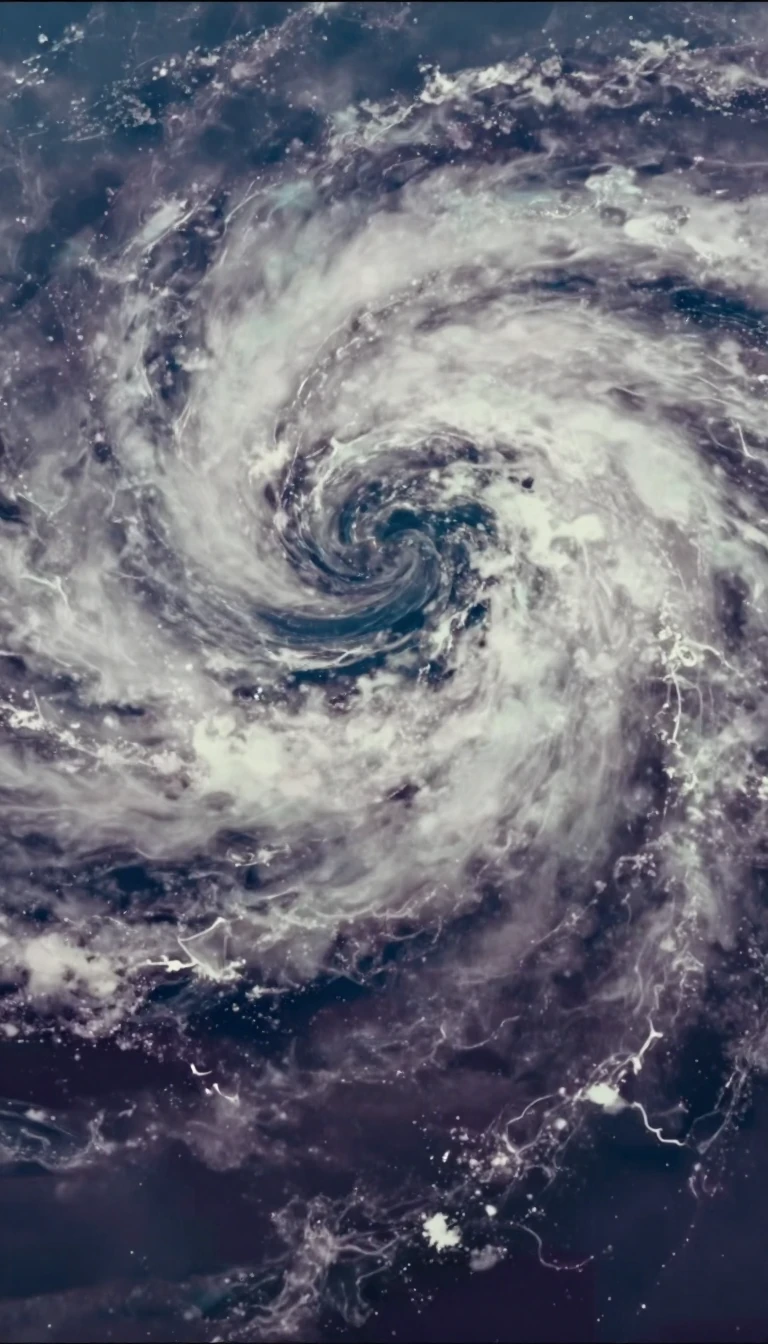 A meteorological record-breaker that defied the Atlantic's seasonal normsHurricane Beryl wasn't just another storm; it was a statistical anomaly. By reaching Category 5 status in July, it shattered records for the earliest-forming major hurricanes in t…
- How a deep quake caused billions in damage without taking livesThe 2001 Nisqually earthquake struck the Pacific Northwest with enough force to shatter buildings and cripple infrastructure, yet it left almost no one dead. This paradox of high-…
 Are Some Infinities Bigger Than Others?From Galileo's puzzle to Cantor's proofs and the still-debated continuum hypothesis, a short look at how mathematicians learned that some infinities are larger than others.
 Half a Fact: The Unit That Lost an OrbiterHow a mismatch between pounds-force seconds and newton-seconds, and the checks that failed to catch it, led to the loss of NASA's Mars Climate Orbiter in 1999.
 Quantum Computing: A Machine Built to Speak Nature's LanguageStarting from Richard Feynman's 1981 question about simulating physics, this film explains what qubits and entanglement are, what quantum computers may realistically do for chemis…
 Nature ignores our rules when two distinct species interbreedWe often treat biological categories as fixed, but life doesn't always follow human labels. This video explores how different lineages mix to create hybrids, revealing hidden myst…
 The terrifying reality of acute radiation syndrome is far rarer than Hollywood suggestsMovies often portray radiation sickness as an immediate, cinematic death sentence. In reality, the biological mechanism is a complex battle of cellular repair, and the extreme dos…
- The Mystery of the Colicky Baby: A Biological PuzzleWhy do some healthy infants spend hours in inconsolable distress while others remain serene? This phenomenon, known as colic, remains one of the most frustrating mysteries in pedi…
 Can we implant memories to teach birds how to sing?Songbirds do not rely on instinct alone; they must learn their complex melodies through imitation. This process relies on specialized neural circuits and a unique voice box, allow…
 The biological feedback loop that turns a fake grin into real joyMost humans assume smiles are merely reactions to happiness, but your face might actually be the driver. By intentionally contracting specific muscles, you can trick your brain in…
- Why the coldest, driest continent is Earth's best window into the deep universeTo study the Big Bang, scientists don't always look up—sometimes they look down. Antarctica’s extreme environment, from its frozen air to its high-altitude plateaus, provides a un…
 Why do autoimmune diseases disproportionately affect women?In the United States, between 24 and 50 million people live with autoimmune conditions. Remarkably, as many as 4 out of 5 of these individuals are women. Scientists are now tracin…
 Why some tiger moths choose to stand their ground against batsMost moths flee from predators, but tiger moths have evolved a different survival strategy. This video explores the specific biological mechanisms that allow these insects to face…
 Paper protections aren't saving our oceans from collapseGovernments are racing to protect 30% of the world's oceans by 2030, but a new analysis suggests these labels might be hollow. While we see more protected zones on maps, underwate…
- The chemist who moved medicine from guesswork to precise scienceBefore Gertrude Elion, drug development was often a game of trial and error. She revolutionized the field by pioneering a scientific approach to drug design, creating life-saving …
- Is this jet-black stone a piece of outer space?Known as carbonados, these opaque, hole-filled black diamonds defy standard classification. While most diamonds are single crystals, these are interlocking networks of crystals. T…
 Is the 10,000 steps a day goal actually a marketing myth?For decades, we have chased the magic number of 10,000 steps daily to stay fit. But this target wasn't born in a lab; it emerged from a Japanese marketing campaign. While walking …
 The skies are growing silent: North America has lost nearly 3 billion birdsIt is easy to imagine a world without birds, but recent data reveals a staggering reality. Since 1970, the continental population of breeding birds has plummeted by 29 percent, si…
 Why you should never wear your pet's flea and tick collarIt might seem like an easy way to avoid parasites while hiking, but wearing a pet's flea or tick collar is dangerous for humans.
- Are antioxidants actually good for anything or just a marketing myth?We are often told that antioxidant-rich diets are the key to longevity. While evidence suggests these diets offer health benefits in humans, the chemicals and enzymes themselves m…
- Why some creatures choose to impersonate antsAnts are ubiquitous in many environments. This video explores how various organisms have evolved to blend into these crowds by mimicking the appearance of ants to their advantage.
 Why do we laugh at things like burps or farts?This video explores the biological and social reasons behind various human quirks, ranging from the mechanics of bodily gas to the social triggers that cause us to blush or laugh.