 Intellect Plus
History
21,004 cards. Each one is a 40-second story with a five-minute read behind it. Page 126 of 351.
Subtopics: 19th century · 20th century · Africa · Age of Exploration · Ages & eras · Ancient · Ancient China · Ancient egypt · Ancient greece · Ancient rome · Ancient trade · Archaeological discoveries · Archaeology · Astronomy · Australia · Auxiliary historical sciences · Babylon · Basics · Born on this day · Bronze age · Buddhism · Case studies · Chefs, bartenders and winemakers · China · Cities · Climate · Columbus · Contemporary (1945-) · Cosmetics people · Crime · Criminals · Decipherment · Deep time · Disasters · Early modern · Education · Egypt · Empires · Empires & civilisations · Exploration · Explorers · Extinction · Fandom, conventions and festivals · History by continent and large region · History by continent and region · History by country · History by country, small region and city · History by ethnicity · History by subject matter · History by topic · Inca · India · Industrial Revolution · Japan · Kings & queens · London · Mass hysteria · Medicine · Medieval kingdoms · Medieval life · Mediterranean · Mercedes-Benz History · Mesopotamia · Middle ages · Military leaders and theorists · Military leaders, personnel, and theorists · Ming dynasty · Misconceptions · Modern · Modern (1800-1945) · Napoleon · Navigation · North africa · Other · Pacific · Pharaohs · Philippines · Pirates · Post-classical · Prehistory · Propaganda · Public health · Rebels, revolutionaries and activists · Renaissance · Researched · Second world war · Shipwrecks · Silk Road · South america · Tradespeople · UK & Ireland: history · United states · Vikings · Volcanoes · Women in history
 Did Maharana Pratap actually win the Battle of Haldighati in 1576?The Battle of Haldighati is often framed as a clash of civilizations, but historical records suggest a more complex reality. While modern narratives sometimes claim a decisive vic…
 When Munich’s Coffeehouse Anarchists Tried to Build a Soviet Republic in 1919In April 1919, a group of playwrights and anarchists seized power in Munich, declaring a short-lived socialist state. Their regime, marked by bizarre decrees and military incompet…
 From Nuneaton to Broadway: How Ben Daniels Built a Career of Quiet IntensityBorn in a small English town to a Rolls-Royce engineer, Ben Daniels evolved from a shy, disruptive child into an acclaimed stage and screen actor. Whether portraying historical fi…
 The Beothuk: How a Culture of Red Ochre and Resourcefulness Faced ExtinctionThe Beothuk of Newfoundland were known for painting their bodies and tools with red ochre, a practice central to their identity. Despite their sophisticated survival strategies, i…
 The enslaved matriarch whose descendants shaped American history from Monticello to the Civil WarElizabeth Hemings, an enslaved woman of mixed ancestry, birthed twelve children who occupied privileged roles at Monticello. Her descendants, including those fathered by her ensla…
 Buddhism has no single Bible, but rather three massive, distinct canonical collections.Buddhism is not defined by one central book. Instead, it relies on three major canons—Pāli, Chinese, and Tibetan—each containing diverse sutras, monastic rules, and philosophical …
 The Roman military camp was a masterclass in geometry, discipline, and urban planningRoman castra were far more than simple military tents. These standardized, grid-based fortresses functioned as the backbone of imperial expansion, evolving from temporary marching…
 Was the legendary founder of Wessex actually a Roman-era British noble?Cerdic of Wessex is traditionally hailed as the Germanic conqueror who established a royal dynasty. Yet, scholars increasingly suggest he was a native Briton, potentially a local …
 The Chagos Islanders were expelled to build a military base, then denied their home.For decades, the Chagossians have fought to return to their ancestral islands in the Indian Ocean. Forced out by the British government in the 1960s and 1970s to clear the way for…
 How a regional dynasty of Rajasthan became the legendary Chauhans of AjmerThe Chahamanas of Shakambhari rose from humble beginnings as petty rulers in Nagaur to dominate northern India. Known for their shifting capitals and fierce resistance against Gha…
 How a Greek city’s alphabet became the foundation for the modern Latin scriptChalcis, an ancient powerhouse on the Euripus Strait, did more than dominate Mediterranean trade. By spreading its unique alphabet to colonial settlements in Italy, it inadvertent…
 From Roman Court Ushers to Modern Heads of State: The Evolution of the ChancellorThe title of chancellor has traveled through millennia, evolving from humble Roman court ushers guarding lattice screens to the leaders of modern nations. While the term now signi…
 A King in Name Only: The Tragic Life of Denmark's Mentally Ill MonarchChristian VII ascended the throne of Denmark and Norway at age 17, but his reign was defined by severe mental illness and political power struggles. While he remained the nominal …
 How a national church emerged from the ruins of a collapsing empireThe Church of Greece is more than a religious institution; it is a pillar of national identity forged during the struggle for independence. Born from a desire to break free from e…
 The Cinquecento: A Century of Artistic Revolution and the Birth of Modern StyleThe Cinquecento, or the 1500s in Italy, was a transformative era that bridged the High Renaissance and the dawn of the Baroque. From the technical mastery of Leonardo and Michelan…
 Why the close back unrounded vowel is a linguistic outlier in human speechThe close back unrounded vowel, represented by the symbol ɯ, is a rare phonetic sound where the tongue sits high and back in the mouth without lip rounding. While most back vowels…
 Ancient Greek fashion was not a sea of white marble, but a vibrant, draped art.The image of ancient Greeks in plain white robes is a modern misconception born from weathered statues. In reality, their clothing was a sophisticated, colorful, and highly person…
 How a small German town became the secret engine of Europe's royal dynastiesCoburg was once a quiet backwater, but strategic marriages transformed its ducal family into the architects of modern European royalty. By the early 20th century, this Bavarian ci…
 Before cardboard boxes and shipping containers, the world was held together by wooden barrels.For millennia, the cooper was the essential craftsman of global trade. From Egyptian tubs to the massive casks that sustained sailors on long voyages, these artisans shaped timber…
 The turbulent history of the Crimean Tatar language, from Golden Horde to modern survivalTracing its roots to the 13th-century Golden Horde, the Crimean Tatar language has survived centuries of political upheaval, displacement, and suppression. Once a prestigious lite…
 How a dynasty simulator turns medieval history into a complex, unpredictable strategy gameCrusader Kings III is more than a map-painting exercise; it is a deep dynasty simulator where personality traits, genetics, and religious tenets dictate your survival. By managing…
 Why Ancient Rome Built Its Cultural Identity Through the Lens of Its Defeated EnemiesRome conquered the Greek world, yet it was Greek culture that ultimately conquered Rome. From literature and philosophy to the very language of its elite, Roman identity was forge…
 Is this global agricultural powerhouse actually a persistent, misunderstood weed in your backyard?Cyperus esculentus, known as tiger nut or chufa, is a nutritional heavyweight packed with healthy fats, protein, and starch. While ancient Egyptians prized these sweet, tuberous r…
 The Ōdachi: Why Samurai Wielded Massive Swords That Were Often Impossible to Draw AloneThe ōdachi was a gargantuan Japanese sword, sometimes reaching over four meters in length. Too cumbersome to draw from the waist, these blades required specialized carriers or ser…
 Deborah: The Ancient Prophetess Who Orchestrated a Decisive Military Victory for IsraelDeborah stands as the only female judge in the Hebrew Bible, a pivotal figure who commanded a general to lead an uprising against Canaanite oppression. Her story, preserved in bot…
 The three rigorous stages of becoming a fully committed Eastern Orthodox monasticIn the Eastern Orthodox Church, the path to monasticism is a slow, deliberate ascent through three distinct degrees. Unlike Western traditions, this process is standardized across…
 Is democide a more accurate term than genocide for state-sponsored mass murder?Coined by historian R. J. Rummel, democide describes the intentional killing of unarmed people by government agents. It encompasses far more than genocide, including forced labor,…
 Dennis Potter used the agony of his own body to reinvent television storytelling.A titan of British television, Dennis Potter transformed the medium by blurring the lines between fantasy and reality. Battling a debilitating skin condition, he pioneered techniq…
 Dominique de Villepin: The Diplomat Who Challenged the Iraq War and Faced Internal StrifeA career diplomat and protégé of Jacques Chirac, Dominique de Villepin rose to international prominence by opposing the 2003 Iraq invasion. Yet, his tenure as French Prime Ministe…
 The Dorset people were Arctic masters who vanished without a trace of genetic legacyFor two millennia, the Dorset culture thrived in the harsh North American Arctic, surviving on sea mammals and refined stone tools. Yet, they lacked bows, arrows, and drills. By 1…
 The deep-sea submersible that conquered the world's five deepest ocean trenchesCommissioned by explorer Victor Vescovo for $37 million, the Limiting Factor became the first crewed vessel to reach the deepest point in all five oceans. Now renamed Bakunawa, th…
 The Duat was not a hellish place of torment, but a realm of transformation.Ancient Egyptians viewed the Duat as a complex, subterranean landscape where the dead and deities converged. Far from a place of eternal punishment, it served as a vital stage for…
 How a minor German noble family became the royal house of two modern nationsThe House of Nassau began as local counts in the 12th century, yet their descendants eventually ascended to the thrones of the Netherlands and Luxembourg. Through centuries of com…
 Did the Eastern Zhou dynasty begin with a secret king and a nine-year vacancy?Traditional history claims the Eastern Zhou began in 770 BC when King Ping moved the capital to Luoyang. However, a recently discovered manuscript suggests a more chaotic origin, …
 Ecclesiastical Latin: How a Dead Language Became the Living Voice of the ChurchEcclesiastical Latin is not merely a relic of Rome. It is a living, evolving tool that the Catholic Church has used for centuries to anchor its theology and administration. From t…
 How a tiny alpine principality transformed from a rural backwater into a global industrial powerhouse.Liechtenstein has undergone a radical metamorphosis over the last half-century, shifting from a primarily agricultural society to one of the world's most highly industrialized nat…
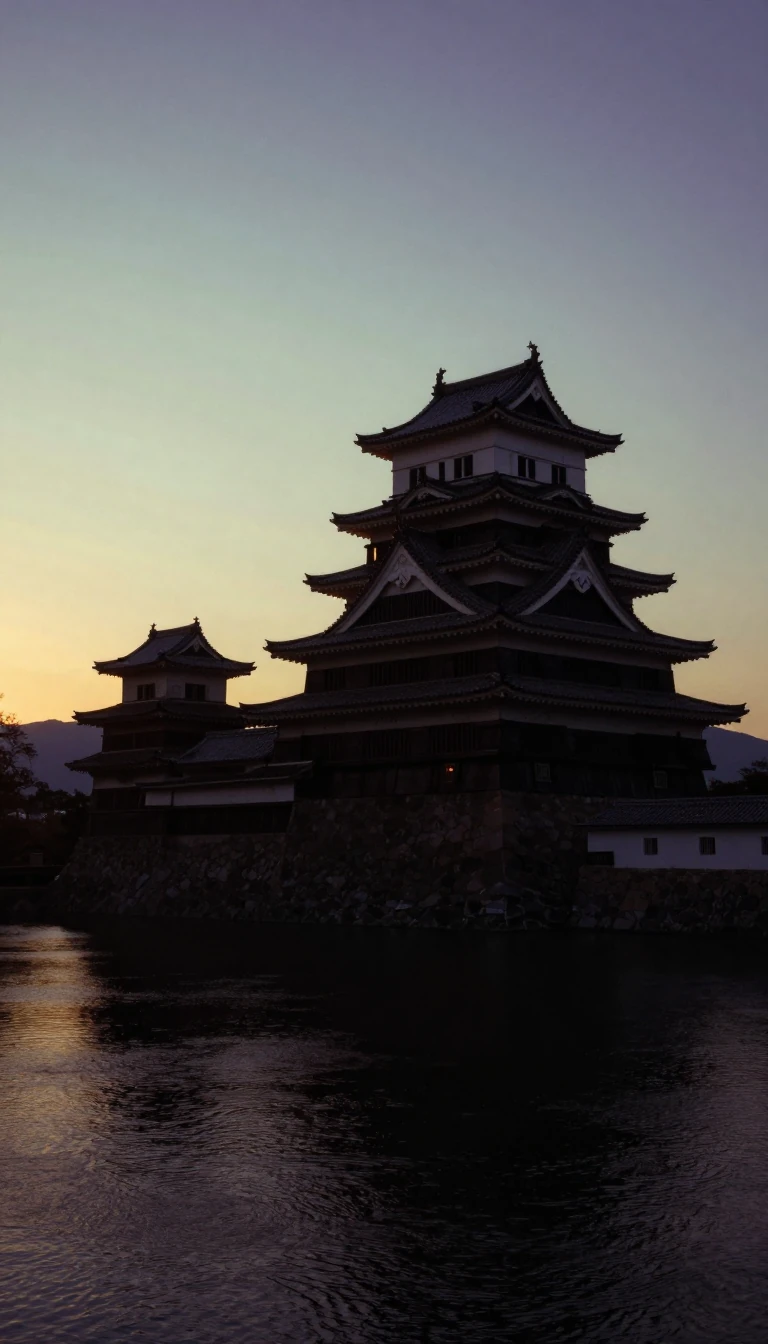 Edo Castle: The vanished fortress that once defined the heart of Japanese powerBuilt on reclaimed land and protected by thirty-eight gates, Edo Castle served as the nerve center of the Tokugawa shogunate for over two centuries. Though its iconic five-story k…
- Eduard Limonov: The Soviet dissident who became a radical nationalist and literary provocateur.Eduard Limonov lived a life of extreme contradictions. From a Soviet poet and New York City homeless man to a militant leader of the National Bolshevik Party, he spent decades cha…
 How Egypt’s military evolved from a colonial garrison into a state-shaping economic titan.The Egyptian Armed Forces are more than a defense force; they are a central pillar of the nation’s politics and economy. From their 19th-century origins under Muhammad Ali to thei…
- How Egypt’s modern army evolved from a brutal 19th-century experiment into a regional powerThe Egyptian Army was forged through radical 19th-century social engineering. Muhammad Ali Pasha transformed local farmers into a disciplined, isolated force by replacing traditio…
 An island on the Nile held a secret Jewish temple in ancient EgyptElephantine, an island within modern Aswan, served as a unique cultural crossroads in the ancient world. Beyond its Egyptian roots, the island hosted a distinct mercenary communit…
- The Emishi were not just barbarians; they were the masters of early Japanese warfare.Long dismissed by imperial records as hairy savages, the Emishi of northern Honshu were actually sophisticated horse archers who held the Yamato state at bay for centuries. Their …
 How a small rural population transformed into an independent European nation by 1918The Estonian national awakening was a decades-long evolution from a peasant culture into a self-governing republic. Driven by rising literacy, intellectual leadership, and a rejec…
- How a Southern Baptist upbringing shaped the cinematic sound of Ethel CainBorn Hayden Silas Anhedönia, the artist known as Ethel Cain crafts immersive, Southern Gothic soundscapes that blur the lines between music and film. From her religious roots to h…
- Why did nations once allow foreigners to live under their own home laws?Extraterritoriality is the legal doctrine where individuals remain subject to their home nation's laws while abroad. Historically, this emerged because states claimed sovereignty …
 The genealogical roots of Muhammad are a blend of oral tradition and social narrative.The lineage of Muhammad, tracing back to the biblical figure Ishmael, serves as a cornerstone of Islamic tradition. Yet, modern historians view these genealogical trees not as obj…
 The Forgotten Buffer State That Once Stretched Across the Russian Far EastBetween 1920 and 1922, a nominally independent nation emerged in the chaos of the Russian Civil War. Designed by Moscow as a strategic buffer against Japanese expansion, the Far E…
 The First Bank of the United States was never a true central bankChartered in 1791, the First Bank of the United States was a bold experiment in federal fiscal power. Yet, despite its name, it lacked the core functions of a modern central bank,…
 The First Republic of Armenia: A Short-Lived State Born from the Ashes of WarEmerging in 1918 after the collapse of the Transcaucasian Federation, the First Republic of Armenia faced immediate existential threats. Despite military victories against the Ott…
- The Five Barbarians were not five, nor were they necessarily barbarians in any singular sense.In Chinese history, the Five Barbarians—or Wu Hu—are credited with toppling the Western Jin dynasty. Yet, the term is a historical misnomer. It obscures a complex reality of shift…
 How a party banner became the national symbol of Nazi Germany through political maneuveringDesigned by Adolf Hitler himself in 1920, the swastika flag began as a mere political party emblem. It only achieved national status in 1935, following a diplomatic incident in Ne…
 The Dutch flag is the oldest tricolour in continuous use, but its colors shifted.The iconic red, white, and blue of the Netherlands was not the original design. It evolved from the orange-white-blue Prince's Flag, a symbol of the 16th-century revolt against Sp…
 Why medieval Europeans marched through cities whipping themselves until their blood flowed freelyDuring the 14th century, thousands of Europeans joined public processions to scourge their own flesh in response to plague, war, and famine. These flagellants believed that physic…
 Can a mathematical formula predict the inevitable collapse of a 12,000-year-old galactic empire?In the far future, the Galactic Empire is ruled by a genetic dynasty of clones. When mathematician Hari Seldon uses psychohistory to forecast the empire's unavoidable decay, he tr…
 Francis Schaeffer: The Theologian Who Mobilized the Christian Right to Challenge Secular CultureFrancis Schaeffer was a Presbyterian pastor who transformed evangelical politics in the 1970s and 1980s. By arguing that secular humanism threatened Western civilization, he inspi…
 How a tattooed naval officer modernized the Danish monarchy during a time of change.Frederik IX was no ordinary king. A career naval officer covered in sailor tattoos, he navigated Denmark through the rapid social shifts of the 1960s. By embracing a new constitut…
 How a design choice and a lowered bluff triggered a global nuclear catastropheWhen a massive tsunami struck Japan in 2011, the Fukushima Daiichi plant faced a disaster that had been predicted for decades. By prioritizing original design specifications over …
 Full communion is the ultimate handshake between Christian churches, but definitions vary wildly.In the Christian world, full communion is more than just a friendly relationship. It is a formal recognition that allows churches to share sacraments and clergy. Yet, whether this…
 Is the universe actually slowing down? New evidence challenges the accelerating expansion theory.For decades, astronomers believed dark energy was pushing the universe apart at an ever-increasing rate. But new research suggests we may have misinterpreted the data. By correcti…
 How a tiny Caucasian kingdom forged a national identity through its ancient church.The Georgian Orthodox Church is one of the world's oldest, claiming apostolic roots from the first century. Yet, its path to becoming a national institution was anything but linea…