 Intellect Plus
History
21,004 cards. Each one is a 40-second story with a five-minute read behind it. Page 188 of 351.
Subtopics: 19th century · 20th century · Africa · Age of Exploration · Ages & eras · Ancient · Ancient China · Ancient egypt · Ancient greece · Ancient rome · Ancient trade · Archaeological discoveries · Archaeology · Astronomy · Australia · Auxiliary historical sciences · Babylon · Basics · Born on this day · Bronze age · Buddhism · Case studies · Chefs, bartenders and winemakers · China · Cities · Climate · Columbus · Contemporary (1945-) · Cosmetics people · Crime · Criminals · Decipherment · Deep time · Disasters · Early modern · Education · Egypt · Empires · Empires & civilisations · Exploration · Explorers · Extinction · Fandom, conventions and festivals · History by continent and large region · History by continent and region · History by country · History by country, small region and city · History by ethnicity · History by subject matter · History by topic · Inca · India · Industrial Revolution · Japan · Kings & queens · London · Mass hysteria · Medicine · Medieval kingdoms · Medieval life · Mediterranean · Mercedes-Benz History · Mesopotamia · Middle ages · Military leaders and theorists · Military leaders, personnel, and theorists · Ming dynasty · Misconceptions · Modern · Modern (1800-1945) · Napoleon · Navigation · North africa · Other · Pacific · Pharaohs · Philippines · Pirates · Post-classical · Prehistory · Propaganda · Public health · Rebels, revolutionaries and activists · Renaissance · Researched · Second world war · Shipwrecks · Silk Road · South america · Tradespeople · UK & Ireland: history · United states · Vikings · Volcanoes · Women in history
 Why do some societies surge ahead while others remain stagnant for centuries?Comparative history seeks the answer by placing different cultures side by side. By analyzing institutions like banking or slavery across borders and eras, scholars uncover patter…
 How a medieval power struggle over church appointments reshaped the map of EuropeFor decades, kings and popes battled over who held the right to install bishops. This clash, known as the Investiture Controversy, pitted the authority of the throne against the r…
 The Italian mercenaries who turned the art of war into a profitable business ventureBetween the 14th and 16th centuries, Italian city-states outsourced their survival to condottieri—contracted military leaders who treated warfare as a calculated economic pursuit.…
 How a crowded Massachusetts congregation sparked the birth of the Connecticut ColonyDriven by land scarcity and political friction in the Massachusetts Bay Colony, English settlers ventured into the Connecticut River valley during the 1630s. This migration, led b…
 Did a vision of Apollo or the Christian God secure Constantine’s imperial throne?Constantine the Great transformed the Roman Empire into a Christian state, yet historians remain divided on his true motivations. Was his conversion a genuine spiritual awakening,…
 How a secret meeting in Philadelphia replaced a failing government with a new nationIn 1787, delegates gathered in Philadelphia to fix the Articles of Confederation. Instead, they discarded the existing framework entirely, drafting a new constitution in secret. T…
- The Copts: How an Ancient Egyptian Identity Survived Two Millennia of Religious ChangeCopts are the indigenous Christian descendants of pre-Islamic Egyptians, tracing their faith to the first century. While they have navigated centuries of theological schism, Arab …
 How a failed speech and a military blunder birthed the Napoleonic eraThe coup of 18 Brumaire was meant to be a smooth political transition, but it nearly collapsed into chaos. When Napoleon Bonaparte stumbled through his address to the legislature,…
 Was the COVID-19 recession caused by government lockdowns or by individual human behavior?While lockdowns are often blamed for the 2020 economic collapse, data suggests a more complex reality. Research indicates that the vast majority of the decline in economic activit…
- How Venezuela’s economic collapse triggered a humanitarian crisis and mass emigrationOnce defined by oil-funded social programs, Venezuela has endured the most severe economic contraction in its modern history. Hyperinflation, systemic corruption, and the erosion …
 Was the late Middle Ages a total collapse or just a long, painful stalemate?Europe in the 14th and 15th centuries faced a perfect storm of climate shifts, mass famine, and the Black Death. While historians often label this era a systemic crisis, some argu…
- Did the Roman Republic collapse from a single crisis or a series of ruptures?The fall of the Roman Republic was not a sudden event but a century of unraveling. From 133 BC to 27 BC, structural inequality, political violence, and the rise of private armies …
 Why cultural history is the ultimate tool for understanding our own invisible assumptionsCultural history does more than record the past; it acts as a mirror for our present. By examining the unwritten beliefs, rituals, and everyday objects of past societies, historia…
 Why medieval rulers taxed their own people to pay off invading Viking raidersThe Danegeld was not just a ransom paid to Vikings to stop them from ravaging the land. It evolved into a sophisticated, permanent national land tax that funded standing armies an…
 Is the Dannebrog the world's oldest national flag, or just a medieval legend?Denmark's flag, the Dannebrog, holds the Guinness world record for the longest continuous use of a national flag, dating back to 1625. Yet, its origins are shrouded in myth, with …
 Oceania’s path to independence was a complex transition, not a single moment in time.While many nations celebrate a specific independence day, the decolonisation of Oceania was a multifaceted process that unfolded differently across the region. From the gradual au…
 The collapse of European empires in the Americas was driven by power vacuums, not just rebellion.Independence across the Americas was not a singular event, but a complex, century-long unraveling of colonial authority. While the American Revolution provided the initial spark, …
 Before it was the First State, Delaware was a contested frontier of shifting empires.Long before its famous ratification of the Constitution, Delaware endured a turbulent century of colonial tug-of-war. From the doomed Dutch settlement at Zwaanendael to the Swedis…
 Was the Allied effort to purge Nazi ideology from Germany a success or failure?Following World War II, the Allies launched a massive program to strip Nazi influence from German society. It began with zealous questionnaires and sweeping purges, but quickly de…
 How an 87-year-old retired leader forced China back onto the path of economic reformIn early 1992, Deng Xiaoping embarked on a clandestine southern tour to rescue his stalled reform program. Despite holding no formal government office, his bold rhetoric and press…
 Why the long-standing American project of school desegregation peaked in the late 1980sDesegregation was once a central pillar of the American civil rights movement, transforming everything from military units to neighborhood housing. Yet, decades after landmark leg…
 How a forgotten Cold War conflict in Oman reshaped the Arabian Peninsula's futureIn 1965, a Marxist insurgency erupted in the remote Dhofar region of Oman, challenging British influence and an absolute monarchy. What began as a local separatist struggle transf…
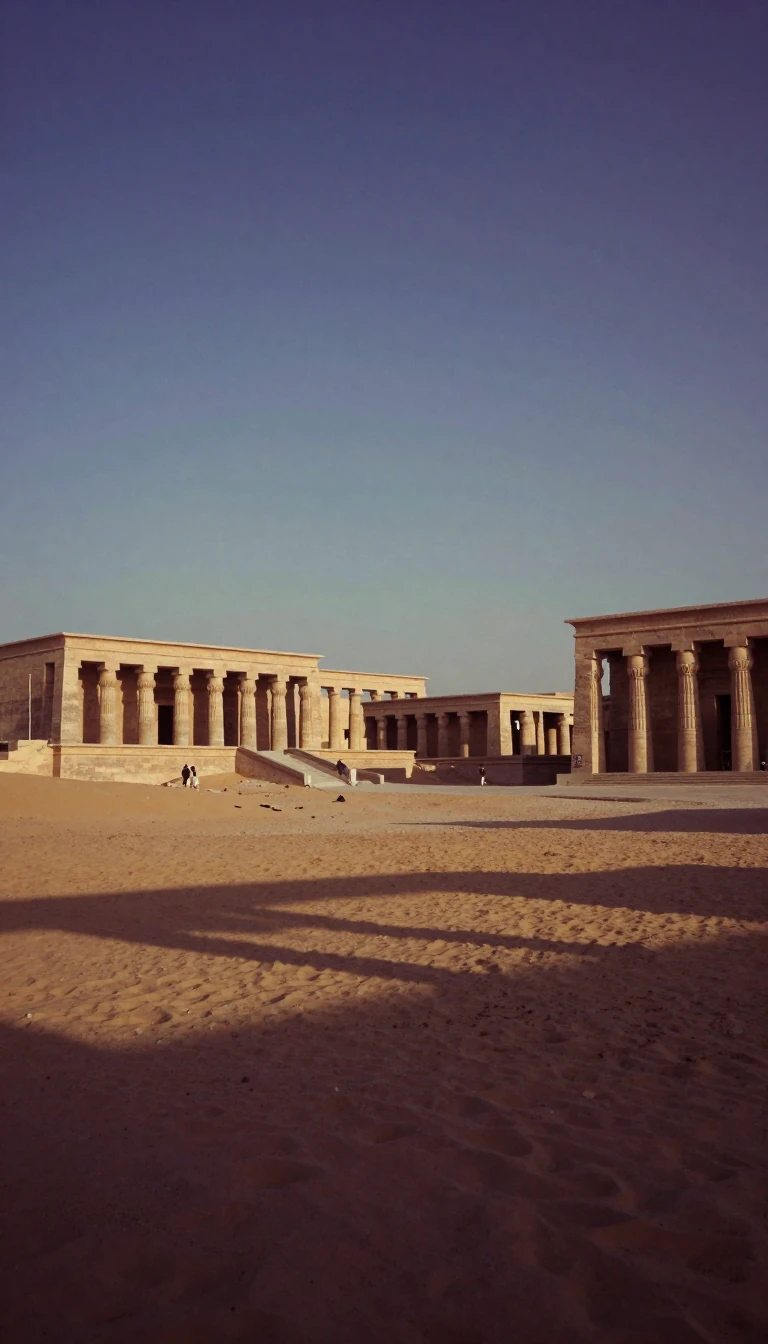 Dilmun was the ancient trade hub that may have inspired the Garden of Eden.An East Semitic civilization thriving in the Persian Gulf from the third millennium BC, Dilmun served as a vital commercial bridge between Mesopotamia and the Indus Valley. Beyond…
 Why the study of ancient documents is the ultimate defense against historical forgeryDiplomatics is not about international relations, but the rigorous science of verifying historical records. Born from a 17th-century academic feud, this discipline provides the to…
- In 81 BCE, China debated whether the state should control its own economy.When Emperor Wu of Han died, he left behind a nation strained by state monopolies on salt and iron. His successor’s regent convened a historic debate in Chang'an to decide the fut…
 How humanity evolved from mapping wanderer stars to discovering a galaxy of planetary systemsFor millennia, humans viewed the Solar System as the entire universe, governed by geocentric models and religious cosmology. Today, we recognize our sun as one of countless stars,…
 How a decade of Broadway-style musicals saved Disney animation from total collapseBetween 1989 and 1999, Disney transformed its struggling animation department into a powerhouse of critical and commercial success. By blending Broadway-style storytelling with in…
 Modern domestic horses share a single, surprisingly recent origin in the Western Eurasian steppes.For years, researchers debated whether horses were domesticated in multiple locations across the ancient world. New genomic analysis of hundreds of ancient samples has finally set…
 Why the Dutch traded the future of New York for a sugar colonyIn 1667, the Dutch Republic made a fateful calculation: they surrendered the thriving province of New Netherland—including the port of New Amsterdam—to the English. In exchange, t…
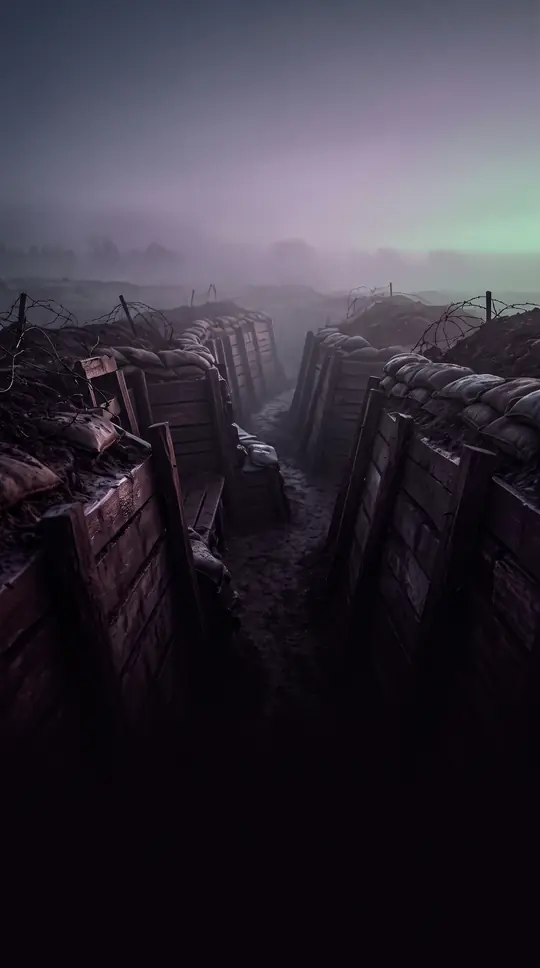 The Dutch West India Company: A Corporate Empire Built on Plunder and SlavesFounded in 1621 to challenge Iberian dominance, the Dutch West India Company was a massive, state-backed gamble. It pivoted from failed colonial conquests and privateering to beco…
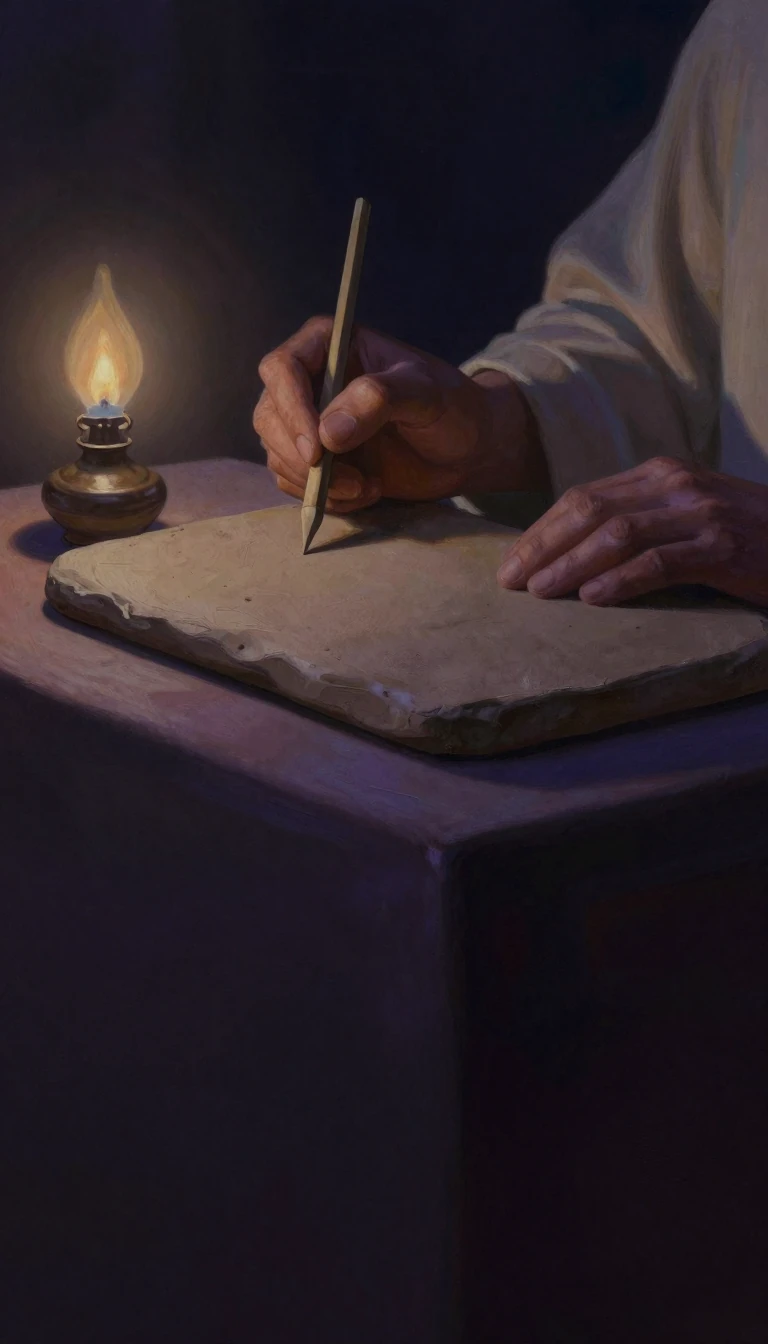 How independent city-states laid the foundation for the world's first empires in MesopotamiaBetween 2900 and 2350 BCE, Mesopotamia transformed into a landscape of competing city-states. This era, known as the Early Dynastic Period, saw the rise of kingship, specialized s…
 Was the legendary first king of Egypt actually a historical figure or a myth?The unification of Egypt is often credited to Menes, but evidence suggests he may be a later invention. Instead, the Early Dynastic Period reveals a complex transition involving r…
 Why the name of a vast Chinese region is a battleground for sovereigntyThe movement for an independent East Turkestan represents a complex clash of historical narratives and modern geopolitics. While Beijing views the region as an integral part of Ch…
 Can we predict the future of global economies by studying the distant past?Economic history bridges the gap between abstract theory and messy reality. By examining how societies managed resources, inequality, and crises, scholars uncover the hidden drive…
- The world's oldest peace treaty was a strategic alliance born of mutual desperationSigned around 1259 BC, the Eternal Treaty between Ramesses II and Hattušiliš III is the earliest diplomatic pact with surviving records from both sides. Far from a simple end to h…
 The 1952 Egyptian coup was not a revolution, but a military takeover from above.On July 23, 1952, a group of military conspirators known as the Free Officers toppled the Egyptian monarchy. While often remembered as a revolutionary uprising, it was actually a …
 How a scattered collection of lands shaped the fate of the Holy Roman EmpireThe Electoral Palatinate was never a single, unified territory, but a fragmented collection of lands spanning the Rhine. Yet, its rulers held immense power, electing emperors and …
 How a medieval bishopric became a powerhouse of the Holy Roman EmpireThe Electorate of Cologne was an ecclesiastical principality where the archbishop wielded both spiritual and secular power. From the 10th century until the early 19th, this state …
 The Electorate of Mainz was the most prestigious state in the Holy Roman EmpireAs the archchancellor of Germany and Primate of the German Church, the Archbishop-Elector of Mainz held a rank second only to the Emperor. This influential state, spanning non-con…
 How a small duchy became the powerhouse of the Holy Roman EmpireThe Electorate of Saxony rose from an insignificant territory along the Elbe to become the second most influential state in the Holy Roman Empire. Through strategic alliances, sil…
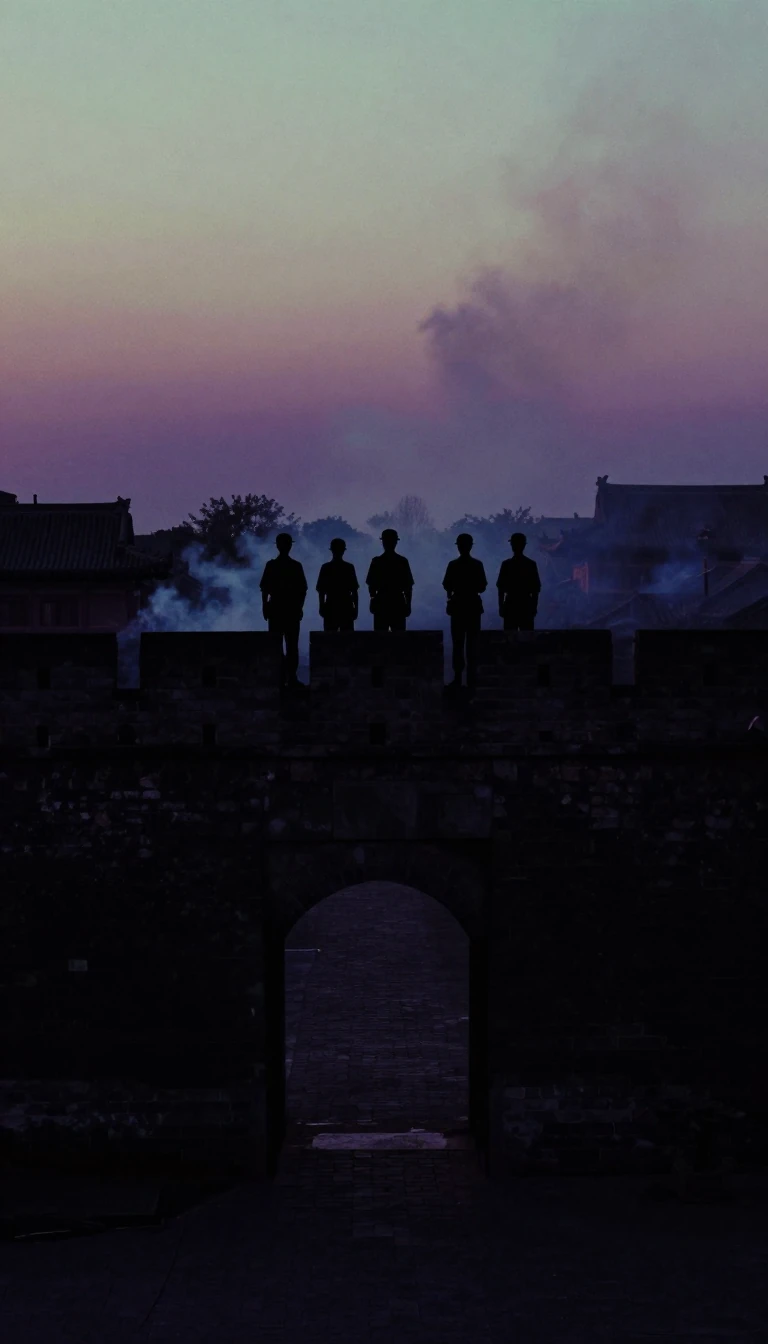 How a 400-Year Imperial Dynasty Collapsed Into the Fragmented Three Kingdoms EraThe Han dynasty defined Chinese identity for centuries, yet its eventual collapse in 220 CE shattered a unified empire into three competing states. Driven by internal corruption, …
 Before the British Empire, England built a patchwork of overseas colonies and trading posts.Long before the Acts of Union in 1707, the Kingdom of England pursued its own overseas ambitions. From the early plantations in Ireland to the fortresses of India and the propriet…
 Is the Epipalaeolithic a distinct era or just a shadow of the Stone Age?Archaeologists often debate whether the Epipalaeolithic is a unique phase of human history or merely a continuation of the Upper Palaeolithic. By examining the transition from nom…
 Did the famous eruption of Mount Vesuvius actually happen in the autumn of 79 AD?For centuries, history books claimed the eruption occurred in August. Yet, modern archaeology tells a different story. From autumn produce found in the ruins to a charcoal inscrip…
 How medieval Europe divided its people into three rigid, divinely ordained social orders.For centuries, European society was structured into three distinct estates: those who prayed, those who fought, and those who labored. This rigid hierarchy, which dictated everyth…
 The snake and the axe: how a student group became a paramilitary forceFounded in 1959 by students seeking Basque independence, ETA evolved from a nationalist movement into a clandestine paramilitary organization. For decades, it waged a violent camp…
 Why the Eurozone’s shared currency made a regional debt crisis nearly impossible to escapeBeginning in 2009, the eurozone faced a brutal period of economic instability. While countries like Iceland could devalue their currency to recover, eurozone members were trapped …
 The Middle Ages were not a scientific dark age but a cradle of discovery.Contrary to the popular myth of a stagnant era, medieval scholars laid the essential groundwork for modern science. By integrating Aristotelian logic, empirical observation, and m…
 How a single cigarette raid ignited a massacre that defined modern Taiwan's identityIn 1947, a violent encounter between monopoly agents and a widow in Taipei sparked an island-wide uprising against Nationalist rule. The subsequent military crackdown left thousan…
- The Federalist Party rose from the ashes of a weak, fractured American government.Before the United States had political parties, it had a desperate need for financial stability. Alexander Hamilton, a self-made immigrant, transformed his vision for a powerful c…
 Was Ancient China Truly Feudal? The Debate Over the Fengjian Governance SystemFengjian, a decentralized system of land allocation and noble rule, defined the Western Zhou dynasty. While often compared to European feudalism, scholars argue the two systems di…
 For centuries, Finland served as the eastern frontier and strategic buffer for the Swedish realm.Long before its independence, Finland was an integral part of Sweden, shaped by crusades, colonial settlement, and constant warfare. While Finns eventually gained equal legal stat…
- Was Egypt's First Intermediate Period a dark age or a time of regional growth?Following the collapse of the Old Kingdom, Egypt entered a century of decentralized power. While often remembered for political instability and famine, this era saw regional gover…
- How a 1954 island skirmish locked the United States into a decades-long Asian allianceWhen the People’s Republic of China began shelling offshore islands in 1954, it triggered a crisis that forced the United States to choose sides. The resulting mutual defense trea…
 Why Ethiopia's flag colors became the symbol of Pan-African resistance and independenceThe green, yellow, and red tricolour of Ethiopia is more than a national banner; it is a global icon of anti-colonial defiance. Adopted after a historic military victory, these co…
- The Indian tricolour evolved from a sectarian political symbol into a secular national emblem.India's national flag, the Tiraṅgā, is more than a simple tricolour. Its journey from a religious-themed banner used by the Indian National Congress to the official flag of the Re…
 The Indonesian flag is a centuries-old symbol of independence and ancient maritime powerIndonesia's red and white bicolor flag, known as the Sang Saka Merah Putih, carries a legacy far deeper than its 1945 adoption. Rooted in the banners of the 13th-century Majapahit…
 Why Iran’s national flag hides a secret countdown to a revolutionary dateThe current flag of Iran is more than a tricolor; it is a meticulously coded political statement. While the green, white, and red stripes represent Islamic faith, peace, and valor…
 Why Japan’s iconic sun flag is both a sacred symbol and a modern controversyThe Japanese flag, known as the Hinomaru, is a minimalist masterpiece of white and red. While its roots stretch back to ancient sun worship and the legendary goddess Amaterasu, it…
 Why Mexico’s flag features an eagle devouring a serpent on a cactusThe Mexican flag is more than a tricolour; it is a visual manifesto of a foundation myth. Its central emblem, depicting an eagle, a cactus, and a serpent, traces back to the 1325 …