 Intellect Plus
Science
17,267 cards. Each one is a 40-second story with a five-minute read behind it. Page 154 of 288.
Subtopics: Acids and bases · Algebra · Alloys and ceramic compounds · Analysis · Applied mathematics · Atomic and molecular physics · Atoms · Basics · Biochemistry · Biochemistry and molecular biology · Biological processes and physiology · Biology · Biology and health sciences: General · Biology basics · Calculus and analysis · Cell biology · Cells · Chemical elements · Chemistry · Climate · Cold · Color · Computer scientists and programmers · Condensed matter physics · Discrete mathematics · Earth science · Electricity & magnetism · Electromagnetism · Elements · Entropy · Everyday Science Questions · Evolutionary biology · Famous equations · Famous experiments · Found by OrchestratorBot · Foundations · Functions · Future Frontier · Genetics and molecular biology · Geology · Geometry · Glass · Global Curiosity Questions · Heat · How Did the Dinosaurs Become Extinct? · How Things Work: Gas from Source to Supply · How Things Work: The Journey of Crude Oil · Human body & genes · Ice · Infinity · Inventors and engineers · Isotopes · Light · Magnetism · Materials · Mathematicians · Maths · Measurement · Mechanics · Microbiology · Minerals & crystals · Molecular compounds · Nature: How Long Can It Live? · Nuclear physics · Number theory · Optics & light · Organic compounds · Other · Particle physics · Physics · Physics basics · Pre-modern figures · Prime numbers & number theory · Probability · Proof · Pseudoscientists · Quantum · Quantum Biology · Reactions and synthesis · Relativity · Research methods · Researched · Salts and ions · Science basics · Scientific discoveries · Scientific instruments · Scientists, inventors and mathematicians · Separation processes · Social scientists · Stars · Statistics and probability · Theoretical computer science · Theory · Thermodynamics · Thermodynamics & heat · UK & Ireland: science · Units & measurement · Volcanoes · Water · Waves · Women in science
 Your four rice-sized glands control your body's calcium, but they can sometimes go rogue.Tucked behind your thyroid, four tiny glands the size of rice grains regulate your calcium and phosphorus levels. When they malfunction, they can trigger hyperparathyroidism, a co…
 Why your body steals from your bones to keep your blood runningCalcium is the silent conductor of your nerves and muscles, but your blood levels are so critical that your body will strip your skeleton to maintain them. When this delicate bala…
 When your body loses its internal thermostat, your calcium levels plummet with dangerous consequences.Deep in your neck, four tiny glands regulate the essential minerals that keep your heart beating and nerves firing. When these parathyroid glands fail, the resulting hormonal imba…
 How a philosopher turned literature into a laboratory for the human mindI. A. Richards did not just read books; he dissected them. By stripping poems of their titles and authors, he forced students to confront the raw mechanics of language. This radic…
 In mathematics, the image of a function is more precise than the term range.When you input a value into a function, the output you receive is an image. While often conflated with the codomain, the image represents the specific set of outputs actually prod…
 From battlefield acclamation to supreme sovereign: the evolving meaning of the title imperatorOriginally a simple term for a military commander, the title imperator underwent a radical transformation in ancient Rome. It evolved from a temporary honorific earned by victorio…
 Why the most successful investment strategy was once mocked as un-American and foolish.Index funds aim to replicate market performance rather than beat it, favoring low costs and simplicity over active stock picking. Once dismissed as Bogle's folly, this passive app…
 How a century of global cooperation keeps our electrical world running safely and consistentlyFrom the batteries in your phone to the power grid in your city, modern life relies on invisible global agreements. The International Electrotechnical Commission has spent over a …
 Is your digital footprint turning your private life into a public commodity?As our daily routines migrate online, the boundary between convenience and surveillance has blurred. From browsing habits to smart home appliances, the architecture of the modern …
 Why your bladder might signal an urgent need to urinate even when emptyInterstitial cystitis is a chronic condition causing persistent bladder pain and an overwhelming, frequent urge to urinate. While it mimics a urinary tract infection, tests often …
 Why your favorite sweets stay creamy and moist long after they are madeInverted sugar syrup is the secret behind the perfect texture of chocolates, jams, and candies. By splitting sucrose into glucose and fructose, this mixture prevents crystallizati…
 How Jackson Browne evolved from a teenage songwriter to a lifelong political activistJackson Browne emerged in the 1960s as a prolific songwriter before defining the singer-songwriter era with hits like Running on Empty. Beyond his commercial success, he became a …
 James Lipton lived a life of extraordinary variety beyond his famous interview chairBefore he became the iconic host of Inside the Actors Studio, James Lipton was a soap opera writer, a Broadway lyricist, a certified pilot, and even a pimp in 1950s Paris. His car…
 How James Maynard transformed our understanding of the distribution of prime numbersPrime numbers are the building blocks of mathematics, yet their distribution remains notoriously elusive. James Maynard, a Fields Medalist, has spent his career cracking open thes…
 Why Japanese numerals group by ten thousand instead of the Western thousandJapanese numerals follow a unique logic that diverges from Western conventions. While we group numbers by thousands, Japanese counts by myriads, or units of 10,000. This system, r…
 How a physicist’s curiosity about the brain sparked the modern machine learning revolutionJohn Hopfield, a physicist who spent his career wandering between disciplines, won the 2024 Nobel Prize in Physics. By applying principles from magnetic systems to neural networks…
 From nursing student to Dame: the versatile career of British icon Julie WaltersBefore becoming a celebrated actress with two Oscar nominations and four BAFTA Television Awards, Julie Walters trained as a nurse at Birmingham's Queen Elizabeth Hospital. Her jo…
- The forgotten 1832 Paris uprising that inspired a literary masterpieceWhile many associate Les Misérables with the French Revolution of 1789, Victor Hugo actually immortalized the failed June Rebellion of 1832. Triggered by the death of a popular ge…
 How a medieval emperor’s hunting retreat became a modern military hub in southwestern GermanyKaiserslautern, a city in the Rhineland-Palatinate, carries the name of Holy Roman Emperor Frederick I. While its roots trace back to a 12th-century palace, the city has endured c…
 The Remarkable Air Plant That Grows Clones Directly From Its Own Leaf MarginsKalanchoe pinnata is a succulent that defies standard reproduction. Instead of relying solely on seeds, it sprouts miniature, fully formed plantlets along the edges of its leaves.…
 How statisticians track survival when they lose sight of the subjects they studyIn medical trials or industrial testing, subjects often vanish from the data before an event occurs. The Kaplan-Meier estimator solves this by calculating survival probabilities d…
 The woman who briefly softened the heart of a future dictatorEkaterine Svanidze was the first wife of Joseph Stalin, a seamstress whose devotion and early death left a mark on the revolutionary. Her life, cut short by illness, reveals the d…
 Can a high-fat, low-carb diet actually rewire the brain to stop epileptic seizures?The ketogenic diet is famous today as a weight-loss trend, but its origins are strictly medical. Originally developed in the 1920s to treat drug-resistant epilepsy in children, th…
 How the Soviet Komsomol transformed from a radical youth movement into a state tool.Born from the chaos of the 1917 revolution, the Komsomol began as an independent, grassroots organization of young workers. Yet, within years, it was systematically absorbed by th…
 Latin declension is the systematic way nouns change form to signal their grammatical role.In Latin, nouns do not just sit there; they transform. By attaching specific suffixes to an oblique stem, the language signals case, number, and gender. Whether you are identifyin…
 Can a mathematical statement be neither true nor false? One mathematician said yes.The law of excluded middle dictates that every proposition is either true or false, with no third option. While this is a cornerstone of classical logic, the Dutch mathematician L…
 Why the LSAT remains the primary gatekeeper for aspiring law students in North AmericaSince 1948, the Law School Admission Test has served as a standardized benchmark for prospective law students. While critics debate its impact on diversity and predictive accuracy…
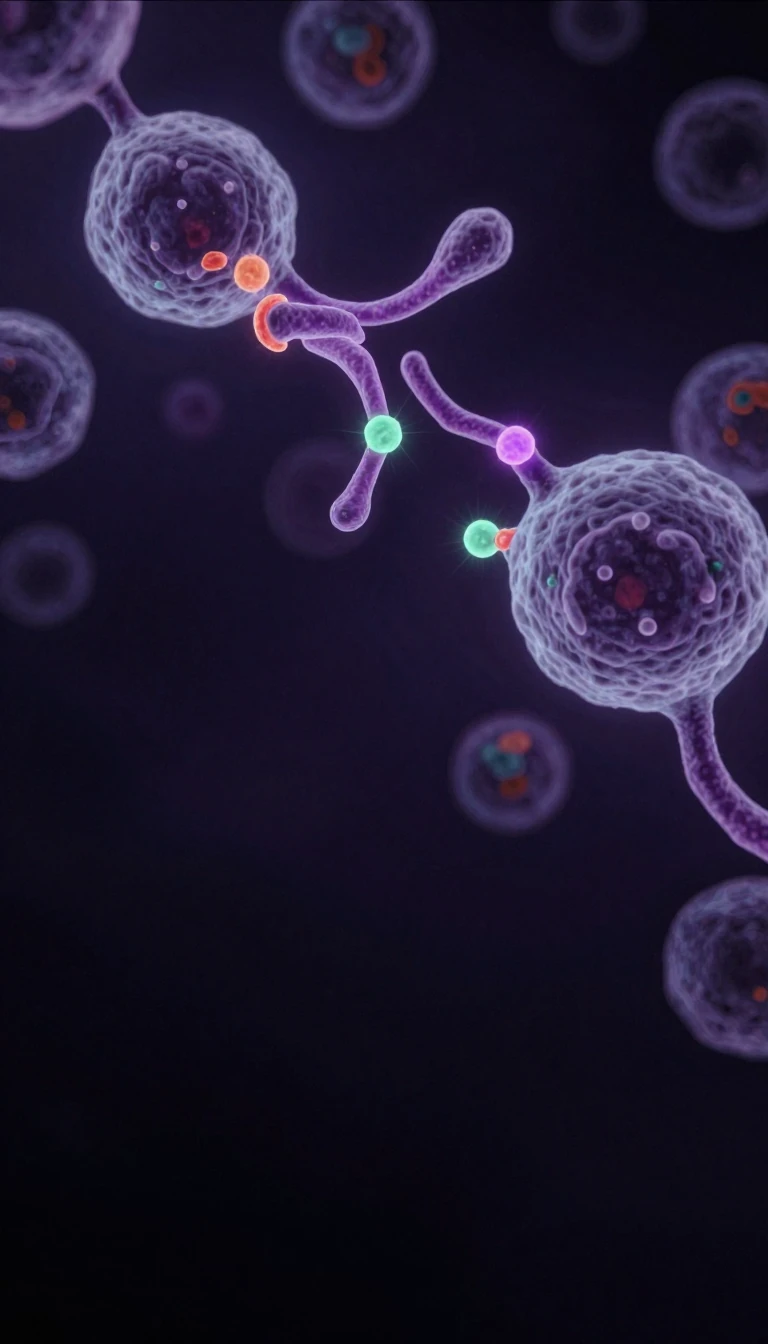 Lectins are nature's biological glue, capable of both life-sustaining signals and lethal toxicity.These carbohydrate-binding proteins exist in every kingdom of life, acting as molecular scouts that recognize specific sugars. While they are essential for immune defense and cell…
 The Legendre transformation lets you swap between different ways of viewing the same system.In physics and mathematics, we often describe systems using specific variables like position or temperature. The Legendre transformation is a powerful tool that allows us to switc…
- How a sprinter from Botswana rewrote national history and redefined speed on the trackLetsile Tebogo transformed Botswana's sporting legacy by securing the nation's first Olympic gold medal. Beyond his historic 200-metre victory in Paris, he has consistently shatte…
- Why your dictionary and your calendar use the exact same mathematical logicLexicographic order is the formal backbone of how we organize everything from words in a dictionary to dates in a calendar. By treating sequences as ordered symbols, this mathemat…
 Why the father of modern taxonomy accidentally created the world's most famous naming system.Carolus Linnaeus did not set out to revolutionize science with a new naming convention. He simply wanted a way to identify plants and animals more efficiently. By adding shorthand…
 Could humans breathe liquid to survive deep-sea pressure or extreme space acceleration?Liquid breathing replaces air with oxygen-rich perfluorocarbons, potentially allowing humans to withstand crushing ocean depths or intense G-forces. While this technology remains …
- Why logical conjunction is the most demanding operator in mathematics and computer scienceLogical conjunction is the strict gatekeeper of truth. It only returns true if every single input provided to it is also true. From the wedge symbol in formal logic to the double …
- Why the logical 'or' is more inclusive than you thinkIn logic, the word 'or' is not just a choice between two options. It is a precise operator that remains true even when both possibilities are valid. While natural language often t…
 Why a billion in London is not the same as a billion in ParisThe word billion is a linguistic false friend. Depending on where you are, it represents either one thousand million or one million million. This discrepancy stems from two compet…
- Louisiana State Penitentiary operates as a complex system balancing public safety and rehabilitation goals.Known as Angola, this massive facility functions as a self-contained environment. Beyond its primary mission of custody and control, the institution manages diverse programs desig…
 Your device's MAC address is a permanent digital fingerprint, but it can be faked.Every device connecting to a network carries a unique identifier called a MAC address. While manufacturers burn these into hardware to ensure global uniqueness, they are not immut…
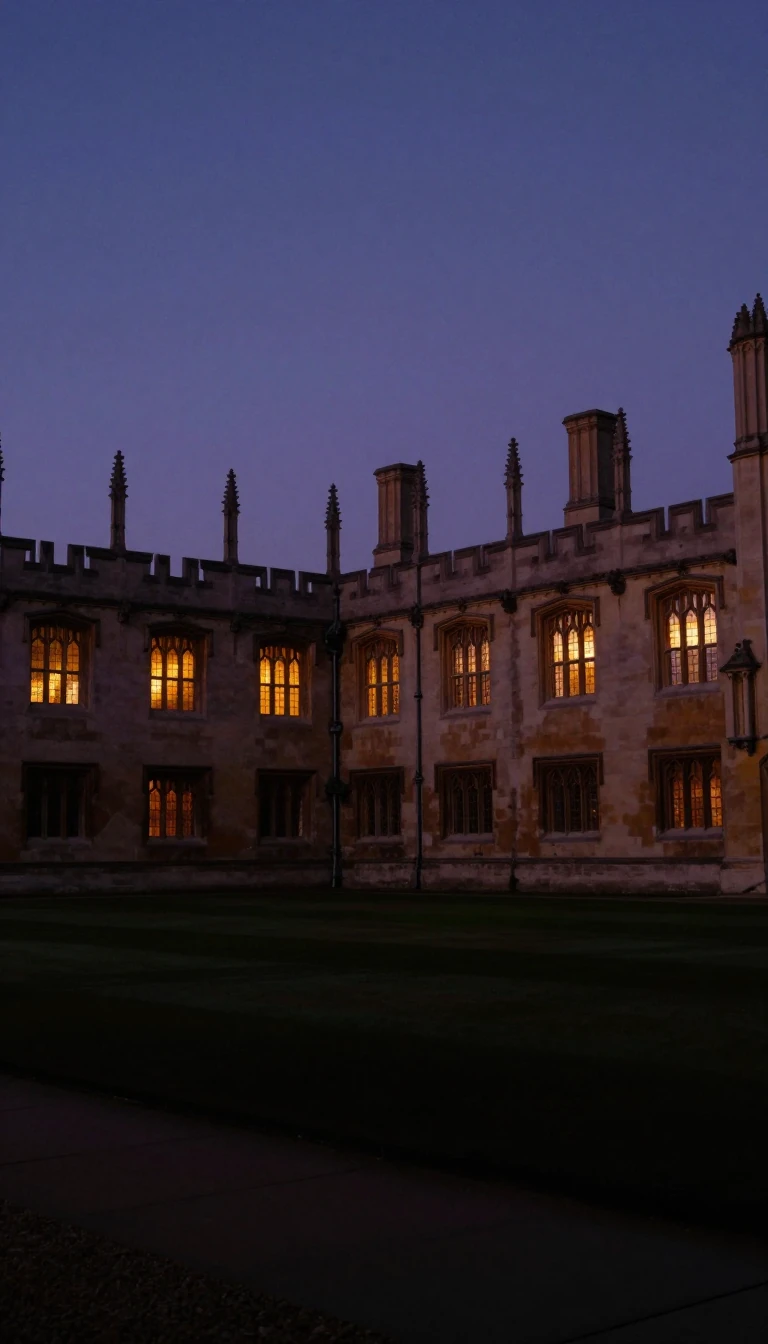 How a medieval Oxford college became a powerhouse of modern scientific research and innovationFounded in 1458, Magdalen College is far more than its iconic tower and deer park. Today, it manages the Oxford Science Park, home to over 100 companies, and continues a long trad…
 The Malayo-Polynesian language family spans from Madagascar to the Pacific, yet remains deeply mysterious.With roughly 385.5 million speakers, the Malayo-Polynesian languages represent a vast linguistic network stretching across Southeast Asia and the Pacific. While they share distinc…
- How a massive diaspora community shaped the economic and political landscape of modern MalaysiaComprising nearly seven million people, the Malaysian Chinese community is the second-largest ethnic group in the country. Their history spans centuries of migration, colonial lab…
 Is a Malay defined by blood, or by the simple act of being Muslim?In Malaysia, being Malay is not just an ethnic category but a legal identity codified in the constitution. While many trace their roots to ancient Austronesian tribes, the legal d…
- The two faces of maltodextrin: one powers your workout, the other feeds your gutMaltodextrin is not a single substance, but a shared name for two chemically distinct families. One is a rapidly absorbed carbohydrate that spikes blood sugar for athletic perform…
 Why your stock trades execute in milliseconds: the invisible engine of market makers.Ever wonder how you can sell shares instantly? You are not trading against a random person, but a market maker. These firms stand ready to buy or sell at all times, ensuring liqui…
 How to calculate the efficiency of recursive algorithms without doing the hard mathThe master theorem is a shortcut for analyzing divide-and-conquer algorithms. Instead of laboriously expanding recursive relations, this method allows computer scientists to deter…
 How a brilliant academic became the chief architect of the Vietnam War escalationMcGeorge Bundy, a Harvard dean and elite intellectual, served as National Security Advisor to two presidents. Initially a key proponent of American intervention in Vietnam, he orc…
 Before the digital age, clockwork gears and levers automated the world's most complex arithmetic.Long before silicon chips, inventors harnessed the precision of clockmaking to build machines that could add, subtract, and multiply. From Blaise Pascal's tax-saving device to the…
 How MediaWiki powers the world's largest collaborative knowledge projects with scalable, open-source architecture.MediaWiki is the engine behind Wikipedia and countless other knowledge management systems. Written in PHP, this software handles massive traffic and terabytes of data through soph…
 What does it actually mean to be a member of parliament across the globe?The title member of parliament is far from universal. While it often designates a representative in a lower house, its application varies wildly. From elected officials in single-…
 Is metabolic syndrome a single disease or a cluster of warning signs?Metabolic syndrome is not a single illness but a collection of health markers that signal a heightened risk for heart disease and diabetes. Affecting roughly one-third of U.S. adu…
- How Chicago's sprawling commuter rail network keeps the metropolitan area moving every dayMetra serves as the backbone of transit for Chicago and its surrounding suburbs, operating an extensive network of eleven rail lines. While its roots trace back to the mid-19th ce…
 Why the mile run remains the ultimate benchmark of human middle-distance speedDespite the global shift to metric distances, the mile persists as the only imperial event with an official world record. It is a grueling test of physical and mental endurance, d…
- How to tell if a massive number is prime without checking every factorDetermining if a large number is prime is computationally expensive, but the Miller-Rabin test offers a shortcut. By using probabilistic logic rather than brute force, this algori…
 Can life arise from non-life? The 1953 experiment that changed everythingIn 1953, Stanley Miller and Harold Urey simulated the conditions of a primordial Earth to test if life’s building blocks could emerge from inorganic matter. By pulsing a mixture o…
 Monads are the secret to managing complex computational side effects in functional programmingMonads provide a structured framework for chaining operations while handling hidden complexities like errors or state changes. By abstracting away repetitive boilerplate, they all…
- Why the most feared antidepressants are making a quiet, evidence-based comebackOnce sidelined due to dietary risks, monoamine oxidase inhibitors are regaining status as potent tools for treatment-resistant depression. Modern food safety standards have drasti…
 Is Western Sahara a sovereign nation, a Moroccan province, or a colonial relic?Western Sahara remains one of the world's most complex geopolitical puzzles. Caught between historical tribal allegiances, a legacy of Spanish colonial design, and a modern-day mi…
 When your body's wiring fails: understanding the progressive nature of motor neuron diseasesMotor neuron diseases are a group of disorders that systematically dismantle the communication lines between your brain and muscles. By destroying the nerve cells responsible for …
 Why the Greek letter Mu is the most versatile symbol in modern scienceFrom the depths of ancient hieroglyphs to the cutting edge of quantum physics, the letter mu is everywhere. It serves as a fundamental SI prefix for the incredibly small, a mathem…
 Why the dark, sticky sugar in your pantry lacks a single legal definitionMuscovado is a complex, mineral-rich sweetener derived from sugarcane juice, yet it remains shrouded in ambiguity. Because no international standards exist to define it, the term …