 Intellect Plus
Science
17,267 cards. Each one is a 40-second story with a five-minute read behind it. Page 156 of 288.
Subtopics: Acids and bases · Algebra · Alloys and ceramic compounds · Analysis · Applied mathematics · Atomic and molecular physics · Atoms · Basics · Biochemistry · Biochemistry and molecular biology · Biological processes and physiology · Biology · Biology and health sciences: General · Biology basics · Calculus and analysis · Cell biology · Cells · Chemical elements · Chemistry · Climate · Cold · Color · Computer scientists and programmers · Condensed matter physics · Discrete mathematics · Earth science · Electricity & magnetism · Electromagnetism · Elements · Entropy · Everyday Science Questions · Evolutionary biology · Famous equations · Famous experiments · Found by OrchestratorBot · Foundations · Functions · Future Frontier · Genetics and molecular biology · Geology · Geometry · Glass · Global Curiosity Questions · Heat · How Did the Dinosaurs Become Extinct? · How Things Work: Gas from Source to Supply · How Things Work: The Journey of Crude Oil · Human body & genes · Ice · Infinity · Inventors and engineers · Isotopes · Light · Magnetism · Materials · Mathematicians · Maths · Measurement · Mechanics · Microbiology · Minerals & crystals · Molecular compounds · Nature: How Long Can It Live? · Nuclear physics · Number theory · Optics & light · Organic compounds · Other · Particle physics · Physics · Physics basics · Pre-modern figures · Prime numbers & number theory · Probability · Proof · Pseudoscientists · Quantum · Quantum Biology · Reactions and synthesis · Relativity · Research methods · Researched · Salts and ions · Science basics · Scientific discoveries · Scientific instruments · Scientists, inventors and mathematicians · Separation processes · Social scientists · Stars · Statistics and probability · Theoretical computer science · Theory · Thermodynamics · Thermodynamics & heat · UK & Ireland: science · Units & measurement · Volcanoes · Water · Waves · Women in science
 How tiny solder droplets and molten surface tension revolutionized the modern electronic landscapeSurface-mount technology replaced bulky through-hole components by mounting parts directly onto circuit boards. This shift enabled massive automation, higher component density, an…
 How long until it breaks? The statistical art of predicting the inevitableSurvival analysis is the statistical study of time until an event occurs, whether that event is a mechanical failure or a biological death. By tracking populations and accounting …
 Can simple rules for ants and birds solve the world's most complex problems?Swarm intelligence proves that decentralized, self-organized systems can outperform centralized control. By mimicking nature—from ant colonies to bird flocks—engineers create simp…
 Born from urban unrest, SWAT teams evolved from specialized units into a standard police resource.Originally formed in the 1960s to manage riots and barricaded gunmen, SWAT teams have expanded from rare tactical interventions to nearly 80,000 annual deployments by 2015. While …
 The elegant logic of symmetric difference: set theory meets the XOR operationIn set theory, the symmetric difference isolates elements belonging to one set or the other, but never both. This operation, which functions like addition modulo 2, transforms col…
 The yin-yang symbol is a modern evolution of a complex Neo-Confucian cosmological diagram.The iconic black-and-white swirl we recognize today as the yin-yang symbol is a relatively recent simplification of a much deeper philosophical model. Originally part of a multi-s…
 How a 6,000-year-old city became a hub for ancient science and global tradeTarsus, a historic Turkish city, has served as a crossroads for empires, philosophers, and traders for millennia. From its legendary origins to its role as a center for Hellenisti…
 Before email and text messaging, the telex network connected the world via teleprinters.Long before the digital age, telex allowed businesses to exchange secure, text-based messages across international borders. Operating on a dedicated network of teleprinters, this …
 The Telugu script is a complex abugida that evolved from ancient Brahmi rootsTracing its lineage back to the Mauryan era, the Telugu script is a sophisticated system where consonants carry an inherent vowel sound. This abugida, which shares deep historical…
 Why base-3 computing is theoretically more efficient than the binary systems we use todayWhile our digital world runs on binary, the ternary numeral system—using base 3—is mathematically superior. By utilizing digits 0, 1, and 2, or the balanced set of -1, 0, and +1, …
 Why do humans build cultures, seek self-esteem, and fear those who are different?Terror management theory proposes that human behavior is driven by a fundamental conflict: our instinct for self-preservation versus the realization that death is inevitable. To m…
- Why a genetic blood disorder once offered humans a survival advantage against malariaThalassemia is an inherited blood disorder that disrupts hemoglobin production, often causing severe anemia. While it poses significant health challenges, the genetic variations b…
 Can religious faith and evolutionary science coexist within a single, coherent worldview?Theistic evolution suggests that God acts through the laws of nature, using evolutionary processes to bring about life. Rather than viewing science and religion as inherently cont…
 How a former journalist became the moral architect of post-war West German democracy.Theodor Heuss, the first president of West Germany, steered a fractured nation toward stability after the horrors of the Nazi era. A liberal intellectual and former journalist, he…
 Is the tree of life actually a two-branch system instead of three?For decades, biology has categorized all life into three domains: Bacteria, Archaea, and Eukarya. But new genetic evidence suggests this framework may be flawed. Eukaryotes—the co…
 From medieval scribal shortcut to digital sarcasm, the tilde has a surprising history.The tilde began as a clever way for medieval scribes to save money on ink and vellum by abbreviating common Latin words. Today, this versatile mark serves as a linguistic tool for…
- Why the world’s most ubiquitous typeface was never actually designed for the massesCommissioned in 1931 for a single British newspaper, Times New Roman was a bespoke solution for high-speed printing. Despite its reputation as a standard, it was never intended fo…
 Why the letter Ø is frequently mistaken for a circle, a zero, or nothingThe character Ø is a linguistic chameleon, serving as a distinct vowel in Nordic languages, a mathematical symbol for the empty set, and a shorthand for diameter in engineering. D…
 How a prisoner of war invented a system for lightning-fast mental arithmeticDeveloped by Jakow Trachtenberg while held in a Nazi concentration camp, the Trachtenberg system is a method of rapid mental calculation. By utilizing specific memorized operation…
 How engineers predict the output of any system using a single mathematical modelA transfer function acts as a bridge between input and output, allowing engineers to model complex systems from electronic circuits to chemical reactors. By representing how a sys…
 How matrices turn complex geometric movements into simple, repeatable multiplication tasksIn linear algebra, matrices are more than just grids of numbers; they are the engines of transformation. By representing movements like rotation, scaling, and reflection as matric…
 Transgender history spans millennia, yet our modern understanding is a recent development.Gender-variant roles have existed across global cultures for thousands of years, from ancient Egypt to Indigenous North American societies. However, the contemporary concept of be…
 Ancient Babylonians used the trapezoidal rule centuries before the formal invention of calculusThe trapezoidal rule is a fundamental technique for approximating definite integrals by calculating the area under a curve as a series of trapezoids. While central to modern calcu…
 Troubleshooting is not just fixing things; it is a rigorous, logical search for truth.When a system fails, most people guess. Experts, however, employ systematic strategies to isolate the root cause. Whether using shallow reasoning based on past experience or deep,…
 How a 1930s recovery framework evolved into a global model for behavioral changeBorn in Akron, Ohio, in 1935, the twelve-step program began as a mutual aid solution for alcoholism. Today, this approach has expanded into over 200 distinct fellowships, addressi…
 Why science struggles to classify the study of unidentified flying objects as legitimate researchUfology sits in an uncomfortable space between grassroots investigation and mainstream skepticism. While governments have historically funded studies into aerial phenomena, the fi…
 How the United States Naval Academy transforms civilians into professional officers for the fleetThe United States Naval Academy is an undergraduate college that prepares students for careers as officers in the Navy and Marine Corps. Through a rigorous four-year program, mids…
 How a Coastal Research Hub Transformed Into a Global Powerhouse of Scientific DiscoveryThe University of California, San Diego, began as a bold experiment in top-down academic planning. Born from the legacy of the Scripps Institution of Oceanography, this institutio…
 How a space-age engineering school became a hub for immersive technology and innovationFounded to fuel the aerospace workforce near the Kennedy Space Center, the University of Central Florida has evolved into a powerhouse of interdisciplinary research. From pioneeri…
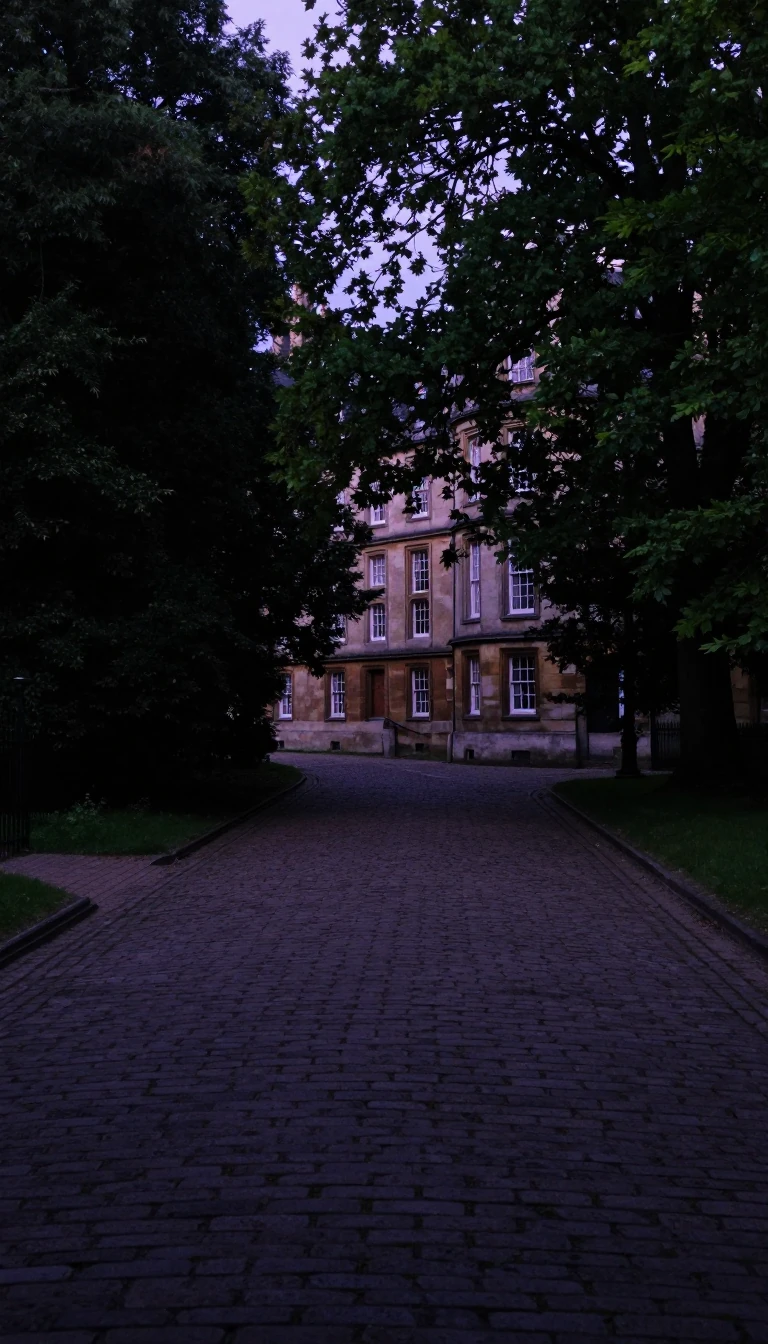 How a small German university became the crucible of idealism and evolutionary theoryEstablished in 1558, the University of Jena evolved from a home for religious reform into a radical intellectual powerhouse. It served as the epicenter of German idealism and late…
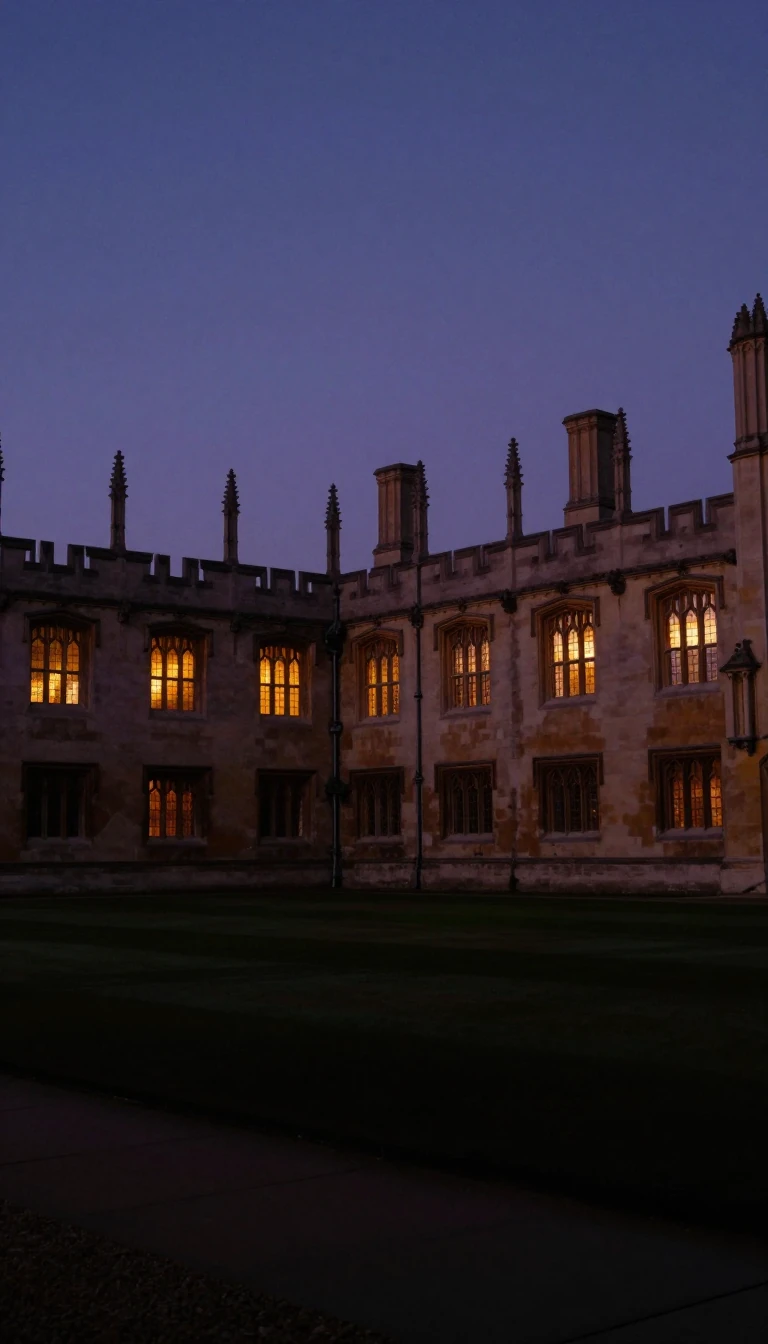 How a Victorian building in Liverpool inspired the term for an entire class of universitiesThe University of Liverpool is the original redbrick university, a title derived from the iconic Victoria Building on its campus. Beyond its architectural legacy, the institution …
 How a City of Steel Built a World-Class University Through Penny DonationsThe University of Sheffield stands today as a global research powerhouse, but its origins are rooted in the collective ambition of a working-class city. In 1904, local steelworker…
- From a Victorian science exhibition to a modern global university in central LondonThe University of Westminster began in 1838 as the Royal Polytechnic Institution, a hub for public scientific demonstrations and technical education. Today, it stands as a major a…
 How the University of Winchester is shaping the future of professional success and inclusionRanked among the top ten UK universities for employability, Winchester blends a focus on career readiness with a deep commitment to social belonging. From teacher training excelle…
 The University of Zurich: A Pioneer in State-Led Education and Academic ControversyFounded in 1833, the University of Zurich was the first European institution established by the state rather than a church or monarch. Today, it remains a powerhouse of research a…
 Unsupervised learning finds hidden patterns in data without needing human-labeled examples to guide it.Unlike supervised learning, which relies on expensive, manually tagged datasets, unsupervised learning algorithms extract structure from raw, unlabeled information. By mimicking d…
 Why the world's most ambitious 17th-century warship sank in minutes on its maiden voyageThe Vasa was a marvel of Swedish engineering, designed to be the most powerful warship of its era. Yet, on August 10, 1628, it foundered in Stockholm Harbor within twenty minutes …
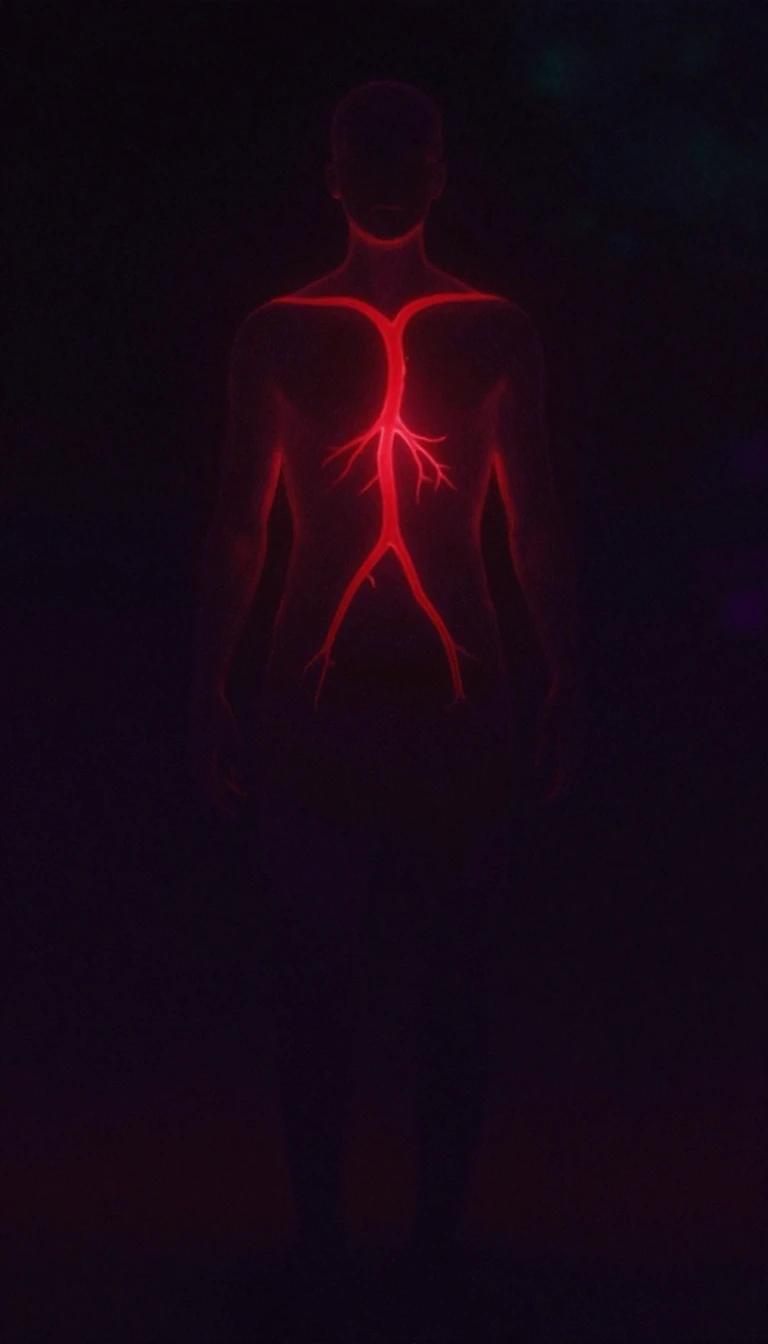 Why your blood vessels widen to keep your body running at peak performanceVasodilation is the body's elegant mechanism for widening blood vessels to boost blood flow and lower pressure. While this process is essential for delivering oxygen and nutrients…
 Did a mysterious double flash in 1979 signal a secret nuclear test?On 22 September 1979, a U.S. satellite designed to detect nuclear detonations captured a mysterious double flash over the South Atlantic. While initial intelligence reports pointe…
 Why your walkie-talkie works while your television signal struggles with a simple hillVery High Frequency (VHF) radio waves are the backbone of modern mobility, enabling everything from handheld walkie-talkies to critical air traffic control. Because these waves ar…
 The Indian Diplomat Who Shattered Glass Ceilings at the United NationsBorn into the influential Nehru-Gandhi family, Vijaya Lakshmi Pandit navigated a life defined by anti-colonial struggle and global diplomacy. She became the first woman to lead th…
- How a 19th-century Augustinian college evolved into a modern research-driven national universityFounded in 1842, Villanova University has navigated financial crises, wartime closures, and shifting academic identities to become a prominent Catholic institution. Today, the uni…
 Beneath the streets of modern Vienna lies the ancient Roman fortress of VindobonaVindobona was a vital Roman military camp on the Danube frontier, housing 6,000 soldiers and thousands of civilians. Today, the city of Vienna preserves its legacy in its very str…
 How a prototype form generator and a database engine created a programming legendVisual Basic transformed software development by marrying a drag-and-drop interface with the simplicity of the BASIC language. Born from a project codenamed Ruby, it allowed devel…
 Why voxels are the secret to building caves and arches in digital worldsA voxel is the 3D equivalent of a pixel, acting as a single data point on a grid. While polygons define surfaces with vertices, voxels map entire volumes. This makes them essentia…
 The bitter 19th-century battle that defined how we power our modern world todayIn the late 1880s, Thomas Edison and Nikola Tesla engaged in a fierce rivalry over the future of electricity. Edison championed direct current, while Tesla pushed for alternating …
 Why the world's most popular IQ test was built to challenge childhood normsDavid Wechsler designed his landmark intelligence scale to fix what he saw as fundamental flaws in existing tests. By ditching age-based groupings for a point-based system and cre…
 Why the Weibull distribution is the master key to predicting when things failWhether you are modeling the lifespan of a mechanical part, the duration of a web session, or the spread of an innovation, the Weibull distribution offers a versatile framework. B…
 The Wheel of the Year is a modern synthesis of ancient seasonal traditions.Often mistaken for an ancient, unbroken tradition, the eight-fold Wheel of the Year is a mid-20th-century creation. By blending four solar quarter days with four Celtic cross-quar…
 Wireless power transfer: why your phone charges without a cable but satellites don'tWireless power transfer transmits energy through electromagnetic fields rather than physical cables. While near-field methods like inductive charging are now common for phones and…
- Why your GPS map is not perfectly aligned with the ground beneath your feet.The World Geodetic System is the invisible framework that makes global navigation possible. By creating a unified mathematical model of Earth, it allows satellites and smartphones…
 How a self-funding UN agency manages the world's patents, trademarks, and creative designsThe World Intellectual Property Organization is a unique United Nations agency that operates differently from its peers. Instead of relying on member state contributions, it gener…
 Why the world's most popular configuration language is actually a recursive acronymYAML is the invisible backbone of modern software configuration, yet its name tells a story of identity crisis. Originally a tongue-in-cheek nod to the markup-heavy early 2000s, i…
 Are YouTube stars the new titans of influence, or just digital microcelebrities?YouTubers have evolved from hobbyists into a new class of microcelebrity, often perceived as more authentic than traditional stars. Their influence now shapes mainstream media, po…
 How a Fried Chicken Lunch Helped Solve a 125-Year-Old Physics MysteryWhile eating in Providence, mathematician Yu Deng had a breakthrough that cracked a century-old challenge. By finding a way to decompose complex physical problems into smaller, ma…
- Is zero to the power of zero equal to one or just undefined?In mathematics, zero raised to the power of zero is a paradox of convenience. While algebra and combinatorics often define it as one to keep formulas consistent, calculus treats i…
 In the ZW System, Mothers Determine the Sex of Their OffspringWhile humans rely on the father's sperm to dictate biological sex, many animals and plants operate differently. In the ZW system, the female carries the heterogametic chromosomes,…
 Why the most influential metric in science is often a statistical illusionThe journal impact factor was created to help librarians manage collections, not to evaluate human careers. Yet, this simple ratio has become a dominant force in academia, shaping…
 Why astronomers count days from noon in 4713 BC instead of using years.To eliminate the chaos of shifting calendar eras and leap years, astronomers use the Julian day: a continuous, unbroken count of days starting from January 1, 4713 BC. By tracking…
 The Semantic Web aims to transform the internet into a giant, machine-readable database.Imagine a web where computers do not just display text, but actually understand the meaning behind it. By adding metadata to digital content, the Semantic Web allows machines to r…