 Intellect Plus
Science
17,267 cards. Each one is a 40-second story with a five-minute read behind it. Page 185 of 288.
Subtopics: Acids and bases · Algebra · Alloys and ceramic compounds · Analysis · Applied mathematics · Atomic and molecular physics · Atoms · Basics · Biochemistry · Biochemistry and molecular biology · Biological processes and physiology · Biology · Biology and health sciences: General · Biology basics · Calculus and analysis · Cell biology · Cells · Chemical elements · Chemistry · Climate · Cold · Color · Computer scientists and programmers · Condensed matter physics · Discrete mathematics · Earth science · Electricity & magnetism · Electromagnetism · Elements · Entropy · Everyday Science Questions · Evolutionary biology · Famous equations · Famous experiments · Found by OrchestratorBot · Foundations · Functions · Future Frontier · Genetics and molecular biology · Geology · Geometry · Glass · Global Curiosity Questions · Heat · How Did the Dinosaurs Become Extinct? · How Things Work: Gas from Source to Supply · How Things Work: The Journey of Crude Oil · Human body & genes · Ice · Infinity · Inventors and engineers · Isotopes · Light · Magnetism · Materials · Mathematicians · Maths · Measurement · Mechanics · Microbiology · Minerals & crystals · Molecular compounds · Nature: How Long Can It Live? · Nuclear physics · Number theory · Optics & light · Organic compounds · Other · Particle physics · Physics · Physics basics · Pre-modern figures · Prime numbers & number theory · Probability · Proof · Pseudoscientists · Quantum · Quantum Biology · Reactions and synthesis · Relativity · Research methods · Researched · Salts and ions · Science basics · Scientific discoveries · Scientific instruments · Scientists, inventors and mathematicians · Separation processes · Social scientists · Stars · Statistics and probability · Theoretical computer science · Theory · Thermodynamics · Thermodynamics & heat · UK & Ireland: science · Units & measurement · Volcanoes · Water · Waves · Women in science
 How a Meccano-built machine helped Douglas Hartree pioneer the age of digital computingDouglas Hartree was a visionary who saw the future of calculation long before the digital revolution. From building a differential analyzer out of children's toy parts to advising…
 How a 2:30 AM phone call changed the course of low-temperature physics foreverDouglas Osheroff was famously annoyed when his phone rang in the middle of the night in 1996. He did not know he had just won the Nobel Prize for discovering a strange, frictionle…
 How a Civil War Historian Became the First Female President of Harvard UniversityDrew Gilpin Faust shattered centuries of tradition when she became Harvard's 28th president in 2007. A historian of the American South, her tenure balanced academic expansion with…
 How a Han Dynasty official revolutionized metallurgy by harnessing the power of rushing waterLong before the industrial age, Du Shi transformed Chinese iron production by applying hydraulic power to furnace bellows. As a local administrator in Nanyang, he engineered a wat…
 How topology redefined our understanding of matter and the quantum worldFrederick Duncan Michael Haldane transformed condensed matter physics by applying the mathematical concept of topology to atomic systems. His theoretical breakthroughs, which earn…
 Why Westerners often misjudge the rationality of belief systems in other culturesE. E. Evans-Pritchard transformed anthropology by arguing that witchcraft and magic are not mere superstitions. Instead, he revealed them to be coherent, rational systems that pro…
 How a Harvard anthropologist helped design the modern world by measuring human bodiesEarnest Hooton was a central figure in 20th-century anthropology, known for his work on human evolution and racial classification. Yet, his most enduring legacy may be his practic…
 Was this Kentucky photographer a medical clairvoyant or a master of hypnotic performance?Edgar Cayce, an eighth-grade educated photographer, gained national fame for diagnosing complex medical conditions while in a self-induced trance. Though he claimed to be a devout…
 How a Retired Headmistress Became the World's Most Famous Interpreter of Ancient GreeceEdith Hamilton spent 26 years running a school before retiring at age 55. She then reinvented herself as a writer, producing best-selling books that stripped away Victorian artifi…
 How a servant’s secret life helped birth the modern naturalist novelEdmond and Jules de Goncourt were inseparable brothers whose obsession with documenting reality transformed French literature. By dissecting the lives of both the elite and the de…
 Why every crime scene holds a secret, according to the father of forensicsEdmond Locard, often called the Sherlock Holmes of France, transformed criminal investigation by establishing a fundamental truth: every contact leaves a trace. This simple yet pr…
 How a clergyman’s obsession with practical geometry changed the way we measure the worldEdmund Gunter was a 17th-century polymath who prioritized real-world application over academic theory. By inventing tools like the Gunter’s chain and the Gunter’s scale, he moved …
 Edmund Wilson was the intellectual conscience of his generation, and he knew it.As the 20th century's preeminent literary critic, Edmund Wilson shaped how we read Hemingway, Fitzgerald, and Nabokov. Yet, he was equally famous for his prickly independence, onc…
 Can music mean anything if it has no words, story, or external message?Eduard Hanslick, the 19th-century critic who defined the War of the Romantics, argued that music’s meaning is found solely in its form. By rejecting the era's obsession with progr…
 How one psychologist tried to map the human mind like a chemistEdward B. Titchener believed psychology should function like chemistry. By breaking down complex thoughts into their fundamental components, he aimed to reveal the architecture of…
 How a Victorian clerk turned a health crisis into the foundation of modern anthropologyWhen tuberculosis forced Edward Burnett Tylor to leave his family business in 1855, he stumbled into an expedition to Mexico that would change the study of humanity forever. By ap…
 Why central banks should follow rules rather than discretion to maintain economic credibilityEdward C. Prescott and Finn E. Kydland transformed macroeconomics by proving that government policy makers often struggle with credibility. Their work showed that when officials u…
 How one 17th-century judge defied the King to establish the supremacy of law.Sir Edward Coke was a formidable British jurist who transformed English law by asserting that even a monarch is subject to the common law. His incorruptible stance against royal p…
 How a wartime radar expert unlocked the secrets of atoms and the Milky WayEdward Mills Purcell was a physicist whose work spanned from the microscopic to the galactic. After developing microwave radar during World War II, he discovered nuclear magnetic …
 Why a tiny rounding error on a computer screen changed how we view nature.In 1961, meteorologist Edward Lorenz discovered that even the most precise weather models are fundamentally limited. By accidentally rounding a decimal, he revealed that tiny chan…
 How a Civil War veteran transformed the pharmaceutical industry through quality and scientific rigorEli Lilly, a former Union Army officer, turned his back on failed plantation life to revolutionize medicine. By pioneering gelatin capsules, flavorings, and strict quality control…
 How Elias James Corey Transformed Organic Chemistry Through Retrosynthetic Analysis and Synthetic InnovationElias James Corey, a Nobel laureate, revolutionized organic chemistry by formalizing retrosynthetic analysis. His work provided a systematic logic for constructing complex molecul…
 How one man turned a sacred, ancient tongue into a modern national language.Eliezer Ben-Yehuda achieved the impossible: he transformed Hebrew from a liturgical relic into a vibrant, everyday language. By raising his children as the first modern native spe…
 The man behind Yale University was a merchant whose wealth remains deeply controversial.Elihu Yale, the namesake of one of America's most prestigious universities, built his fortune as a high-ranking official for the East India Company. His legacy is now under intens…
 How the tiny caps on your chromosomes dictate the speed of your biological agingElizabeth Blackburn discovered telomerase, the enzyme that replenishes the protective ends of our chromosomes. Her work revealed that these structures, known as telomeres, are not…
 How a Hungarian chemist’s secret polonium research helped ignite the atomic bombElizabeth Rona was a pioneer in isotope separation whose expertise in polonium extraction became a vital, uncompensated contribution to the Manhattan Project. Despite her critical…
 How a pioneering chemist used her own home to launch the field of ecologyEllen Swallow Richards was the first woman admitted to MIT and a trailblazing chemist who applied scientific rigor to the domestic sphere. By treating her own home as a laboratory…
 How a mathematician who avoided football helped build the foundation of modern digital communicationElwyn Berlekamp was a polymath who shaped both the invisible code protecting your data and the rigorous study of games. From his early days at MIT to his pioneering work in combin…
 Emil Artin: The polymath mathematician who treated life as a rigorous, beautiful experiment.Emil Artin was a foundational figure in modern abstract algebra, yet his life was defined by far more than equations. From surviving the Italian front with a cockroach-hunting man…
 Emil Fischer: The Chemist Who Unlocked the Secrets of Sugars and ProteinsEmil Fischer was a titan of organic chemistry whose work defined our understanding of molecular structures. From the lock and key mechanism of enzymes to the synthesis of complex …
 How Emilio Segrè helped discover the building blocks of the atomic ageEmilio Segrè was a central figure in 20th-century physics, moving from Enrico Fermi’s inner circle in Rome to the heart of the Manhattan Project. His career spanned the discovery …
 How a Wellesley professor traded her academic career for a global peace missionEmily Greene Balch was a pioneering economist who believed research required on-the-spot investigation. After being dismissed from Wellesley College for opposing World War I, she …
 How a detour through literature and teaching led to a Nobel Prize in physicsEric Allin Cornell nearly abandoned physics for literature and politics during his undergraduate years. After a nine-month teaching stint in Asia, he returned to science with rene…
 How a humble sea snail revealed the biological secrets of human memory storageEric Kandel transformed our understanding of the mind by studying a simple marine mollusc. By observing how a snail learns, he discovered that memories are not fixed, but are phys…
 How the last student of Carl Linnaeus transformed our understanding of the lichen world.Before Erik Acharius, all lichens were lumped into a single, undifferentiated genus. As the final pupil of the legendary Carl Linnaeus, Acharius pioneered the complex taxonomy of …
 How an Irish physicist achieved the first human-controlled splitting of an atomic nucleusIn 1932, Ernest Walton and John Cockcroft achieved a scientific milestone: the first artificial nuclear reaction not reliant on radioactive materials. By bombarding lithium with a…
 Why your brain struggles to notice small changes when things get heavyErnst Heinrich Weber discovered that our senses do not perceive absolute differences, but rather relative ratios. Whether you are lifting weights or listening to music, your brain…
 How a theologian turned mathematician revolutionized number theory and invented the idealErnst Kummer began his academic life in theology before pivoting to mathematics, where he eventually proved Fermat's Last Theorem for a wide class of prime exponents. His work int…
- How Ernst Otto Fischer revolutionized chemistry by rethinking the structure of metal complexesErnst Otto Fischer transformed organometallic chemistry by challenging established structural theories. His work on sandwich complexes, including the discovery of bis(benzene)chro…
- Can randomized field experiments solve the persistent, complex problem of global poverty?Esther Duflo transformed development economics by moving away from broad theories toward surgical, evidence-based interventions. By treating poverty policy like a clinical trial, …
 Did a Dutch anatomist find the missing link between apes and humans in Java?In the 1890s, Eugène Dubois abandoned a promising academic career to hunt for human ancestors in the Dutch East Indies. His discovery of Java Man sparked decades of fierce debate,…
 Why trying to beat the stock market is a fool's errand for most investorsEugene Fama, the father of modern finance, proved that stock prices move in a random walk. Because markets absorb new information almost instantly, predicting short-term price cha…
 How a misdiagnosed illness helped Eugene Wigner revolutionize the physics of symmetryEugene Wigner, a Nobel laureate who transformed quantum mechanics, began his journey toward mathematical mastery while confined to a sanatorium for a disease he never actually had…
 How do children master language? It is not just listening, but active conversational repair.Linguist Eve V. Clark reveals that children do not passively absorb language. Instead, they rely on 'tailor-made' feedback from adults to refine their speech. By analyzing how chi…
 How a Swiss physicist’s quest to measure neutrons revolutionized modern medical imaging technologyFelix Bloch, a brilliant theorist turned experimentalist, transformed our understanding of nuclear magnetism. His development of nuclear induction, a method for measuring nuclear …
 Felix Hausdorff was a brilliant mathematician who lived a secret life as a poet.Beyond his foundational contributions to modern topology and set theory, Felix Hausdorff was a prolific writer and philosopher. Publishing under the pseudonym Paul Mongré, he prod…
- How Felix Klein unified geometry by viewing it through the lens of symmetryFelix Klein transformed mathematics by proposing that geometry is essentially the study of properties that remain unchanged under specific transformations. His Erlangen program pr…
 How a wandering philosopher became the architect of modern empirical sociologyFlorian Znaniecki lived a life of extraordinary variety, from the French Foreign Legion to Polish underground study groups. Yet, his most enduring legacy is the foundation of mode…
- How a Holocaust survivor helped reveal the hidden mechanism giving mass to the universeFrançois Englert, a Belgian physicist who hid from Nazis as a child, spent his life uncovering the fundamental laws of nature. Alongside Robert Brout, he identified the mechanism …
- How a French chemist unlocked the secret of measuring hidden molecular weightsBefore the late 19th century, determining the molecular weight of dissolved substances was a profound challenge. François-Marie Raoult transformed chemistry by discovering that so…
- How a French lawyer invented the language of modern algebra using vowels and consonants.François Viète, a 16th-century privy councillor, transformed mathematics by replacing specific numbers with letters as parameters. This shift moved algebra from a collection of ri…
 Can overloading the welfare system force a guaranteed annual income for the poor?Frances Fox Piven is a political scientist who famously argued that flooding social welfare rolls could collapse the system, forcing the government to implement a guaranteed annua…
 Can a dollhouse solve a murder? The forensic legacy of Frances Glessner Lee.Frances Glessner Lee, a wealthy socialite and the first female police captain in the United States, revolutionized criminal investigation. During the 1940s, she crafted twenty hyp…
 How a 17th-century Italian physician dismantled the ancient myth of spontaneous lifeBefore Francesco Redi, science held that maggots simply appeared from rotting meat. By applying rigorous experimental design, Redi proved that life only emerges from existing life…
 How a brewer turned physicist unlocked the secret of atomic weights and isotopesFrancis William Aston did not start in a high-level lab; he began his career in a brewery. Yet, his obsession with precision led him to invent the mass spectrograph, a breakthroug…
 Why do we save money? The life-cycle theory changed how economists view our future.Franco Modigliani, a Nobel laureate who fled fascist Italy, transformed economics by decoding why people save. His life-cycle hypothesis suggests we do not hoard wealth for our he…
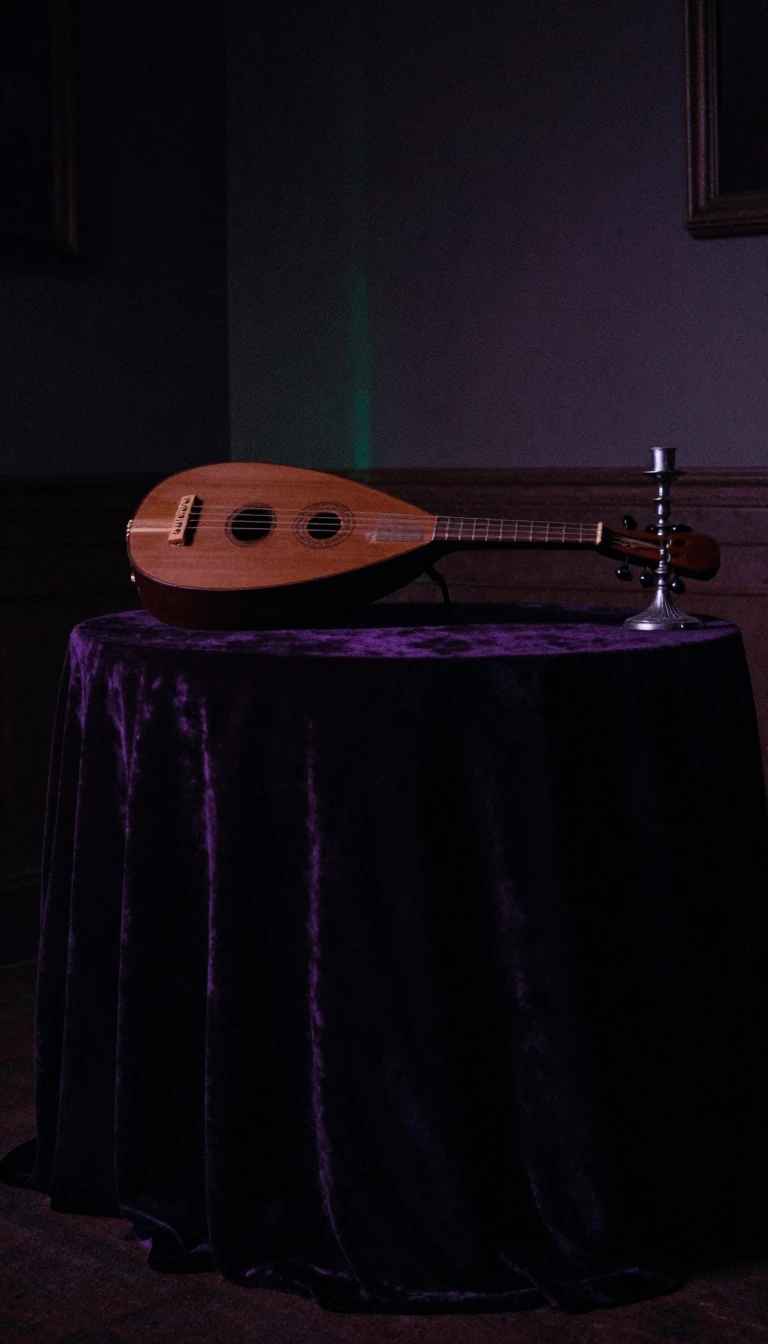 How a thirteenth-century theorist transformed music by letting notes define their own durationBefore the mid-thirteenth century, singers relied on complex, context-dependent rules to interpret rhythmic values from identical-looking notes. Franco of Cologne changed everythi…
 How Frank Popper traced the evolution of art from kinetic machines to virtual realityFrank Popper, a pioneering historian of art and technology, spent decades documenting how machines transformed human creativity. From the kinetic sculptures of the mid-twentieth c…
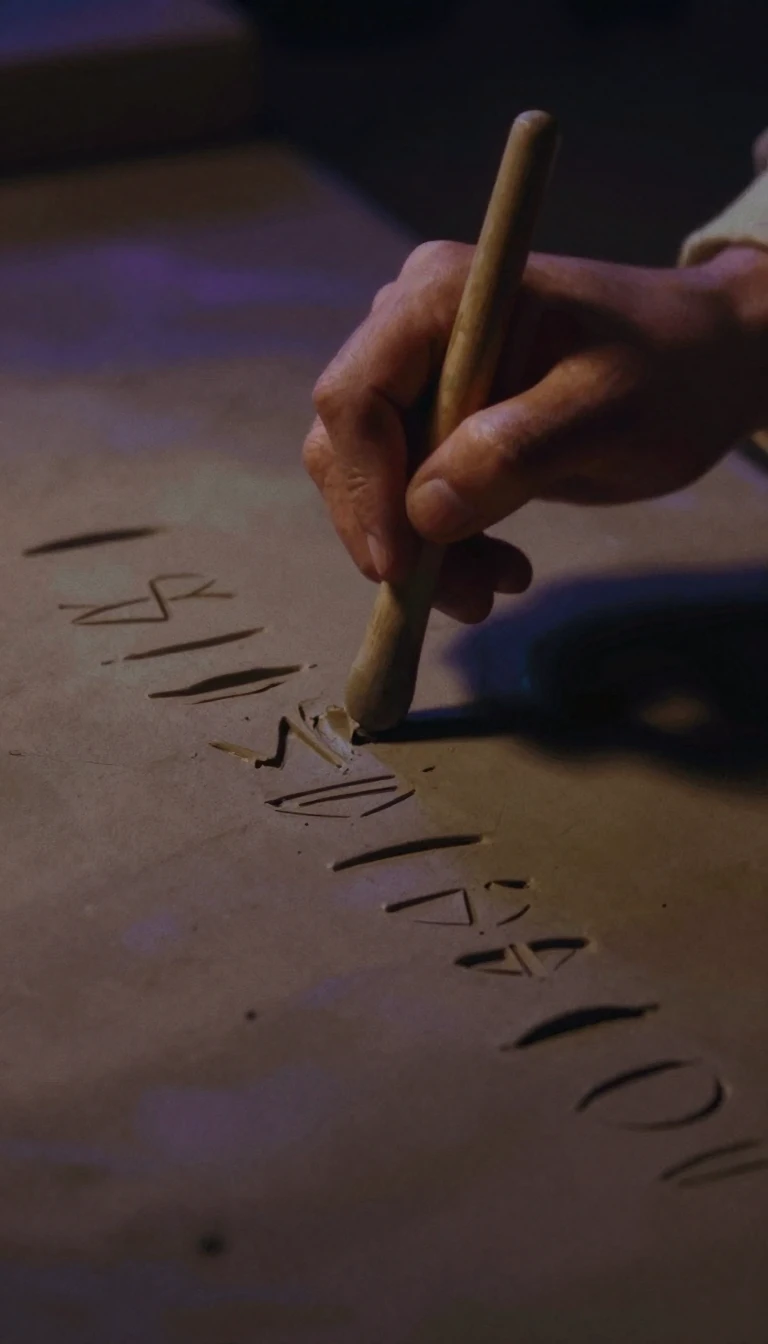 How one man turned the study of language into a rigorous scientific professionIn 1816, Franz Bopp published a monograph comparing the verb systems of Sanskrit, Greek, Latin, Persian, and Germanic. While previous scholars had noted linguistic similarities, B…
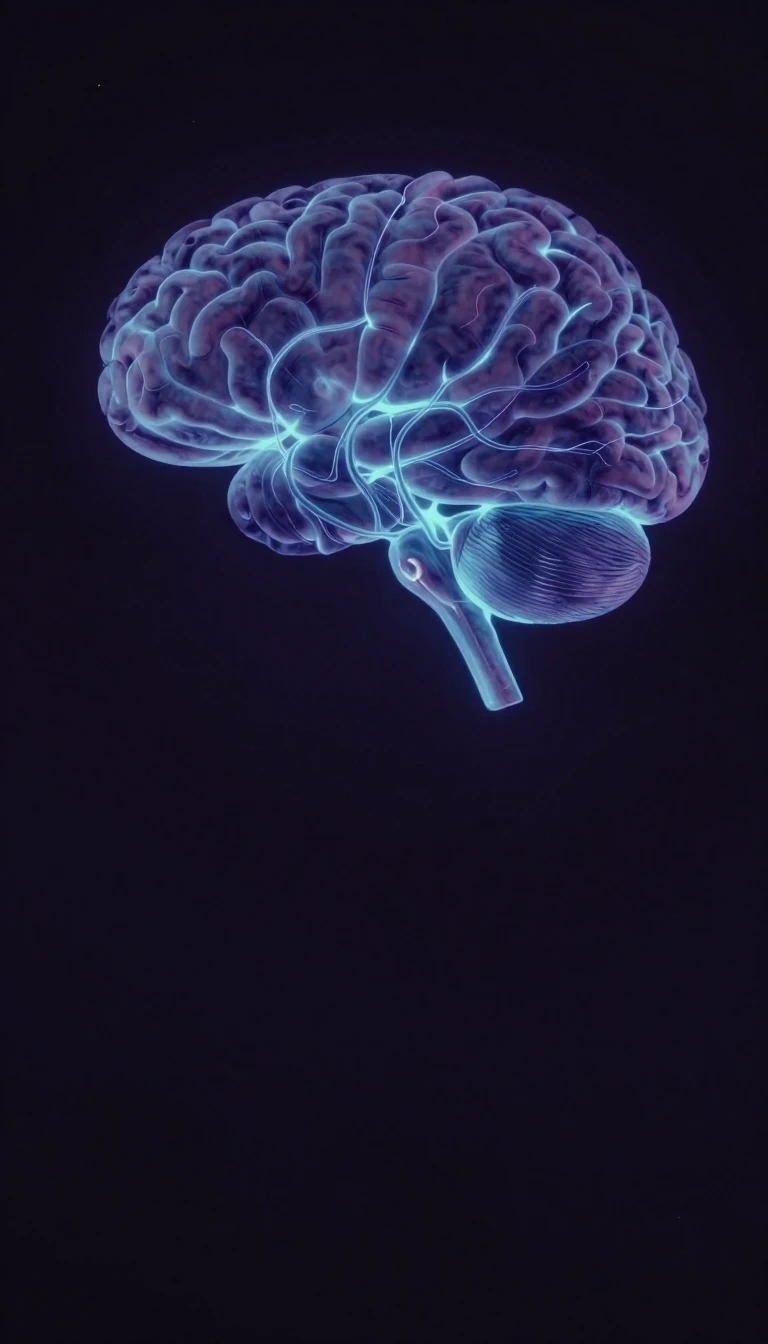 Was the father of phrenology a visionary scientist or a discredited buffoon?Franz Joseph Gall is often remembered as a charlatan who read personality traits from skull bumps. Yet, this 19th-century physician was a serious researcher whose pioneering ideas…