 Intellect Plus
Science
17,267 cards. Each one is a 40-second story with a five-minute read behind it. Page 182 of 288.
Subtopics: Acids and bases · Algebra · Alloys and ceramic compounds · Analysis · Applied mathematics · Atomic and molecular physics · Atoms · Basics · Biochemistry · Biochemistry and molecular biology · Biological processes and physiology · Biology · Biology and health sciences: General · Biology basics · Calculus and analysis · Cell biology · Cells · Chemical elements · Chemistry · Climate · Cold · Color · Computer scientists and programmers · Condensed matter physics · Discrete mathematics · Earth science · Electricity & magnetism · Electromagnetism · Elements · Entropy · Everyday Science Questions · Evolutionary biology · Famous equations · Famous experiments · Found by OrchestratorBot · Foundations · Functions · Future Frontier · Genetics and molecular biology · Geology · Geometry · Glass · Global Curiosity Questions · Heat · How Did the Dinosaurs Become Extinct? · How Things Work: Gas from Source to Supply · How Things Work: The Journey of Crude Oil · Human body & genes · Ice · Infinity · Inventors and engineers · Isotopes · Light · Magnetism · Materials · Mathematicians · Maths · Measurement · Mechanics · Microbiology · Minerals & crystals · Molecular compounds · Nature: How Long Can It Live? · Nuclear physics · Number theory · Optics & light · Organic compounds · Other · Particle physics · Physics · Physics basics · Pre-modern figures · Prime numbers & number theory · Probability · Proof · Pseudoscientists · Quantum · Quantum Biology · Reactions and synthesis · Relativity · Research methods · Researched · Salts and ions · Science basics · Scientific discoveries · Scientific instruments · Scientists, inventors and mathematicians · Separation processes · Social scientists · Stars · Statistics and probability · Theoretical computer science · Theory · Thermodynamics · Thermodynamics & heat · UK & Ireland: science · Units & measurement · Volcanoes · Water · Waves · Women in science
 Is your sugar-free snack secretly priming your blood for a dangerous clot?Xylitol is a popular sugar substitute found in keto-friendly snacks and sugar-free treats. While it avoids spiking glucose, recent research suggests it may trigger a hidden danger…
 How a failed attempt to explain nuclear forces became the bedrock of modern physicsIn 1953, Chen Ning Yang and Robert Mills sought to describe nuclear forces using gauge theory. Their work initially stalled because it predicted unphysical, massless particles. Ye…
 The yard was once a royal arm, a tax loophole, and a shrinking metal bar.Before it became a standardized international measurement, the yard was a chaotic relic of royal anatomy and merchant rebellion. From medieval kings using their own limbs as ruler…
 Why Young's modulus is the secret to predicting how materials bend, stretch, and breakYoung's modulus measures a material's stiffness, defining how much it resists deformation under tension or compression. While named after Thomas Young, the concept originated with…
 Yttrium barium copper oxide: The ceramic that broke the liquid nitrogen barrierYttrium barium copper oxide, or YBCO, is a superconducting ceramic that loses all electrical resistance at temperatures above the boiling point of liquid nitrogen. This discovery …
 How a simple magnetic field can split the light of an atom into piecesIn 1896, Pieter Zeeman discovered that applying a magnetic field to a light source causes its spectral lines to split. This phenomenon, now known as the Zeeman effect, provides a …
 Why the vacuum of space is never truly empty, even at absolute zeroClassical physics suggests that cooling matter to absolute zero should bring all motion to a halt. Quantum mechanics reveals the opposite: atoms and molecules retain a residual, j…
 Why the Zeroth Law is the essential foundation for every thermometer you useYou might assume temperature is an obvious physical fact, but it requires a specific mathematical rule to exist. The zeroth law of thermodynamics explains how thermal equilibrium …
 Zinc acetate is a versatile chemical compound with surprising industrial and medical applications.Beyond its role as a common food additive, zinc acetate serves as a critical catalyst in chemical manufacturing and a therapeutic agent for various human conditions. This white cr…
 Zinc chloride is a versatile, highly corrosive salt that shapes modern industrial chemistry.This white, odorless solid is far more than a simple chemical compound. Highly deliquescent and intensely soluble, zinc chloride acts as a powerful Lewis acid in laboratories and …
- Zinc sulfate: The colorless crystal that shapes everything from rayon to your morning brew.Often overlooked, zinc sulfate is a versatile inorganic compound found in nature as minerals like goslarite. Whether it is stabilizing yeast in high-gravity brewing, fortifying an…
 Zinc sulfide is the secret behind everything from glow-in-the-dark dials to infrared optics.This versatile compound, found in nature as the mineral sphalerite, is far more than a simple pigment. By adding trace amounts of specific elements, scientists transform this yell…
 Meet the zwitterion: a molecule that balances opposing electrical charges within itselfA zwitterion is a unique chemical entity that carries both positive and negative charges simultaneously. While it acts as a single, neutral molecule, its internal structure is a t…
 Why a famous physics paper was named after the first three Greek lettersIn 1948, a landmark paper on the origin of elements was published with a whimsical author list: Alpher, Bethe, and Gamow. While the work laid the foundation for understanding the …
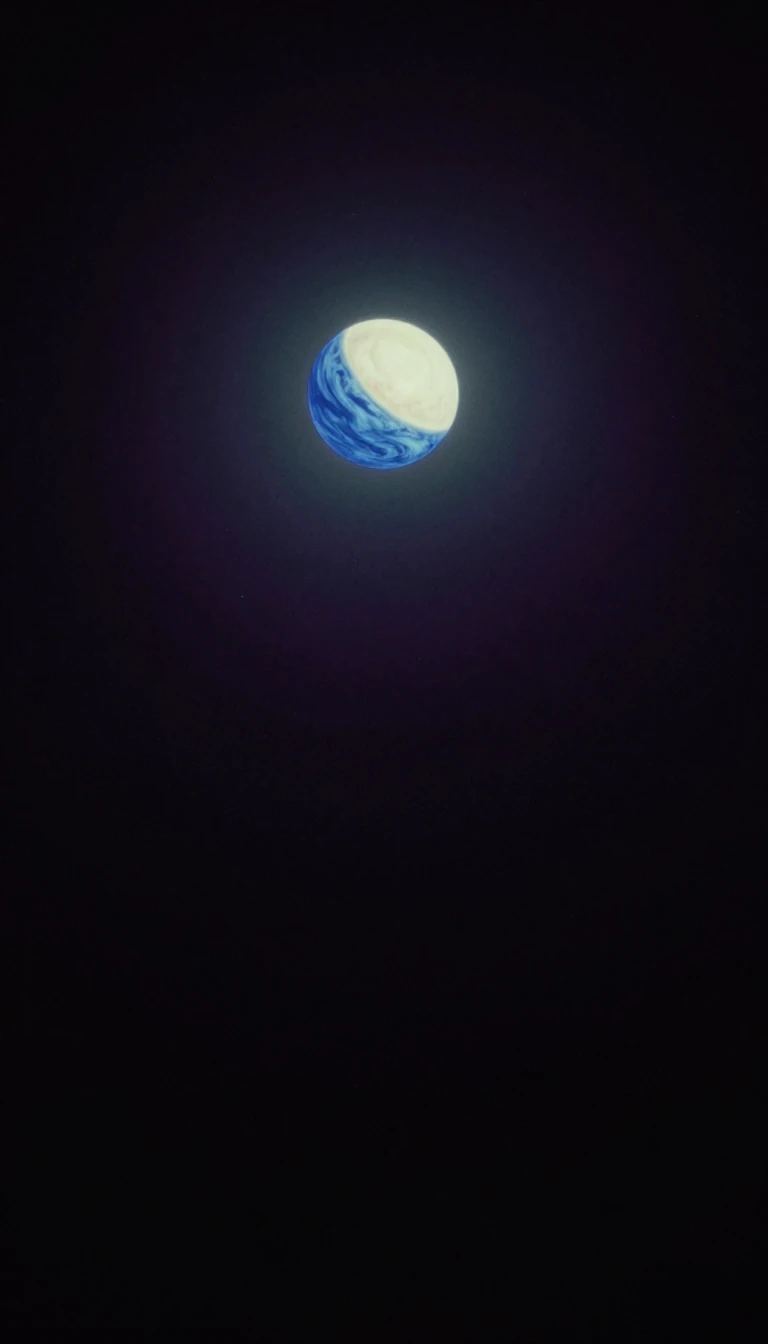 Why the sky turns deep blue long after the sun has vanished from sightThe blue hour is a fleeting twilight phenomenon that photographers and artists prize for its tranquil, soft illumination. While many believe it is caused by simple light scatterin…
 Why the world’s most precise measurements are managed from a pavilion near ParisThe International Bureau of Weights and Measures ensures global consistency in everything from atomic time to chemical standards. Born from 19th-century geodetic necessity, this i…
- Why the direction of prayer for over a billion people is a mathematical puzzleFor Muslims, the qibla—the direction toward the Kaaba in Mecca—is a daily necessity for prayer. While it seems simple, calculating this orientation from thousands of miles away re…
 How a Croatian schoolteacher discovered the boundary between Earth's crust and its mantleIn 1909, a massive earthquake near Zagreb provided the data Andrija Mohorovičić needed to change geology forever. By analyzing how seismic waves traveled through the planet, he id…
 How one scientist’s obsession with air samples revealed the planet’s warming trajectoryCharles David Keeling transformed climate science by developing a precise method to measure atmospheric carbon dioxide. His work at Mauna Loa produced the Keeling Curve, a definit…
 Why the man who defined earthquake intensity hated the idea of predicting themCharles Richter revolutionized seismology by replacing subjective damage reports with an objective, logarithmic scale. Yet, the man whose name became synonymous with measuring the…
 A failed diplomat became the father of catalysis and the master of crystalsEilhard Mitscherlich intended to study Persian and join a diplomatic mission to the East, but a political collapse changed his path. Instead, he became a titan of 19th-century che…
 Why Friedrich Mohs abandoned chemistry to rank minerals by their physical scratch resistanceBefore Friedrich Mohs, scientists classified minerals primarily by their chemical makeup. Mohs challenged this tradition by focusing on physical traits, specifically hardness. By …
 The 18th-century scientist who climbed mountains to measure the secrets of the EarthHorace Bénédict de Saussure was a polymath who treated the Alps as his laboratory. From inventing the first solar oven to pioneering modern meteorology, he spent his life measurin…
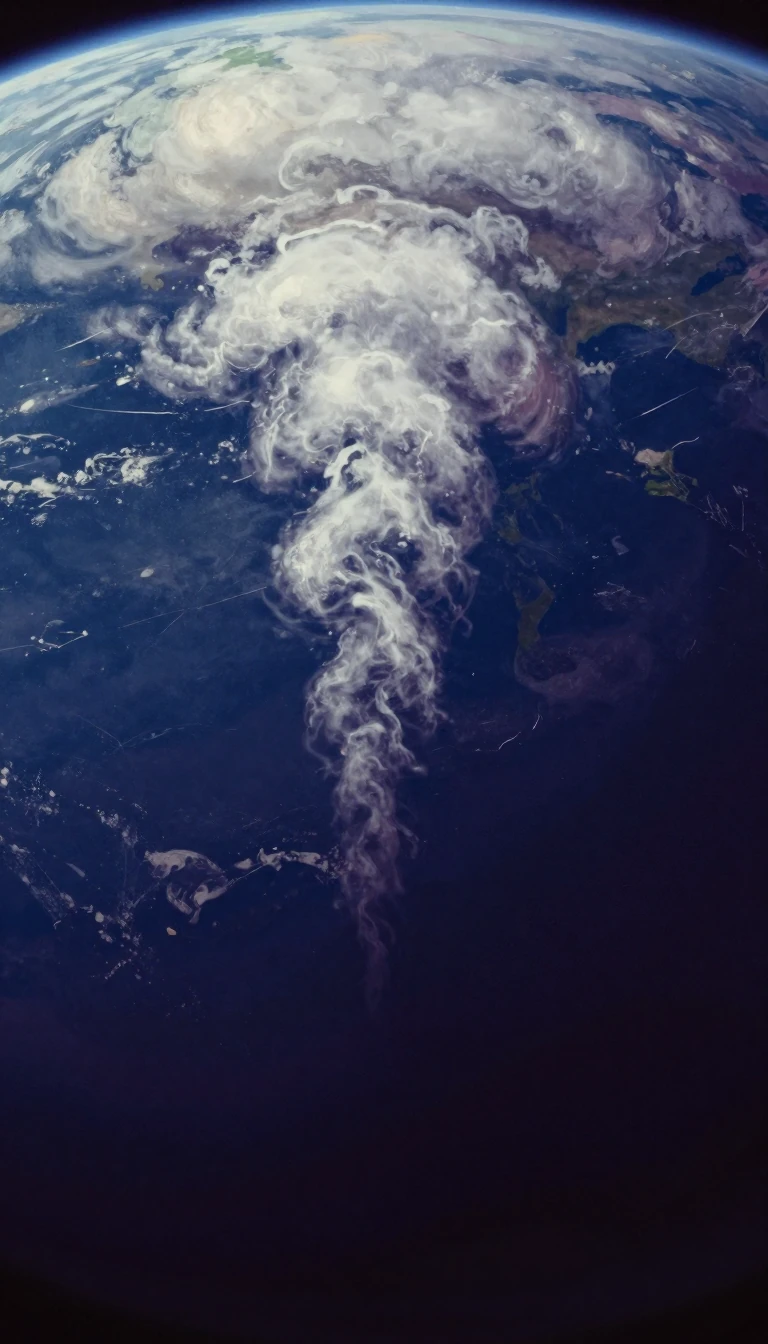 How one man mapped the ocean floor and changed our understanding of EarthMaurice Doc Ewing was a titan of geophysics who transformed how we see the deep sea. From pioneering seismic studies to discovering the SOFAR channel, his relentless curiosity led…
 How a Soviet scientist first predicted the melting of our polar ice capsMikhail Budyko transformed climatology from a qualitative field into a rigorous, quantitative science. By modeling the Earth's heat balance, he accurately forecasted global temper…
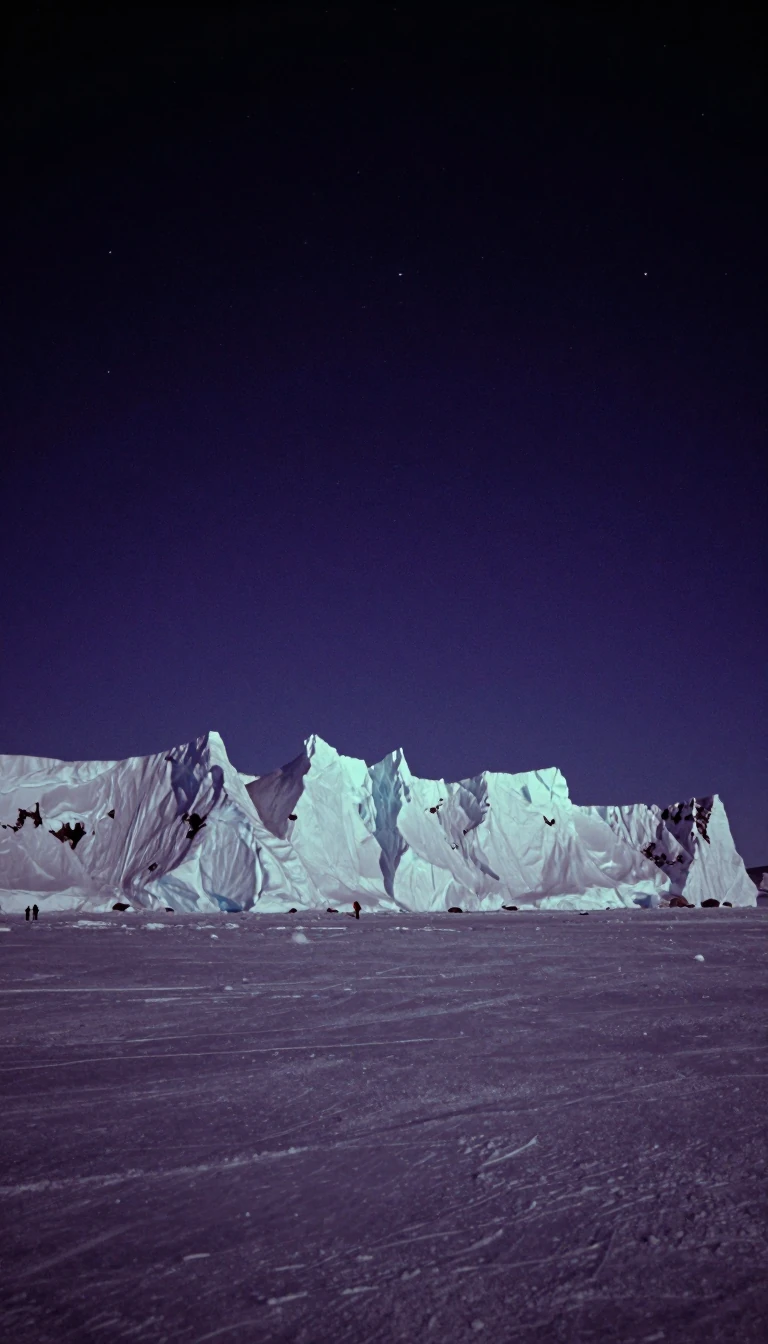 Can the subtle wobbles of Earth’s orbit explain the mystery of the ice ages?Milutin Milanković, a Serbian engineer turned astronomer, proposed that slow, predictable changes in Earth's orbit redistribute sunlight enough to trigger global ice ages. While h…
 How a 17th-century anatomist transformed our understanding of the Earth beneath our feetNicolas Steno began his career dissecting shark heads and questioning the origins of tears. His rigorous observational approach led him to realize that fossils were once-living or…
 How Thomas Chrowder Chamberlin revolutionized science by refusing to pick a favorite theoryGeologist Thomas Chrowder Chamberlin transformed modern scientific inquiry by championing the method of multiple working hypotheses. Rather than clinging to a single ruling theory…
 How a Norwegian mineralogist decoded the chemical architecture of the entire planetVictor Goldschmidt transformed geology from a descriptive field into a rigorous science. By applying thermodynamic principles to minerals, he unlocked the rules governing how elem…
 How a Norwegian physicist transformed weather forecasting from guesswork into a mathematical scienceVilhelm Bjerknes did not just study the sky; he decoded it. By applying fluid dynamics to the atmosphere, he created the primitive equations that underpin modern climate modeling.…
 How Aage Bohr solved the mystery of the non-spherical atomic nucleusAage Bohr, son of the legendary Niels Bohr, carved his own path in physics by challenging how we visualize the heart of the atom. While early models treated nuclei as simple, rigi…
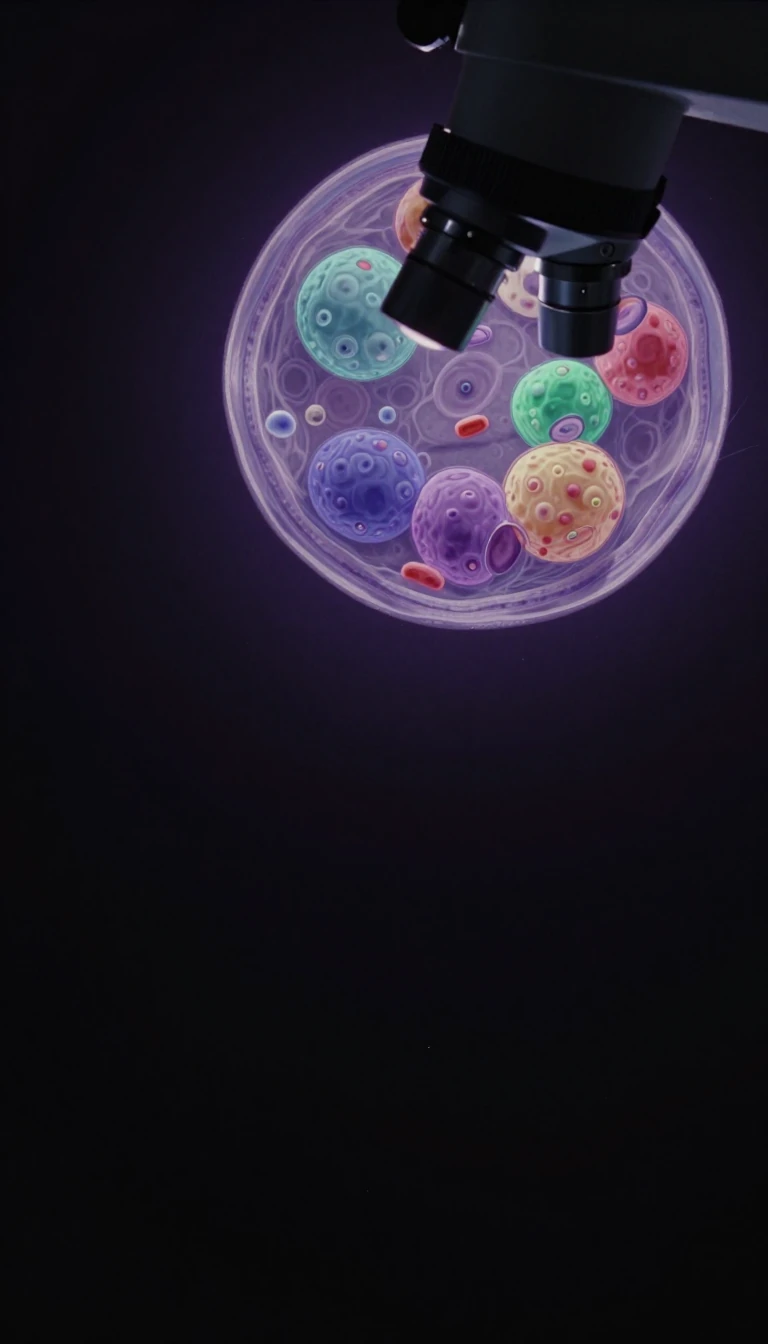 How Aaron Klug transformed our view of life by turning flat images into 3DAaron Klug, a Nobel laureate in chemistry, revolutionized structural biology by developing crystallographic electron microscopy. By combining two-dimensional images taken from var…
 The medieval astronomer who first spotted a galaxy beyond our own Milky WayIn 964 AD, Persian astronomer Abd al-Rahman al-Sufi documented a faint, nebulous smear in the constellation of Andromeda. While he described it simply as a little cloud, he had in…
- The Egyptian jurist who reconciled Islamic law with modern European legal systemsAbd El-Razzak El-Sanhuri was the architect of the 1948 Egyptian Civil Code, a monumental legal framework that remains a cornerstone of Arab jurisprudence. By blending Islamic prin…
 How a Pakistani physicist unified the fundamental forces of the universeAbdus Salam was the first Muslim Nobel laureate in science, a brilliant theorist who bridged the gap between the weak nuclear force and electromagnetism. Beyond his Nobel-winning …
 The exiled mathematician who predicted his own death and mastered the laws of chanceAbraham de Moivre was a brilliant Huguenot refugee who spent his life in London, tutoring in coffee houses to survive. Despite his poverty, he pioneered probability theory, discov…
 Did a sixteenth-century mapmaker predict the movement of the continents centuries before science?Abraham Ortelius, the visionary behind the first modern atlas, noticed something peculiar about the world map. By observing the coastlines of Europe, Africa, and the Americas, he …
 How an Egyptian calculator bridged the gap between ancient algebra and modern European mathematics.Abu Kamil, a 10th-century Egyptian mathematician, was the vital link between the pioneers of algebra and the European Renaissance. By expanding on the work of Al-Khwarizmi and int…
- How Ada Yonath overcame scientific skepticism to map the machinery of lifeFor decades, the international scientific community dismissed Ada Yonath’s pursuit of ribosomal crystallography as a fool’s errand. Yet, by pioneering cryo bio-crystallography, sh…
 Did a Habsburg court librarian invent the modern study of human cultures?Adam František Kollár, a polyglot advisor to Empress Maria Theresa, coined the term ethnology in 1783. While he served as a centralist political strategist, his scholarly work lai…
 Adi Shamir: The Cryptographer Who Proved That Even Your Laptop's Sound Can Betray YouFrom co-inventing the RSA algorithm that secures the internet to extracting encryption keys by listening to the hum of a computer, Adi Shamir has spent decades exposing the hidden…
 How a boy's obsession with indigo dye changed the face of modern chemistryAdolf von Baeyer began his lifelong pursuit of chemical synthesis at age thirteen with a simple chunk of indigo. He would go on to reshape organic chemistry, creating the nomencla…
- Did this medieval mathematician invent the building blocks of modern algebra?Al-Karaji, an Islamic scholar active in 11th-century Baghdad, broke from tradition by stripping geometry out of algebraic operations. By treating unknowns like known numbers, he p…
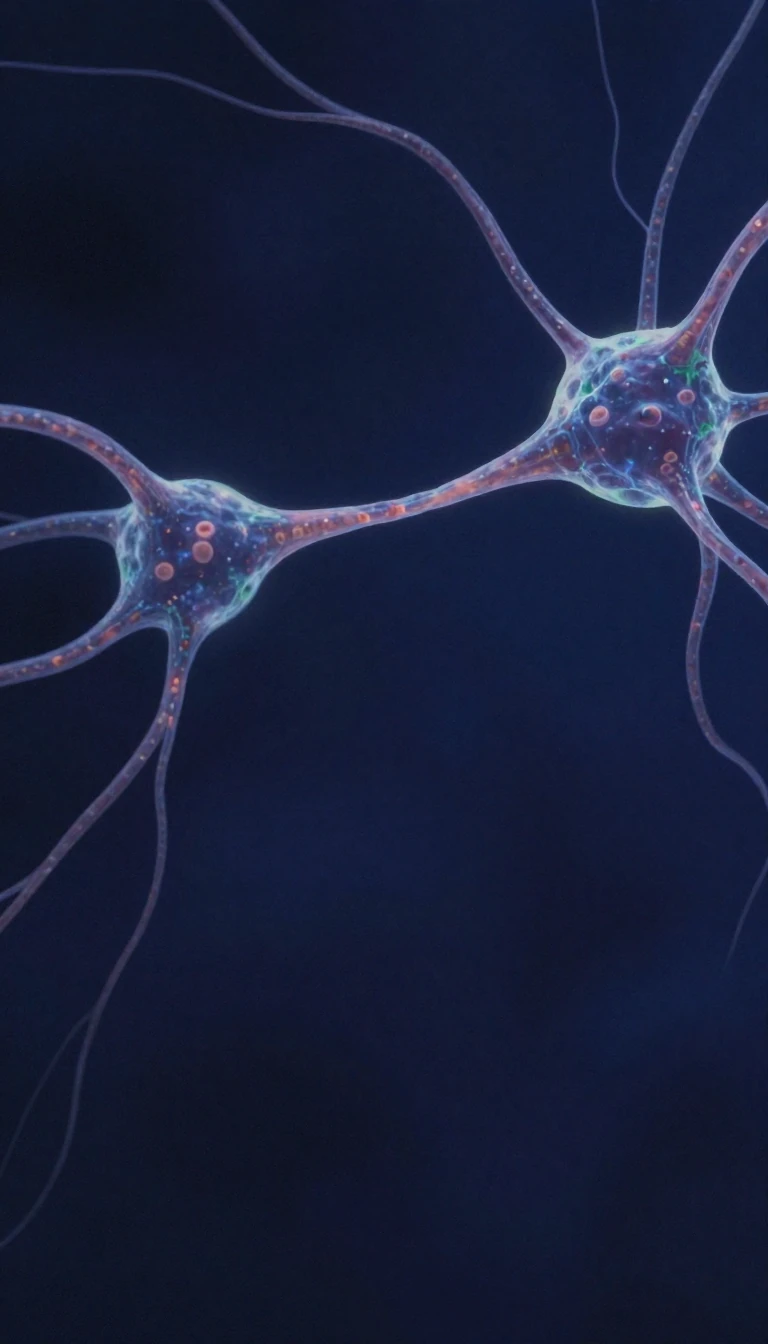 How a squid's giant nerve axon revealed the secret language of the human brainAlan Hodgkin transformed our understanding of the nervous system by peering inside a single squid axon. His work, which earned him a Nobel Prize, uncovered the electrical dance of…
 The Italian refugee who became the father of modern international law in England.Alberico Gentili fled the Inquisition to become a Regius Professor at Oxford and a trusted advisor to Queen Elizabeth I. Though his fame was later eclipsed by Hugo Grotius, this j…
- How a country boy’s childhood curiosity led to the birth of modern spintronicsAlbert Fert spent his early years on a farm, far from the world of physics. Yet, his later doctoral research into electron mobility in ferromagnetic metals laid the groundwork for…
 How one man classified thousands of species and redefined the reptile family treeAlbert Günther was a titan of Victorian zoology. From his base at the British Museum, he described over 2,000 species of fish and reptiles, fundamentally changing our understandin…
 How a chemist’s accidental bicycle ride changed our understanding of the human mindIn 1943, Swiss chemist Albert Hofmann synthesized a compound intended to stimulate respiration. Instead, he stumbled upon a powerful psychedelic experience. His subsequent intenti…
 Albert O. Hirschman: The Economist Who Found Hope in Unbalanced Growth and Human ChoiceFrom rescuing refugees in World War II to advising Latin American leaders, Albert O. Hirschman was a polymath who defied simple categorization. He challenged the rigid models of h…
 Why Nobel Prize winner Albert Szent-Györgyi believed science needs more scientific dissentersAlbert Szent-Györgyi, the man who isolated vitamin C, famously divided scientists into two camps: the Apollonians, who perfect established paths, and the Dionysians, who explore t…
 How Albion Woodbury Small transformed sociology from speculative philosophy into a rigorous academic disciplineIn 1892, Albion Woodbury Small established the first independent sociology department in the United States at the University of Chicago. By professionalizing the field, he moved i…
- Albrecht von Haller: The polymath who defined modern physiology and mapped the AlpsKnown as the father of modern physiology, Albrecht von Haller was a Swiss prodigy who mastered medicine, botany, and poetry. He pioneered the distinction between nerve sensibility…
 A chemistry set accident and a lab eureka moment changed forensic science foreverAlec Jeffreys transformed how we identify individuals by discovering that human DNA contains unique, inherited variations. From a childhood fascination with chemistry to a breakth…
- Aleksandr Lyapunov created the modern framework for understanding how dynamical systems maintain their stability.A Russian mathematician who preferred working alone through the night, Aleksandr Lyapunov transformed our grasp of motion. By developing rigorous methods to analyze the stability …
- Why Soviet psychologist Aleksei Leontiev rejected the simple stimulus-response model of human behaviorAleksei Leontiev transformed psychology by arguing that human life is defined by active engagement with the world, not just passive reactions to stimuli. As a founder of activity …
 How a Brooklyn chemist transformed crime scene investigation into a rigorous scientific disciplineBefore the twentieth century, poisoners often escaped justice because medical examiners lacked the tools to detect toxins. Alexander Gettler changed everything. Working from a cra…
- How an Australian-born physicist helped spark the global revolution in laser technologyBorn in Australia to parents fleeing Tsarist repression, Alexander Prokhorov returned to Russia to become a titan of quantum electronics. His fundamental research into coherent ra…
- The chemist who synthesized over 200 psychedelics and became a legend of countercultureAlexander Shulgin was a brilliant biochemist who turned his home lab into a hub for psychedelic discovery. By synthesizing hundreds of compounds and testing them on himself, he un…
 How a Soviet-born linguist reshaped our understanding of ancient East Asian language familiesAlexander Vovin was a prolific philologist whose career spanned from the Soviet Union to Paris. Initially a proponent of the Altaic hypothesis, he famously pivoted to become one o…
 Every society gets the kind of criminal it deserves, argued Alexandre Lacassagne.Alexandre Lacassagne was the preeminent French criminologist of the late 19th century, challenging the era's obsession with biological determinism. By shifting the focus from the …