 Intellect Plus
Science
17,267 cards. Each one is a 40-second story with a five-minute read behind it. Page 187 of 288.
Subtopics: Acids and bases · Algebra · Alloys and ceramic compounds · Analysis · Applied mathematics · Atomic and molecular physics · Atoms · Basics · Biochemistry · Biochemistry and molecular biology · Biological processes and physiology · Biology · Biology and health sciences: General · Biology basics · Calculus and analysis · Cell biology · Cells · Chemical elements · Chemistry · Climate · Cold · Color · Computer scientists and programmers · Condensed matter physics · Discrete mathematics · Earth science · Electricity & magnetism · Electromagnetism · Elements · Entropy · Everyday Science Questions · Evolutionary biology · Famous equations · Famous experiments · Found by OrchestratorBot · Foundations · Functions · Future Frontier · Genetics and molecular biology · Geology · Geometry · Glass · Global Curiosity Questions · Heat · How Did the Dinosaurs Become Extinct? · How Things Work: Gas from Source to Supply · How Things Work: The Journey of Crude Oil · Human body & genes · Ice · Infinity · Inventors and engineers · Isotopes · Light · Magnetism · Materials · Mathematicians · Maths · Measurement · Mechanics · Microbiology · Minerals & crystals · Molecular compounds · Nature: How Long Can It Live? · Nuclear physics · Number theory · Optics & light · Organic compounds · Other · Particle physics · Physics · Physics basics · Pre-modern figures · Prime numbers & number theory · Probability · Proof · Pseudoscientists · Quantum · Quantum Biology · Reactions and synthesis · Relativity · Research methods · Researched · Salts and ions · Science basics · Scientific discoveries · Scientific instruments · Scientists, inventors and mathematicians · Separation processes · Social scientists · Stars · Statistics and probability · Theoretical computer science · Theory · Thermodynamics · Thermodynamics & heat · UK & Ireland: science · Units & measurement · Volcanoes · Water · Waves · Women in science
 How a physicist learned to work at midnight to see the world's smallest structuresHeinrich Rohrer, a Nobel laureate, once measured superconductors so sensitive to vibration that he had to conduct his research after midnight when the town was asleep. This habit …
 How a German designer’s forgotten innovations shaped the evolution of twentieth-century military firearmsHeinrich Vollmer was a prolific small-arms designer whose work spanned from World War I to the mid-1930s. Though his name is rarely celebrated today, his technical contributions—i…
 How a Viennese refugee became the unlikely architect of modern self psychologyHeinz Kohut was once known as Mr. Psychoanalysis, a staunch defender of Freudian tradition. Yet, behind his polished exterior, he was quietly developing a revolutionary approach t…
 How a chemistry graduate became the most influential voice in American poetry criticism.Helen Vendler began her academic life studying chemistry under parental pressure, yet she evolved into a towering figure of literary analysis. By prioritizing lived experience ove…
 How a wartime anti-aircraft system helped invent the modern digital ageHendrik Wade Bode was a brilliant engineer whose work on WWII artillery control systems laid the groundwork for the Information Age. By solving complex problems in signal processi…
 Henri Cartan helped rebuild French mathematics after the catastrophic losses of the First World War.As a founding member of the elusive Bourbaki group, Henri Cartan sought to renew French science following a generational vacuum. His career spanned nearly a century, marked by int…
 How Henri Lebesgue revolutionized the way we measure the area under a curveFor centuries, mathematicians struggled to define integration rigorously. Henri Lebesgue solved this by shifting the focus from the domain to the codomain. By inventing a new conc…
 How Henri Moissan Tamed the Most Dangerous Element in the Periodic TableFluorine is the most reactive element in existence, a chemical terror that defied scientists for over 150 years. In 1886, French chemist Henri Moissan finally isolated the elusive…
 How a Puritan mathematician transformed the way we calculate the modern worldHenry Briggs, a 17th-century English professor, took John Napier's cumbersome early logarithms and refined them into the base-10 system we still use today. His tireless work on ma…
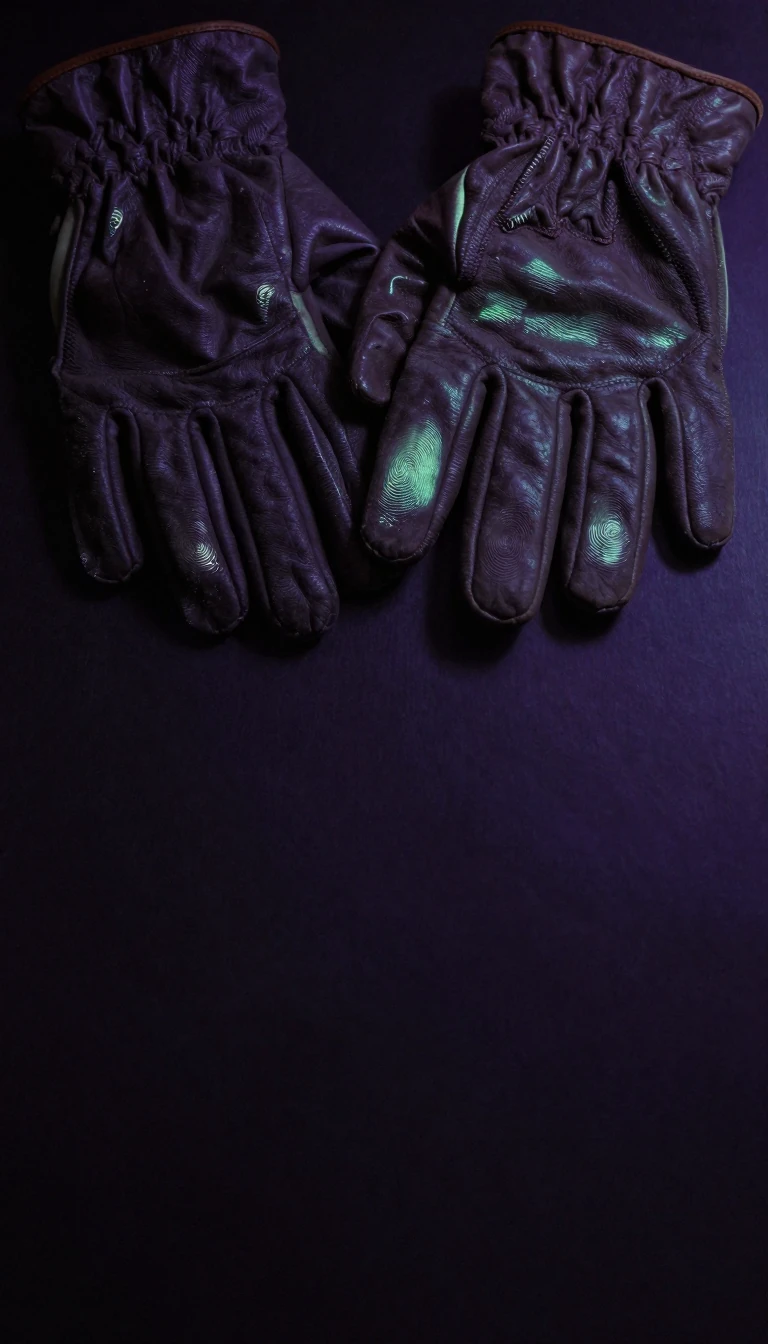 Did a Scottish medical missionary accidentally invent the modern science of forensic fingerprinting?Henry Faulds was a doctor in Japan when he noticed unique ridge patterns on ancient pottery and human fingertips. He used this insight to exonerate an innocent man, yet spent his …
 How Henry Louis Gates Jr. redefined the African American literary tradition through ancestral storytellingHenry Louis Gates Jr. transformed the study of Black literature by uncovering lost voices and introducing the concept of signifyin’. Beyond his scholarly rigor, he has brought anc…
 Was this self-taught Australian inventor the true pioneer of television and portable radio?Born in a tent on the Ballarat goldfields, Henry Sutton was a prolific polymath who designed early telephones, automobiles, and even a mechanical television system. Despite his in…
 How Henry Taube Discovered Molecules Build Bridges Instead of Just Swapping ElectronsFor decades, chemists assumed molecules simply exchanged electrons during reactions. Henry Taube proved otherwise. By identifying a hidden chemical bridge, he transformed our unde…
 How a Nobel-winning physicist helped prove that protons are not fundamental particlesHenry Way Kendall was a man of extremes, balancing high-stakes particle physics with dangerous mountaineering. His collaboration with Jerome Friedman and Richard Taylor at SLAC re…
 How a bored student in post-war Germany revolutionized modern high-speed electronicsHerbert Kroemer was a self-described disruptive student who struggled to be bored gracefully. His academic rebellion led him to theoretical physics, where he pioneered semiconduct…
 The economist who ordered his own life's work destroyed before he diedHermann Heinrich Gossen was a pioneer of marginal utility, yet his 1854 masterpiece was so thoroughly ignored that he attempted to erase it from history. Decades later, the book w…
 Hermann Staudinger proved that polymers are long chains, not just clusters of small molecules.For years, the scientific establishment mocked the idea that large molecules existed. They insisted that substances like rubber were merely loose aggregates of tiny particles. Her…
 How a Japanese physicist predicted a subatomic particle before anyone had ever seen oneIn 1935, Hideki Yukawa proposed a radical theory of nuclear forces that required the existence of a brand-new particle. Though his initial prediction was complicated by the discov…
 How a student's three years of failure led to the invention of blue LEDs.Hiroshi Amano spent years struggling to grow high-quality crystals for a revolutionary light source. Working in a lab with limited funding, he eventually discovered a breakthrough…
 How a nineteenth-century gunsmith revolutionized the mechanics of modern repeating firearmsHorace Smith was more than a namesake for a famous brand. From inventing explosive bullets for whaling to pioneering the first repeating rifle, Smith spent his life refining the m…
 A childhood fascination with building blocks led to a Nobel Prize in physics.Horst Ludwig Störmer, a 1998 Nobel laureate, spent his youth constructing elaborate cardboard models and intricate race tracks. This early obsession with structural design eventua…
 Why do quarks act like free particles when they are squeezed together?In 1973, physicist Hugh David Politzer discovered a counterintuitive phenomenon called asymptotic freedom. He found that the strong nuclear force, which binds quarks inside proton…
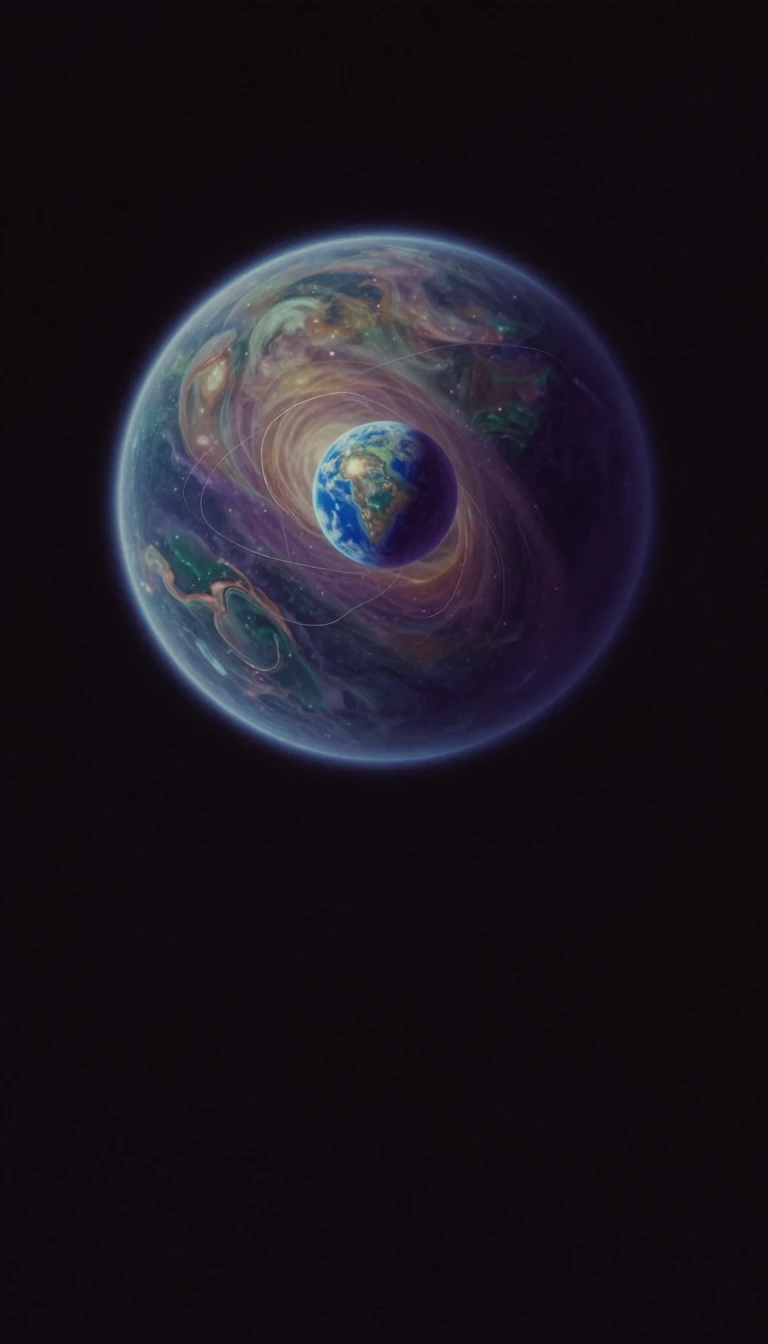
 Did a Princeton drinking session accidentally invent a multiverse of infinite branching realities?In 1954, a graduate student named Hugh Everett III proposed that quantum mechanics does not force reality to choose a single outcome. Instead, he argued that every possible event …
 Hugo de Vries: The Botanist Who Redefined Evolution and Coined the Term MutationHugo de Vries was a pioneering Dutch geneticist who fundamentally altered our understanding of heredity. While he famously rediscovered Mendelian laws, he is best known for his mu…
 Why the father of applied psychology believed your memory is fundamentally unreliableHugo Münsterberg, a pioneer of industrial and forensic psychology, argued that human observation is inherently flawed. By applying experimental rigor to legal and business setting…
 How Hugo Riemann turned the intuitive feeling of music into a rigorous mathematical scienceHugo Riemann was the architect of modern musicology, transforming how we understand harmony and rhythm. By blending philosophy, psychology, and acoustics, he created a framework t…
 How one Nestorian scholar unlocked the wisdom of ancient Greece for the Islamic worldBorn in 808, Hunayn ibn Ishaq became the most prolific translator of his era. By mastering Arabic, Syriac, Greek, and Persian, he transformed the House of Wisdom into a bridge bet…
 Can a psychiatrist prove reincarnation through the memories of children?For four decades, Ian Stevenson investigated thousands of children who claimed to recall previous lives. While he never claimed to have solved the mystery of death, he argued that…
- Did a tenth-century mathematician discover the law of refraction before Snell?Long before the seventeenth-century Dutch astronomer Willebrord Snellius, a mathematician in the Buyid court of Baghdad was already mastering the physics of light. Ibn Sahl, activ…
- The chemist who predicted nuclear fission but was ignored by the scientific establishmentIda Noddack was a brilliant German chemist who co-discovered rhenium and first proposed the concept of nuclear fission. Despite her groundbreaking insights, her work was frequentl…
- How a Soviet physicist explained why particles glow when they break the light barrierIlya Frank helped solve a mystery: why do charged particles emit a blue glow when moving through water? By proving these particles travel faster than light does in that medium, he…
 Did ancient catastrophes rewrite history, or was it just a case of bad science?Immanuel Velikovsky, a physician turned writer, claimed that electromagnetic forces caused planets to collide in antiquity, triggering global upheavals. While his books became bes…
 How a physicist revolutionized digital image compression by rethinking the geometry of curvesIngrid Daubechies began her career in theoretical physics, but her fascination with how things are built led her to a breakthrough in mathematics. By constructing compactly suppor…
 How a teenage prodigy redefined the boundaries of competitive mathematics and random matrix theoryBorn in 1976, Ioana Dumitriu emerged as a mathematical force early, winning national contests by age 11. By 19, she was already tackling graduate-level coursework at NYU. Her care…
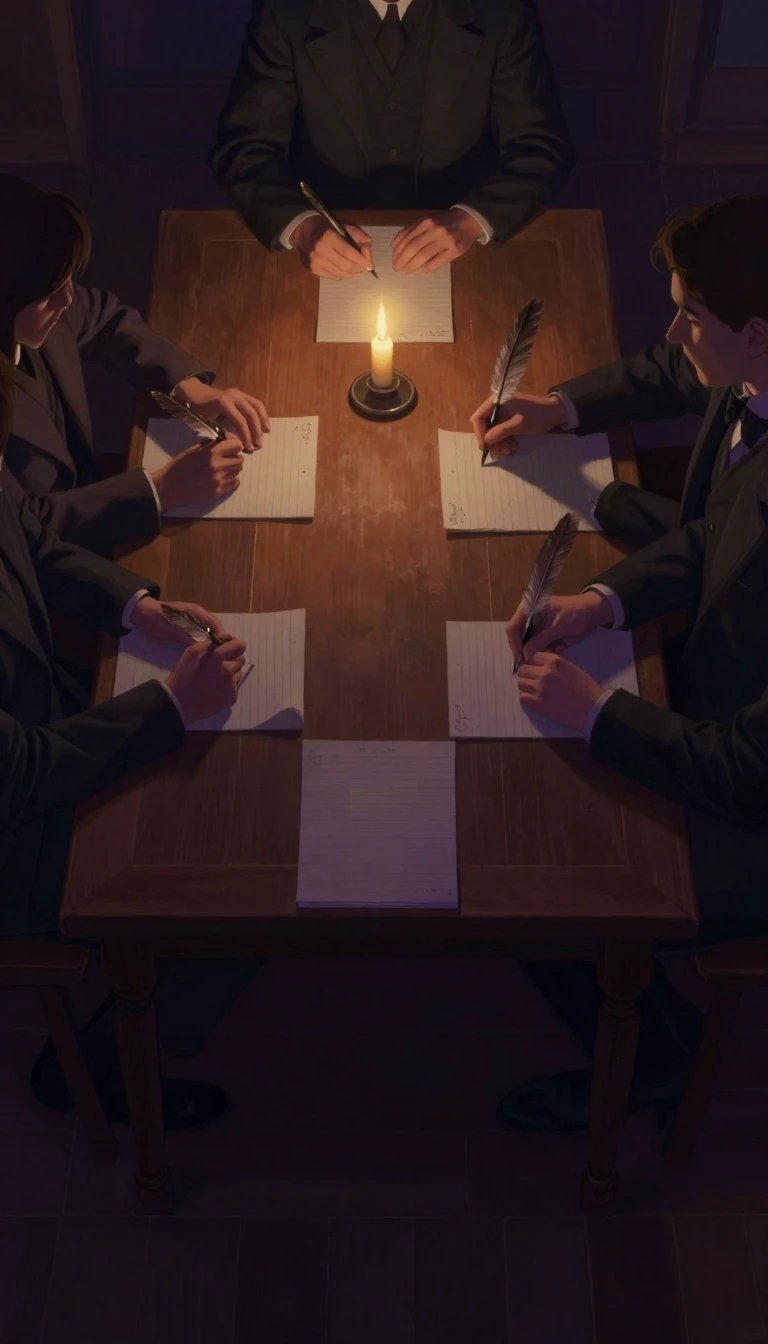 The stonemason who invented ancient Druidic traditions to reshape Welsh national identityEdward Williams, known as Iolo Morganwg, was a celebrated antiquarian whose legacy is built on a foundation of elaborate forgeries. By inventing ancient Druidic rites and manuscri…
 Irawati Karve was a pioneering Indian sociologist whose legacy remains complex and debated today.As India's first female sociologist and anthropologist, Irawati Karve bridged classical Indology with physical anthropology. Despite her prolific output and wide-ranging intellect…
 Are human social behaviors innate relics of our hunter-gatherer past?Austrian ethologist Irenäus Eibl-Eibesfeldt pioneered human ethology by applying animal behavior studies to our own species. By filming diverse cultures over forty years, he ident…
 How a persistent materials scientist finally unlocked the secret to the blue LEDFor decades, the blue light-emitting diode was considered an impossible dream. Isamu Akasaki spent his career methodically overcoming the material limitations of gallium nitride. …
- How a physicist's quest to measure atomic nuclei changed modern medicine foreverIsidor Rabi invented a precise resonance method to probe the magnetic properties of atomic nuclei. While his 1944 Nobel-winning work was intended for fundamental physics, it becam…
 Was this celebrated naturalist a pioneer of science or a master of the hoax?Ivan T. Sanderson was a Cambridge-educated zoologist who became a household name on 1950s television. Yet, he also coined the term cryptozoology and championed bizarre theories ab…
 How a mechanical engineer proved that electrons can defy the laws of classical physicsIvar Giaever began his career as a mechanical engineer, yet he ended up winning the 1973 Nobel Prize in Physics. By demonstrating that electrons could tunnel through barriers they…
- How a PR pioneer invented modern crisis management and the art of daily focus.Ivy Lee transformed corporate image-making by shifting from secrecy to transparency. Beyond his work for the Rockefellers and railroads, he left a lasting mark on productivity wit…
 The psychologist who dreamt of the internet before the hardware even existedJ. C. R. Licklider was not an engineer, yet he is the father of the modern internet. By shifting the focus from machines that calculate to systems that augment human intelligence,…
- How a self-described poor memorizer changed our understanding of matter and phase transitionsJ. Michael Kosterlitz, a Nobel laureate who once struggled with chemistry due to color blindness and a limited memory, revolutionized physics. By focusing on logical deduction rat…
 How a Hungarian officer created a strange new universe from nothingFor two millennia, mathematicians were trapped by Euclid's parallel postulate, a rule they desperately tried to prove but could never escape. János Bolyai broke the cycle, indepen…
 Was the Buddha’s personal physician a real historical figure or a legendary medical archetype?Jīvaka Komārabhacca, the legendary physician to the Buddha and King Bimbisāra, remains a central figure in Asian medical traditions. While texts describe him performing miraculous…
- Why Jack Halberstam argues that failure is a productive tool for social critiqueJack Halberstam, a prominent academic, challenges traditional notions of success and gender. By analyzing popular culture—from Pixar films to Lady Gaga—he explores how failure and…
 How a refugee from Nazi Germany changed our understanding of the subatomic worldJack Steinberger fled Germany as a teenager, arriving in America with nothing. He eventually became a Nobel-winning physicist, helping reveal the hidden structure of matter. His j…
 How a French mathematician survived the siege of Paris and conquered prime numbersJacques Hadamard was a mathematical giant who survived the desperate famine of the 1870 siege of Paris by eating elephant meat. He later transformed mathematics, proving the prime…
- Can a machine-like cell make rational choices, or is it just blind chemistry?Jacques Monod, a Nobel-winning biochemist and French Resistance hero, argued that life is built on a paradox. While our biological components are governed by rigid, unthinking che…
- The physicist who pioneered radio technology but refused to profit from his geniusJagadish Chandra Bose was a visionary scientist who laid the groundwork for modern wireless communication and solid-state electronics. Despite his groundbreaking inventions, he fa…
 Two men named James Cronin: one explored subatomic symmetry, the other fights cancer cells.The name James Cronin belongs to two distinct figures in science. One is a Nobel-winning physicist who shattered our understanding of time symmetry in the subatomic world. The oth…
- The physicist who risked his career to stop the atomic bomb's useJames Franck was a Nobel-winning pioneer of quantum physics whose moral compass proved as sharp as his scientific mind. From protesting Nazi racial laws to leading a desperate 194…
 James G. March: The Polymath Who Revolutionized How We Understand Organizational Decision-MakingJames G. March was a towering intellectual who challenged the assumption that organizations operate with perfect rationality. By blending psychology, economics, and political scie…
 Was James George Frazer the architect of the modern mind or a relic of empire?Sir James George Frazer reshaped how the English-speaking world understood human evolution. By comparing ancient rituals to the practices of contemporary peasants, he challenged t…
 James Lovelock: The Independent Scientist Who Saw Earth as a Single Living OrganismJames Lovelock was a polymath who bridged the gap between cryobiology and planetary science. Best known for the Gaia hypothesis, he proposed that Earth functions as a self-regulat…
 Why do politicians act the way they do? The answer lies in public choice theory.James M. Buchanan transformed economics by applying the lens of self-interest to government. Instead of viewing politicians as selfless public servants, he analyzed them as ration…
 How a self-described leftist with a right-leaning brain revolutionized international trade theoryJames Meade was a towering figure in twentieth-century economics, balancing radical political sympathies with rigorous analytical precision. From his early days in the Cambridge c…
 Why a socialist economist concluded that flat taxes were the most efficient choiceSir James Mirrlees, a Nobel-winning economist, set out to prove that high tax rates were essential for a fair society. Instead, his rigorous mathematical modeling led him to a sta…
 Why physicists once wrongly assumed all atomic nuclei were perfectly sphericalFor years, the scientific community believed atomic nuclei were simple, round shapes. James Rainwater challenged this consensus by proposing that nuclei could actually be distorte…