 Intellect Plus
Science
17,267 cards. Each one is a 40-second story with a five-minute read behind it. Page 205 of 288.
Subtopics: Acids and bases · Algebra · Alloys and ceramic compounds · Analysis · Applied mathematics · Atomic and molecular physics · Atoms · Basics · Biochemistry · Biochemistry and molecular biology · Biological processes and physiology · Biology · Biology and health sciences: General · Biology basics · Calculus and analysis · Cell biology · Cells · Chemical elements · Chemistry · Climate · Cold · Color · Computer scientists and programmers · Condensed matter physics · Discrete mathematics · Earth science · Electricity & magnetism · Electromagnetism · Elements · Entropy · Everyday Science Questions · Evolutionary biology · Famous equations · Famous experiments · Found by OrchestratorBot · Foundations · Functions · Future Frontier · Genetics and molecular biology · Geology · Geometry · Glass · Global Curiosity Questions · Heat · How Did the Dinosaurs Become Extinct? · How Things Work: Gas from Source to Supply · How Things Work: The Journey of Crude Oil · Human body & genes · Ice · Infinity · Inventors and engineers · Isotopes · Light · Magnetism · Materials · Mathematicians · Maths · Measurement · Mechanics · Microbiology · Minerals & crystals · Molecular compounds · Nature: How Long Can It Live? · Nuclear physics · Number theory · Optics & light · Organic compounds · Other · Particle physics · Physics · Physics basics · Pre-modern figures · Prime numbers & number theory · Probability · Proof · Pseudoscientists · Quantum · Quantum Biology · Reactions and synthesis · Relativity · Research methods · Researched · Salts and ions · Science basics · Scientific discoveries · Scientific instruments · Scientists, inventors and mathematicians · Separation processes · Social scientists · Stars · Statistics and probability · Theoretical computer science · Theory · Thermodynamics · Thermodynamics & heat · UK & Ireland: science · Units & measurement · Volcanoes · Water · Waves · Women in science
 How a simple crystal and artificial intelligence are rewriting the history of lifeEpidote is more than a pretty crystal; its formation under intense pressure offers a window into the origins of life. By pairing high-resolution chemical analysis with machine lea…
 Is the tiny Nanotyrannus a distinct species or just a teenage T. rex?For nearly 40 years, paleontologists have debated whether the small-bodied Nanotyrannus was a unique predator or merely a juvenile T. rex. New research analyzing a rarely studied …
 Why your pizza slice stays rigid when you fold it in halfCarl Friedrich Gauss discovered a geometric truth in 1827 that explains why you cannot flatten a globe without distortion and why a simple fold makes a floppy pizza slice stand ta…
 Can we simulate our way to new materials using the laws of physics?Theoretical chemistry bridges the gap between abstract physics and tangible chemical reactions. By applying quantum mechanics and advanced computational models to molecular system…
 What defines a mathematical theory beyond the simple collection of its formal sentences?In mathematical logic, a theory is far more than a random list of statements. It is a structured system where truth is relative to the axioms chosen. By exploring how these formal…
 How the time derivative maps the hidden rhythm of our physical worldA time derivative measures how quickly a value changes as time ticks forward. While it sounds like a simple calculus concept, it is the fundamental language of physics. From the v…
 Does giving a computer more time actually allow it to solve more complex problems?In the world of computational complexity, the answer is a definitive yes. The time hierarchy theorems prove that with additional time, Turing machines can tackle problems that wer…
 Why your data might be lying to you if it follows a timelineA time series is more than just data in order; it is a sequence where the past dictates the present. While these patterns are essential for forecasting everything from stock marke…
 How mathematicians extend the logic of counting to the infinite and beyondMathematical induction is a staple of finite logic, but what happens when you reach infinity? Transfinite induction allows mathematicians to prove properties across the vast, well…
 What is a mathematical transformation and how does it map a set to itself?In mathematics, a transformation is a function that maps a set to itself. While often associated with geometric operations like rotations or reflections, the concept extends to co…
 Why a simple slide is the most fundamental movement in geometry and physicsA translation is more than just moving an object from one spot to another. It is a precise geometric transformation where every point shifts by the same distance in the same direc…
- How mathematics solves the puzzle of moving resources with the least possible effortTransportation theory is the study of moving goods or resources from origins to destinations as efficiently as possible. From organizing iron shipments to rearranging books on a s…
 The deceptively simple puzzle that keeps the world's most powerful computers working overtimeThe travelling salesman problem asks for the shortest possible route visiting every city exactly once before returning home. While it sounds like a basic navigation task, it is an…
 Why the tree is the most essential structure for organizing complex digital informationIn computer science, a tree is more than a metaphor; it is a fundamental abstract data type for hierarchical organization. By connecting nodes through strict parent-child relation…
- Why the humble tree is the most essential structure in modern graph theoryIn mathematics, a tree is not just a branching plant, but a fundamental network where every point is linked by a single, unique route. These structures are the backbone of compute…
 Triangular matrices simplify complex linear systems by turning them into straightforward, solvable equations.In the world of linear algebra, triangular matrices are square grids where half the entries are zero. This specific structure is not just a curiosity; it is a powerful tool that a…
 Beyond the quadratic: How three-term expressions unlock the secrets of algebraic factoringIn the landscape of algebra, a trinomial is simply a polynomial composed of three distinct terms. While often associated with standard quadratic forms, these expressions possess h…
 Why the triple bond is the ultimate architectural feat of the molecular worldA triple bond is a chemical powerhouse where two atoms share six electrons instead of the usual two. This intense connection creates a bond stronger than any single or double alte…
 Why chemists use names like 'theobromine' despite it containing no bromine at allIn chemistry, a trivial name is a non-systematic label that ignores formal nomenclature rules. While systematic names provide precision, trivial names persist because they are con…
 How mathematicians measure the hidden complexity of unsolvable problemsNot all unsolvable problems are created equal. Turing degrees provide a rigorous way to rank the difficulty of decision problems that computers cannot solve. By grouping sets of n…
 Can a problem be solved if you already have the answer to another?Turing reduction is a fundamental concept in computability theory that treats one problem as a subroutine for another. By using an oracle machine, you can solve a complex task by …
- Alan Turing proved that some mathematical problems are fundamentally impossible for computers to solve.In 1936, Alan Turing shattered the dream of a universal decision-making algorithm. By imagining a machine tasked with analyzing other machines, he revealed a logical trap: some pr…
 The Twelvefold Way: A Unified Framework for Counting Complex Combinatorial ArrangementsCounting objects is rarely as simple as it seems. Whether you are distributing balls into boxes or sampling items from a population, the Twelvefold Way provides a systematic class…
 Beyond the Flat Page: How Two-Dimensional Spaces Define Our Mathematical RealityWe often think of two-dimensional space as a simple, flat sheet of paper. Yet, mathematics reveals a far more complex landscape. From curved surfaces that defy parallel lines to a…
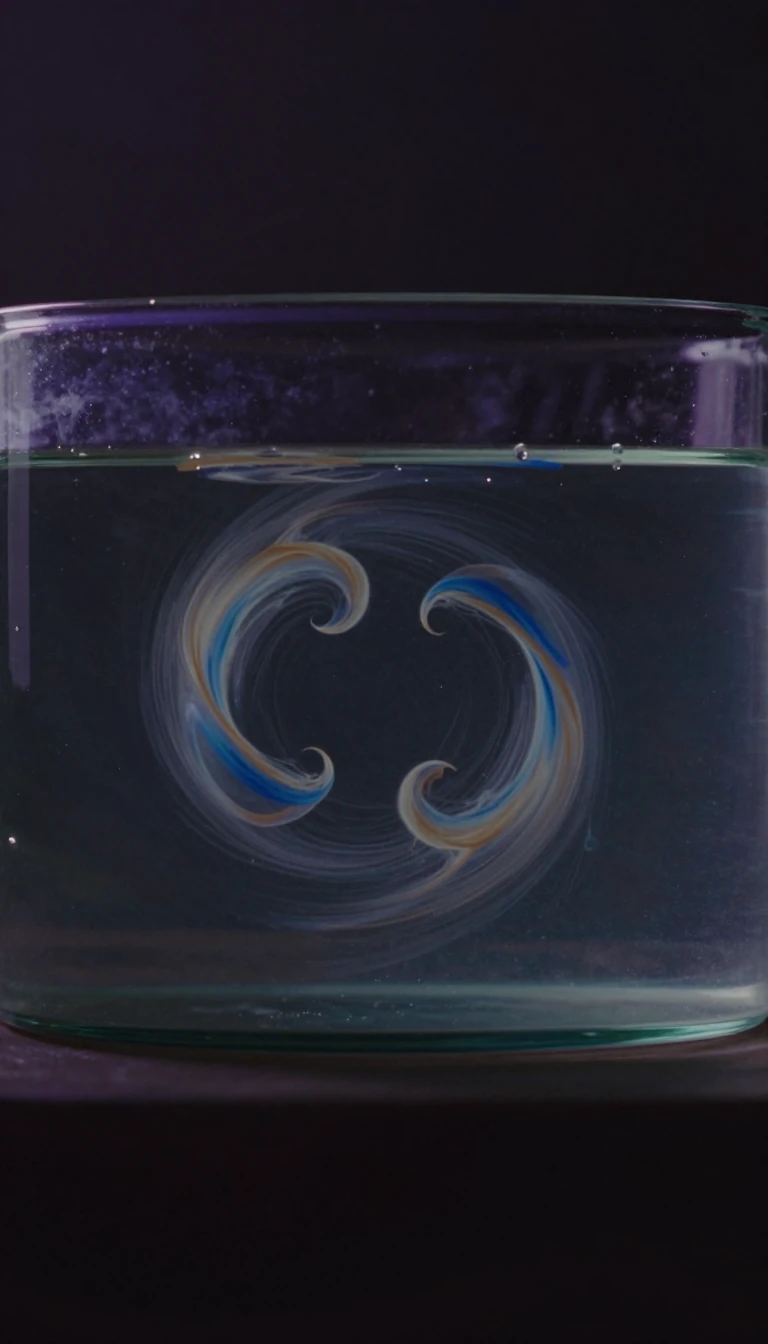 Why the sky is blue, but your eyes are a structural illusionThe Tyndall effect explains why light beams become visible in smoke and why glacial water glows turquoise. It is a phenomenon of scattering, where particles suspended in a medium …
 Why perfect statistical certainty is impossible and how we manage the inevitable errorsIn statistics, every test carries a risk of being wrong. You either reject a true hypothesis, creating a false positive, or accept a false one, creating a false negative. Because …
 In model theory, a type acts as a blueprint for how mathematical elements behave.Mathematical structures are often complex, but we can describe their components using types. A type is a collection of logical statements that define the potential properties of a…
- Ultrafilters: The Mathematical Tool That Decides What Counts as Almost EverythingIn mathematics, an ultrafilter acts as a binary filter, sorting elements into categories of almost nothing or almost everything. These structures are essential for set theory and …
- How mathematicians use ultraproducts to build new worlds from existing structuresAn ultraproduct is a sophisticated mathematical construction that merges a family of structures into a single, cohesive new entity. By using an ultrafilter to decide which compone…
- Why mathematicians once struggled to prove that continuous functions always add up correctly.In the early 19th century, calculus was plagued by faulty reasoning. Mathematicians assumed that adding continuous functions would always yield a continuous result, but they lacke…
 Why the unit circle is the ultimate engine for understanding all periodic motionThe unit circle is far more than a basic geometry shape. By anchoring a radius of one at the origin of a coordinate plane, it transforms simple right triangles into a universal to…
 Why mathematicians ignore the messy details of complex constructions to find elegant truths.In mathematics, a universal property allows you to define an object by what it does rather than how it is built. By focusing on these abstract behaviors, you can bypass tedious, m…
- Why a single counterexample is enough to dismantle an entire universal claimIn logic, universal quantification asserts that a property holds for every member of a domain. While it sounds powerful, it is fragile. Because it requires absolute consistency ac…
- Can a single machine simulate every possible computer? Alan Turing proved the answer is yes.In 1936, Alan Turing proposed a theoretical device capable of performing any computation that can be described by an algorithm. By treating instructions as data, this Universal Tu…
 In mathematics, a universe is not a place, but a boundary for logic.To prove a theorem, you must define your playground. Mathematicians use universes—collections of entities that contain everything relevant to a specific problem. Whether you are w…
 Why the simple concept of valence still confuses modern chemistryValence measures an atom's combining capacity, yet it remains a slippery term. While elementary textbooks use it to explain how atoms bond, advanced chemistry has largely moved on…
 Why the outermost electrons of an atom dictate the behavior of everything around usValence electrons are the high-energy particles residing in an atom's outer shell that determine how elements react, bond, and conduct electricity. From the reactivity of alkali m…
 Why atoms are not just points: the invisible boundaries defining the physical worldAtoms are not mere mathematical points; they possess a physical size that dictates how matter behaves. By treating atoms as hard spheres, scientists define the van der Waals radiu…
 A vector field maps every point in space to a specific direction and magnitude.Imagine a map of wind speeds or fluid currents. A vector field is the mathematical framework that assigns a precise vector—a direction and a strength—to every single point in a gi…
- A vector is not just an arrow; it is a precise mathematical rule set.While often visualized as simple arrows, vectors are defined by their ability to obey specific algebraic laws. They possess magnitude and direction, yet lack a fixed position in s…
 Why the world of mathematics failed to agree on a single way to write vectorsFor over a century, mathematicians have struggled to standardize how we represent vectors. From Hamilton’s quaternions to Heaviside’s boldface, the history of vector notation is a…
- How vector functions turn simple variables into complex paths through three-dimensional spaceA vector-valued function is a mathematical tool that takes one or more inputs and returns a vector. By treating these outputs as position vectors, mathematicians can map curves an…
- Why finding the smallest set of nodes to cover every edge is deceptively hardIn graph theory, a vertex cover is a set of nodes that touches every edge in a network. While the concept is simple, finding the smallest possible cover is a classic NP-hard probl…
 How to uncover hidden truths from a sequence of noisy, observable data pointsWe often see the effects of events without witnessing the events themselves. The Viterbi algorithm is a mathematical powerhouse that reconstructs the most likely sequence of hidde…
- Beyond simple geometry: how volume integrals calculate the mass of complex 3D objectsA volume integral is more than a way to measure the size of a shape. By integrating a density function over a three-dimensional region, this mathematical tool allows physicists to…
- The Von Neumann universe is a vast, building hierarchy of pure mathematical setsImagine a tower of sets built from nothing, where each level contains everything from the levels below it. This is the Von Neumann universe, a foundational concept in set theory t…
 What makes a logical statement valid? The strict grammar of well-formed formulas.In formal logic, not every string of symbols qualifies as a meaningful statement. A well-formed formula, or wff, is a sequence of symbols constructed according to precise grammati…
- Why some sequences must end, and how that powers mathematical discoveryA well-founded relation is a mathematical structure where every non-empty subset contains a minimal element. By forbidding infinite descending chains, these relations provide the …
 Can every set be well-ordered? The surprising link between choice and order.The well-ordering theorem asserts that every set can be arranged so that every subset has a least element. While it sounds abstract, this principle is mathematically equivalent to…
 Why the wet lab remains the essential engine of modern scientific discovery and innovationA wet lab is a specialized environment where researchers handle chemicals and hazardous substances to conduct experiments. Unlike dry labs that focus on data analysis or large-sca…
 Why the world's most elite astronauts are learning to walk underwaterTo prepare for a return to the lunar surface, astronauts are trading space for the deep end. By training in massive, weighted immersion tanks, they simulate the unique challenges …
 Why the hardest rocks can sometimes be surprisingly easy to breakHardness is not a single, universal trait. While we often rank minerals using the Mohs scale, this metric only captures one specific type of resistance. The true secret to how a r…
- Why the world's oldest freshwater fish are thriving in the Arizona desertIn the arid landscape of Apache Lake, Arizona, a group of buffalofish are rewriting the rules of longevity. These freshwater fish, often mistaken for invasive carp, have been foun…
- The Wiener process is the invisible mathematical engine powering everything from finance to physics.Named after Norbert Wiener, this continuous-time stochastic process models random motion with uncanny precision. It is the backbone of the Black-Scholes option pricing model, quan…
 Why this V-shaped star cluster is named after a flock of migrating ducksThe Wild Duck Cluster, or Messier 11, earns its name from the V-shaped arrangement of its brightest stars, which resembles a flock of waterfowl in flight. Located 6,200 light-year…
 A simple mathematical test can reveal if any number is truly primeWilson's theorem offers a definitive way to identify prime numbers using factorials. By calculating the product of all integers less than a given number and checking its divisibil…
- How many times does a path loop around a point? Meet the winding number.The winding number is a mathematical integer that captures the total number of times a closed curve travels around a specific point. By assigning positive values to counterclockwi…
 The accidental entry in the Messier catalog that turned out to be a mistakeCharles Messier is famous for his catalog of deep-sky objects, but one entry, Winnecke 4, stands out as a blunder. While hunting for a reported nebula in 1764, Messier found only …
 Why chemical synthesis rarely achieves a perfect result in the laboratory or industryIn chemistry, yield measures the efficiency of turning starting materials into a desired product. While scientists aim for high yields in short timeframes, competing reactions and…
 The Yoneda Lemma: How to Understand an Object by Looking at Its RelationshipsIn mathematics, you can often understand an object not by looking at it directly, but by observing how it interacts with everything else. The Yoneda lemma formalizes this intuitio…