 Intellect Plus
Space
9,120 cards. Each one is a 40-second story with a five-minute read behind it. Page 118 of 152.
Subtopics: Apollo · Asteroids · Astronauts · Astronomical objects · Astronomical technology · Astronomy · Astronomy and geodesy · Astronomy basics · Big bang · Black holes · Celestial mechanics · Celestial sphere · Comets · Constellations · Cosmology · Dark energy · Dark matter · Deep time · Exoplanets · Exploration · Future Frontier · Galactic and extragalactic astronomy · Galaxies · Gravity · Impacts · Interstellar · Jupiter · Light · Mars · Mars exploration · Meteorites & asteroids · Moon · Moon exploration · Moons · Navigation and timekeeping · Nebulae · Observational astronomy · Observatories · Physical cosmology · Physics · Planetary science · Planets · Quantum · Relativity · Rockets & launch vehicles · Satellites · Saturn · Seti · Space · Space agencies · Space probes · Space stations · Space telescopes · Spacecraft · Spaceflight · Stars · Stellar astronomy · Sun & solar physics · Supernovae · Telescopes · Volcanoes · Weather
 NASA initially rejected the Landsat program, now its most valuable investment in space technology.NASA once resisted the project that became its longest-running satellite mission. Despite early skepticism and multiple attempts to commercialize the endeavor, Landsat has evolved…
 Why bringing a handful of Martian dirt back to Earth is a logistical nightmareNASA’s Perseverance rover is currently roaming Mars, carefully curating a collection of rock samples that could reveal if we are alone in the universe. Yet, the rover has no way t…
 Why NASA's Deep Space Network is the most vital component of any space missionWithout the Deep Space Network, our robotic explorers would be effectively deaf and blind. This global array of massive antennas acts as an interplanetary switchboard, ensuring co…
 Why do scientists need your help to map the ground beneath our feet?Satellites provide a bird's-eye view of Earth, yet they often struggle to distinguish between complex land uses like specific crop types or urban environments. By contributing gro…
 Why America's first satellite flipped over because of a simple physics oversightExplorer 1, the first US satellite, launched in 1958 with a clever spinning nose to maintain stability. Yet, engineers failed to account for a fundamental law of rotational dynami…
 A robotic telescope system scans the northern sky for fleeting cosmic eventsResearchers using the Zwicky Transient Facility (ZTF) are scanning the northern visible sky to identify transient astronomical phenomena. Using a 600-megapixel camera on the Palom…
 New cosmic measurements suggest dark energy may change over timeResearchers analyzing over 14 million galaxies and quasars from the Dark Energy Spectroscopic Instrument found evidence that dark energy might not be a constant. While the standar…
 New software updates enhance the precision of complex stellar evolution modelsResearchers have introduced significant updates to the Modules for Experiments in Stellar Astrophysics (MESA) software. These enhancements include a new automatic differentiation …
 Updated opacity calculations improve the accuracy of stellar modelsResearchers who updated the OPAL Rosseland mean opacities found that incorporating more complex physics and a wider range of elements significantly changes theoretical predictions…
 The humble ballistic missile that launched the American space ageAmerica's most frequently launched rocket began its life as a military weapon of limited reach. Originally designed as an intermediate-range ballistic missile, it was never intend…
 The lunar rover transformed a landing mission into a mobile scientific laboratoryWhen Apollo 15 launched in July 1971, it wasn't just another Moon landing. As the first 'J-series' mission, it introduced the Lunar Roving Vehicle, allowing astronauts to traverse…
- How a Dobsonian telescope worksThe Dobsonian is an altazimuth-mounted Newtonian telescope design that uses a simplified mechanical design to create large, portable telescopes.
 How the magnetosphere of Saturn worksSaturn's magnetosphere is a cavity created in the flow of the solar wind by the planet's internally generated magnetic field.
- How the magnetosphere of Jupiter worksJupiter's magnetosphere is a cavity created in the solar wind by Jupiter's magnetic field.
 New software modules enhance our ability to model complex stellar life cyclesResearchers have updated the Modules for Experiments in Stellar Astrophysics (MESA) software to better simulate the life cycles of stars. By adding new computational tools, the so…
 Substellar objects appear much bluer than expected due to complex atmospheric absorptionResearchers using new nongray calculations found that extrasolar giant planets and brown dwarfs exhibit much bluer infrared colors than scientists previously believed. By modeling…
 New astronomical data release expands our map of the southern skyAstronomers have released the first data set from the third phase of the Sloan Digital Sky Survey. This update includes five-band imaging of a large portion of the southern Galact…
- Methane and carbon dioxide detected in a potential ocean-covered exoplanet atmosphereAstronomers using the James Webb Space Telescope observed the atmosphere of K2-18 b, a candidate Hycean world. These planets are characterized by temperate oceans covered by hydro…
- The grueling odds of becoming one of America's newest astronautsSelecting a single astronaut is a needle-in-a-haystack endeavor. In 2017, NASA faced a pool of over 18,000 applicants to find just 12 individuals capable of carrying the torch for…
- How supercomputers simulate the fury of an Atlantic hurricane seasonPredicting whether a hurricane season will be exceptionally busy or remarkably slow requires more than just looking at the clouds. NASA scientists use massive supercomputers to re…
 To save its moons, Cassini will intentionally destroy itselfAfter two decades of orbiting Saturn, NASA’s Cassini spacecraft is preparing for a deliberate, fiery end. By plunging into the gas giant's atmosphere on September 15, 2017, the pr…
 How cargo ships vanish into the atmosphere after servicing the space stationAfter delivering vital supplies and scientific experiments to the International Space Station, massive cargo spacecraft like Cygnus and Progress undergo a final, destructive journ…
- Three veteran travelers launch toward the International Space Station from KazakhstanOn July 28, 2017, the Soyuz MS-05 roared to life at the Baikonur Cosmodrome. Carrying a diverse crew of experienced astronauts, the mission aimed to bridge Earth and orbit, settin…
 Comparing designs for the next generation of gravitational-wave detectorsResearchers evaluating the future Einstein Telescope project assessed how different detector configurations might impact scientific discovery. By comparing a triangular observator…
 How engineers simulate the launch of a planetary hunting telescopeBefore the CHEOPS mission launches, scientists and engineers must meticulously simulate every stage of its journey, from the initial launch to its early orbit phase.
 How NASA is sending a spacecraft to touch the Sun's atmosphereHumanity is attempting the impossible: flying a machine into the Sun's outer layers. The Parker Solar Probe is braving extreme radiation and intense heat to solve 60-year-lonely m…
 Mars rover finds igneous rocks on Jezero crater floor altered by ancient waterResearchers analyzing data from the Perseverance rover have found that the floor of Mars' Jezorp crater is composed of igneous rocks that were chemically changed by water. The stu…
 Early galaxy evolution matches predictable patterns of dark matter halo growthResearchers using Hubble Space Telescope data to analyze over 24,000 sources found that the brightness and number of galaxies from redshift 9 down to 2 follow a remarkably consist…
 Complex organic molecules in space provide clues about the origins of planetsA review of over 150 detected molecular species in space found that approximately 50 of them are considered complex organic molecules. These carbon-based structures are found in d…
- Monte Carlo methods help refine our understanding of the universe's fundamental parametersResearchers using a fast Markov chain Monte Carlo approach analyzed cosmic microwave background data alongside various astronomical observations. By combining data from the cosmic…
 Could an invisible companion star be responsible for Earth's mass extinctions?For decades, scientists proposed that a hidden neighbor—a hypothetical star called Nemesis—periodically nudged comets into our inner solar system. This 'Death Star' theory aimed t…
 Can a reusable heavy-lift rocket finally make space access more economical?Blue Origin’s New Glenn is a massive undertaking designed to transform orbital logistics. By utilizing a reusable first stage that lands on a sea-based barge, the vehicle aims to …
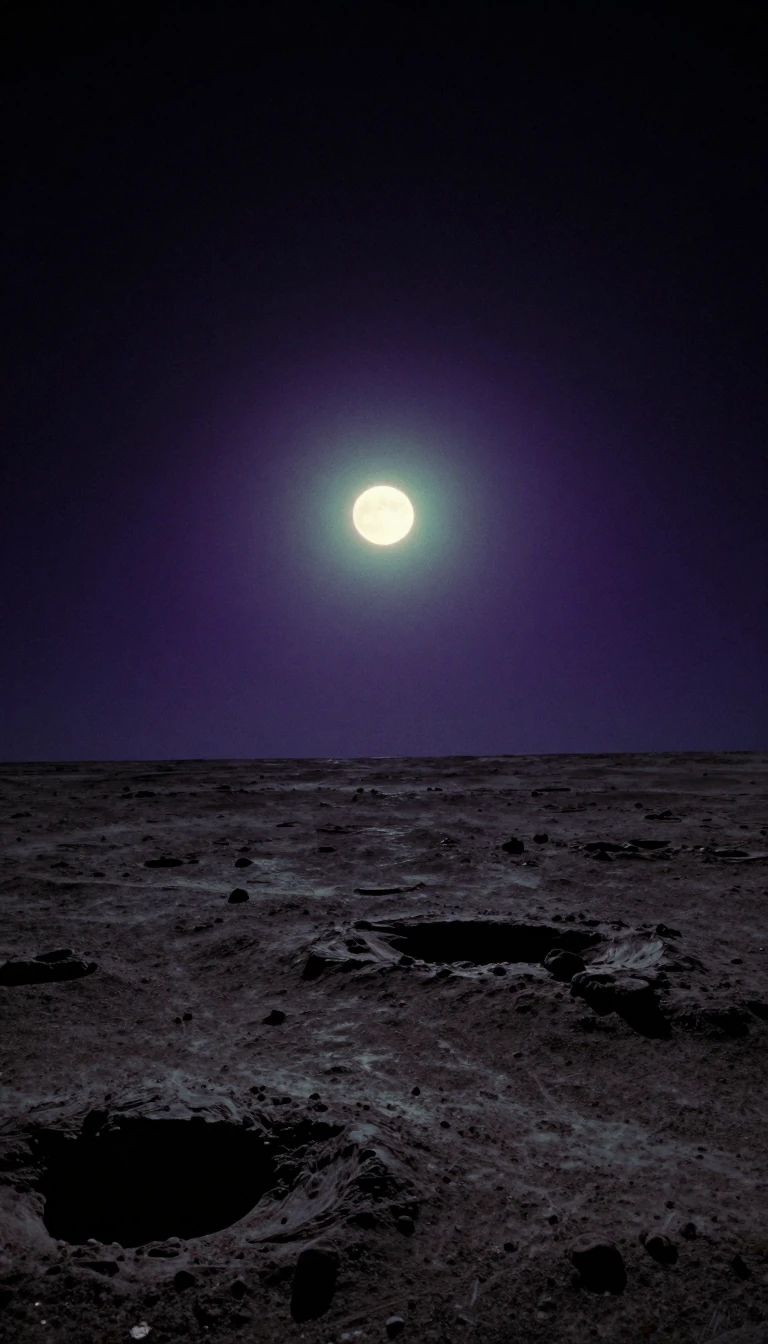 The Moon's many months: why one orbit is never just one cycleWhen we speak of a lunar month, we usually mean the 29.5-day cycle of phases. But the Moon's complex dance with Earth and the Sun creates several distinct 'months,' each governed …
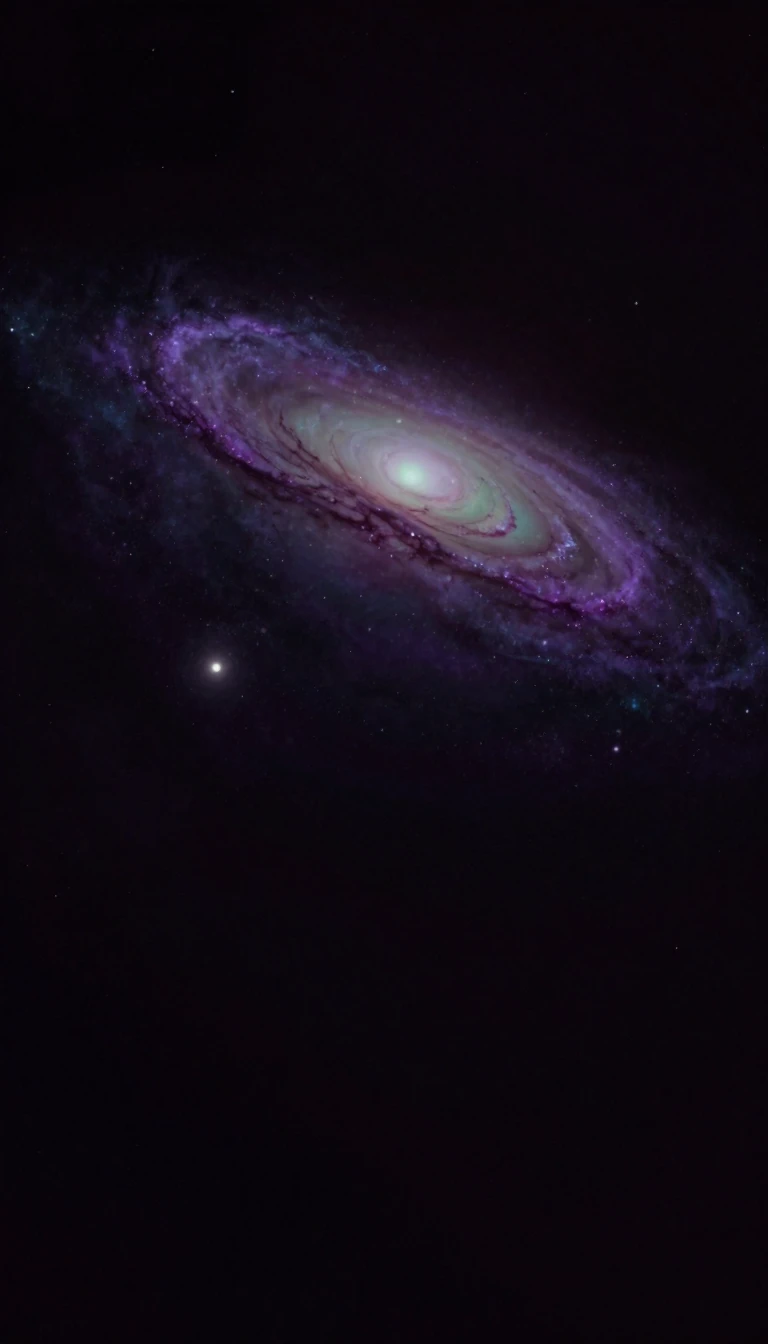 New radio survey reveals millions of previously undetected celestial sourcesResearchers using the LOw-Frequency ARray have released a massive new dataset covering 27% of the northern sky. This survey produced high-resolution images at frequencies between …
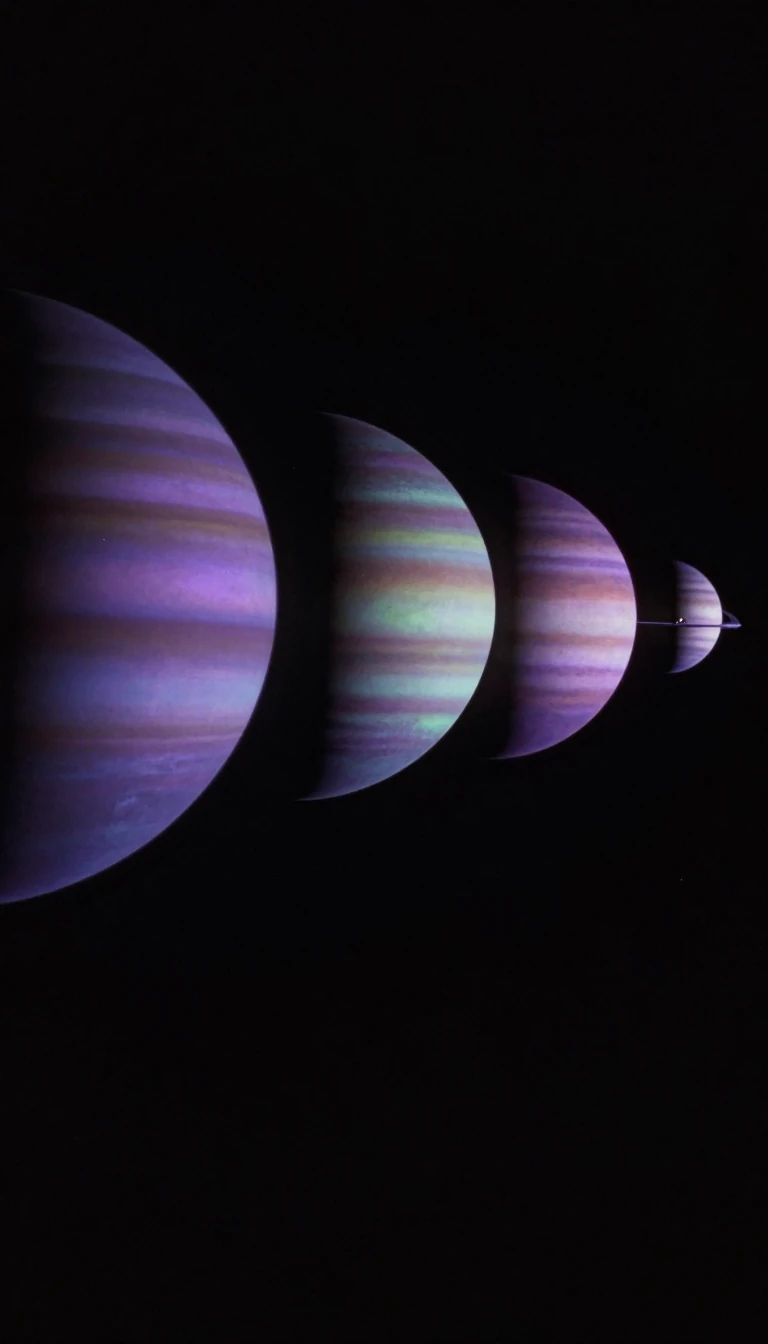 James Webb Space Telescope exceeds performance expectations during its early testing phaseResearchers evaluating the James Webb Space Telescope (JWST) found that the observatory is performing better than originally anticipated. During a six-month commissioning period, …
- Rolling scalar fields could explain the universe's low mass densityResearchers investigating a pervasive, rolling scalar field found that it could resolve a major cosmological puzzle. By modeling a universe where a self-interacting scalar field d…
 Astronomers observe a gas giant passing in front of a Sun-like starResearchers observing the star HD 209458 have detected two separate transit events where a planetary-mass companion passed across the stellar disk. This observation confirms that …
- New mathematical formulas improve the accuracy of detecting planets orbiting distant starsAstronomers observing a star with the Hubble Space Telescope used new analytic formulae to more precisely measure the size of an orbiting planet. By creating exact equations for h…
 The International Reference Ionosphere serves as the global standard for modeling Earth's upper atmosphereResearchers reviewing the International Reference Ionosphere (IRI) project have described the official benchmark used to represent Earth's ionosphere. This empirical model uses lo…
 Current cosmic star formation is significantly lower than the historical averageResearchers analyzing data from the Sloan Digital Sky Survey studied approximately 105 galaxies with measurable star formation. By comparing emission lines with continuum properti…
- The Swift mission uses autonomous technology to study high-energy cosmic explosionsA NASA-led international collaboration developed the Swift mission, a multiwavelength observatory designed to hunt for gamma-ray bursts. This satellite is engineered to autonomous…
 Early galaxies show a steady decline in star formation as the universe agesResearchers using the James Webb Space Telescope (JWST) and ground-based imaging have mapped the brightness of galaxies in the very early universe. By analyzing deep images of the…
 Laser measurements provide a highly accurate map of the Martian surfaceResearchers using the Mars Orbiter Laser Altimeter (MOLA) have completed one year of global mapping, revealing the planet's topography and surface features. By measuring laser pul…
- Astronomers detect carbon dioxide in the atmosphere of a distant gas giantUsing the James Webb Space Telescope, researchers identified carbon dioxide in the atmosphere of WASP-39b, a hot gas giant exoplanet. By analyzing light passing through the planet…
- Uncertainties remain regarding the composition and climate of the early EarthResearchers reviewing the history of our planet's atmosphere found that while scientists agree oxygen levels rose significantly near 2.0 billion years ago, the exact timing and ca…
- Are these celestial wanderers planets or failed stars?Deep in space, objects exist that defy easy classification. They possess the mass of a planet but the birth story of a star, having formed from collapsing gas clouds rather than w…
- Why some stars develop a sooty, ruby red atmosphereMost stars are oxygen-rich, but carbon stars undergo a dramatic transformation. Through internal fusion and violent stellar winds, they dredge up carbon that consumes oxygen, leav…
 Meteorites contain a diverse variety of pyrimidine nucleobasesResearchers analyzing three carbonaceous meteorites have identified a wide range of pyrimidine nucleobases, including cytosine, uracil, and thymine. While purines like adenine wer…
- The HiRISE camera aims to map the Martian surface with unprecedented detailResearchers designing the HiRISE camera for the Mars Reconnaissance Orbiter have developed a system capable of capturing incredibly high-resolution images of the Red Planet. This …
 New observations reveal distinct patterns in how black holes disrupt starsResearchers using the Zwicky Transient Facility and space telescopes identified 17 new tidal disruption events, where black holes tear apart nearby stars. By analyzing these new e…
 New open source software suite enables complex simulations of stellar evolutionResearchers have developed Modules for Experiments in Stellar Astrophysics, known as MESA, a robust suite of open-source libraries designed for computational astrophysics. This so…
- New atmospheric models help characterize the transition from stars to planetsResearchers who developed an atmosphere model for hot Jupiters have updated their code to better understand objects between stars and planets. By incorporating revised oxygen leve…
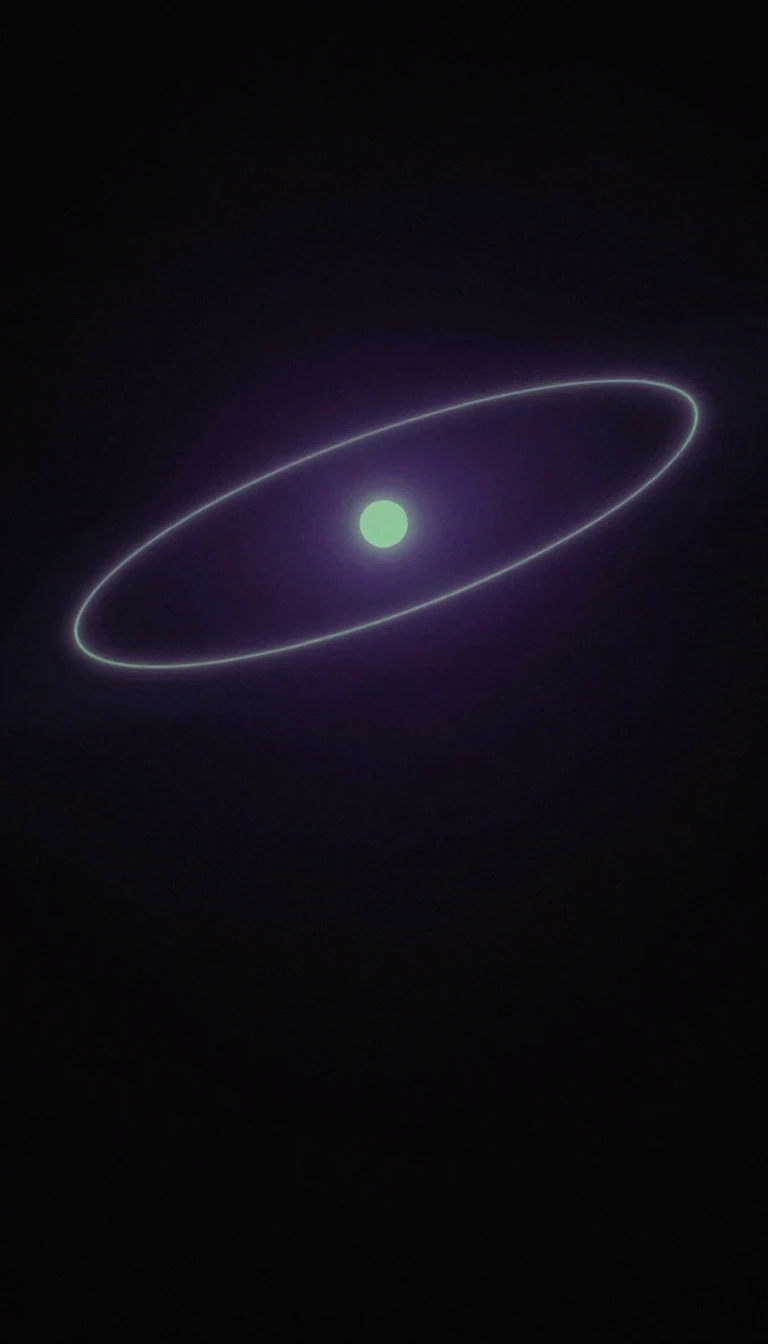 How orbiting triplets exchange momentum to reshape cosmic structuresA review of triple-body dynamics found that in hierarchical systems, orbits can exchange angular momentum over long timescales. This process, known as the eccentric Kozai-Lidov me…
 Astronomers determine the expansion rate of the universe using Cepheid starsResearchers using the Hubble Space Telescope found that the universe is expanding at a rate consistent across multiple independent measurement methods. By observing Cepheid variab…
- Astronomers detect sodium in the atmosphere of an exoplanetResearchers observing the transit of a planet named HD 209458b across its host star found evidence of an atmosphere. By measuring how much light from the star was blocked during t…
- Astronomers detect cosmic echoes in the distribution of ancient galaxiesResearchers analyzing a massive survey of 46,748 luminous red galaxies have identified a distinct peak in how these galaxies are clustered. By studying the Sloan Digital Sky Surve…
 New software updates improve how astronomers simulate the formation of cosmic structuresResearchers have introduced significant methodological updates to the Gadget-4 code, a tool used for decades to model how the universe's large-scale structures form. This new vers…
 Experiments suggest hydrogen likely dissolved into the Earth's forming coreResearchers conducting high-pressure experiments found that hydrogen strongly prefers to bond with molten iron rather than silicate melt. By simulating the extreme temperatures an…
- The Spitzer Space Telescope provides high-sensitivity infrared views of the cosmosNASA's Spitzer Space Telescope, launched in 2003, allows astronomers to see the universe in infrared light. By operating from an Earth-trailing solar orbit and utilizing a cryogen…
- Laboratory analysis of Bennu asteroid sample reveals complex mineral historyResearchers analyzing approximately 120 grams of pristine regolith returned by NASA's OSIRIS-REx mission found that asteroid Bennu is chemically complex. The sample contains a var…