 Intellect Plus
Space
9,120 cards. Each one is a 40-second story with a five-minute read behind it. Page 113 of 152.
Subtopics: Apollo · Asteroids · Astronauts · Astronomical objects · Astronomical technology · Astronomy · Astronomy and geodesy · Astronomy basics · Big bang · Black holes · Celestial mechanics · Celestial sphere · Comets · Constellations · Cosmology · Dark energy · Dark matter · Deep time · Exoplanets · Exploration · Future Frontier · Galactic and extragalactic astronomy · Galaxies · Gravity · Impacts · Interstellar · Jupiter · Light · Mars · Mars exploration · Meteorites & asteroids · Moon · Moon exploration · Moons · Navigation and timekeeping · Nebulae · Observational astronomy · Observatories · Physical cosmology · Physics · Planetary science · Planets · Quantum · Relativity · Rockets & launch vehicles · Satellites · Saturn · Seti · Space · Space agencies · Space probes · Space stations · Space telescopes · Spacecraft · Spaceflight · Stars · Stellar astronomy · Sun & solar physics · Supernovae · Telescopes · Volcanoes · Weather
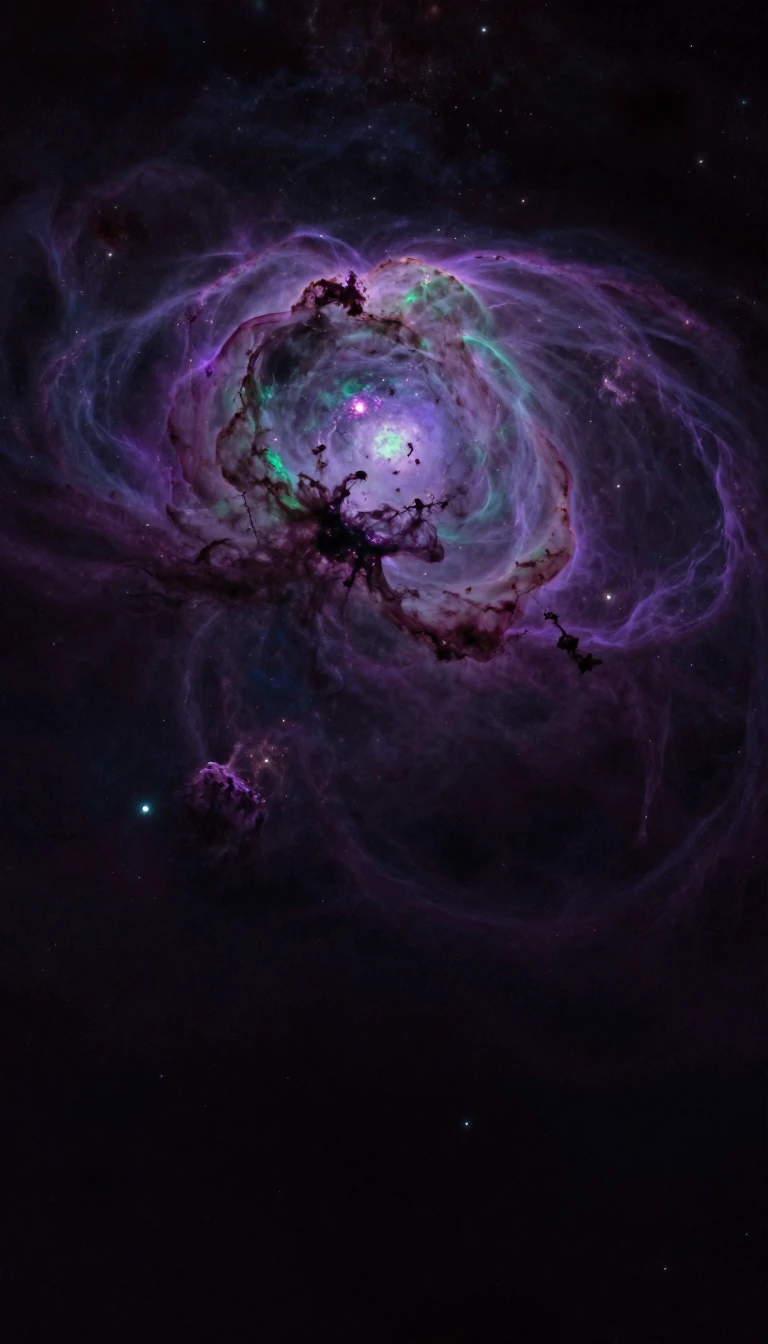 Without a precise nuclear resonance, the universe would contain almost no carbon for life.The triple-alpha process is the stellar engine that builds carbon from helium. It relies on a highly unstable intermediate state and a specific, fine-tuned energy resonance known …
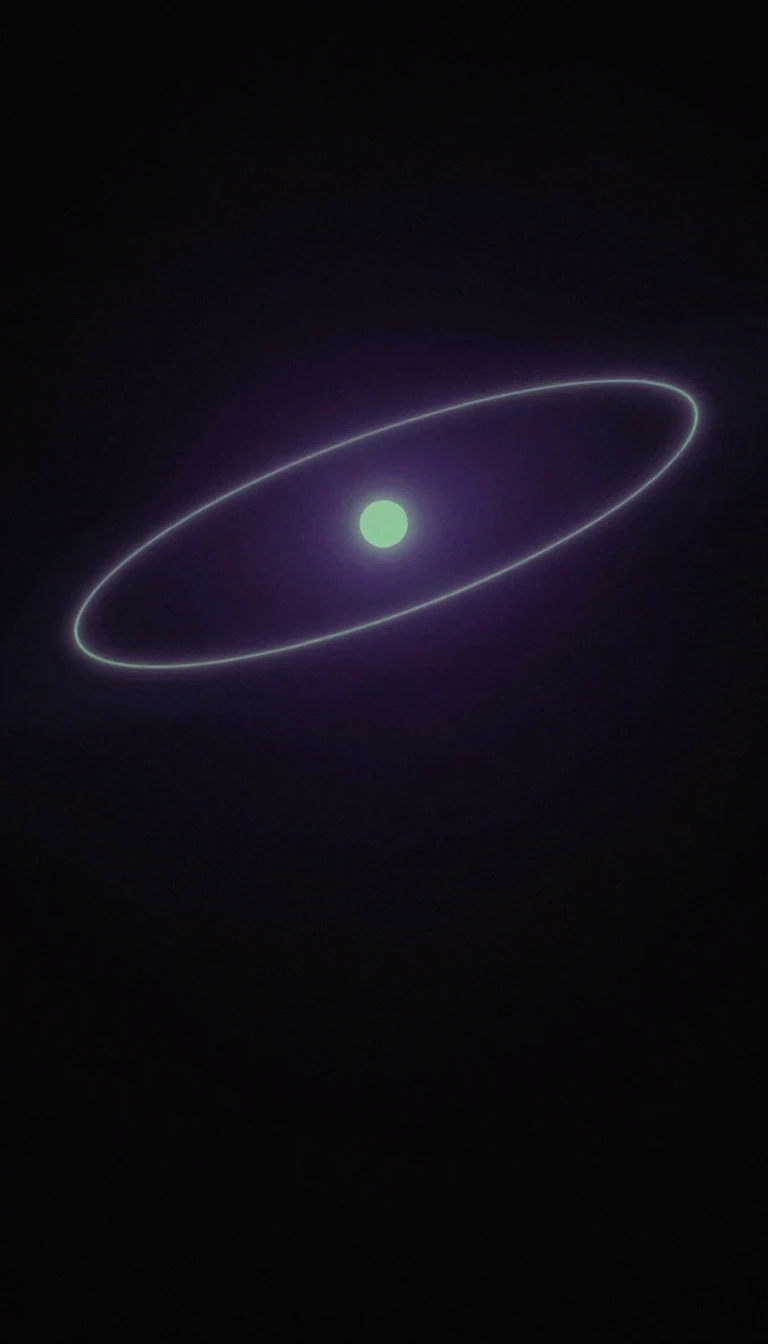 Celestial hitchhikers: how small bodies share orbits with planets and moonsTrojans are small celestial bodies that share the orbit of a larger object, tethered to stable gravitational pockets known as Lagrange points. While Jupiter is famous for hosting …
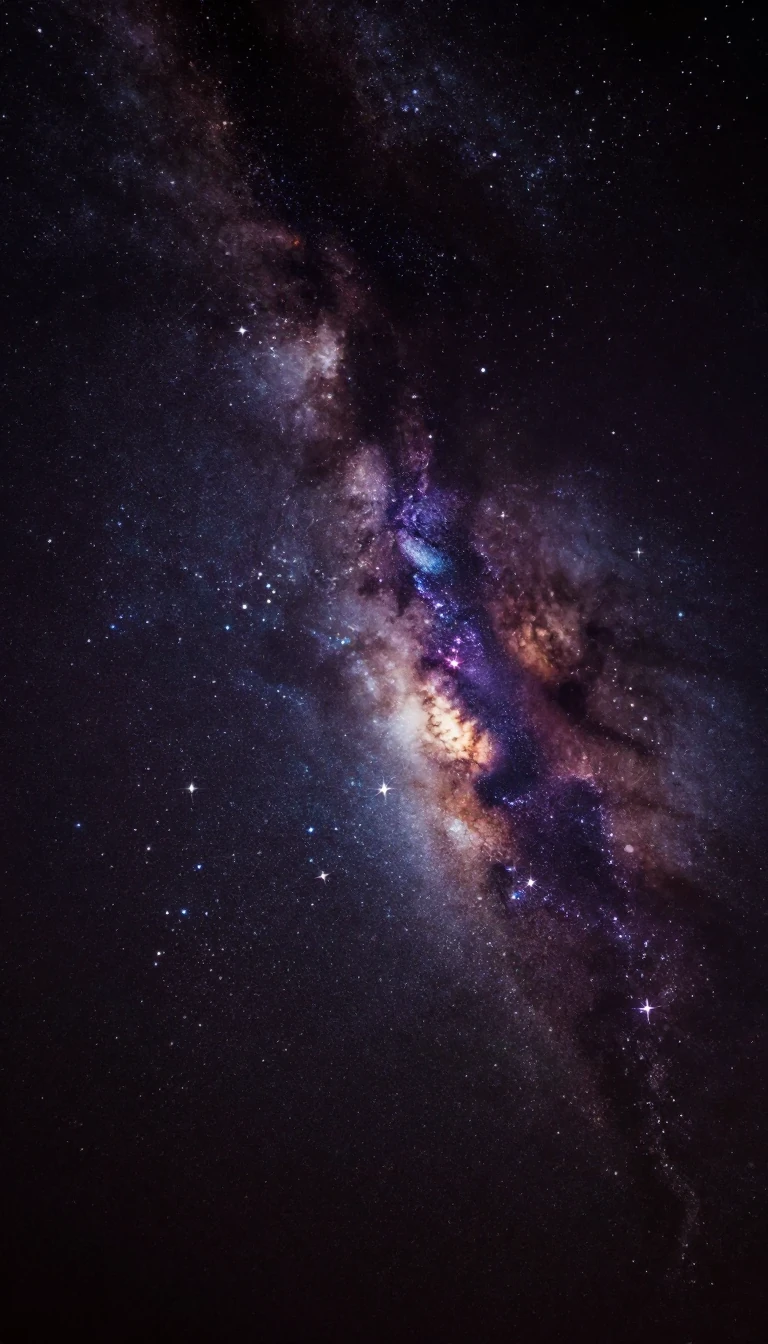 Tucana: A Southern Constellation Named for a Bird and Home to Ancient StarsConceived in the late sixteenth century, the constellation Tucana represents a South American toucan in the southern sky. While it contains no exceptionally bright stars, it serve…
 How astronomers use the spin of distant galaxies to map the cosmic distance ladderThe Tully–Fisher relation reveals a surprising cosmic secret: the faster a spiral galaxy spins, the brighter it shines. By measuring the width of hydrogen emission lines, astronom…
 Why the sky never truly goes dark in many parts of the worldTwilight is not just a fleeting moment before nightfall; it is a complex atmospheric phenomenon defined by the Sun's position below the horizon. Depending on your latitude and the…
- Why do stars twinkle while planets remain steady in the night sky?The shimmering dance of starlight is not a property of the stars themselves, but a consequence of our turbulent atmosphere. While distant stars flicker as point sources of light, …
 Why these rare stellar explosions are the universe's most reliable cosmic yardsticksType Ia supernovae are not just violent cosmic fireworks; they are precise standard candles. Because these explosions consistently reach a specific peak brightness, astronomers us…
 These ancient, flickering stars act as cosmic yardsticks for measuring the distant universeType II Cepheids are old, metal-poor stars that pulse with rhythmic precision. By linking their brightness to their pulsation period, astronomers use these objects as standard can…
- When a massive star dies, it creates a cataclysmic explosion fueled by invisible neutrinos.A Type II supernova is the violent end of a star at least eight times the mass of the Sun. When its iron core collapses, it releases a massive burst of neutrinos, triggering a sho…
 The UBV system turned starlight into a precise language for measuring stellar secrets.Before the 1950s, measuring star brightness was subjective and prone to error. By introducing the UBV system, astronomers Harold L. Johnson and William Wilson Morgan created a sta…
 Why the ultraviolet universe reveals the life and death of starsUltraviolet light is invisible to human eyes, but it is the primary language of the cosmos's most energetic events. By peering into this high-energy spectrum from space, astronome…
 Why some spiral galaxies lack the central bar found in our own Milky WayWhile many galaxies feature a central bar of gas and stars that funnels material toward the core, roughly one third of known spiral galaxies lack this structure. These unbarred sp…
 Vela: The celestial sails that once formed a massive, ancient ship in the sky.Vela is a southern constellation representing the sails of the mythical ship Argo Navis. Once part of a much larger star grouping, it was subdivided in the 18th century. Today, it…
- How astronomers weigh the invisible by measuring the chaotic motion of stars and galaxiesVelocity dispersion is the statistical spread of speeds within a group of celestial objects. By measuring how fast stars or galaxies move relative to their average, astronomers ca…
 Virgo is the largest zodiac constellation, hiding a massive cluster of distant galaxies.As the second-largest constellation in the sky, Virgo dominates the spring heavens. Beyond its brightest star, Spica, lies a cosmic treasure trove: a dense cluster of galaxies and…
- Why the stars you see at night are only a fraction of the universeVisible light reveals the cosmos, but it is merely one slice of the electromagnetic spectrum. From the glowing hydrogen of emission nebulae to the temperature-driven colors of dis…
 The southern sky holds a flying fish born from sixteenth-century Dutch maritime explorationVolans, a constellation representing a tropical fish capable of gliding through the air, emerged from the observations of Dutch navigators in the late 1500s. Originally named Pisc…
- The faint Northern constellation that holds the secrets of pulsars and galactic giantsTucked within the Summer Triangle, the constellation Vulpecula is far more than its modest appearance suggests. Though it lacks stars brighter than the fourth magnitude, this smal…
 VY Canis Majoris is a hypergiant star behaving like Betelgeuse on steroidsThis red hypergiant is so immense that if it replaced our Sun, its surface would stretch beyond the orbit of Jupiter. Far more violent than its famous neighbor Betelgeuse, this st…
 Astronomers have finally located the mysterious missing matter hiding in the vast cosmic webFor decades, scientists could not account for about one-third of the normal matter predicted to exist in the universe. Now, researchers using NASA’s Chandra X-ray Observatory have…
 How astronomers use invisible dark matter to map the entire history of the universeGravity bends light, but most cosmic distortions are too faint to see in a single galaxy. By statistically analyzing the shapes of hundreds of millions of distant galaxies, astron…
- Astronomers have discovered water clouds on a frozen, planet-sized object beyond our solar systemLocated just 7.2 light-years away, WISE 0855 is the coldest object ever found outside our solar system. With a temperature near minus 10 degrees Fahrenheit, this failed star is es…
 Why we must leave Earth to see the most violent events in the universeEarth's atmosphere acts as a shield, absorbing the high-energy X-rays that reveal the cosmos's most extreme phenomena. To study these, astronomers must launch detectors into space…
 When stars feed on their neighbors, they become the brightest X-ray beacons in space.X-ray binaries are cosmic feeding frenzies where a dense, collapsed star strips matter from a normal companion. As this material spirals inward, it heats to millions of degrees, r…
- Yellow supergiants are rare, luminous stars caught in fleeting stages of stellar evolutionThese stars are not a single type, but a diverse group of objects passing through the yellow spectral range. Whether they are massive stars cooling toward a red supergiant phase o…
- How astronomers track the chaotic, dusty transformation of a star from birth to maturityA young stellar object is not just a star in the making; it is a complex, evolving system. By measuring the infrared light radiating from their surrounding disks, scientists can m…
 The zenith is not just a peak, but a precise point in the sky.We often use the word zenith to describe the highest point of success, but in astronomy, it is a literal coordinate. It marks the exact spot directly above your head, defined by g…
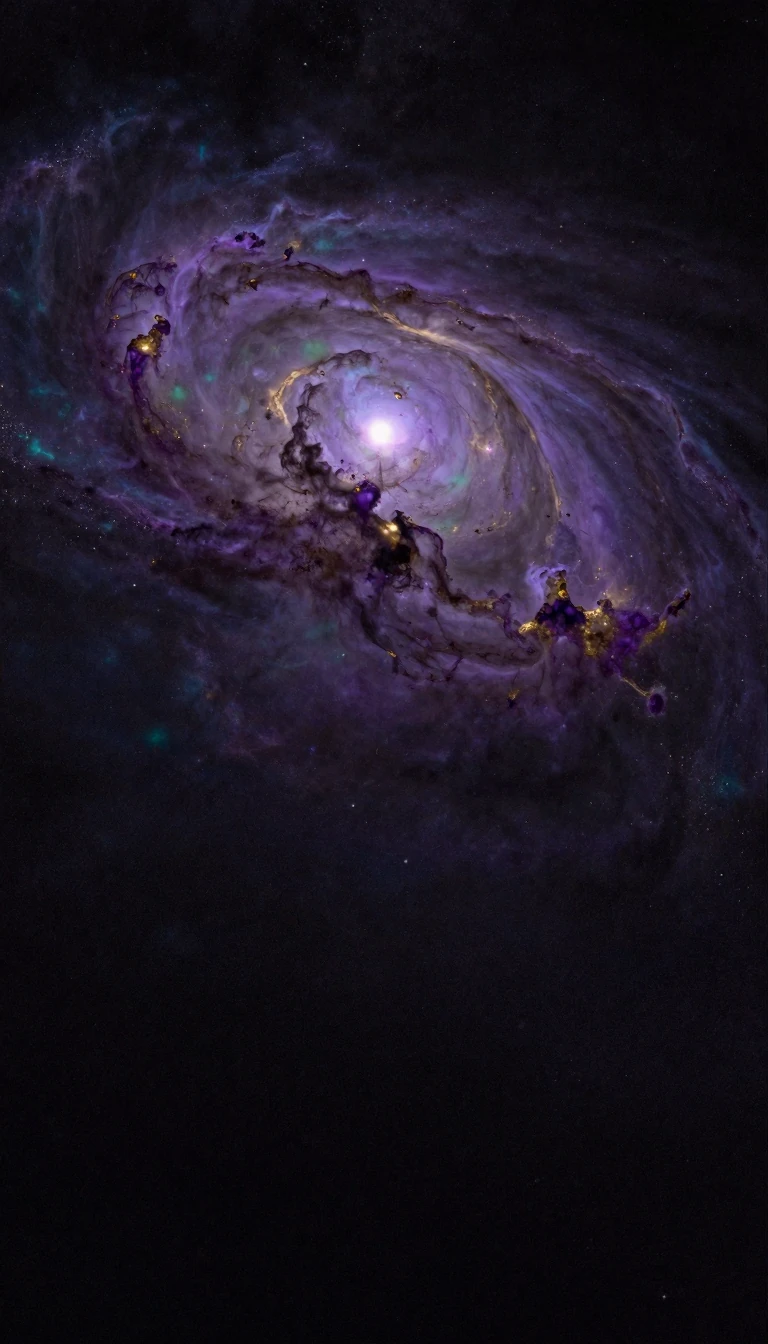 A runaway star is carving a glowing path through the cosmic dustZeta Ophiuchi appears as a dim red point from Earth, but it is actually a massive, brilliant blue star sprinting through space. Ejected from a binary system by a violent supernova…
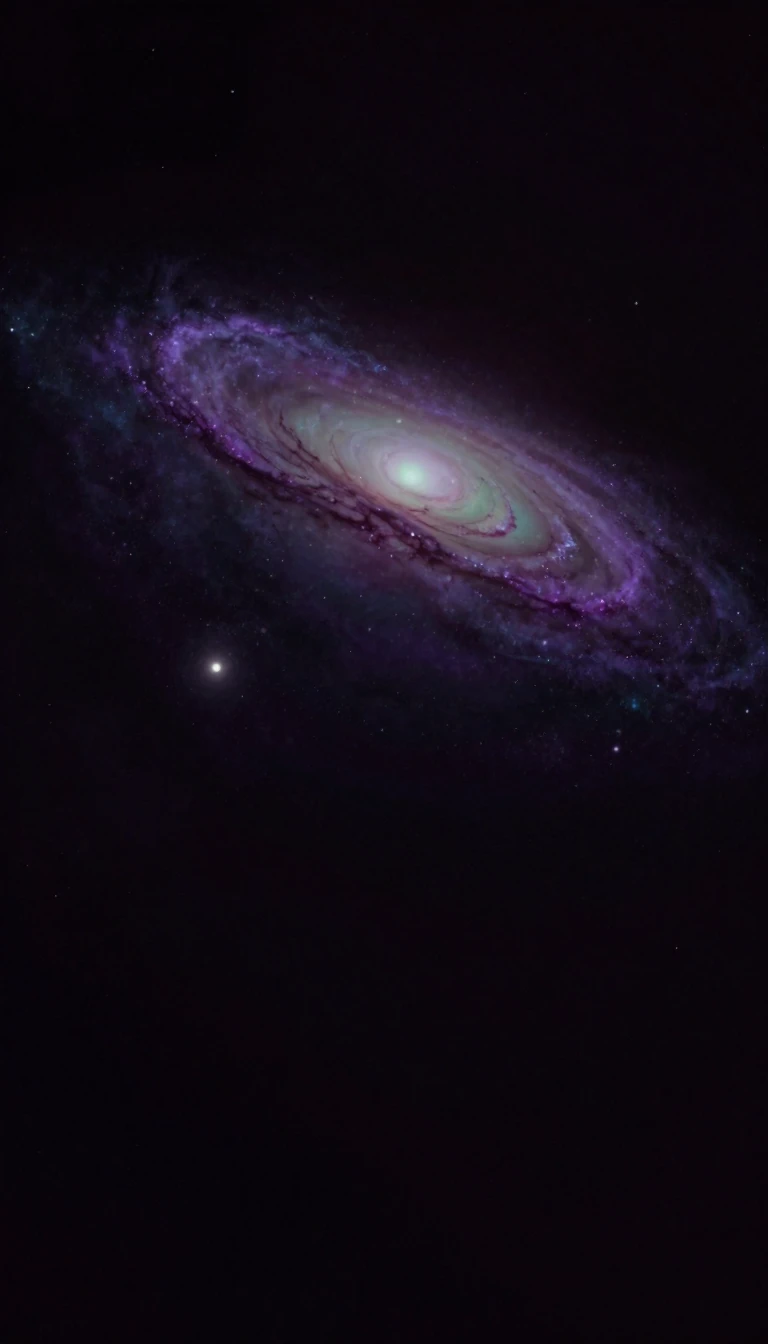 A massive, uncharted region of the universe hides behind our own galaxy's dense center.Astronomers call it the Zone of Avoidance: a vast, mysterious patch of the night sky that optical telescopes cannot penetrate. Obscured by the Milky Way's thick dust and crowded s…
 Jerry L. Ross was the first human to launch into space seven timesBefore retiring in 2012, Jerry L. Ross built a legendary career as a NASA astronaut and Air Force engineer. He became the first person to reach orbit seven times, a record he stil…
- Why the universe is flying apart faster than anyone ever expectedIn 1998, astronomer Adam Riess and his colleagues made a startling discovery: the expansion of the universe is not slowing down as gravity should dictate, but accelerating. This r…
 Allan Sandage spent decades measuring the universe, only to find a century-old secret.Allan Sandage was the preeminent observational cosmologist of the 20th century, spending half a century at the Palomar and Mount Wilson observatories. Yet, even in his final days,…
 How one woman's speed and precision mapped the stars for the entire worldAnnie Jump Cannon was an American astronomer who revolutionized how we understand the cosmos. By streamlining the classification of stellar spectra, she transformed an impossibly …
- The astronomer who mapped the Milky Way while theorizing the end of capitalismAnton Pannekoek was a dual pioneer: he founded Dutch astrophysics and served as a primary theorist of council communism. While he revolutionized how we visualize galactic light, h…
- How a search for twinkling radio stars led to the discovery of pulsarsIn 1967, Antony Hewish built a massive antenna array to study the solar wind. Instead, his team detected strange, rapid pulses from deep space. This accidental discovery of pulsar…
- How a persistent hum in a radio antenna confirmed the universe's explosive originIn 1964, Arno Penzias and Robert Wilson stumbled upon a mysterious, persistent background noise while testing a sensitive microwave antenna. After scrubbing away bird droppings th…
- Why a Nobel Prize-winning astronomer spent six weeks trying to prove himself wrong.In 1998, Brian Schmidt and his team discovered that the universe is expanding at an ever-increasing rate. The result was so unexpected that Schmidt initially assumed he had made a…
 Why a legendary comet hunter created the most famous list in the night sky.Charles Messier was obsessed with finding comets, but the universe kept getting in his way. To stop wasting time on stationary, blurry objects that looked like comets but weren't,…
 How a farm boy using homemade equipment discovered the ninth planet in 1930Clyde Tombaugh, a self-taught astronomer from Kansas, identified Pluto while conducting a methodical search for a predicted trans-Neptunian world. By comparing photographic plates…
 How a PhD student’s discovery shattered our understanding of the universe’s planetary systemsUntil 1995, our solar system was the only blueprint for planetary life. Then, Didier Queloz and his supervisor Michel Mayor detected a giant planet orbiting a Sun-like star. This …
 The first woman to earn a doctorate at the Sorbonne was an astronomerDorothea Klumpke shattered academic barriers in 1893, becoming the first woman to receive a doctorate from the Sorbonne. Her career spanned from measuring star positions at the Pa…
- How a team of women transformed astronomy from simple observation into a theoretical scienceEdward C. Pickering, director of the Harvard College Observatory, launched an ambitious project in 1885 to catalog the spectra of all stars. By hiring a group of women to analyze …
 How one astrophysicist decoded the hidden life of stars and the power of quasarsEdwin E. Salpeter was a polymath whose insights reshaped our understanding of the cosmos. From explaining how stars forge carbon to identifying the engines powering the universe's…
- How a chemical engineer revolutionized our understanding of the stars without formal astronomical training.Ejnar Hertzsprung entered astronomy as an outsider, armed only with a background in photochemistry. By applying his expertise in light and photography to the night sky, he uncover…
- How a self-taught apprentice transformed astronomy by obsessing over the smallest possible errors.Friedrich Wilhelm Bessel left school at 14 to work in a commercial firm, yet he became one of history's greatest astronomers. By systematically eliminating optical, mechanical, an…
- The curmudgeonly genius who first saw the invisible mass holding our universe togetherFritz Zwicky was a brilliant, abrasive astronomer who fundamentally changed our view of the cosmos. While his peers focused on visible light, Zwicky inferred the existence of dark…
- The visionary astronomer who built the world's most powerful telescopes while battling mental illness.George Ellery Hale was a titan of twentieth-century astrophysics, responsible for creating the massive observatories that expanded our view of the cosmos. Yet, behind his monument…
 The man who mapped the moon and named the belt beyond NeptuneGerard Kuiper is widely considered the father of modern planetary science. From discovering moons around Uranus and Neptune to pioneering lunar atlases for the Apollo missions, hi…
 The astronomer who mapped the heavens and redefined the size of our solar system.Giovanni Domenico Cassini was a master of precision who transformed 17th-century astronomy. From discovering Saturn’s moons and its iconic ring gap to calculating the scale of the…
- How a busy doctor in Bremen became a titan of 19th-century celestial discovery.Heinrich Wilhelm Matthias Olbers was a dedicated physician who spent his nights scanning the heavens from his home observatory. Beyond his medical practice, he revolutionized come…
- How a deaf researcher’s tedious cataloging of stars unlocked the scale of the universeHenrietta Swan Leavitt was a Harvard computer who spent her days analyzing glass photographic plates. While restricted from operating telescopes, her meticulous study of variable …
- How one man transformed astronomy from simple data collection into rigorous theoretical physicsHenry Norris Russell spent six decades at Princeton, fundamentally shifting how we understand the stars. By applying physics to the heavens, he helped create the Hertzsprung-Russe…
- How Jan Oort proved the Milky Way rotates and revealed our hidden solar neighborhoodJan Oort transformed our view of the cosmos by proving the Milky Way spins like a giant wheel. He shifted the Sun from the galaxy's center to its edge and proposed a vast, invisib…
- How a refugee from Saigon helped reveal the hidden edge of our solar system.Jane Luu, a Vietnamese American astronomer, spent years searching for the supposed emptiness beyond Neptune. In 1992, her persistence paid off when she and David Jewitt discovered…
 Why the architect of modern cosmology spends his time hunting for cosmic anomaliesJim Peebles helped build the standard model of the universe, turning cosmology into a precision science. Yet, the Nobel laureate remains a professional skeptic. Today, he focuses …
 How a childhood hobby with ham radio led to a Nobel Prize in physics.Joseph Hooton Taylor Jr. turned an early fascination with radio equipment into a career that reshaped our understanding of the universe. By discovering the first binary pulsar, he…
- How a soldier in the trenches solved the mystery of the black holeWhile serving on the Russian front during World War I, Karl Schwarzschild produced the first exact solution to Einstein's field equations. His mathematical breakthrough revealed t…
- How a theoretical physicist turned Einstein’s ripples into a Nobel-winning realityKip Thorne spent decades chasing the faintest whispers in the universe. While Einstein predicted that accelerating masses would create ripples in space-time, these gravity waves r…
- Lyman Spitzer: The Mountaineer Who Conceived of Telescopes Operating in Outer SpaceLyman Spitzer was a polymath who bridged the gap between the stars and the earth. A theoretical physicist who pioneered plasma research and space-based astronomy, he also found ti…
- The astronomer who mapped the stars while dodging V-1 bombs and gender barriersMargaret Burbidge revolutionized our understanding of how stars forge the elements of the periodic table. Despite being barred from observatories and denied fellowships because of…