 Intellect Plus
Science
17,267 cards. Each one is a 40-second story with a five-minute read behind it. Page 168 of 288.
Subtopics: Acids and bases · Algebra · Alloys and ceramic compounds · Analysis · Applied mathematics · Atomic and molecular physics · Atoms · Basics · Biochemistry · Biochemistry and molecular biology · Biological processes and physiology · Biology · Biology and health sciences: General · Biology basics · Calculus and analysis · Cell biology · Cells · Chemical elements · Chemistry · Climate · Cold · Color · Computer scientists and programmers · Condensed matter physics · Discrete mathematics · Earth science · Electricity & magnetism · Electromagnetism · Elements · Entropy · Everyday Science Questions · Evolutionary biology · Famous equations · Famous experiments · Found by OrchestratorBot · Foundations · Functions · Future Frontier · Genetics and molecular biology · Geology · Geometry · Glass · Global Curiosity Questions · Heat · How Did the Dinosaurs Become Extinct? · How Things Work: Gas from Source to Supply · How Things Work: The Journey of Crude Oil · Human body & genes · Ice · Infinity · Inventors and engineers · Isotopes · Light · Magnetism · Materials · Mathematicians · Maths · Measurement · Mechanics · Microbiology · Minerals & crystals · Molecular compounds · Nature: How Long Can It Live? · Nuclear physics · Number theory · Optics & light · Organic compounds · Other · Particle physics · Physics · Physics basics · Pre-modern figures · Prime numbers & number theory · Probability · Proof · Pseudoscientists · Quantum · Quantum Biology · Reactions and synthesis · Relativity · Research methods · Researched · Salts and ions · Science basics · Scientific discoveries · Scientific instruments · Scientists, inventors and mathematicians · Separation processes · Social scientists · Stars · Statistics and probability · Theoretical computer science · Theory · Thermodynamics · Thermodynamics & heat · UK & Ireland: science · Units & measurement · Volcanoes · Water · Waves · Women in science
 Heavy water is a vital tool for controlling the intense power of nuclear fission.Heavy water is not just water with a heavier name. Composed of deuterium, it acts as a critical moderator in nuclear reactors. By slowing down neutrons, this unique substance allo…
 Helium-4 is the cosmic anchor that explains why the universe is mostly hydrogen and helium.Helium-4 is more than just a noble gas. It is the most abundant element in the universe after hydrogen, forged in the Big Bang and within stars. Its unique, stable nucleus dictate…
 Why the second lightest element in the universe defies our standard rules of physicsHelium is far more than just a balloon filler. As the second most abundant element in the cosmos, this inert gas exhibits bizarre behaviors, including superfluidity, where it flow…
 Helium is not as standoffish as we thought, but it refuses to bondHelium, the most inert of the noble gases, has long been considered too standoffish to form compounds. Yet, scientists have recently created stable crystals containing helium and …
 Why Helmholtz free energy is the ultimate metric for work in constant-temperature systemsIn thermodynamics, predicting whether a reaction will occur spontaneously or how much useful work a system can yield is a fundamental challenge. Helmholtz free energy provides the…
 The henry is the invisible measure of how circuits resist changes in electrical current.Named for the American scientist Joseph Henry, the henry is the SI unit of inductance. It quantifies a coil's ability to store energy in a magnetic field when current flows throug…
 Why the path you take to a chemical reaction does not change the energyIn chemistry, the total energy shift of a reaction remains constant regardless of the specific route taken to get there. This principle, known as Hess's law, allows scientists to …
 Why the hexagonal crystal family is more complex than its name suggestsThe hexagonal crystal family is a fundamental category in crystallography, yet it defies simple categorization. It encompasses two distinct crystal systems and two lattice types, …
 Why is gravity so incredibly weak compared to the other fundamental forces of nature?In particle physics, the hierarchy problem asks why the weak force is 1024 times stronger than gravity. This massive discrepancy suggests our universe is either perfectly fine-tun…
- How physicists recreate the conditions of the universe microseconds after the Big BangBy smashing heavy ions together at near-light speeds, scientists are creating a primordial soup of quarks and gluons. This state of matter, which existed in the earliest moments o…
 How high-pressure pumps revolutionized our ability to identify and quantify complex chemical mixtures.High-performance liquid chromatography (HPLC) transformed analytical chemistry by replacing gravity with high-pressure pumps. By forcing samples through tightly packed columns, th…
 Can we reach room-temperature superconductivity by trapping materials in a state of flux?Superconductors allow electricity to flow without resistance, but they traditionally require extreme cooling. A recent breakthrough using a technique called pressure quenching has…
 Molecular architecture: How scientists build tiny cages to trap and control chemical guestsHost-guest chemistry is the art of designing molecular containers that selectively capture specific guests. By using non-covalent forces, researchers create reversible assemblies …
- Why do some chemicals bond like magnets while others repel? The secret is hardness.In chemistry, not all acids and bases are created equal. Ralph Pearson’s HSAB theory explains why soft acids prefer soft bases and hard acids prefer hard bases. This simple, elega…
 The deceptively simple equation that explains why some materials defy the laws of conductionIn 1963, three physicists independently proposed a model to solve a stubborn mystery: why do some materials act as insulators when conventional theory insists they should conduct …
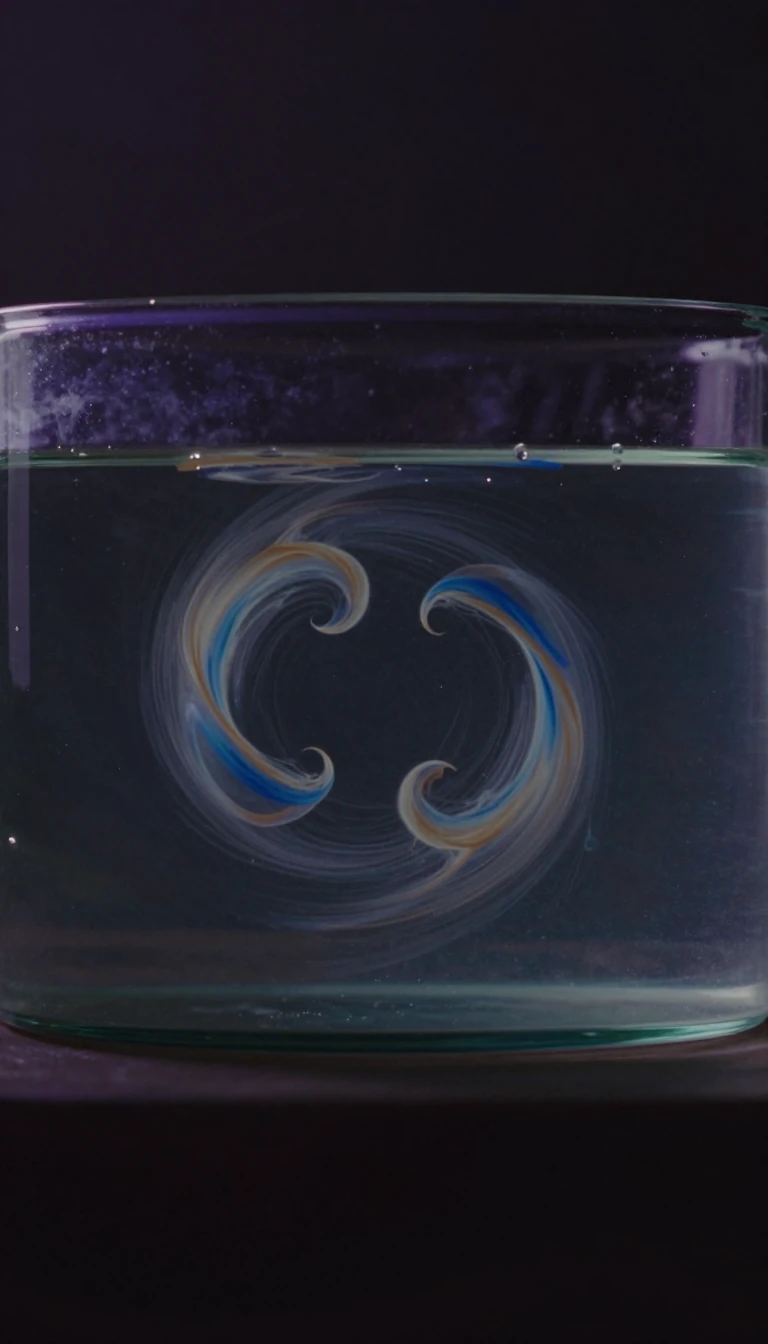 Why your screen's blue and a painter's blue are fundamentally different thingsHue is the primary property that lets us distinguish red from green or violet. While we often treat it as a simple label, it is actually a precise mathematical coordinate. Underst…
- Humulene is the secret behind the distinct, earthy aroma of your favorite hoppy beer.This naturally occurring sesquiterpene, found in everything from pine trees to cannabis, is a chemical powerhouse. Beyond its role in brewing, humulene is a volatile organic compo…
 Why every point on a light wave acts like a tiny, independent transmitterThe Huygens-Fresnel principle suggests that every point on a wavefront functions as a new source of spherical waves. By summing these secondary wavelets, we can predict how light …
 Why the HWB color model is more intuitive for human designers than HSVMost digital color pickers rely on models like HSV, but they often fail to align with how humans actually perceive and mix pigments. Developed in 1996, the HWB model offers a more…
 Water is more than a liquid; it is a structural architect of the physical world.Water is deceptively simple, yet its molecular architecture defies the norms of chemistry. From the ice that insulates our lakes to the crystalline structures that define hydrates…
 Hydrazine: The volatile, ammonia-scented liquid powering everything from fighter jets to space missions.Hydrazine is a colorless, fuming liquid that is as dangerous as it is versatile. While it is highly toxic and corrosive, its unique chemical properties make it an essential tool f…
 From rocket fuel to water, almost every element forms a hydride compoundA hydride is formally a hydrogen ion with two electrons, but the term covers a vast, diverse landscape of chemistry. From the metallic alloys in batteries to the simple hydrocarbo…
 How industrial chemistry turns simple gases into the building blocks of modern daily life.Hydroformylation is a cornerstone of industrial chemistry, transforming alkenes into essential aldehydes using carbon monoxide and hydrogen. While traditionally a liquid-phase pro…
 The deep-red glow of hydrogen-alpha is the primary tool for mapping the ionized universe.Hydrogen-alpha is a specific spectral line that acts as a cosmic beacon. By tracing the light emitted when electrons drop within hydrogen atoms, astronomers can map the structure …
 Why the simplest atom in the universe is the ultimate key to quantum physicsHydrogen is the most abundant element in the cosmos, yet it is elusive on Earth. As the simplest atomic structure, it serves as the primary theoretical model for understanding all…
 Can cheap, earth-abundant molecular catalysts finally replace platinum for sustainable hydrogen production?Hydrogen is a clean energy carrier, but producing it efficiently from water usually requires expensive, rare metals like platinum. Scientists are now designing clever molecular an…
 Hydrogen chloride is a gas that transforms into a powerful acid upon contactHydrogen chloride is a colorless, pungent gas that exists as a simple diatomic molecule. While it remains relatively unreactive when completely dry, it becomes a potent acid the m…
 Hydrogen cyanide is a deadly industrial workhorse with a surprisingly elusive scentThis volatile, colorless compound is both a lethal chemical warfare agent and a vital precursor for plastics, synthetic rubber, and mining. While famous for its bitter almond arom…
 Why this colorless gas is both a vital industrial feedstock and a lethal hazardHydrogen fluoride is an essential chemical building block, enabling the creation of everything from Teflon to high-octane gasoline. Yet, this same substance is notoriously dangero…
 Why hydrogen halides are more than just the acids you find in labsHydrogen halides are diatomic molecules that exist as gases at room temperature, yet they transform into potent acids upon contact with water. While often confused with their aque…
 Hydrogen iodide is a potent, corrosive gas that transforms into a powerful liquid acid.Hydrogen iodide is a colorless, pungent gas that acts as a foundational building block in chemical synthesis. When dissolved in water, it becomes hydriodic acid, a remarkably stro…
 Hydrogen selenide is a highly toxic, flammable gas that smells like rotting horseradish.Hydrogen selenide is a potent, colorless gas used in semiconductor manufacturing. While it shares chemical similarities with hydrogen sulfide, it is significantly more toxic. Its …
- Why the light from hydrogen atoms reveals the hidden architecture of the universeEvery hydrogen atom acts like a tiny, precise clockwork mechanism. When electrons jump between fixed energy levels, they release light at exact, predictable wavelengths. By decodi…
 Hydrogenation uses catalysts to force hydrogen into molecules, transforming their chemical structure entirely.Hydrogenation is the process of adding hydrogen atoms to a molecule, typically to reduce double or triple bonds. Because molecular hydrogen is largely unreactive on its own, this …
 The hydronium ion is the hidden engine behind the acidity of waterWhile we often represent acidity with a simple H+ ion, chemistry tells a more complex story. In water, protons do not exist alone; they latch onto water molecules to form hydroniu…
- Why some molecules love water and how we use that to our advantageAt the molecular level, some substances are drawn to water like magnets, while others recoil. These water-loving entities, known as hydrophiles, are essential to everything from t…
 Why do some surfaces repel water while others invite it to cling?Hydrophobicity is more than a simple fear of water. It is a complex interplay of surface geometry, molecular chemistry, and entropic forces. From the self-cleaning lotus leaf to w…
- Why the planets are round: the invisible tug-of-war shaping our solar systemHydrostatic equilibrium is the silent force governing the cosmos. It is the delicate balance between gravity pulling inward and pressure pushing outward. Without this constant str…
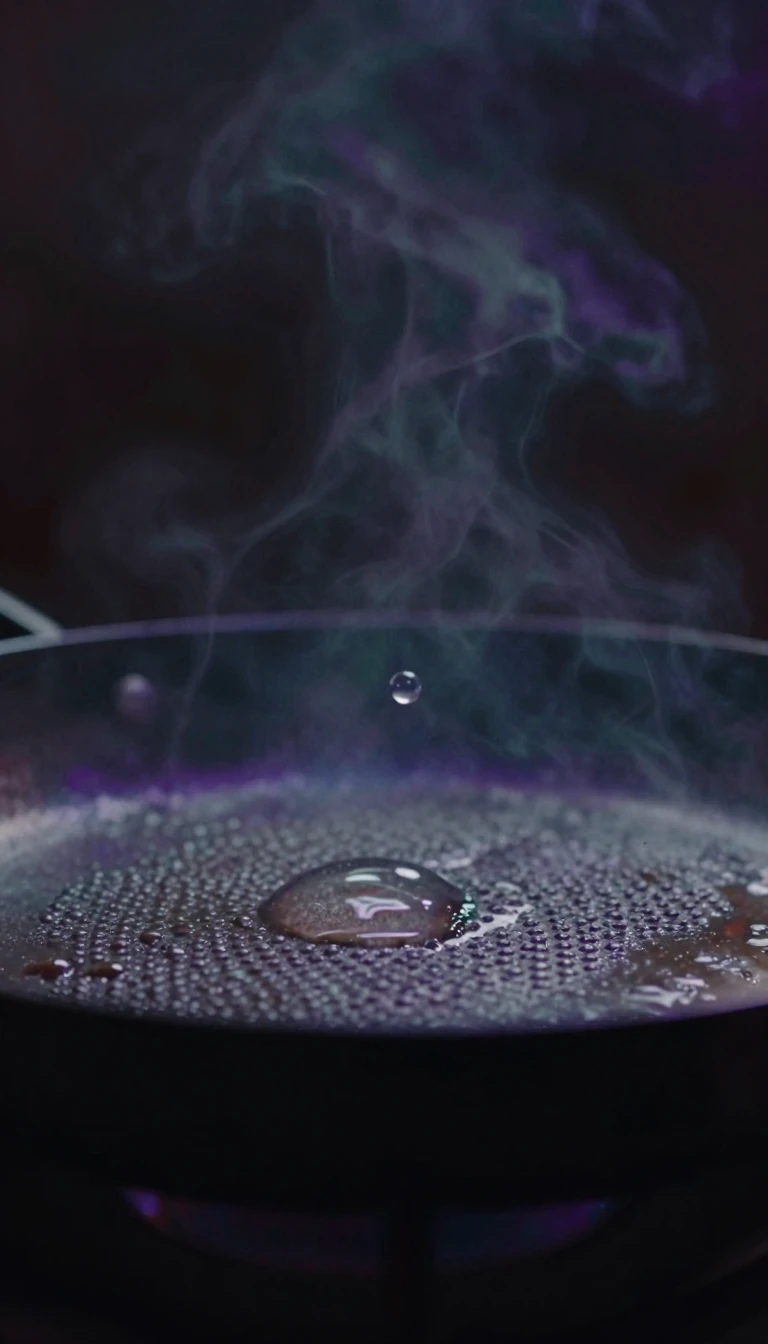 Why do ships float and pipes burst? The silent physics of fluids at restHydrostatics is the study of fluids in equilibrium, governing everything from the buoyancy of ships to the pressure in your blood. While we often associate it with water, it appli…
- The hydroxyl radical is Earth's atmospheric detergent, yet it is deadly to living cells.Known as the troposphere's primary cleaner, the hydroxyl radical destroys pollutants and greenhouse gases within seconds. Despite this vital planetary role, its extreme reactivity…
- Hygroscopy is the natural ability of materials to pull water directly from the air.From salt shakers that clump in humid weather to the complex mechanisms that allow pinecones to open and seeds to bury themselves, hygroscopy is a fundamental physical process. It…
 How physicists use hypercharge to organize the chaotic zoo of subatomic particlesIn the mid-20th century, physicists faced a bewildering array of newly discovered particles. To bring order to this subatomic chaos, they developed hypercharge, a quantum number t…
 Why the atomic nucleus is the secret architect of spectral lightSpectral lines are not simple, singular markers of light. Under the scrutiny of an interferometer, they reveal a hidden, finer structure. This splitting occurs because the atomic …
 Hyperons: The strange, heavy subatomic particles that might exist in neutron star coresHyperons are baryons that contain strange quarks, making them heavier than the protons and neutrons that form ordinary matter. These particles are so unusual that their discovery …
 The same chemical that whitens your laundry is forged inside your own immune system.Hypochlorite is more than just the active ingredient in household bleach. This powerful oxyanion, known for its ability to disinfect and oxidize, is also a critical weapon used by…
 Why your hard drive remembers the past even when the power is goneHysteresis is the phenomenon where a system's current state depends on its history. In magnetic materials, this lag allows for permanent memory, as magnetization does not return t…
- The hidden architecture of ice reveals why glaciers flow and light turns blueAt near-freezing temperatures, ice is not just a solid block but a complex, layered lattice of oxygen atoms. This hexagonal structure behaves like a deck of cards, allowing for pl…
 Why the perfect gas is a useful fiction that never actually existsThe ideal gas is a theoretical construct that obeys a simple law linking pressure, volume, and temperature. While no real substance perfectly matches this model, it serves as a po…
 Why your eyes are better at measuring light than you might thinkIlluminance measures the density of light hitting a surface, adjusted for how humans perceive brightness. While we often confuse this with other light metrics, our eyes are remark…
 The humble imidazole ring is the silent architect of life and modern medicine.This planar, five-membered heterocycle is far more than a laboratory curiosity. From the structural foundation of essential amino acids like histidine to the active cores of poten…
 Why high-speed collisions turn soft materials into brittle glass-like shardsWhen two objects collide, the duration of the impact determines the damage. At high velocities, materials lack the time to deform or vibrate, causing them to shatter rather than a…
- Why the vacuum of space has a specific electrical resistance of 377 ohmsSpace is not just an empty void. It possesses a fundamental physical property known as the impedance of free space, which dictates how electric and magnetic fields interact as the…
 Why incompressible flow doesn't actually require a fluid to have constant density everywhere.In fluid mechanics, we often assume flow is incompressible to simplify complex problems. While it is easy to imagine this means density never changes, the reality is more nuanced.…
- In the quantum realm, identical particles lose their individual identities entirelyIn our everyday world, you can track a ball by its path. In quantum mechanics, particles like electrons are fundamentally indistinguishable. They lack definite positions and canno…
- Why most collisions in the real world fail to conserve kinetic energyWhen objects collide, they rarely bounce back with their original energy. In an inelastic collision, internal friction, heat, and deformation siphon off kinetic energy, leaving th…
 Why collisions that change internal states reveal the building blocks of our universeIn the world of subatomic physics, not all collisions are simple bounces. When particles collide and their internal states shift, they undergo inelastic scattering. This process i…
- Why your perspective on motion depends entirely on the frame you chooseIn physics, an inertial frame is a special vantage point where objects move in straight lines unless pushed by a force. It is the gold standard for simplicity, allowing scientists…
- Infrared spectroscopy turns molecular vibrations into a fingerprint for identifying unknown chemical substancesBy measuring how matter absorbs, emits, or reflects infrared radiation, scientists can identify unknown samples or characterize new materials. This technique exploits the fact tha…
 Why do systems collapse, buckle, or spiral out of control when pushed too far?Instability is not just chaos; it is a precise mathematical state where a system’s internal variables grow without bound. Whether in a structural beam, a swirling plasma, or a hum…
 Modern chemical analysis now uses artificial intelligence to see the invisible in real time.Instrumental chemistry has evolved from simple measurement to high-resolution, AI-driven diagnostics. By combining advanced sensors with machine learning, researchers can now iden…