 Intellect Plus
Science
17,267 cards. Each one is a 40-second story with a five-minute read behind it. Page 174 of 288.
Subtopics: Acids and bases · Algebra · Alloys and ceramic compounds · Analysis · Applied mathematics · Atomic and molecular physics · Atoms · Basics · Biochemistry · Biochemistry and molecular biology · Biological processes and physiology · Biology · Biology and health sciences: General · Biology basics · Calculus and analysis · Cell biology · Cells · Chemical elements · Chemistry · Climate · Cold · Color · Computer scientists and programmers · Condensed matter physics · Discrete mathematics · Earth science · Electricity & magnetism · Electromagnetism · Elements · Entropy · Everyday Science Questions · Evolutionary biology · Famous equations · Famous experiments · Found by OrchestratorBot · Foundations · Functions · Future Frontier · Genetics and molecular biology · Geology · Geometry · Glass · Global Curiosity Questions · Heat · How Did the Dinosaurs Become Extinct? · How Things Work: Gas from Source to Supply · How Things Work: The Journey of Crude Oil · Human body & genes · Ice · Infinity · Inventors and engineers · Isotopes · Light · Magnetism · Materials · Mathematicians · Maths · Measurement · Mechanics · Microbiology · Minerals & crystals · Molecular compounds · Nature: How Long Can It Live? · Nuclear physics · Number theory · Optics & light · Organic compounds · Other · Particle physics · Physics · Physics basics · Pre-modern figures · Prime numbers & number theory · Probability · Proof · Pseudoscientists · Quantum · Quantum Biology · Reactions and synthesis · Relativity · Research methods · Researched · Salts and ions · Science basics · Scientific discoveries · Scientific instruments · Scientists, inventors and mathematicians · Separation processes · Social scientists · Stars · Statistics and probability · Theoretical computer science · Theory · Thermodynamics · Thermodynamics & heat · UK & Ireland: science · Units & measurement · Volcanoes · Water · Waves · Women in science
 Why general relativity predicts that singularities are an inevitable feature of our universeGeneral relativity suggests that singularities—places where spacetime curvature becomes infinite—are not just mathematical quirks of contrived scenarios. Instead, they are robust,…
 Is the chemical powering our rockets also a hidden threat in our drinking water?Perchlorate is a versatile chemical used in everything from fireworks and rocket fuel to airbag initiators. Yet, because it occurs naturally and as an industrial byproduct, it fre…
 Perchloric acid is a powerful industrial tool that can also be dangerously explosiveAs one of the strongest known acids, perchloric acid is essential for everything from rocket fuel to etching electronics. Yet, its extreme reactivity makes it a volatile neighbor …
 Why chemists once called these mysterious transformations the no-mechanism reactionsPericyclic reactions defy standard chemical intuition. Instead of electrons flowing from a donor to an acceptor, they redistribute in a single, synchronized loop. Once dismissed a…
 Why the first row of the periodic table contains only two chemical elementsThe periodic table is built on recurring patterns, yet its very first row breaks the rules. With only hydrogen and helium, this period is an outlier in atomic structure. Understan…
 The fifth row of the periodic table contains eighteen elements with surprising, diverse roles.Spanning from rubidium to xenon, the fifth period of the periodic table is a collection of eighteen elements that defy simple categorization. From the radioactive technetium to th…
 The sixth row of the periodic table holds 32 elements, from caesium to radon.Spanning from atomic number 55 to 86, the sixth period is a dense collection of extremes. It contains the last stable element, lead, and the rarest naturally occurring elements. F…
 The seventh row of the periodic table is a frontier of radioactive, synthetic elements.Period 7 contains 32 elements, ranging from francium to oganesson. While the first two are naturally occurring, every subsequent element must be created in a laboratory. These hea…
 Permanganate is a powerful, purple oxidizer that demands extreme caution in the laboratory.Recognizable by its deep purple hue, the permanganate ion is a potent oxidizing agent essential for water treatment and chemical analysis. While it is a versatile tool for organic…
 Permeability is the invisible dial that dictates how materials respond to magnetic fields.Ever wonder why some materials cling to magnets while others ignore them? Permeability is the secret measure of how easily a substance allows magnetic fields to permeate its struc…
 Why the dream of a machine that runs forever remains a scientific impossibilityA device that operates indefinitely without external energy is the ultimate fantasy of inventors. Despite centuries of attempts to build one, these machines consistently fail beca…
 Pewter is a timeless alloy that has shaped human domestic life for two millennia.For over 2,000 years, this versatile tin-based alloy has been the backbone of household utility. From Roman tableware to modern decorative figurines, pewter’s unique properties—ma…
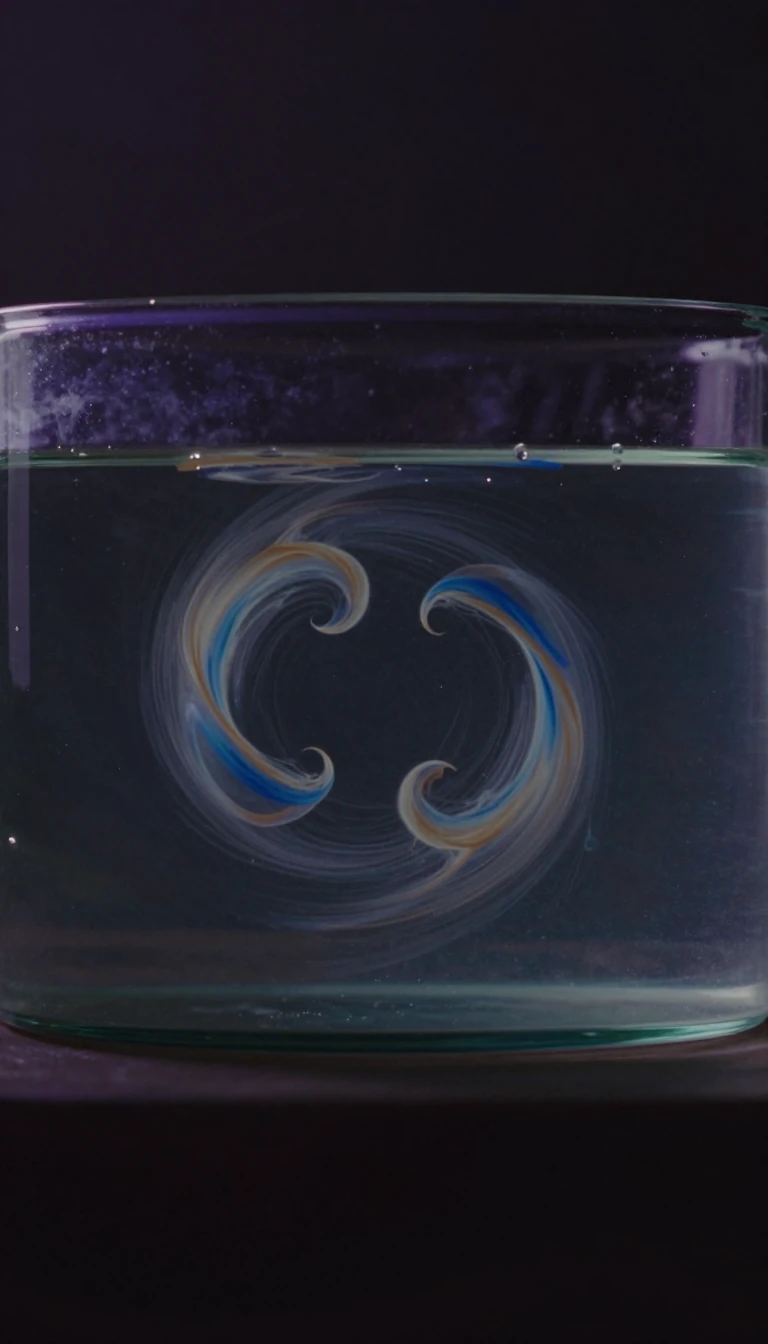 How chemical indicators reveal the hidden acidity of everyday substances through color changesA pH indicator is a chemical detector that reveals the concentration of hydrogen ions in a solution by changing color. From the vibrant petals of a hydrangea to the humble red cab…
 Why nature forbids certain mixtures from ever reaching a state of perfect equilibriumThe Gibbs phase rule dictates how many variables, like temperature and pressure, you can independently control in a chemical system. It reveals why you cannot have four phases of …
 Cells are not just bags of soup, they are complex, organized, liquid-like droplets.Inside your cells, components do not just float randomly. They undergo phase separation, demixing into distinct, functional droplets called biomolecular condensates. This process …
 Why the speed of a wave's crest is not the speed of informationWhen you watch a wave crest travel across the ocean, you are observing phase velocity. It describes how a single frequency component moves through space. Yet, this speed is often …
 Phase is the secret clockwork that determines whether waves amplify or vanish entirelyIn the world of physics, phase is the precise fraction of a cycle a wave has completed. It acts as a rhythmic marker, dictating how waves interact when they meet. When waves align…
 How a failed experiment in the 1870s birthed the modern age of synthetic plastics.Before the 20th century, humanity relied on modified natural materials like shellac. That changed when Leo Hendrik Baekeland mastered the phenol-formaldehyde reaction. By controll…
 Plants build over 8,000 diverse compounds from a single, ancient metabolic pathwayThe phenylpropanoid pathway is the secret engine behind plant survival. By transforming simple amino acids into a massive array of over 8,000 metabolites, plants create everything…
 Phonons are the invisible particles of heat and sound vibrating within solid materialsIn the crystalline structures of computer chips and solar panels, heat is not just a vague energy state. It is a collection of particles called phonons. By treating atomic vibrati…
 Phosphine: The Toxic Gas That Bridges Industrial Chemistry and Extraterrestrial MysteryPhosphine is a colorless, flammable, and highly toxic gas known for its sharp, garlic-like scent. While it serves as a vital tool in chemical synthesis and pest control, its prese…
 Why do some materials glow in the dark long after the lights go out?While fluorescence vanishes in a nanosecond, phosphorescence lingers, sometimes for years. This persistent glow occurs because electrons get trapped in a metastable energy state, …
 Why your light bulbs are measured by human perception rather than raw powerPhotometry measures light not as it exists in the physical universe, but as it appears to the human eye. While radiometry tracks absolute energy, photometry weights every waveleng…
 Photonic crystals: The nanostructures that manipulate light like semiconductors manipulate electronsImagine a material that forces light to bend around sharp corners or traps it entirely. Photonic crystals achieve this by using periodic nanostructures to create band gaps, effect…
 Is photonics just electronics for light, or is it something entirely new?Photonics is the science of generating, manipulating, and detecting light at the level of individual photons. While it shares a lineage with classical optics, it aims to perform t…
 Are the fundamental constants of nature truly constant, or do they shift over time?Physical constants are the bedrock of our theoretical equations, yet their status is surprisingly fluid. While we rely on values like the speed of light to define our measurement …
 Is a car with replaced parts still the same object you started with?We intuitively define physical objects by their boundaries and material, but physics and philosophy suggest identity is more fluid. Whether it is a rock losing mass or a car getti…
- Why light behaves like a wave rather than a simple straight-line rayGeometric optics treats light as straight lines, but this fails when light encounters obstacles. Physical optics fills the gap, modeling how waves interfere, diffract, and polariz…
 Why your intuition about the physical world might be fundamentally incompleteWe define the world through measurable traits like mass, color, and temperature. Yet, these physical properties are often secondary, emerging from deeper, hidden layers of reality…
 Why measuring the world requires more than just a number and a unitA physical quantity is not just a measurement; it is a precise language for describing the universe. While we often think of quantities as simple numbers, they are actually comple…
 Why modern physics education is shifting from passive lectures to active student discoveryPhysics teaching is evolving beyond the traditional lecture hall. By integrating evidence-based research, educators are moving away from teacher-centric models toward active learn…
 How weak Van der Waals forces allow geckos to scale vertical walls with easePhysisorption is a subtle dance of atoms where electronic structures remain largely unchanged. Driven by weak Van der Waals forces, this phenomenon is responsible for everything f…
 Why the pi bond is the essential architect of molecular rigidity and strengthWhile sigma bonds provide the sturdy foundation of chemical structures, pi bonds add the complexity and constraints that define molecular shape. By forcing atoms into fixed orient…
- Squeeze a crystal, get a spark: the hidden physics of piezoelectricityPiezoelectricity is the remarkable ability of certain materials to generate an electric charge when physically compressed. Discovered in 1880, this reversible process powers every…
 Why the pint is a global measurement nightmare disguised as a simple drinkThe pint is a unit of volume defined by history rather than logic. While it is traditionally one-eighth of a gallon, the actual amount you receive depends entirely on your locatio…
- Pions are the subatomic glue that holds the atomic nucleus togetherPions are the lightest mesons, acting as the essential mediators of the strong nuclear force. These unstable particles, composed of a quark and an antiquark, are produced in high-…
- Why the movement of water through a closed pipe defies simple atmospheric rulesFluid mechanics distinguishes between open-channel flow and pipe flow based on the presence of a free surface. While open channels interact directly with atmospheric pressure, pip…
 From mouth-pipetting to zeptolitre precision, the humble lab tool has a complex history.The pipette is a fundamental laboratory instrument, yet its evolution spans from dangerous mouth-suction techniques to modern robotic systems. Whether measuring viscous blood or n…
 Why your high-resolution monitor might look blurry when you finally print it out.Pixel density, or pixels per inch, is the bridge between digital files and physical reality. While your screen resolution dictates how much information you see, pixel density dete…
 Why a mathematical trick accidentally launched the quantum revolution in 1900Max Planck introduced a radical idea to solve the mystery of black body radiation. He assumed energy was emitted in discrete packets rather than a continuous flow. Planck initiall…
- How a mathematical trick to fix a broken physics formula birthed quantum mechanicsBy 1900, classical physics could not explain why hot objects emit radiation at specific wavelengths. Max Planck solved this by proposing that energy is emitted in discrete packets…
 Why the color of a black body follows a precise, predictable path through spaceThe Planckian locus describes the exact chromaticity path an incandescent object takes as its temperature climbs. From deep red to blinding blue, this curve maps how light shifts …
- Why the perfect plane wave is a mathematical ghost that cannot physically existA plane wave is a theoretical ideal where wave values remain constant across infinite flat surfaces. While these perfectly uniform waves are impossible to find in nature because t…
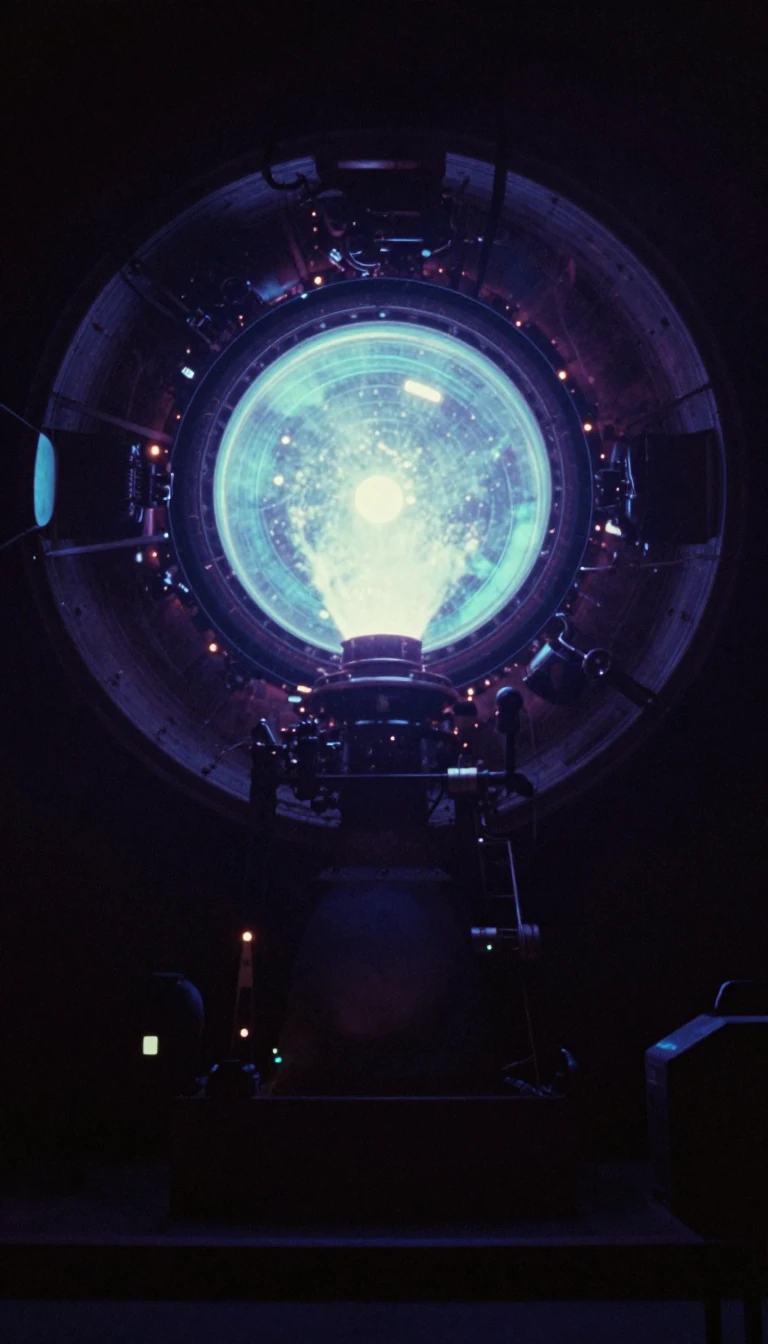 When you switch off a fluorescent light, you are witnessing plasma turning into gas.Plasma recombination is the process where positive ions capture free electrons to revert into neutral atoms. This exothermic reaction releases energy as heat, effectively reversin…
- Plasmons are the secret to manipulating light at scales smaller than its own wavelength.By harnessing the collective dance of electrons at the interface of metals and dielectrics, scientists can compress light into subwavelength dimensions. This phenomenon, known as …
 The rare metals cleaning our air may be creating an environmental hazard of their ownPlatinum-group metals are essential for modern life, from catalytic converters in cars to life-saving cancer treatments. Yet, as global demand for these rare elements surges, thei…
 Why the nitrogen family is named after the Greek word for choking or stranglingKnown as pnictogens, the elements in group 15 of the periodic table share a unique valence shell structure that dictates their chemical behavior. From the life-sustaining nitrogen…
 Why the simplest nitrogen-based gases behave like water while their heavier cousins turn deadlyPnictogen hydrides are binary compounds formed by hydrogen and elements from the periodic table's fifteenth column. While ammonia is a vital industrial solvent that mimics water's…
- Why the laws of physics remain constant no matter how you move through spaceThe Poincaré group is the mathematical bedrock of special relativity. It describes every possible way you can shift, rotate, or accelerate through Minkowski spacetime without alte…
 Why physicists treat massive objects as infinitely small points to solve complex problemsA point particle is an idealization where an object's size, shape, and rotation are ignored. By treating complex bodies as infinitesimal points, physicists simplify interactions—f…
- Why scientists treat massive stars and entire power plants as tiny mathematical pointsA point source is a localized origin of flux or flow, treated as a mathematical singularity to simplify complex calculations. While these points do not exist in the physical unive…
 The poise measures how much a fluid resists flowing under a specific forceBeyond its common meaning of grace and balance, the poise is a precise scientific unit for dynamic viscosity. It quantifies the internal friction of fluids, revealing how much for…
- How the Poisson bracket maps the hidden geometry of moving physical systemsIn 1809, Siméon Denis Poisson introduced a mathematical tool that fundamentally changed how we describe motion. By defining a specific binary operation, he created a way to track …
 Why stretching a rubber band makes it thinner, not just longerWhen you pull a material, it does not simply grow longer; it also shrinks in width. This counterintuitive behavior is governed by Poisson's ratio, a fundamental constant that defi…
 How materials respond to electric fields through the hidden dance of bound chargesWhen a dielectric material encounters an electric field, it does not just sit there. Its internal atoms and molecules shift, creating a subtle internal alignment known as polariza…
 How a simple drop of liquid mercury revolutionized the world of chemical analysisInvented in 1922, polarography uses a unique dropping mercury electrode to identify unknown substances in solution. By measuring how current changes as voltage increases, scientis…
- Polyacrylonitrile is the secret ingredient behind your favorite wool-like sweaters and high-tech carbon fibers.This versatile synthetic resin, born from a toxic monomer, transformed the textile industry by offering a durable, low-cost alternative to wool. Beyond your closet, its unique che…
 Polycyclic aromatic hydrocarbons are everywhere, from your grilled dinner to the deep interstellar void.These organic compounds, formed by incomplete combustion, are ubiquitous. They drift through the interstellar medium, coat the surface of Saturn's moon Titan, and linger in your k…
 The elastic backbone of the modern world is a simple polymer called polyisoprene.Polyisoprene is the primary chemical building block of natural rubber, a resilient material harvested from tropical trees. While synthetic versions now dominate global production,…
 How simple molecules transform into the durable materials that define our modern world.Polymerization is the chemical process of linking hundreds or thousands of small molecules, called monomers, into massive, complex chains. By forging stable covalent bonds, this r…