 Intellect Plus
Health
6,621 cards. Each one is a 40-second story with a five-minute read behind it. Page 26 of 111.
Subtopics: Ageing & longevity · Anaesthesia · Anatomy and morphology · Bacteria · Biology · Blood · Bones & muscles · Brain · Clinical trials · Consciousness · Diabetes · Diagnosis · Digestion · Dreams · Drugs and medication · Epidemiology · Ethics · Exercise · Exercise & fitness · Eyes & vision · First aid · Future Frontier · Germ theory · Global health · Health and fitness · Health, medicine and disease · Heart & circulation · History of medicine · Hormones · Hygiene · Immunology · Infection · Medical basics · Medical history · Medical procedures · Medicine · Medicines · Memory · Mental health · Mind · Morbidity · Neuroscience · Nutrition · Pandemics & epidemics · Psychiatry · Public health · Researched · Skin & hair · Sleep · Surgery · Teeth & dentistry · Vaccines · Vitamins
 The rural geography of health and agriculture in Dooly CountyIn a landscape where 100% of the population lives in rural areas, the intersection of geography and lifestyle creates unique challenges for public health. From the management of a…
 Haiti's genetic map reveals a complex history of migration and mixingWhile Haiti is often viewed through a singular lens, its DNA tells a story of deep regional diversity. From the north to the south, the country's genetic makeup shifts significant…
 Two Almas: One Michigan college, one Swedish health studyThe name Alma can lead you to a historic Michigan campus or a massive Swedish health study. While one fosters liberal arts and Scottish traditions, the other tracks the developmen…
 The hidden health toll of Haiti's 2021 earthquakeWhen a 7.2 magnitude earthquake strikes, the immediate destruction is visible, but the secondary health crisis is often harder to map. In Haiti, the quake didn't just collapse bui…
 The 19th Century's Defining Epidemic: A Disease of Fear and MiasmaDuring the 1830s, a terrifying new disease swept across the globe, claiming millions of lives. Because science could not identify its source, authorities blamed foul air or divine…
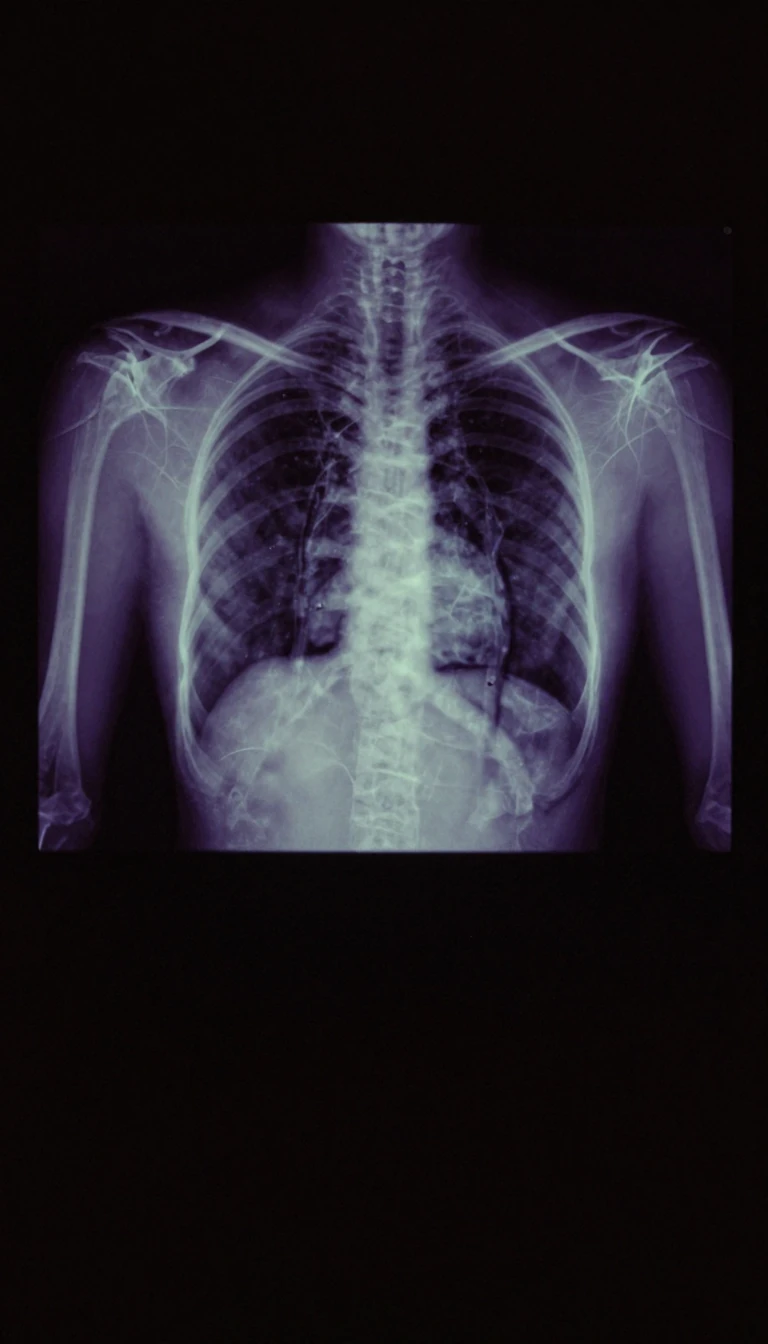 The gold standard for finding hidden biological blueprintsHow do scientists determine if two proteins share a common ancestor or if a new gene has a specific function? They use the Smith–Waterman algorithm. By mathematically scanning for…
 The hidden health toll of Louisiana's industrial landscapeLiving near a petrochemical hub isn't just a matter of geography; it is a measurable health risk. In Louisiana, industrial activity creates a disproportionate burden on specific c…
 The hidden health toll of the global business travelerExpanding a business across borders is a feat of logistics and strategy, but it carries a physical cost. While global value chains connect 70 percent of international trade, the p…
 How you describe a choice can fundamentally change your decisionImagine choosing between two medical treatments. If one is framed as "saving lives" and the other as "preventing deaths," most people will pick the first option—even if the math i…
 Protecting the heart: The high-stakes geometry of breast cancer radiationTreating left breast cancer requires a delicate balancing act: destroying the tumor while sparing the heart and lungs. Because the left anterior descending coronary artery (LAD) s…
 The hidden mobility barriers facing Arizona's essential farmworkersYuma County is a powerhouse of American agriculture, producing the state's highest value of crops. Yet, the very people who sustain this industry face unique hurdles to basic heal…
 The 'Green Lane' logic: How the Windsor Framework handles medicinesMoving goods between Great Britain and Northern Ireland creates a complex regulatory maze. The Windsor Framework attempts to simplify this by creating a 'green lane' for goods sta…
 Why a South Carolina county has 10 times the national West Nile riskIn the heart of South Carolina, a unique intersection of urban wealth, dense tree canopies, and specific water bodies has created a hyperendemic hotspot for West Nile virus. While…
- Systemic discrimination remains a primary driver of Native American health disparitiesFor Native Americans, the path to healthcare is often blocked by a legacy of systemic trauma. New research reveals that one in five Native Americans report facing discrimination i…
 Why healthcare is a primary target for devastating cyberattacksA single ransomware strike can freeze a nation's pathology services for over a month. As medical systems become more digitized, the risks of cyberattacks have shifted from simple …
 Your brain might be hallucinating an accent before you hear a wordResearch suggests that our brains don't just listen to speech; they project expectations onto it. We can 'hallucinate' an accent based solely on a person's appearance, leading to …
 The invisible barriers to public health screening in news commentsWhen the NHS announced a national lung cancer screening programme in 2023, the public response revealed more than just medical interest. Hidden within online news commentary are d…
 How geography shapes the geography of the human mindMental health is often treated as an individual struggle, but data suggests it is deeply tied to where we live. From the Andean peaks of Colombia to the digital borders of Chile, …
 The Invisible Architecture of Oppression: How Racism Becomes Self-PerceptionInternalized racism is more than just a personal feeling; it is a sociological phenomenon where systemic oppression is absorbed into an individual's self-concept. It manifests as …
- How internalized oppression creates a psychological barrier to physical healthWhen a group is systematically marginalized, the pressure can lead them to adopt the oppressor's negative views as their own truth. This psychological injury doesn't just hurt sel…
 True e-Governance is about redesigning power, not just digitizing servicesMany people mistake e-governance for simply putting government forms online. In reality, it represents a fundamental shift in how states exercise authority. It moves beyond mere c…
 The hidden waste of healing: what happens to hospital trash?Healthcare is a major contributor to environmental pollution, generating millions of tons of waste annually. In a single 24-hour period at a major urban hospital, an emergency dep…
 Geography and history shape the health landscape of Dorchester CountyIn the Lowcountry of South Carolina, the history of settlement and the reality of modern demographics intersect. While the region was once a destination for those fleeing coastal …
 The invisible barriers of acephobia and systemic healthcare inequalityAsexuality is often misunderstood as a choice or a medical condition, leading to a specific form of discrimination known as acephobia. Beyond individual prejudice, these biases cr…
 The island that joined the EU despite being split in twoCyprus is a geographical paradox: a divided island where the entire landmass is EU territory, yet EU law is suspended in certain areas. Its journey into the Union wasn't just a di…
- One snake, two venoms: the biological split of the Mohave rattlesnakeThe Mohave rattlesnake is often cited as one of the most dangerous snakes in North America, but its lethality depends entirely on where it lives. Depending on the geography, the s…
 While climate denotes anticipated conditions, weather describes the actual experienceIf weather is the outfit you wear today, climate is the entire wardrobe you own. It is the long-term summation of atmospheric elements—temperature, humidity, and precipitation—ove…
- The EU budget is an investment tool, not a primary spending potWhile the European Union manages a massive multi-billion euro budget, it functions as a secondary investment layer rather than a primary spending pot. Representing about 2% of pub…
 When the facts are subjective, 'prejudice' becomes a political mirrorIn the 2017 Australian marriage law survey, a simple question revealed a profound psychological divide. Research suggests that both supporters and opponents of same-sex marriage v…
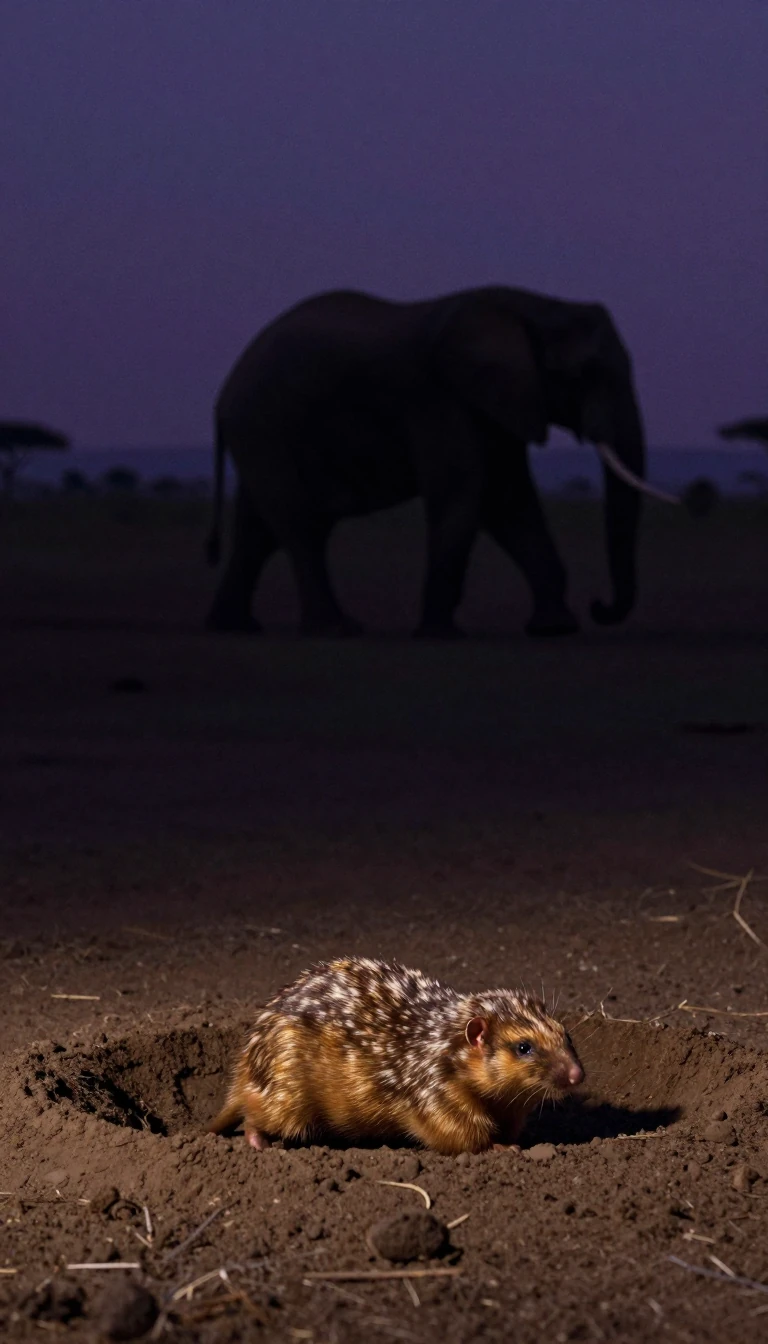 The blue sheep that is genetically closer to goats than sheepDespite its name, the bharal is a master of evolutionary deception. This high-altitude caprine is genetically closer to goats than to the sheep it resembles. Living in the rugged …
- How a 1910 land tax law aimed to break up Australian estatesLong before the modern digital era, Australia's federal tax system was forged from a desire to redistribute land. What began as a targeted strike against large, under-utilised col…
 The hidden health cost of winter warmth in regional AustraliaIn the highland city of Armidale, the cozy glow of a domestic wood heater carries a heavy price. While providing essential warmth during long, frosty winters, these heaters create…
 Beyond the headlines: the complex mechanisms of anti-Palestinian racismIt is often described as a cocktail of xenophobia, erasure, and identity denial. From the halls of German parliaments to university campuses in the United States, anti-Palestinian…
 Is your respect for children actually a form of systemic bias?We often view our authority over children as a protective necessity. However, scholars argue this power dynamic may be 'adultism'—a systematic prejudice that treats youth as inher…
 Contentment is not a destination, but an internal state of 'wholeness'The word contentment originates from the Latin term for containers being 'held together' or 'intact.' In humans, it describes a sense of completeness where desires do not exceed o…
 Ukraine's administrative architecture: A three-tiered system of governanceUkraine operates as a unitary state with a structured hierarchy of territorial organization. From the broad oversight of regions to the granular level of local communities, this s…
- Can a fish feel suffering, or is it just a reflex?For centuries, philosophers debated whether animals could truly feel pain or merely react to it. While humans experience pain as a private, emotional state, determining if fish sh…
- Can a cockroach feel pain, or is it just a reflex?We often assume that if an animal reacts to a sting, it must be suffering. But there is a vital distinction between nociception—the mechanical reflex to avoid harm—and the private…
 From an occult church to a sanctuary for 1,500 animalsThe Best Friends Animal Society began as the Process Church of the Final Judgment, an English occult group. Today, it manages over 36,000 acres of land in Utah, providing a perman…
- From fringe movement to parliamentary power: the rise of Norway's Green PartyFor decades, the Norwegian Green Party existed on the periphery of politics, never breaking 0.5% in national elections. That changed in 2025, as the party secured its first-ever l…
 The socialist architect who drafted the blueprint for British public ownershipSidney Webb didn't just advocate for socialism; he engineered its institutional framework. From co-founding the London School of Economics to drafting the core principles of the B…
- The UK's unique legal bridge between profit and public goodHow do you run a business that prioritizes the community over the bottom line? In 2005, the UK introduced a specific legal structure to solve this dilemma. It allows for profit, b…
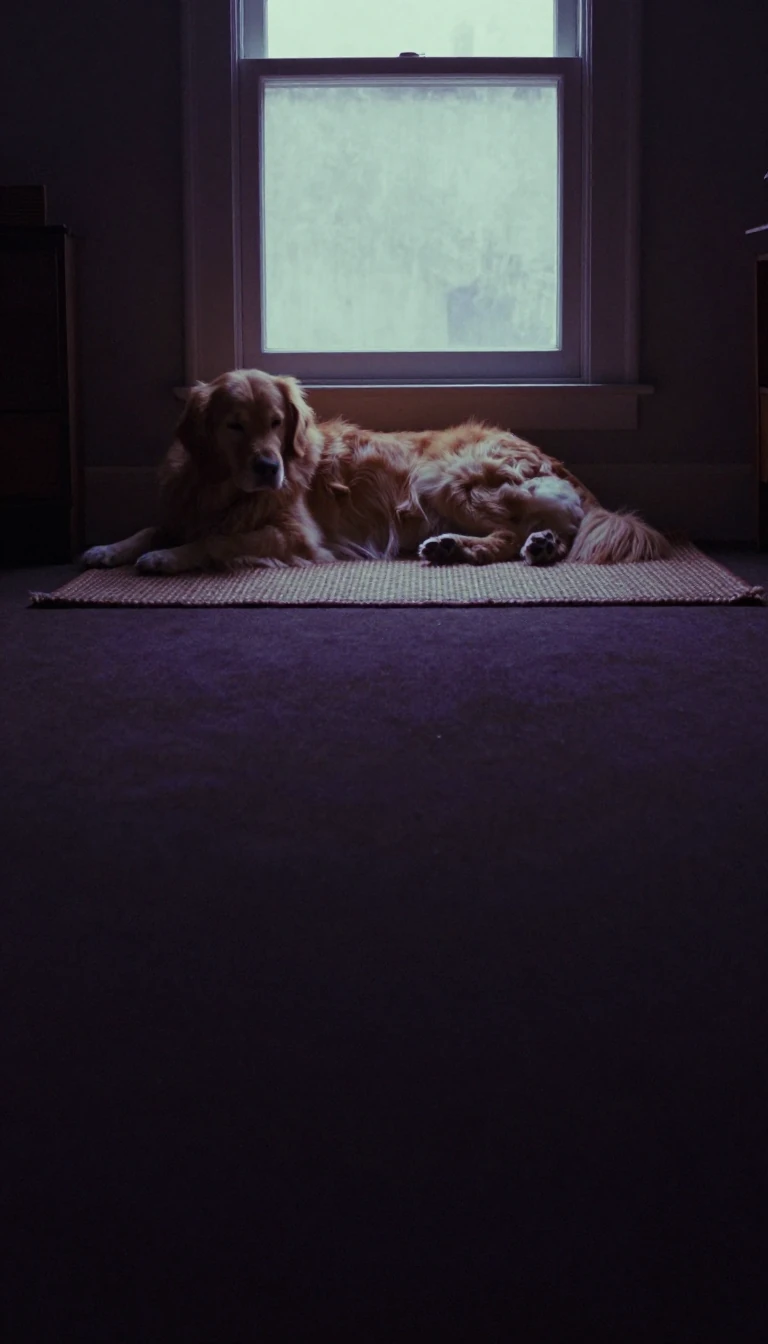 Can a simple bond with an animal transform human psychological health?Beyond companionship, animal-assisted therapy leverages a biological bond to lower blood pressure and reduce stress. While some believe it is a modern trend, the practice of using…
 Democracy is not just a conversation; it is a physical presenceWe often think of democracy as a series of debates and speeches. But sociologist Richard Sennett argues that the most fundamental democratic acts are nonverbal and physical. By si…
 The Greek party that rose from the ashes of a military dictatorshipFounded in 1974 by Konstantinos Karamanlis, New Democracy emerged during Greece's transition from military rule to democracy. While its roots trace back to the early 20th-century …
- The radical splinter group that refused to compromise on apartheidWhen the ruling National Party began making concessions to the world, a hardline faction broke away to preserve a purer vision of segregation. They didn't just want a seat at the …
 The failed experiment of liberalizing a dictatorship from the insideCan a dictator truly surrender power on his own terms? In 1973, Greek leader Georgios Papadopoulos attempted to dismantle his own military junta through a process called metapolit…
 The invisible geometry that defines ownership and state powerA cadastre is more than a map; it is a fundamental tool of governance. By translating messy physical reality into legible, line-by-line data, states can tax, trade, and control la…
 Philosophy is not just for interpreting the world, but for transforming itKarl Marx famously rejected the idea that thinkers should merely observe reality. Instead, he proposed a radical shift: philosophy must become a tool for practical change. Discove…
- Why the 'Plan' is making a sophisticated comeback in modern statesAfter the collapse of the Soviet Gosplan in 1991, many assumed state-level economic planning was a relic of the past. Yet, a new era of 'indicative' planning is emerging. It isn't…
 Why predicting a diagnosis is often more effective than modeling the disease itselfIn machine learning, we often face a choice: do we try to understand how data is created, or simply learn to tell it apart? While generative models attempt to map the entire biolo…
- The psychology of the 'FOMO' feed: Why we share our dataWhy does a simple summary of your music taste turn into a global social media phenomenon? It is a masterclass in how data visualization, multi-list interfaces, and the fear of mis…
 The invisible engine driving the world's most used business softwareIt is not a standalone program, yet it automates your entire workflow. From Excel to Word, Visual Basic for Applications (VBA) acts as a hidden layer of logic, allowing different …
- The rugged 'tin can' that powered 1980s productivityIn an era of fragile electronics, one company built a computer designed like industrial test equipment. It was heavy, durable, and intentionally limited—a 'turnkey' appliance that…
 How mathematicians reshape messy data into predictable patternsIn the chaotic world of statistics, raw data often arrives with uneven variance and skewed distributions. To make sense of this noise, researchers use power transforms—a family of…
 Why we peel back the layers of others like an onionHuman connection isn't a light switch; it is a gradual process of peeling back layers. Social penetration theory explains how we move from superficial small talk to deep intimacy …
 Mammals may have hijacked ancient viruses to master cell fateWe often think of viruses as mere invaders, but some may have become essential architects of life. New research suggests that placental mammals have co-opted endogenous retrovirus…
 How mathematicians predict the most extreme events in natureWhen we study the world's most intense storms or highest floods, we aren't just looking at averages. We are looking at the tails. The Generalized Extreme Value distribution provid…
 The computer that turned technophobes into office workersIn 1985, computers were expensive toys for the tech-savvy. Amstrad disrupted this by creating a machine so affordable it was marketed as a typewriter replacement. By focusing on o…
 Why modern brands are transforming into media publishing housesInstead of pushing products, leading companies are now focusing on delivering valuable, free information. From extreme sports films to personal finance guides, the goal has shifte…