 Intellect Plus
Health
6,621 cards. Each one is a 40-second story with a five-minute read behind it. Page 31 of 111.
Subtopics: Ageing & longevity · Anaesthesia · Anatomy and morphology · Bacteria · Biology · Blood · Bones & muscles · Brain · Clinical trials · Consciousness · Diabetes · Diagnosis · Digestion · Dreams · Drugs and medication · Epidemiology · Ethics · Exercise · Exercise & fitness · Eyes & vision · First aid · Future Frontier · Germ theory · Global health · Health and fitness · Health, medicine and disease · Heart & circulation · History of medicine · Hormones · Hygiene · Immunology · Infection · Medical basics · Medical history · Medical procedures · Medicine · Medicines · Memory · Mental health · Mind · Morbidity · Neuroscience · Nutrition · Pandemics & epidemics · Psychiatry · Public health · Researched · Skin & hair · Sleep · Surgery · Teeth & dentistry · Vaccines · Vitamins
 Are great apes legal persons or mere property under the law?For centuries, animals were legally classified as things. Today, a growing movement argues that great apes—bonobos, chimpanzees, gorillas, and orangutans—possess the self-awarenes…
 How to predict the world by treating everything as if it has a mindWhen you watch a bird fly or a robot move, you aren't just seeing physics. You are likely using a sophisticated mental shortcut. By ascribing beliefs and desires to objects, you c…
 Can a single brain host two separate conscious entities?When surgeons sever the primary communication bridge between the brain's hemispheres, the results are eerie. Some patients experience "alien hands" that act independently of their…
 Design does not require a designer: the corrosive logic of evolutionMost people assume that complex design—from the human eye to the smartphone in your pocket—requires an intentional architect. Philosopher Daniel Dennett argues the opposite. He su…
 Is the internet destroying our ability to have a shared public debate?The public sphere is supposed to be a neutral ground where citizens meet as equals to debate common interests and hold power to account. But in a digital age, this space is fractu…
 The peaceful transfer of power is a habit-forming democratic miracle.While it feels like a routine civic duty, the peaceful handover of leadership is actually a rare and delicate achievement. Scholars suggest that once a nation successfully navigat…
 Does your nation recognize that animals can feel?Legal protections for animals are far from universal. While some nations have formally acknowledged the sentience of non-human animals, others possess no anti-cruelty laws at all.…
 The new playbook for autocracy is being written from withinUnlike the military coups of the Cold War, today's slide toward authoritarianism often happens under the guise of legitimacy. Modern autocrats are not seizing power from the outsi…
- Were the Spanish American territories colonies or merely overseas provinces?History often paints the Spanish Empire as a system of economic exploitation. However, legal records suggest a far more complex reality: a pluralistic model of integration where A…
 Can algorithms sense a life-threatening allergy before a human can?In the high-stakes world of healthcare, seconds determine survival. While doctors rely on physical symptoms, a new frontier of predictive analytics is using wearable sensors to de…
 Why some democracies choose to ban political parties entirelyIn a world defined by partisan friction, some nations operate without political parties at all. From the tiny islands of the Pacific to the halls of ancient Athens, non-partisan s…
 Can a fake match percentage actually make people like each other?In a bold A/B test, OkCupid researchers used a placebo match score to manipulate user connections. The results revealed a startling psychological truth: when we are told we are a …
 Democracy moves in waves, not just random ripples of changeDemocratization is rarely a linear path. Instead, it tends to occur in global clusters of time and space. From the 19th-century expansion of suffrage to the modern era of hybrid r…
- The ethical cornerstone of human research is undergoing a digital transformationSince 1964, the Declaration of Helsinki has been the global gold standard for medical ethics. But as artificial intelligence and massive biobanks reshape science, the world’s most…
 The word processor that inspired Game of Thrones is still used todayWhile modern software prioritizes visual polish, a 1970s legacy program remains the preferred tool for some of history's most famous authors. Discover how WordStar’s unique comman…
 Why some messages spread like wildfire while others vanish instantlyVirality isn't a random accident or a lucky sneeze. It is a deliberate psychological and structural phenomenon. To move from a simple post to a global phenomenon, a message must n…
 The danger of believing humans are born as blank slatesIf the human mind were truly a tabula rasa, any environment could be engineered to produce perfect citizens. But cognitive psychologist Steven Pinker argues this belief is a dange…
 Will machines eventually possess spiritual experiences and free will?Futurist Ray Kurzweil argues that as computers achieve human-level intelligence, they won't just mimic our logic—they may develop their own spiritual lives. According to his visio…
- The mathematical art of distilling infinite data into a single 'word'Imagine condensing years of complex medical records or massive streams of noisy communication into a single, compact summary without losing a drop of information. This is the powe…
 Why your sense of self is often a group projectWe often believe our identities are purely personal, but psychology suggests much of our self-worth is actually borrowed. Social Identity Theory reveals that we construct our sens…
- To survive the machine age, humans may need to become cyborgsEngineer Kevin Warwick argues that human limitations in sensorimotor abilities are being rapidly outpaced by machines. To avoid being overtaken, he suggests we must use technology…
- Why we treat our friendships like a balance sheetDo you ever wonder why you stop reaching out to a friend who never reciprocates? Social exchange theory suggests your brain is performing a silent cost-benefit analysis. It treats…
 The mental bridge: how consciousness reaches beyond itself to find meaningIs your mind a container for the world, or a bridge to it? In phenomenology, intentionality is the unique power of consciousness to be directed toward an object. It is the mechani…
- Why your friends are statistically more popular than youIt is a mathematical certainty that, on average, your friends have more friends than you do. This isn't just a social quirk; it is a structural property of networks. Because popul…
- Why your brain prefers the crowd over your own judgmentFrom financial bubbles to organic food trends, humans possess a deep-seated instinct to mirror the group. This isn't just a social quirk; it is an evolutionary shortcut. Our brain…
- The math of 'sufficient' statistics: Why some data matters more than othersIn a world of overwhelming data, how do we isolate what actually matters? The exponential family of distributions provides a rigorous mathematical framework to do just that. By id…
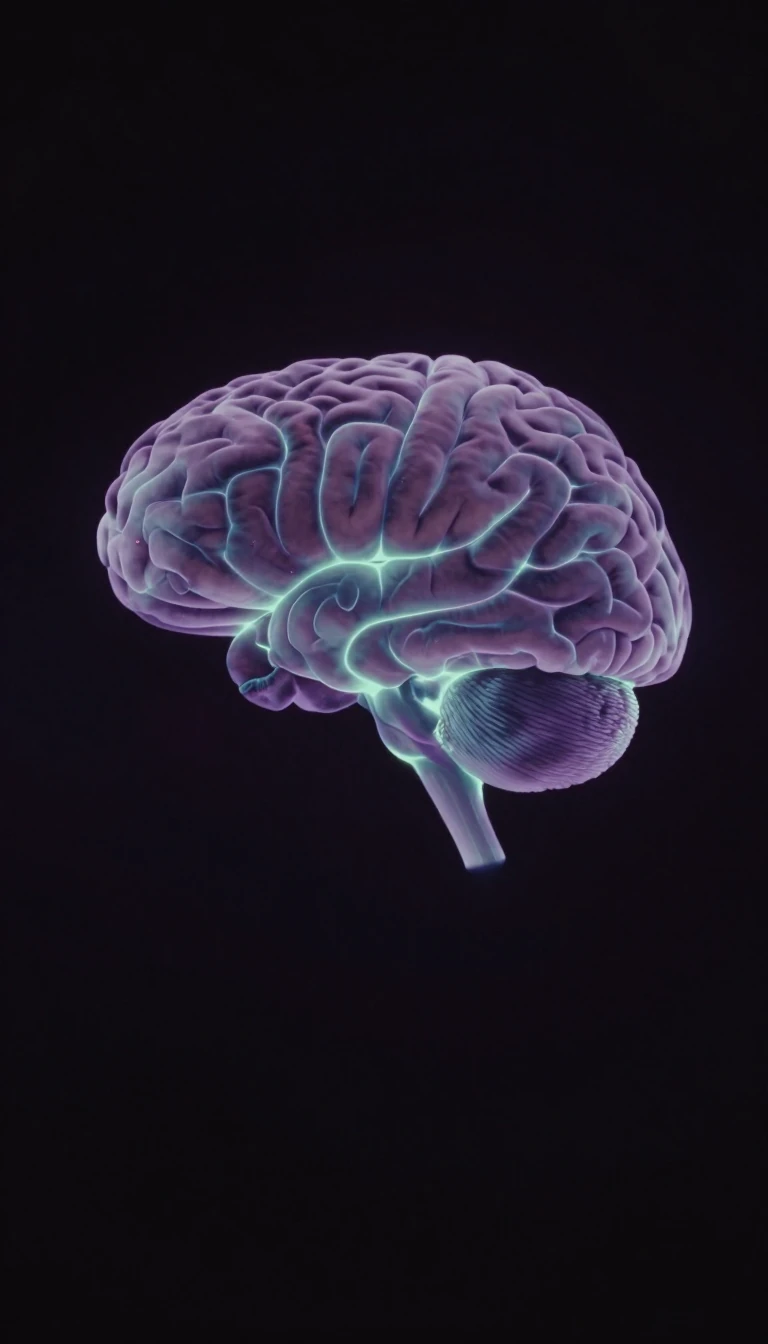 The brain is not a machine, but a self-organizing danceYour brain doesn't follow a simple blueprint; it behaves like a bustling city or a shifting ecosystem. It is a complex adaptive system where the whole is greater than its parts. U…
 A deep-sea glass house where roommates live for lifeIn the crushing depths of the Pacific, a glass sponge builds a literal house for its neighbors. This symbiotic arrangement forces a pair of tiny crustaceans to live inside the spo…
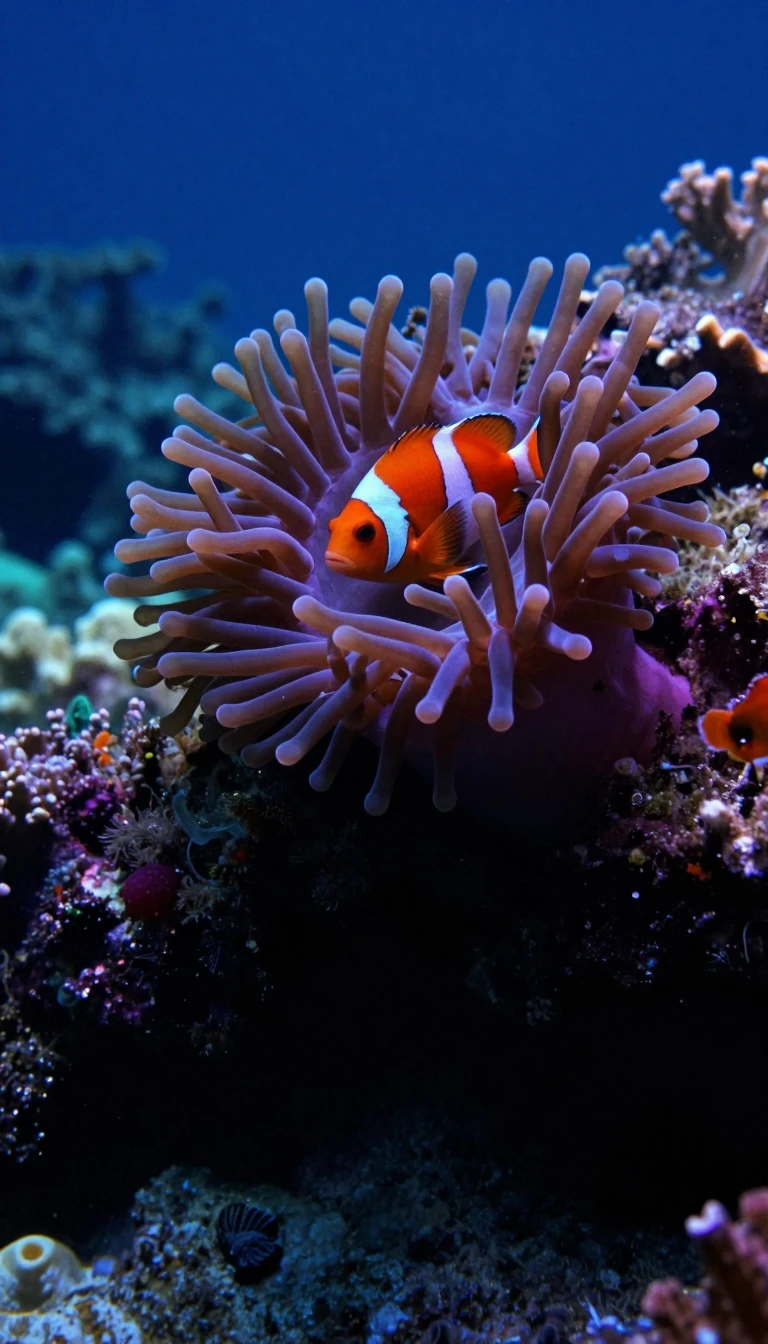 Corals hold a 450-million-year-old genetic blueprint for animal lifeWhile most animals undergo radical genomic restructuring, stony corals have maintained an ancient chromosomal core. By preserving a stable architecture from the Precambrian era, t…
 Mammals may possess a hidden switch for complex tissue regrowthFor centuries, the inability to regrow limbs has been seen as a fundamental human limitation. However, new research suggests that our bodies might not lack the machinery for regen…
 The 2,500-year-old pantry pest: why red flour beetles endureFrom ancient Egyptian tombs to modern pantries, the red flour beetle is a master of survival. These tiny insects can thrive in environments as dry as 8% moisture, turning your sto…
 The chemical dance that saved dinosaur eggs from dissolvingIn the acidic soils of the Late Cretaceous, dinosaur eggshells should have vanished. Instead, they survived. This preservation wasn't a fluke of geology, but a precise chemical in…
 The hidden engineering of fish scales reveals secrets for modern materialsFish scales are far more than simple armor; they are sophisticated biological structures that balance strength with extreme toughness. By studying their hierarchical architecture,…
 The shell is the skeleton of history's first scientific curiositiesBefore we had high-resolution DNA sequencing, scientists relied on the tangible architecture of shells to map life. Conchology—the study of mollusc shells—was a primary gateway fo…
 Before corals ruled the seas, these 'ancient cups' built the first reefsImagine a world where the first complex reef systems weren't built by corals, but by strange, vase-shaped organisms. These extinct creatures, known as archaeocyathids, pioneered m…
 Is failure a character flaw or a historical invention?We often treat failure as a personal moral failing, but history suggests it might be a relatively modern social construct. From the way we grade students to how we define medical …
 Binge eating disorder is a medical condition, not a lack of willpowerMany people mistake binge eating for a simple lack of discipline, but it is a serious mental health condition. Characterized by a loss of control over food intake, it affects mill…
- Nature's biological hacks can override your instincts with exaggerated signalsEvolutionary biology contains a fascinating glitch: supernormal stimuli. These are artificial or exaggerated versions of natural cues that trigger a response much stronger than th…
 Turning trash into treasure: the high-stakes physics of waste-to-energyWe often view waste as a dead end, but a growing global infrastructure treats it as a fuel source. By incinerating residual trash, we can shrink waste volume by nearly 90% while g…
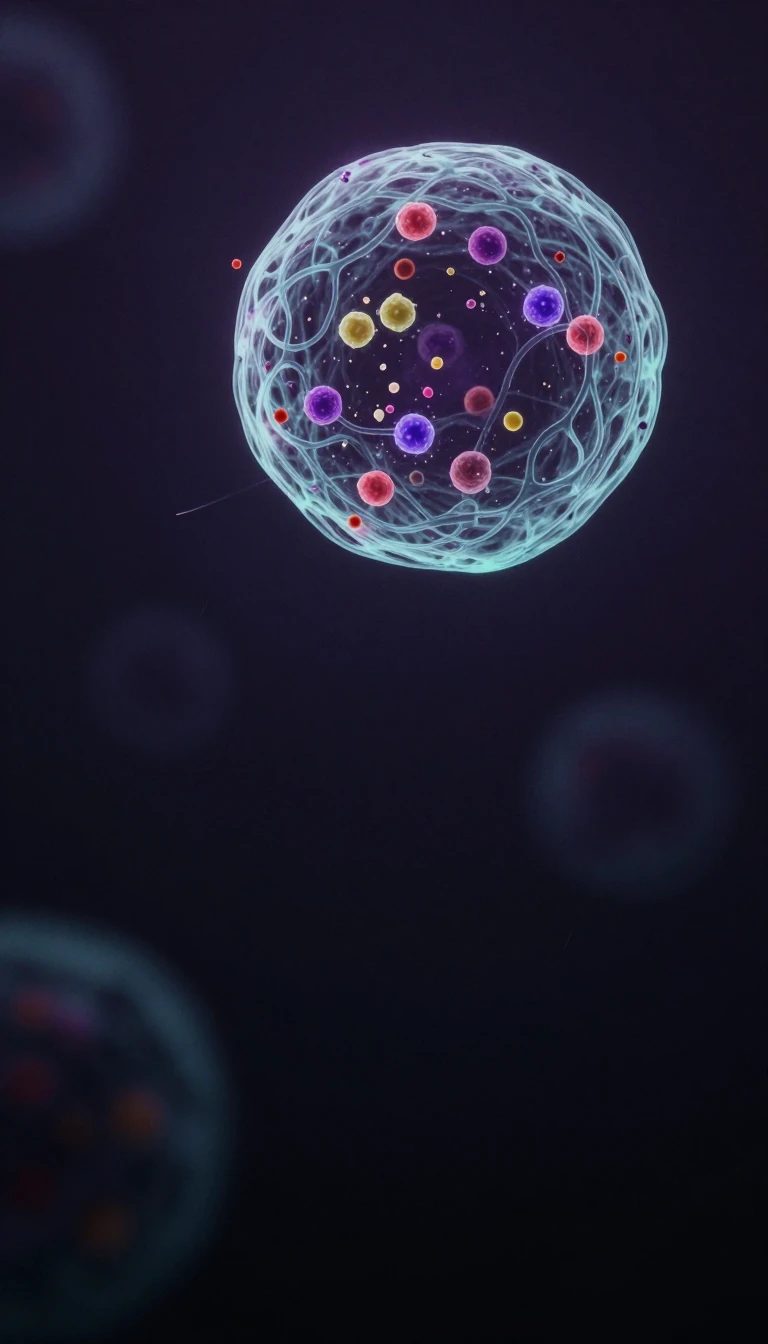 How heavy metals quietly dismantle bacterial defenses at the molecular levelSome of our most common materials possess a hidden biocidal power. From brass doorknobs to silver jewelry, these objects can actively neutralize pathogens. This phenomenon, known …
 The volatile liquid gold hidden within raw natural gasIt is a low-density mixture of hydrocarbons that behaves like gasoline but originates from deep underground gas reservoirs. Known variously as 'condy' or 'drip gas,' this substanc…
 The hidden carcinogens in your kitchen's most common cooking applianceCooking with gas is a staple of domestic life, but it carries a chemical cost. Beyond the flame, gas stoves release pollutants that can reach levels comparable to secondhand tobac…
 The village that gave the United States a name it never tookIn 1803, a scholar proposed a new name for the entire United States: Fredonia. It was intended to mean "freedom," but while the nation rejected the title, the word survived in a s…
 From Victorian streetlights to high-tech pathogen detectionThe gas holder is a masterclass in industrial evolution. Originally designed to balance the flow of coal gas for 19th-century streetlights, these massive structures have transitio…
 Energy is never lost, but its quality is constantly dyingYou might think of energy as something you 'use up' like fuel in a tank. But according to the laws of thermodynamics, energy is never destroyed. Instead, it loses its 'exergy'—its…
- Energy cannot be created or destroyed; it only changes its maskEvery movement you make and every calorie you burn is a relay race of power. From the nuclear furnace of the Sun to the mechanical motion of your stride, energy never vanishes. It…
 The Great American Energy Pivot: From Coal to Gas and BeyondFor over a century, fossil fuels have dictated the American landscape. But the internal machinery of U.S. energy is undergoing a profound structural shift. From the rise of shale …
 The "First Fuel": Why saving energy is more powerful than creating itWe often think of renewable energy as the ultimate solution to our climate crisis. But there is a concept in policy known as the "first fuel." It suggests that the most effective …
 The hidden economics of the world's fourth most popular automotive fuelAutogas is often sidelined in the conversation about green energy, yet it remains a massive global player. While it captures less than 2% of the total market share, its unique che…
 How a planetary health diet could avert 11 million annual deathsWe are facing an unprecedented challenge: feeding 10 billion people by 2050 without destroying the planet. The solution may lie on our plates. A new scientific framework suggests …
 The gut microbiome may hold the key to human longevityModern nutrition is often a maze of fad diets and unproven claims. British epidemiologist Tim Spector argues that the real science lies in our gut microbes. By diversifying what w…
 The survival of a 240-year-old newspaper through radical ownership shiftsIn early 2026, Pittsburgh's largest newspaper faced an existential crisis. After a three-year strike and a federal labor law judgment, the paper was on the brink of permanent clos…
- Why your 'flexitarian' identity might be shifting as the term growsFlexitarianism is exploding in popularity, but its definition is moving target. While it serves as a gateway to plant-based eating for many, research suggests that as more people …
- Can radical lifestyle changes actually reverse coronary heart disease?In the late 1970s, Dean Ornish challenged the medical establishment by proposing that heart disease wasn't just a matter of medication or surgery. He argued that a radical shift i…
 The billionaire who claimed a plant-based diet could extend life to 125David H. Murdock lived to be 102, fueled by a strict pescetarian regimen and an obsession with longevity. From real estate tycoon to health advocate, he spent his final decades fu…
 The high price of 'unfiltered' influence: how a wellness guru faked a terminal illnessBelle Gibson built a multi-million dollar wellness empire on a foundation of fabricated cancer diagnoses. By weaponizing personal tragedy and pseudoscience, she convinced hundreds…
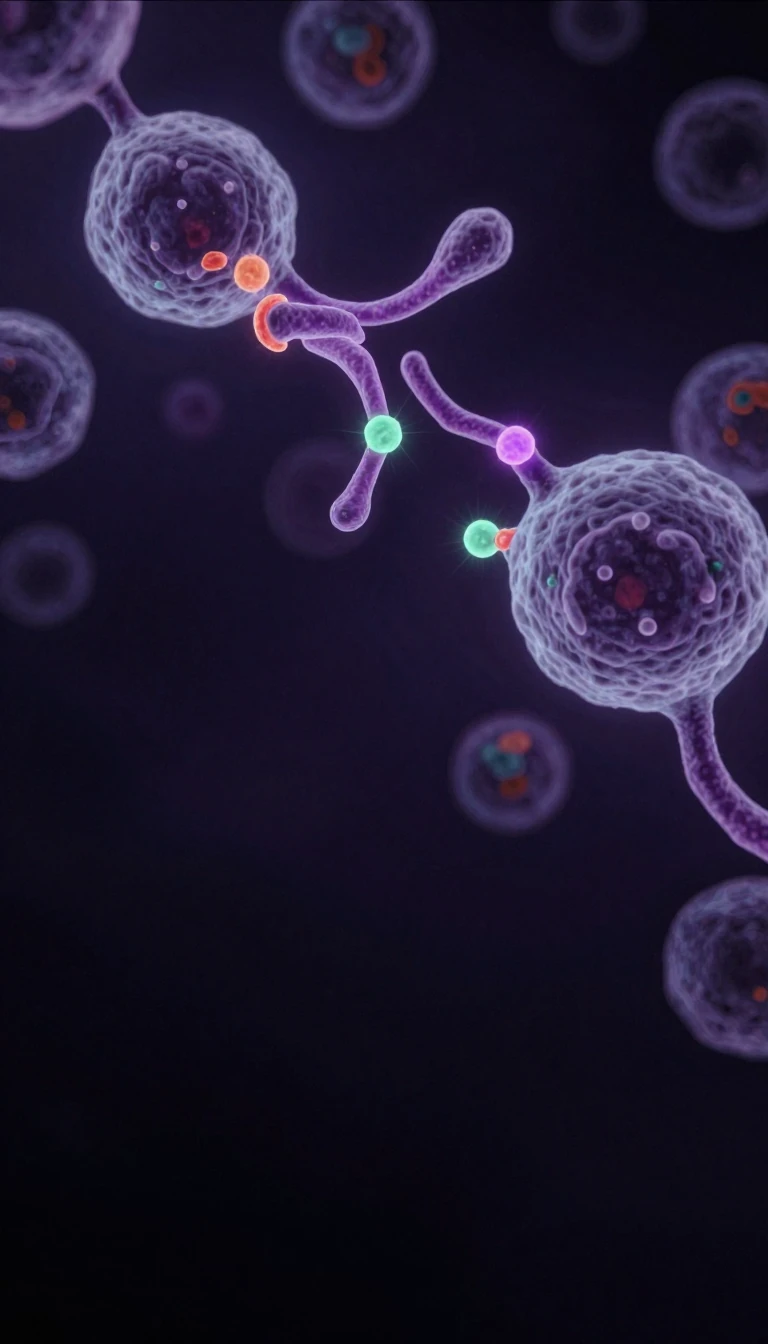 The 'Holy Grail' of immunology: How your body recognizes the invisibleFor decades, the T-cell receptor was the elusive "Holy Grail" of immunology because it lived only on cell membranes. Now we know it is a master of versatility, capable of identify…
 The chemical switch that controls your skin's color and visionTyrosinase is the master architect of pigment. By converting a simple amino acid into dopaquinone, this enzyme dictates the color of your hair, skin, and eyes. When this process g…
 The laboratory of hygiene that shaped modern immunologyBefore it was a powerhouse of global health, the NIAID began as a small laboratory in New York. Its mission was simple: study the link between microscopic organisms and disease. T…
 Is Omicron a different serotype? The case for viral 'jumps'In microbiology, a serotype is defined by how the immune system recognizes a pathogen's surface. While most viruses evolve through steady, incremental changes, some undergo dramat…