 Intellect Plus
Nature
11,198 cards. Each one is a 40-second story with a five-minute read behind it. Page 187 of 187.
Subtopics: Ageing · Air · Animal behaviour · Animal breeds and hybrids · Animals · Arthropods · Atmosphere · Big cats · Bilateria, others · Birds · Botany · Cnidarians · Conservation · Coral reefs · Deep sea · Deserts · Dinosaurs · Earth science · Earth science and physical geography · Earth science basics · Earthquakes & tsunamis · Echinoderms · Ecology · Ecosystems · Endangered species · Extinct animals · Farming · Fish · Forests · Fungi · General classifications · Geology · Geomorphology · How Long Can It Live? · Ice · Individual animals · Insects · Lightning · Longevity · Mammals · Marsupials · Migration · Mollusks · Ocean · Organisms · Parasites · Physical geography · Plants · Porifera · Predators · Primates · Rainforest · Reptiles & amphibians · Researched · Sharks & rays · Spiders & arachnids · Symbiosis · Trees · UK & Ireland: nature · Vertebrates · Vision · Volcanoes · Water · Waves · Weather · Whales & dolphins · Zoology
 Ants outweigh the wild birds and mammals combinedFormicidae evolved from wasp ancestors in the Cretaceous and now number more than thirteen thousand eight hundred described species of an estimated twenty-two thousand. Elbowed an…
 Antbirds rarely eat ants—names measure size insteadThamnophilidae packs more than two hundred thirty Neotropical passerines called antshrikes, antwrens, antvireos, and fire-eyes. The labels track body size more than diet. Most hun…
 True anteaters share an order with sloths aloneOnly four living mammals belong to Vermilingua, the worm-tongue anteaters: giant, silky, and two tamanduas. Together with sloths they make Pilosa inside Xenarthra. Aardvarks, pang…
 Antelope is a lifestyle label, not a family treeCall something an antelope and you have named a habit of African and Asian bovids, not a single clade. Some so-called antelopes sit closer to cattle or goats than to gazelles. Tru…
 Aphids clone themselves into crop-killing cloudsAphididae packs about five thousand described sap-suckers—greenflies, blackflies, woolly fluff—most diverse in temperate zones, not the tropics. Flightless females birth live daug…
- Ara macaws take their name from a Tupi squawkBernard Germain de Lacépède coined Ara in seventeen ninety-nine for Neotropical macaws whose bare facial patches and long tails define the look. The name echoes Tupi ará, an onoma…
 Arachnids wear eight legs and a weaver's mythClass Arachnida corrals spiders, scorpions, ticks, mites, harvestmen, and stranger chelicerates. Adults typically sport eight walking legs on a fused cephalothorax, plus chelicera…
 Amazon giant fish must gulp air or drownArapaima—also pirarucu or paiche—are among Earth's largest freshwater fishes, bonytongues of Amazon and Essequibo waters that can top three metres. They surface to breathe, so tra…
 Fourteen feathered fossils made Darwin's case visibleArchaeopteryx—ancient wing—lived about one hundred fifty million years ago on tropical Jurassic islands now preserved as Solnhofen limestone. Magpie- to raven-sized, it mixed dino…
 Armadillos include extinct two-tonne glyptodontsSpanish speakers named them little armored ones—twenty-one living cingulate species native only to the Americas. Genetic work now folds giant Pleistocene glyptodonts, once two ton…
- Arthropods own more than eighty percent of animal speciesPhylum Arthropoda—jointed-leg animals with chitinous exoskeletons, segmented bodies, and paired limbs—holds estimates from about one point seventeen million to five or ten million…
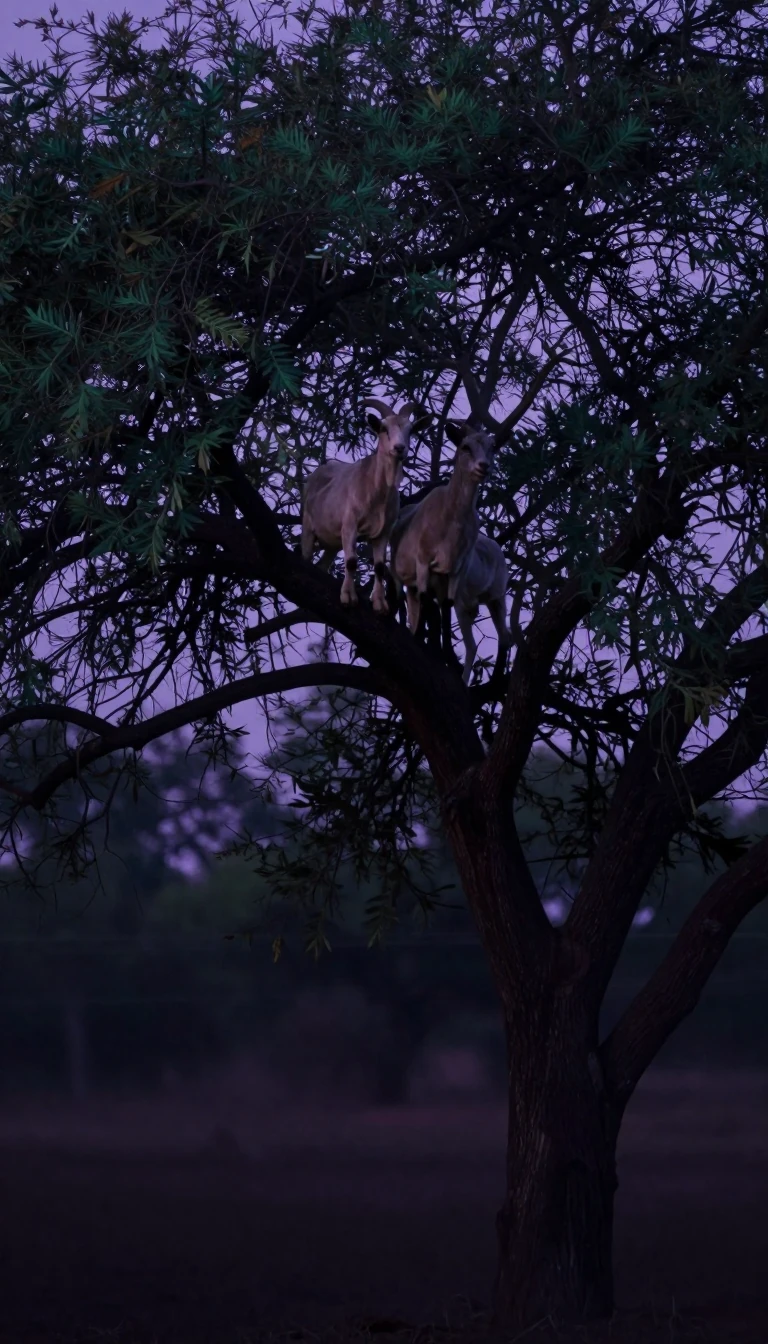 Even-toed ungulates hide whales inside their familyArtiodactyla means even finger: roughly two hundred seventy land species that walk on the third and fourth toes—pigs, deer, cattle, camels, hippos. Molecular trees tuck fully carn…
 Most bees never make honey or live in hivesAnthophila holds over twenty thousand bee species in seven families. Honey bees, bumbles, and stingless bees are the social celebrities, yet more than ninety percent of bees are s…
 Chameleon colour is mostly signalling, not camouflageChamaeleonidae counts about two hundred Old World lizard species famous for shifting hues. Skin stacks chromatophores and iridophore crystal lattices that change spacing to flip r…
 The Arctic tern sees two summers a year and more daylight than any animal.Each year the Arctic tern flies from its northern breeding grounds to the edge of Antarctica and back, chasing summer at both ends of the planet. Tracking shows its winding route …
 The axolotl can regrow lost limbs, parts of its heart and even its brain.The axolotl, a Mexican salamander that never really grows up, keeps its feathery gills and lives in water all its life. Lose a leg and it grows a complete new one over a few month…
 Over one Venezuelan lake, lightning flickers for up to nine hours a night.Where the Catatumbo River meets Lake Maracaibo, storms gather on 140 to 160 nights a year, flashing up to 40 times a minute for about nine hours at a stretch. It is the most light…
 Crows remember your face, and they tell their friends.Researchers at the University of Washington wore a distinctive mask while trapping and ringing crows. For years afterwards, crows scolded and mobbed anyone wearing that mask, incl…
 Who draws the Namib Desert's 'fairy circles': termites, or the grass itself?Across a 2,400-kilometre strip of the Namib, grasslands are dotted with bare circles 2 to 12 metres wide, fringed by taller grass and spaced with uncanny regularity. Similar patte…
 The Greenland shark can live for centuries, longer than any other known vertebrate.Greenland sharks glide through the cold, dark North Atlantic more slowly than almost any fish their size. They may not breed until they are around 150 years old. By dating crystal…
 Honeybees give directions by dancing, using the sun as a compass.A forager bee that finds good flowers returns to the hive and runs a figure of eight on the vertical comb. The angle of her waggling run from straight up matches the angle between…
 The 'immortal jellyfish' can turn itself back into a juvenile and start again.When stressed, sick or injured, the tiny jellyfish Turritopsis dohrnii can do something almost unheard of in the animal kingdom: revert from a sexually mature adult to its juvenil…
 Leafcutter ants don't eat the leaves. They farm a fungus that can't live without them.The columns of ants carrying leaf fragments through the forests of the Americas are not hauling food for themselves. The leaves feed an underground fungus garden, which in turn fe…
 Mantis shrimp have up to 16 kinds of light receptor, but may not see 'more colours'.Humans see colour with three kinds of receptor; some mantis shrimp have twelve for colour, plus more for ultraviolet and polarised light. That inspired claims that they see unimag…
 The naked mole-rat lives like an ant colony and barely seems to age.Naked mole-rats live underground in colonies run by a single breeding queen, like bees or termites. They can survive 18 minutes without oxygen, feel no pain from acid and live mor…
 This forest of 47,000 aspen trees is actually one single organism.On a Utah hillside, some 47,000 quaking aspen trunks spread across 43 hectares. Genetically they are all one male individual, joined by a shared root system. Named Pando, Latin fo…
 The Portuguese man o' war isn't a jellyfish. It's a colony that sails.It looks like a single jellyfish with a gas-filled float, but a Portuguese man o' war is a colony of specialised units called zooids, all cloned from one egg and working as a sing…
 Giant tube worms have no mouth or gut, and are fed by bacteria inside them.Around volcanic vents on the Pacific seafloor, red-plumed worms up to three metres long grow faster than any other known marine invertebrate. As adults they have no mouth, gut or …
 Sailors' tales of monster waves were dismissed as myths until 1995.For centuries sailors described sudden walls of water far bigger than the surrounding sea, and scientists mostly waved them away. Then, on New Year's Day 1995, a laser on a North …
 Death Valley's 'sailing stones' moved unseen for decades, until cameras caught them.On a dry lakebed in Death Valley, rocks, some as heavy as a person, leave long trails behind them, yet for decades nobody saw one move. Explanations ranged from hurricane-force wi…
 Sloths grow algae in their fur, and moths live there too.A sloth moves so little that its shaggy coat becomes a tiny ecosystem. Green algae grow in its hair, camouflaging it in the canopy, and moths live in the fur. About once a week th…
 High above thunderstorms, giant red 'sprites' flash for an instant, and they aren't lightning.People reported strange flashes above storms from at least 1886, but nobody photographed one until 1989, and then by accident. Sprites are vast red-orange discharges up to 90 kilo…
 This desert plant grows only two leaves in its life, and may live 2,000 years.Welwitschia mirabilis grows in the Namib Desert, where rain can be almost non-existent. It produces just two leaves, which never fall but keep growing from the base for its entire…
 When a whale dies and sinks, it can feed the deep sea for decades.A whale carcass sinking to the dark seafloor becomes an oasis. Scavengers strip the flesh, worms and snails colonise the bones, and bacteria feed on the fats inside for perhaps 50…
 Wombats produce cube-shaped poo, and explaining it won a physics prize.An adult wombat leaves 80 to 100 neat little cubes of dung a night, which it uses to mark its territory. How a soft, rounded gut produces flat-sided droppings puzzled people for y…
 Do trees really talk through a 'wood wide web'?Fungi weave through forest soil and link to tree roots, trading nutrients for sugar. Popular books describe trees using this network to feed their young and warn neighbours. A 202…
 Did wolves really 'change the rivers' of Yellowstone? The truth is more complicated.When wolves returned to Yellowstone in 1995, elk numbers fell, willows recovered in places and beaver colonies multiplied. It became a famous story of a predator healing an ecosys…
 A fungus hijacks ants, steering them to the perfect spot to die.In tropical forests, carpenter ants infected by the fungus Ophiocordyceps unilateralis leave their colony, climb a plant to about 25 centimetres and clamp their jaws onto a leaf v…