 Intellect Plus
History
21,004 cards. Each one is a 40-second story with a five-minute read behind it. Page 269 of 351.
Subtopics: 19th century · 20th century · Africa · Age of Exploration · Ages & eras · Ancient · Ancient China · Ancient egypt · Ancient greece · Ancient rome · Ancient trade · Archaeological discoveries · Archaeology · Astronomy · Australia · Auxiliary historical sciences · Babylon · Basics · Born on this day · Bronze age · Buddhism · Case studies · Chefs, bartenders and winemakers · China · Cities · Climate · Columbus · Contemporary (1945-) · Cosmetics people · Crime · Criminals · Decipherment · Deep time · Disasters · Early modern · Education · Egypt · Empires · Empires & civilisations · Exploration · Explorers · Extinction · Fandom, conventions and festivals · History by continent and large region · History by continent and region · History by country · History by country, small region and city · History by ethnicity · History by subject matter · History by topic · Inca · India · Industrial Revolution · Japan · Kings & queens · London · Mass hysteria · Medicine · Medieval kingdoms · Medieval life · Mediterranean · Mercedes-Benz History · Mesopotamia · Middle ages · Military leaders and theorists · Military leaders, personnel, and theorists · Ming dynasty · Misconceptions · Modern · Modern (1800-1945) · Napoleon · Navigation · North africa · Other · Pacific · Pharaohs · Philippines · Pirates · Post-classical · Prehistory · Propaganda · Public health · Rebels, revolutionaries and activists · Renaissance · Researched · Second world war · Shipwrecks · Silk Road · South america · Tradespeople · UK & Ireland: history · United states · Vikings · Volcanoes · Women in history
 How Sweden's Moderate Party evolved from staunch nationalism to a modern liberal-conservative forceFounded in 1904 to counter the rise of socialism, Sweden's Moderate Party has spent over a century reinventing itself. From its origins as a protectionist, nationalist organizatio…
 The 1939 pact that stunned the world by dividing Eastern Europe between two dictators.In August 1939, Nazi Germany and the Soviet Union shocked the world by signing a non-aggression treaty. Behind the public agreement lay a secret protocol that carved up Eastern Eu…
 How ancient seafaring technology enabled the rapid settlement of the vast Micronesian island region.Micronesians are not a single monolith, but a diverse collection of Austronesian peoples who mastered the open Pacific. By inventing revolutionary sailing technologies like double…
 How Sweden's first female prime minister navigated a volatile political landscape and shifting alliancesMagdalena Andersson made history as Sweden's first female prime minister, only to resign hours after her initial election. Her tenure was defined by rapid-fire crises, from managi…
 What really happened to Malaysia Airlines Flight 370, the greatest mystery in aviation history?On 8 March 2014, a Boeing 777 carrying 239 people vanished from radar while flying from Kuala Lumpur to Beijing. Despite the most expensive search in aviation history, the aircraf…
 Why the world's oldest university is not the one you think it isWe often assume the oldest universities are ancient, but the modern university is a specific legal invention of medieval Europe. While many institutions claim ancient roots, histo…
 How a conservative finance minister became the architect of Nazi Germany's stolen wealthLutz Graf Schwerin von Krosigk served as Germany's finance minister from 1932 until the regime's collapse in 1945. A non-partisan conservative, he facilitated the systematic theft…
 How a German Prince Became the First King of the BelgiansLeopold I was a German prince who nearly became King of Greece before accepting the Belgian throne in 1831. A seasoned military veteran and diplomat, he navigated the complex powe…
 Why did the Belgian King surrender to the Nazis while his government fled to London?Leopold III remained in Belgium to face the German occupation, a decision that triggered a constitutional crisis and branded him a traitor in the eyes of his own ministers. While …
 The Soviet police chief who orchestrated mass terror then attempted to dismantle it.Lavrentiy Beria was the architect of the Katyn massacre and the Gulag’s wartime expansion, yet after Stalin’s death in 1953, he paradoxically emerged as a reformer. In his brief t…
 How a semi-autonomous region in Iraq became a de facto state for three decades.The Kurdistan Region of Iraq emerged from the chaos of the 1991 uprisings, establishing self-governance under the protection of international no-fly zones. While formally part of …
 Why a tiny island group became the center of a 1960 US presidential debateKinmen, a small archipelago just miles from the Chinese coast, once held the world's attention as a potential flashpoint for nuclear war. During the 1960 American presidential ele…
 Why One Hundred Thousand People Rushed to the Frozen Yukon for GoldBetween 1896 and 1898, a massive migration transformed the remote Klondike region. Driven by economic instability and the promise of sudden wealth, thousands of unprepared prospec…
 How the Kingdom of Hungary survived centuries of partition, rebellion, and Habsburg rule.Following the 1526 Battle of Mohács, Hungary was carved into pieces by the Ottoman Empire and the Habsburg monarchy. For over three centuries, the kingdom navigated a precarious e…
- A kingdom without a king: the strange reality of Hungary's interwar regencyBetween 1920 and 1946, Hungary was a kingdom that lacked a monarch. Ruled by Admiral Miklós Horthy, the nation functioned as a conservative, nationalist regency. Despite its forma…
 The Kingdom of Egypt: A Puppet Monarchy Caught Between British Power and Nationalist UprisingsFrom 1922 to 1953, Egypt operated as a kingdom, yet its true sovereignty remained elusive. Despite gaining nominal independence from Britain, the state struggled with foreign mili…
 Was the Khalistan movement a genuine separatist threat or a manufactured political chimera?The quest for Khalistan, a sovereign Sikh homeland in Punjab, emerged from the twilight of British rule. While often viewed as a grassroots insurgency, some intelligence insiders …
 The nineteen-year-old revolutionary who inspired a generation to challenge British colonial ruleKartar Singh Sarabha was a teenager when he became a pivotal leader in the Ghadar Party, an organization dedicated to ending British rule in India through armed struggle. Despite …
 From Silver Screen Icon to Tamil Nadu's Most Powerful Political MatriarchBefore she was Amma, the formidable leader who dominated Tamil Nadu politics for decades, Jayalalithaa was a cinematic superstar. Her transition from a celebrated actress to a six…
- The elite Ottoman soldiers who began as child slaves and ended as kingmakersThe Janissaries were the Ottoman Empire's premier infantry, serving as the sultan's personal household troops. Initially recruited through the forced levy of Christian children, t…
- Ionia was never a unified state, yet it birthed the foundations of Western scientific thought.Nestled on the western coast of Anatolia, Ionia was a collection of independent cities rather than a single nation. Despite this lack of political unity, the region became a power…
 The nomadic origins of the Indo-Aryan peoples who shaped South Asian historyThe Indo-Aryan peoples are a vast, diverse group defined by their linguistic roots and shared cultural heritage. Originating as pastoralists in the Central Asian steppes, their mi…
 Did the Indus Valley Civilization actually practice the roots of modern Hinduism?Archaeologists have long debated whether the ancient Indus Valley Civilization laid the foundation for modern Indian religions. While some early 20th-century scholars identified p…
- The tiny Russian republic that defied empires and survived a brutal Soviet genocideIngushetia, Russia's smallest non-city federal subject, has a history defined by fierce resistance and tragic displacement. From repelling Imam Shamil to surviving a 1944 mass dep…
- The world's oldest hereditary monarchy relies on a remarkably narrow and fragile lineageJapan's Imperial House claims an unbroken history stretching back to 660 BC, yet modern scholarship reveals a more complex reality. While the dynasty is the oldest continuous here…
 A 133-day experiment: How Hungary briefly became a Soviet republic in 1919In the chaotic aftermath of World War I, Hungary transformed into a short-lived communist state. Led by Béla Kun, the regime promised to restore lost territories and empower the w…
 How Hurricane Maria Became the Deadliest Atlantic Storm of the 21st CenturyIn September 2017, Hurricane Maria tore through the Caribbean, leaving a trail of catastrophic destruction. As the deadliest storm of the 21st century, it claimed over 3,000 lives…
- How a diplomat-turned-prime minister attempted to reshape India's regional influence through non-reciprocityInder Kumar Gujral served as India's prime minister for less than a year, yet he left an enduring mark on foreign policy. Best known for the Gujral doctrine, he sought to secure I…
- How a fiery preacher became the face of hardline unionism in Northern IrelandIan Paisley was a polarizing force who dominated Northern Irish politics for decades. From founding his own fundamentalist church to leading the Democratic Unionist Party, he shap…
 How a minor German dynasty became the architects of modern European royaltyFrom a modest castle in Germany to the thrones of the United Kingdom and Norway, the House of Oldenburg has shaped European history for nearly a millennium. By strategically marry…
- How Hungary became the merriest barrack in the socialist camp during the Cold WarFor four decades, Hungary operated as a Soviet-aligned communist state, marked by brutal purges and a failed revolution. Yet, following the crushing of the 1956 uprising, the nati…
 Ancient Somali city-states dominated global trade routes long before the modern era.Long before colonial borders, the Somali peninsula was a thriving hub of international commerce. From the legendary Land of Punt to the powerful medieval Sultanates of Mogadishu a…
 How Hu Jintao steered China from rapid growth to a global superpowerAs China's paramount leader from 2002 to 2012, Hu Jintao oversaw a decade of unprecedented economic expansion. By prioritizing state-owned enterprises and technocratic governance,…
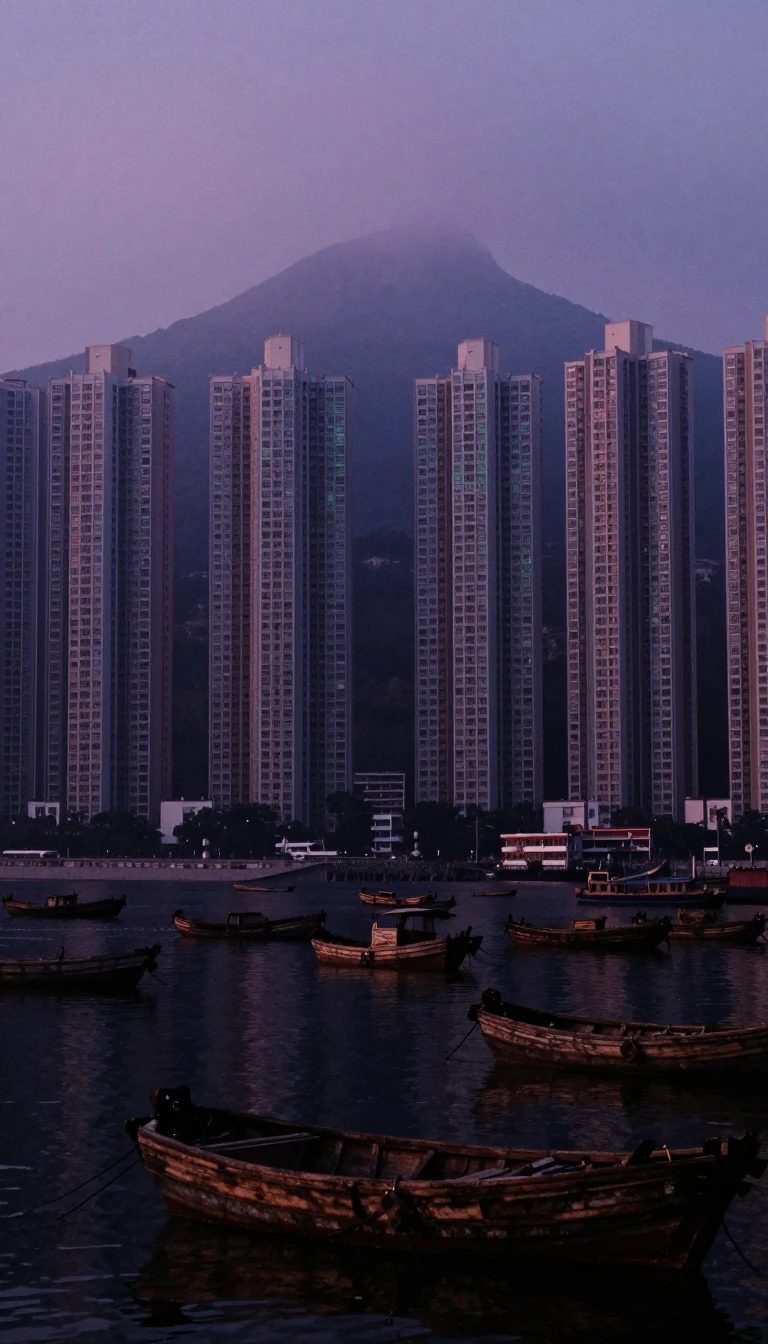 How a century of British rule in Hong Kong concluded at the stroke of midnightOn 1 July 1997, the United Kingdom transferred control of Hong Kong to the People's Republic of China, ending 156 years of colonial administration. This historic handover, which f…
- How a wounded war veteran became Britain's most pragmatic and unflappable post-war leaderHarold Macmillan rose from the trenches of the First World War to lead the United Kingdom during an era of unprecedented prosperity. Known as Supermac, he navigated the complexiti…
 The ancient roots of Romania: From the formidable Dacian kingdom to Roman provinceLong before modern borders, the territory of Romania was a regional power center. Home to the Dacians, a people who believed in their own immortality, the land became a prize for …
 How a Cold War transit hub reinvented itself after losing its shortcut to AsiaHelsinki Airport was once the premier bridge between Europe and Asia, leveraging its northern geography to offer the fastest routes. When Russian airspace closed in 2022, that str…
- How Muammar Gaddafi transformed Libya from a monarchy into a self-styled state of massesIn 1969, a bloodless coup led by Muammar Gaddafi dismantled the Libyan monarchy. Over the next four decades, he reshaped the nation through radical social experiments, oil-funded …
 Was Japan’s pan-Asian union a genuine liberation movement or a facade for imperial expansion?The Greater East Asia Co-Prosperity Sphere promised an end to Western colonialism, uniting Asian nations under Japanese leadership. While marketed as a path to regional self-suffi…
 Goguryeo: The Ancient Korean Kingdom That Once Dominated Northeast AsiaSpanning from 37 BC to 668 AD, Goguryeo was a formidable power that shaped the Korean peninsula and Manchuria. Beyond its military might and vast territorial reach, this kingdom l…
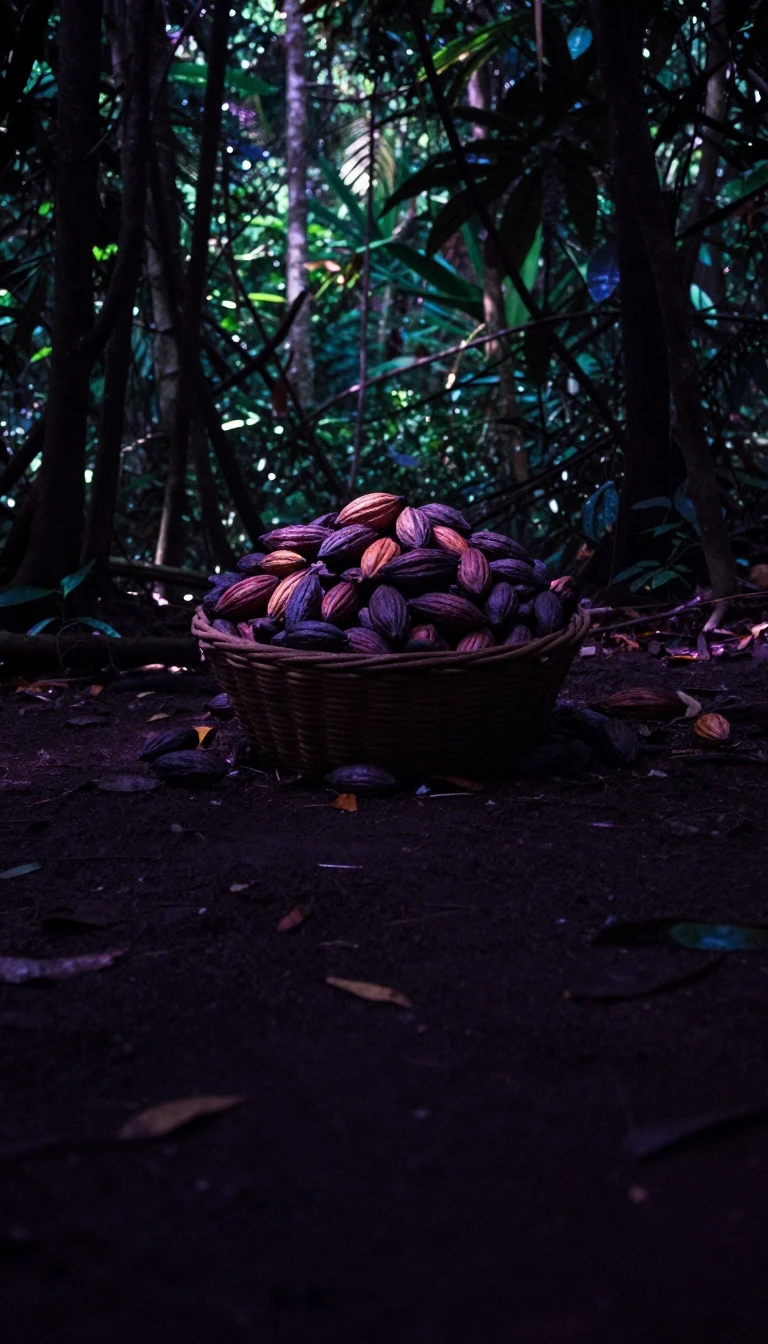 How a West African colony became the world's leading cocoa exporter under British ruleThe British Gold Coast colony was built on gold, but it was cocoa that transformed its economy. By the late 1940s, this West African territory supplied over half of the world's co…
- How a German colonial empire in the Pacific was built on trade and ambitionGerman New Guinea was a sprawling, short-lived colonial project that emerged from private trading interests rather than state enthusiasm. Spanning from the Bismarck Archipelago to…
- Who were the Frisians, and why did their name vanish for three hundred years?The Frisians are an indigenous group from the North Sea coast, yet their history is defined by a mysterious three-century silence. After Roman records of the Frisii ceased in the …
- The elusive gaucho: from outlawed cattle smuggler to romanticized national folk heroThe gaucho is a legendary figure of the South American pampas, often imagined as a free-roaming, brave horseman. Yet, historical records reveal a more complex reality: they were f…
- The hidden evolution of the title that once rivaled the PopeAn emperor is more than just a king. Historically, the title represented a rank so high it surpassed all other monarchs, often claiming a status equal to the Pope. But how did a R…
- From Feudal Levies to Professional Force: The Evolution of the French ArmyThe French Army has evolved from a medieval force of feudal levies into a modern, all-volunteer professional military. Its history is defined by centuries of shifting structures, …
- How the former Prussian monarchy transformed into a democratic bulwark of the Weimar RepublicAfter the German Empire collapsed in 1918, Prussia shed its authoritarian past to become a parliamentary democracy. Despite losing significant territory and facing internal politi…
 France's colonial empire once spanned ten million square kilometers across the Western Hemisphere.Beginning in the 16th century, France established a vast colonial network stretching from Canada to Brazil. While often remembered for the fur trade and strategic forts, this empi…
 How a colonial crisis birthed France’s enduring and powerful presidential systemBorn from the chaos of the 1958 Algiers crisis, the French Fifth Republic replaced a fragile parliamentary system with a robust, semi-presidential structure. Designed by Charles d…
 Why the German Empire's black-white-red flag remains a complex symbol of national identityThe German Empire's tricolor flag was born from a practical need for maritime identity, blending Prussian and Hanseatic colors. Though it became a potent political emblem across s…
- A fragile union: Why the Federation of South Arabia never found its footingUnder British protection, the Federation of South Arabia attempted to unite disparate states into a single federal entity. Yet, it struggled to establish a true political identity…
 Finland fought three distinct wars during World War II, shifting alliances to survive.Finland’s path through the Second World War was a complex survival strategy. It began with a defensive stand against Soviet invasion, transitioned into an offensive partnership wi…
- How a thirty-year guerrilla struggle reshaped the Horn of Africa and ended Ethiopian rule.Beginning in 1961, Eritrean insurgents launched a protracted war to secure independence from Ethiopia. Over three decades, the conflict evolved from a regional insurgency into a c…
- From ice cream truck driver to Senate veteran, the long career of Ed MarkeyBefore becoming a fixture in the United States Senate and a leading voice for progressive climate policy, Ed Markey spent his youth driving an ice cream truck in Massachusetts. Hi…
- The Forgotten Desert Kingdom That Once Challenged the Rise of Modern Saudi ArabiaBefore the modern Saudi state consolidated power, the Emirate of Jabal Shammar dominated the northern Arabian Peninsula. Centered in the city of Ha'il, this Rashidi-led power cont…
- The Last Muslim Kingdom in Western Europe Survived by Playing Its Neighbors Against Each OtherThe Emirate of Granada was a precarious, tributary state that defied the odds for over two centuries. By masterfully navigating shifting alliances with Christian kingdoms and Nort…
- How a tiny, decentralized confederation became the world's most powerful trading empireFor two centuries, the Dutch Republic defied the odds. With only 1.5 million people, this small confederation of provinces built a global colonial empire, pioneered publicly trade…
 How a non-contiguous province became the independent nation of Bangladesh in just fifteen years.Between 1956 and 1971, Pakistan existed as two geographically separated wings. East Pakistan, a deltaic region of rivers and tropical jungles, generated significant export wealth …
- The Donbas: A Century of Industrial Might and Geopolitical Tug-of-WarBorn from coal and forged in the fires of the Industrial Revolution, the Donbas region has long served as a critical economic engine. Yet, its history is defined by a complex inte…
 The Derg: How a Secretive Military Committee Transformed Ethiopia into a Communist StateEmerging from a 1974 military mutiny, the Derg seized control of Ethiopia, dismantling the ancient monarchy to install a brutal Marxist-Leninist regime. Over seventeen years, this…