 Intellect Plus
Health
6,621 cards. Each one is a 40-second story with a five-minute read behind it. Page 69 of 111.
Subtopics: Ageing & longevity · Anaesthesia · Anatomy and morphology · Bacteria · Biology · Blood · Bones & muscles · Brain · Clinical trials · Consciousness · Diabetes · Diagnosis · Digestion · Dreams · Drugs and medication · Epidemiology · Ethics · Exercise · Exercise & fitness · Eyes & vision · First aid · Future Frontier · Germ theory · Global health · Health and fitness · Health, medicine and disease · Heart & circulation · History of medicine · Hormones · Hygiene · Immunology · Infection · Medical basics · Medical history · Medical procedures · Medicine · Medicines · Memory · Mental health · Mind · Morbidity · Neuroscience · Nutrition · Pandemics & epidemics · Psychiatry · Public health · Researched · Skin & hair · Sleep · Surgery · Teeth & dentistry · Vaccines · Vitamins
 Gum disease is not curable, but it is a manageable condition with the right care.Periodontal disease is a silent, progressive condition that often goes unnoticed until significant damage occurs. While you cannot reverse the loss of structural support once it h…
 Is your leg pain just aging, or is it a sign of restricted blood flow?Many people dismiss recurring leg pain during exercise as a normal part of getting older. In reality, it may be peripheral artery disease, a condition where fatty deposits restric…
 Beyond beauty, petals are dynamic tools shaped by climate and the need for survival.While we often view petals as mere decorative ornaments, they are sophisticated biological structures. Their size, shape, and presence are not just for attracting pollinators; the…
 Could viruses be the ultimate weapon against the rising tide of antibiotic-resistant superbugs?Bacteriophages are viruses that hunt bacteria with surgical precision. As antibiotic resistance threatens global health, these natural predators are being repurposed as living med…
 Pharmacodynamics: The Science of How Drugs Actually Change Your Body's Internal ChemistryPharmacodynamics is the study of how drugs influence an organism, distinct from pharmacokinetics, which tracks how the body processes those drugs. Together, these fields determine…
 From ancient opium to AI design, how we mastered the science of medicine.Pharmacotherapy is more than just taking a pill. It is a precise, evolving discipline that balances ancient botanical wisdom with modern genetic insights. By tailoring treatments …
 Phencyclidine: The Chemistry and Clinical Reality of a Potent Dissociative AnestheticPhencyclidine, or PCP, is a synthetic arylcyclohexylamine that functions as an NMDA receptor antagonist. While often associated with extreme street-level myths, its chemical profi…
 Your eyes are not cameras, but biological sensors that turn light into neural code.Photoreceptors are specialized neurons at the back of your retina that convert light into electrical signals. While we often compare eyes to cameras, these cells perform a far mor…
 Movement is medicine: why your daily habits matter more than you thinkPhysical activity is far more than just gym sessions or structured sports. It encompasses every action that engages your muscles and burns energy, from scrubbing floors to walking…
- Is Pilates a medical treatment or just a way to improve your physical fitness?Developed in an internment camp during World War I, Pilates has evolved from a niche method into a global fitness phenomenon. While often marketed for its health benefits, the sci…
 Why that satisfying pop is actually the worst thing you can do for your skinPopping a pimple might feel like a quick fix, but it often backfires by driving bacteria deeper into your skin and risking permanent scarring. Instead of manual extraction, unders…
 Beyond the core: why the spongy center of a plant is more than storageOften dismissed as mere filler, the pith is a dynamic central tissue essential to plant life. While it serves as a starch reservoir, it also orchestrates complex hydraulic functio…
- Why the humble plank is a surprisingly potent tool for lowering blood pressureThe plank is more than just a test of endurance; it is a sophisticated isometric exercise that engages your entire core. While often associated with fitness challenges, recent res…
 Most garden plants do not need fertilizer, and adding it can actually cause harm.While many gardeners assume plants are constantly hungry, the truth is that established trees and shrubs rarely require supplemental feeding. Over-fertilizing risks water pollutio…
 Why fluid buildup in your lungs is a matter of pressure and permeabilityA pleural effusion occurs when excess fluid collects in the space surrounding your lungs, potentially collapsing them. Understanding whether this fluid is a transudate or an exuda…
 Why the pneumococcal vaccine is a vital shield against life-threatening bacterial infectionsPneumococcal vaccines protect against severe illnesses like meningitis, sepsis, and pneumonia. Recommended for babies, older adults, and those at high risk, these vaccines target …
 From ancient Egyptian tomb carvings to modern surgical specialists, the evolution of foot care.Podiatry has transformed from an independent medical tradition into a sophisticated, regulated healthcare specialty. While historical figures like Napoleon relied on personal foot…
 Why the medical community is renaming PCOS to reflect its true metabolic natureLong known as polycystic ovary syndrome, this condition is being rebranded as polyendocrine metabolic ovarian syndrome. This shift acknowledges that the disorder is not merely a r…
 Polytrauma is a complex medical condition defined by multiple severe, concurrent physical injuries.Polytrauma is more than just a collection of wounds; it is a clinical state where multiple body systems are compromised simultaneously. Often triggered by high-velocity accidents …
 The pons is a small, cauliflower-shaped bridge essential for your survival and daily movement.Tucked at the base of your skull, this beige structure acts as a vital junction between your brain and spinal cord. It manages everything from your breathing and sleep cycles to f…
 Is post-nasal drip a real medical condition or just a normal bodily function?That persistent sensation of mucus dripping down your throat is often labeled post-nasal drip, but some experts argue it is actually a standard physiological process. While it is …
 Why a negative pregnancy test might not be the final answer you expectHome pregnancy tests are remarkably accurate when used correctly, but they are not infallible. While a positive result is almost certainly correct, a negative reading can sometime…
 Why your arms might feel too short for reading as you hit fortyPresbyopia is an inevitable consequence of aging, typically appearing after forty. As the eye's lens stiffens and loses flexibility, focusing on nearby objects becomes increasingl…
- The brain-eating amoeba is rare, but its path to the central nervous system is precise.Naegleria fowleri is a microscopic, free-living organism found in warm fresh water and soil worldwide. While infections are extremely rare, they are almost always fatal. The amoeb…
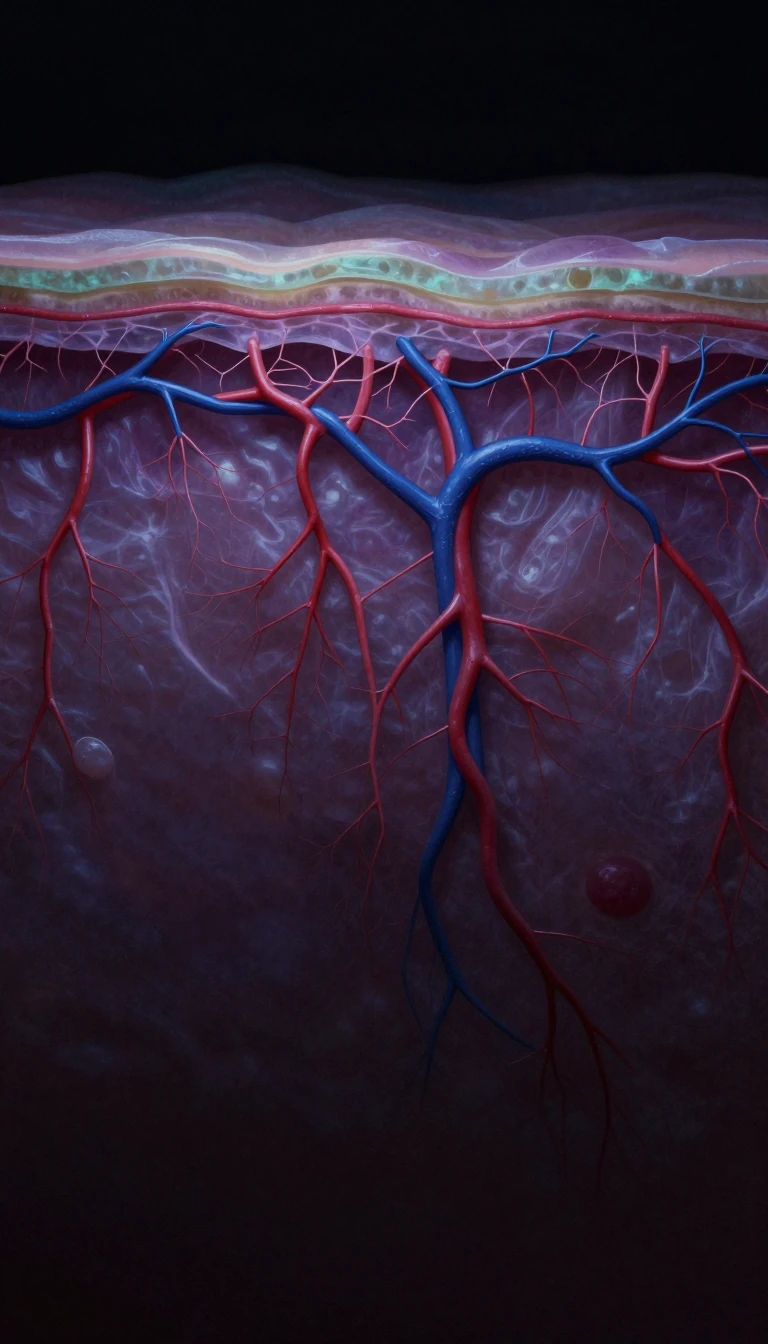 Your legs contain a second heart that pumps blood against the force of gravity.While your chest heart beats constantly, your lower legs rely on a secondary pump system to return oxygen-poor blood to your heart. Every time you take a step, your calf muscles s…
 Beyond the Nose: The Surprising Evolutionary Versatility of the Animal ProboscisFrom the delicate, coiled straw of a butterfly to the piercing, spiny tools of parasitic worms, the proboscis is nature's ultimate multi-tool. While we often associate this term w…
 Can a single dose of psilocybin rewire the brain to silence chronic pain?New research suggests psilocybin may offer a non-addictive alternative to opioids for managing chronic pain. By targeting specific brain circuits rather than injury sites, this co…
- Is your skin producing too many cells? Understanding the mechanics of chronic psoriasisPsoriasis is a long-term condition where the body mistakenly accelerates skin cell production, creating itchy, scaly patches. While often misunderstood as contagious, it is actual…
 Can a single chemical trigger a profound, life-altering shift in human consciousness?Psychedelics, ranging from ancient plant-based entheogens to modern synthetic compounds, trigger non-ordinary mental states by modulating brain circuits. While these substances re…
- Can we map the brain's response to psychiatric drugs by tracking neurotransmitter activity?Traditional psychiatry often groups drugs by broad categories, but new research suggests we can better understand their effects by mapping them to specific neurotransmitter system…
 Why scientists still struggle to define what psychological trauma actually isPsychological trauma is a term used everywhere, yet a clear scientific consensus remains elusive. While we often associate it with specific distressing events, the field is curren…
 Why the pull-up is the ultimate test of your upper body strength and enduranceThe pull-up is a classic closed-chain movement that demands coordinated effort from your lats, biceps, and core. While it serves as a gold standard for assessing strength-to-weigh…
- Millions of tiny air sacs in your lungs are the secret to your survival.Deep within your lungs, hundreds of millions of microscopic cavities called alveoli perform the essential task of gas exchange. These fragile structures, unique to mammals, provid…
 Why your mouth burns from chili peppers but a pumpkin pie stays coolPungency is not a taste, but a physical sensation triggered by chemicals hijacking your nerves. While we call it spicy, scientists prefer the term pungency to avoid confusion with…
- Your pupils do more than regulate light; they are windows into your cognitive state.While the pupil is famously the eye's aperture for light, it is also a dynamic indicator of your internal world. Beyond responding to brightness, pupil size fluctuates based on em…
 Why your red flowers turn black at dusk: the science of the Purkinje shift.As daylight fades, the world undergoes a strange transformation. Red objects seem to vanish into darkness, while blues and greens suddenly pop with unexpected brightness. This is …
 Beyond the gym, the humble push-up is emerging as a medical intervention toolWhile commonly viewed as a standard calisthenics exercise for building chest and arm strength, the push-up is being repurposed for clinical therapy. Recent research explores how g…
- Beyond the supplement aisle, pyridoxine acts as a critical metabolic switch for human health.Known as vitamin B6, pyridoxine is more than a dietary staple. It is a chemical powerhouse essential for metabolizing amino acids and glycogen. While often used to treat common ai…
 Pyromania is a rare impulse-control disorder, not a synonym for criminal arson.Pyromania is a psychiatric condition defined by an uncontrollable urge to set fires, often driven by internal tension rather than external gain. Unlike arsonists, who act for prof…
 The forty-day isolation period that defined modern quarantine originated in the Venetian Republic.Quarantine is not just a modern response to pandemics; it is a centuries-old practice rooted in the Black Death. The term itself comes from the Venetian word for forty days, a dur…
 The rabies vaccine is almost always fatal to ignore, but rarely fatal to receive.Rabies is a terrifying, nearly 100% fatal infection once symptoms appear. While the vaccine is a life-saving tool, it is not a cure once the virus reaches the brain. Understanding…
 The radius is a complex, rotating lever that defines how your arm moves.While the ulna provides length, the radius is the thicker, curved bone that acts as the primary pivot for your forearm. It connects your elbow to your wrist, enabling the essentia…
 Once a staple for heartburn, ranitidine vanished after a surprising chemical discovery.For decades, ranitidine was a go-to H2 blocker for acid reflux and ulcers. However, the discovery of a potential carcinogen within the medication led to global market withdrawals.…
 Almost everyone develops a skin rash, but identifying the cause is notoriously difficult.A rash is a universal human experience, yet its origins range from simple allergic reactions to complex viral infections. While many are harmless, some require immediate medical i…
- Why do your fingers turn white, blue, and then red in the cold?Raynaud's phenomenon is a common condition where blood vessels in your fingers, toes, or even nose spasm in response to cold or stress. While often just a minor inconvenience, the…
 When a bone breaks, doctors perform a reduction to restore its natural anatomical alignment.A broken bone is rarely a clean snap; it often shifts into a displaced position. To ensure proper healing, medical professionals must perform a reduction—the process of reposition…
- Reproductive medicine is evolving beyond fertility treatments into a precise, data-driven medical discipline.Reproductive medicine encompasses far more than just assisted conception. It integrates endocrinology, genetics, and advanced imaging to manage health from early life through preg…
 Are residential treatment centers a last-resort solution or a dangerous institutional trap for youth?Residential treatment centers promise stability for youth with severe behavioral or mental health struggles, yet they remain deeply controversial. While some programs report long-…
- Why the human respiratory system is uniquely vulnerable to a vast range of diseasesOur lungs are not just organs; they are a high-traffic gateway exposed to everything we inhale. From the nasal cavities to the microscopic alveoli, this complex system faces const…
- Your lungs speak a complex language that doctors use to diagnose hidden health conditionsWhen you breathe, your lungs produce specific acoustic signatures that reveal the state of your airways. While healthy lungs sound smooth and soft, abnormalities like wheezing or …
 Your lungs are a battlefield where thousands of microscopic invaders are defeated every day.Every day, you inhale roughly 28,000 breaths, each carrying a cocktail of environmental bacteria, viruses, and fungi. Despite this constant barrage, your respiratory tract remains…
 When humans become the patient zero for animals: understanding reverse zoonosisWe often fear diseases jumping from animals to us, but the reverse is just as dangerous. Reverse zoonosis, or zooanthroponosis, occurs when human-borne pathogens infect non-human …
 The humble rhizome is a horizontal powerhouse for plant survival and asexual reproductionOften mistaken for roots, rhizomes are actually modified underground stems that act as biological storage vaults. By hoarding starches and proteins, these structures allow plants …
- Why your ribs are the most difficult bones in your body to healYour ribs are essential for breathing and protecting vital organs, but they are notoriously difficult to treat when injured. Because they cannot be easily splinted or supported li…
- Rift Valley fever outbreaks are often triggered by unusually heavy rainfall and flooding events.Rift Valley fever is a viral disease that primarily cycles through mosquitoes and livestock, occasionally spilling over to humans. While most infections cause mild, flu-like sympt…
 Why the fourth digit on your hand is globally known as the ring fingerAcross cultures and centuries, the fourth digit has been imbued with magical, medicinal, and romantic significance. From the ancient belief in a direct vein to the heart to its ro…
- Why your eyes are better at seeing in the dark than any cameraYour retinas contain over 100 million rod cells, highly sensitive biological sensors that allow you to navigate the world in near-total darkness. While modern cameras mimic the ey…
 Oral drops for infants are the most effective defense against severe rotavirus infectionsRotavirus is a common, highly contagious infection that causes severe vomiting and diarrhea in infants. While most children recover quickly, the disease can lead to dangerous dehy…
 How you deliver a drug is often as critical as the medicine itself.The path a substance takes into your body dictates its success. While we often focus on the chemical composition of treatments, the route of administration—from topical mouthwashe…
 Why your nose runs when it is cold or you are exercisingA runny nose is rarely a cause for alarm, yet its triggers range from viral infections to simple weather changes. While often dismissed as a nuisance, this discharge is actually a…