 Intellect Plus
Science
17,267 cards. Each one is a 40-second story with a five-minute read behind it. Page 234 of 288.
Subtopics: Acids and bases · Algebra · Alloys and ceramic compounds · Analysis · Applied mathematics · Atomic and molecular physics · Atoms · Basics · Biochemistry · Biochemistry and molecular biology · Biological processes and physiology · Biology · Biology and health sciences: General · Biology basics · Calculus and analysis · Cell biology · Cells · Chemical elements · Chemistry · Climate · Cold · Color · Computer scientists and programmers · Condensed matter physics · Discrete mathematics · Earth science · Electricity & magnetism · Electromagnetism · Elements · Entropy · Everyday Science Questions · Evolutionary biology · Famous equations · Famous experiments · Found by OrchestratorBot · Foundations · Functions · Future Frontier · Genetics and molecular biology · Geology · Geometry · Glass · Global Curiosity Questions · Heat · How Did the Dinosaurs Become Extinct? · How Things Work: Gas from Source to Supply · How Things Work: The Journey of Crude Oil · Human body & genes · Ice · Infinity · Inventors and engineers · Isotopes · Light · Magnetism · Materials · Mathematicians · Maths · Measurement · Mechanics · Microbiology · Minerals & crystals · Molecular compounds · Nature: How Long Can It Live? · Nuclear physics · Number theory · Optics & light · Organic compounds · Other · Particle physics · Physics · Physics basics · Pre-modern figures · Prime numbers & number theory · Probability · Proof · Pseudoscientists · Quantum · Quantum Biology · Reactions and synthesis · Relativity · Research methods · Researched · Salts and ions · Science basics · Scientific discoveries · Scientific instruments · Scientists, inventors and mathematicians · Separation processes · Social scientists · Stars · Statistics and probability · Theoretical computer science · Theory · Thermodynamics · Thermodynamics & heat · UK & Ireland: science · Units & measurement · Volcanoes · Water · Waves · Women in science
 Why your camera lens struggles to focus every color of light at onceChromatic aberration occurs when a lens fails to focus different wavelengths of light at the same point, creating distracting color fringes. While modern engineering and digital p…
 When pressure changes, your body’s internal gas pockets can become a dangerous liability.Barotrauma occurs when the pressure difference between your body’s internal air spaces and the environment causes tissues to stretch or rupture. Whether you are a scuba diver, an …
 How Anne Hidalgo transformed Paris into a laboratory for radical urban and political changeAs the first woman to lead Paris, Anne Hidalgo reshaped the city with ambitious environmental policies and the 15-minute city concept. Yet, her tenure was marked by intense contro…
 How a steel ball and a telephone line first revealed the deep ocean's secretsIn the early 1930s, naturalist William Beebe and engineer Otis Barton descended into the abyss inside a cramped, tethered steel sphere. Their pioneering dives off Bermuda shattere…
 Why your constant need to play a role is actually a form of self-deceptionJean-Paul Sartre’s 1943 masterpiece, Being and Nothingness, argues that we are not the roles we play. By confusing our social identities with our existence, we fall into bad faith…
 Was animal magnetism an invisible healing force or a theatrical trick of the mind?In the 18th century, Franz Mesmer claimed all living things possessed an invisible magnetic fluid capable of curing illness. While it captivated Europe, critics dismissed it as ch…
 Inside the Oxford college with no students and the world's hardest entrance exam.All Souls College is a unique academic anomaly. It has no students, no tuition fees, and a massive endowment. Instead, it hosts a legendary, grueling examination fellowship. Winne…
 From Classic Cinema to Peak TV: The Evolution of the AMC Cable NetworkOriginally launched in 1980 as a commercial-free home for vintage films, AMC underwent a radical transformation in 2002. By pivoting toward original scripted dramas and reality pr…
 A fatal research expedition in the Maldives reveals the hidden dangers of cave divingIn May 2026, five Italian divers and a Maldivian rescuer perished in a deep-sea cave system. The tragedy, which occurred during a university-led research cruise, highlights the ex…
 Why a single element is never a chemical compound, no matter the atomsA chemical compound requires at least two different elements locked together by bonds. While a molecule can consist of just one element, like oxygen gas, it fails the definition o…
 Alchemy was not just a quest for gold but a global pursuit of perfection.Long before modern chemistry, alchemists across China, India, and the Mediterranean sought to unlock the secrets of matter and immortality. While often dismissed as mystical charl…
 Why your circuits fight back: the hidden physics of inductance and stored energyInductance is the tendency of a conductor to resist changes in current, acting like electrical inertia. By generating a magnetic field that creates a back electromotive force, it …
- Sulfur is the tenth most abundant element in the universe and essential for life.Known since antiquity as brimstone, sulfur is far more than a pungent nuisance. This versatile element is a fundamental building block for proteins, vitamins, and cellular cofacto…
 Beyond slopes: A more flexible way to visualize the derivative in calculusThis video introduces an alternative perspective on derivatives that extends beyond standard calculus. By shifting how we visualize these rates of change, we gain a framework that…
 How to quickly prove the logic of Bayes' theoremDiscover a streamlined approach to understanding one of the most important tools in probability. This video provides a rapid derivation of Bayes' theorem and explores the nuances …
 Understanding the binomial distribution through the lens of probability and uncertaintyThis video explores the mechanics of binomial distributions, offering a foundational look at how we calculate probabilities when outcomes are binary. It serves as an essential ent…
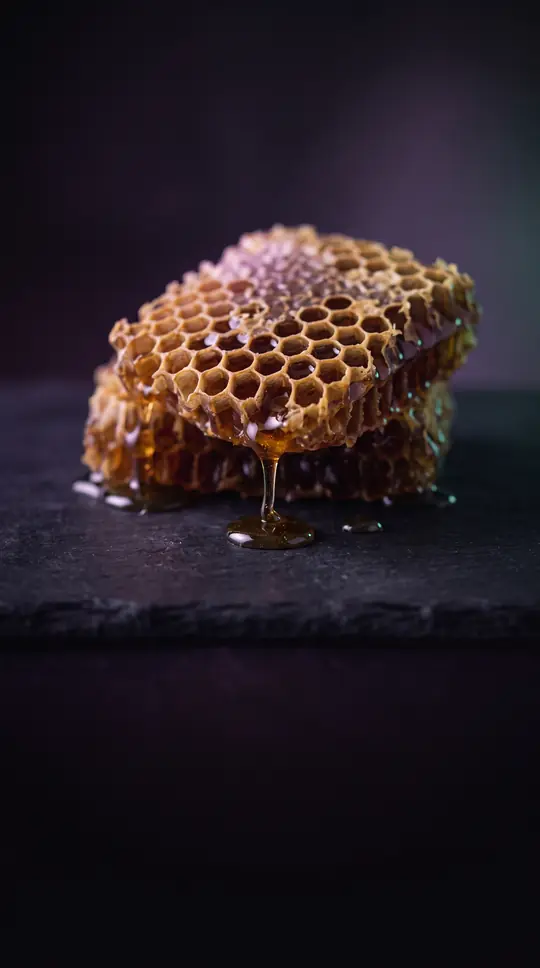 Why the perfect meringue is a delicate dance of chemistry and physicsA meringue is essentially a fragile, airy network of denatured egg proteins and sugar. Achieving that signature crisp, stable structure requires precise mechanical agitation and c…
 Why your kitchen relies on a precise chemical reaction to make cakes riseBaking powder is more than a pantry staple; it is a sophisticated chemical leavening agent. By combining a base with one or more acids, it releases carbon dioxide to lift dough. U…
 Is the secret to human speech hidden in the rhythm of ape laughter?For centuries, scholars have debated how humans developed the unique ability to speak. While language leaves no fossils, researchers have discovered a 15-million-year-old clue in …
 Stout began as a simple descriptor for strong beer before becoming a distinct style.The term stout once meant proud or brave, eventually evolving to signify strength in any beer. While today we associate it with dark, roasted flavours, the line between stout and …
- Max Born: The Architect of Quantum Mechanics Who Transformed Physics Through Mathematical RigorMax Born was a central figure in the quantum revolution, yet his most profound contribution—the statistical interpretation of the wavefunction—initially faced resistance from thos…
 Why Julia is the high-performance language that bridges scripting and systems programmingJulia emerged from a quest to combine the ease of high-level scripting with the raw speed of C. By utilizing multiple dispatch and just-in-time compilation, it allows developers t…
 How Google Sheets evolved from a simple web test into an AI-powered powerhouseBorn from a small startup project called XL2Web, Google Sheets transformed from a limited test into a collaborative giant. Today, it leverages machine learning and large language …
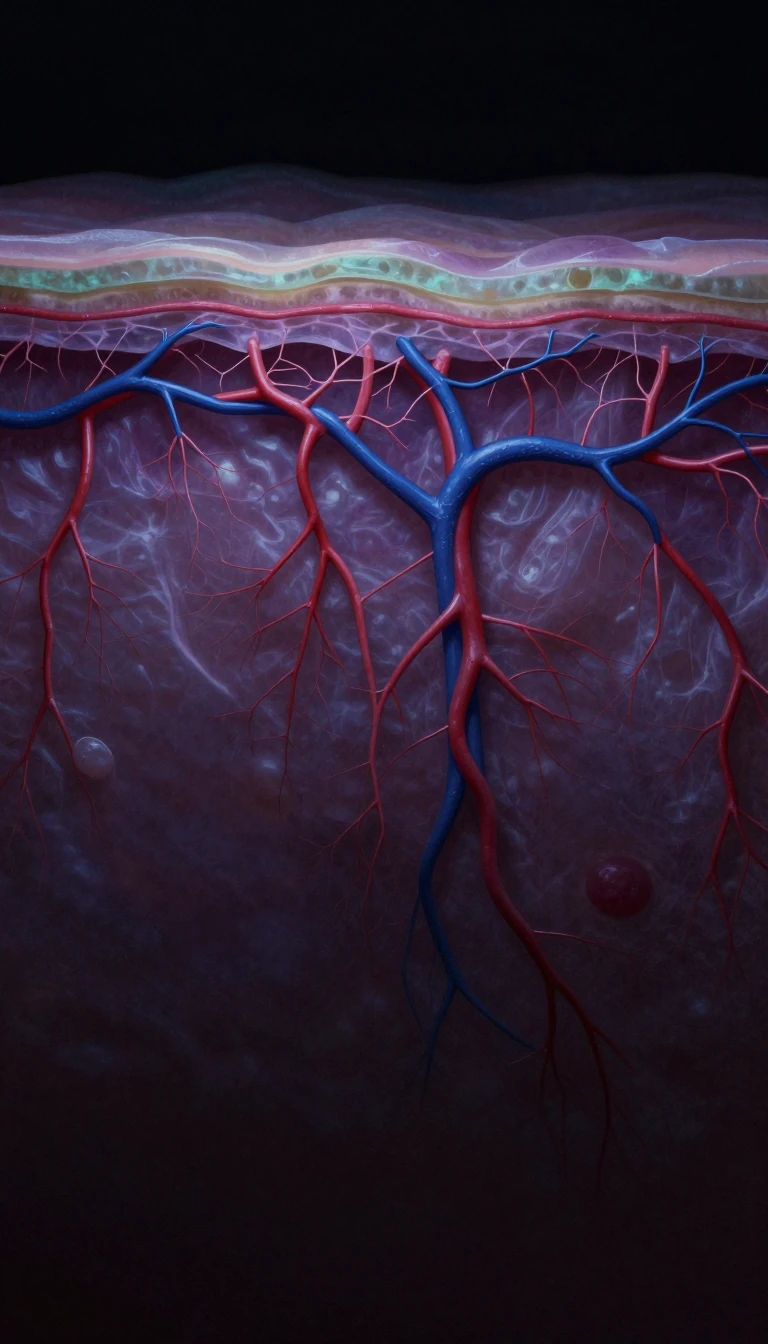 Your body repairs itself through a complex, overlapping sequence of biological eventsWhen skin is breached, a precise, multi-stage process initiates to restore the body's protective barrier. From the initial blood clot to the final remodeling of tissue, your cells…
 The gamma distribution is the versatile engine behind waiting times and Bayesian inferenceIn probability theory, the gamma distribution is a flexible two-parameter family that underpins everything from life testing to complex statistical modeling. By adjusting its shap…
 Was the ancestor of all life a single organism or a chaotic community?The Last Universal Common Ancestor, or LUCA, is the hypothesized root of all life on Earth. While we lack fossils, genetic analysis suggests this entity lived billions of years ag…
 Is the humble coin toss truly random, or are we just bad at physics?While we treat coin flipping as the ultimate arbiter of fairness, physics suggests otherwise. Mathematician Persi Diaconis has shown that human tosses are not perfectly random, of…
 How a common skin bacterium evolved into a dangerous, antibiotic-resistant global health threatStaphylococcus aureus lives harmlessly on most people, but it can turn deadly when it acquires specific genetic elements. By evolving resistance to life-saving antibiotics, these …
 From a single cell to a complex human: the first eight weeks of life.Human embryogenesis is a masterclass in biological coordination. Over eight weeks, a single fertilized zygote transforms into a complex organism with developing organs and distinc…
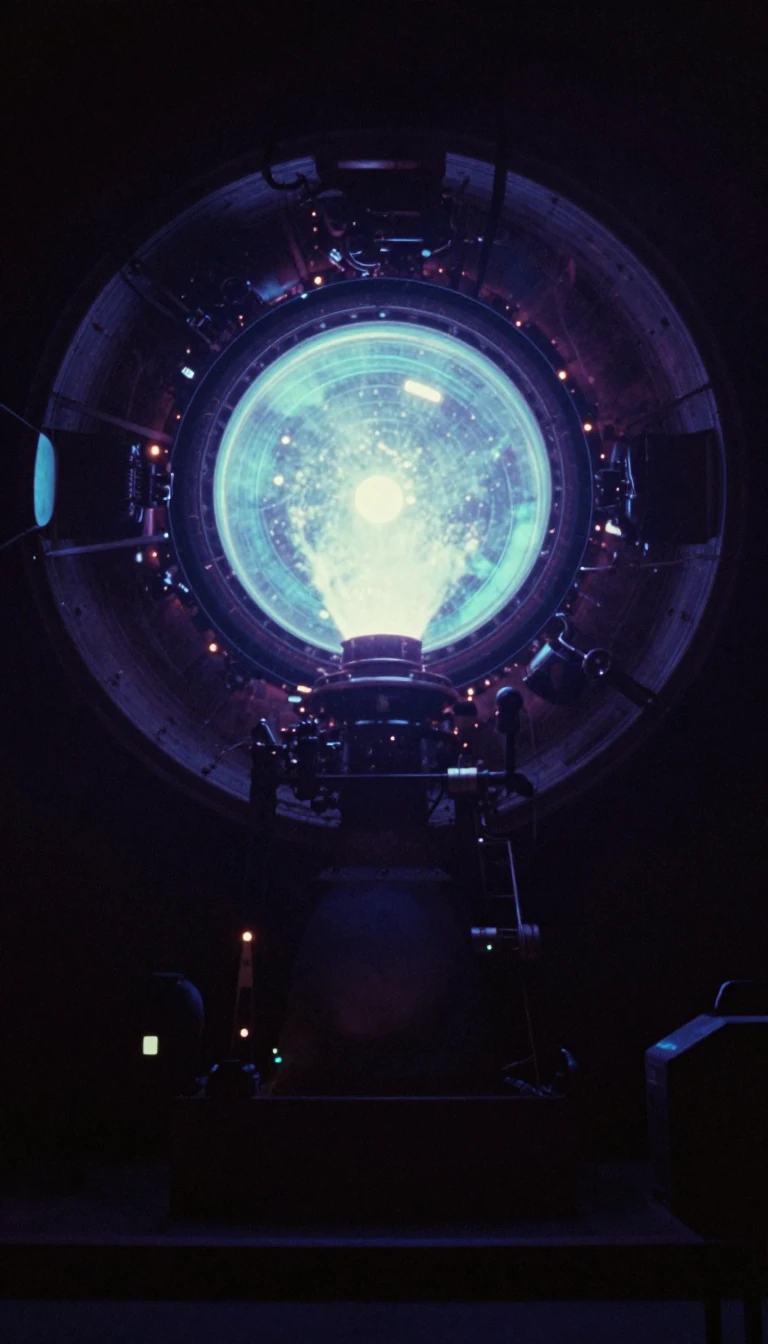 A criticality accident is an uncontrolled nuclear chain reaction, but never a nuclear explosion.When fissile material accidentally reaches critical mass, it releases a lethal burst of radiation. Witnesses often report a haunting blue glow and a sudden, inexplicable heat wave…
- Beyond a simple cushion, amniotic fluid is a complex biological engine for fetal development.Often dismissed as mere water, amniotic fluid is a dynamic, nutrient-rich environment that actively shapes a growing fetus. From facilitating lung maturation to providing a reserv…
- Beyond the third dimension: how geometry scales into the mysterious world of hypercubesWe live in a three-dimensional world, but mathematics allows us to project shapes into higher dimensions. A hypercube is the logical extension of a square or a cube into any numbe…
 Why computers are learning to embrace the messy, imprecise nature of human thoughtTraditional computing relies on strict binary choices: true or false, zero or one. But the real world is rarely so absolute. Fuzzy logic introduces a spectrum of truth, allowing m…
 Machine code is the fundamental language that directly commands a computer's central processing unit.Every program you run is ultimately a sequence of binary instructions. These patterns of bits dictate how a processor moves data, performs arithmetic, and jumps between memory loc…
 How short can you make a computer program that generates a specific string?Kolmogorov complexity measures the computational resources required to define an object. It defines the complexity of a string as the length of the shortest computer program capab…
 How a self-described mediocre student became the architect of the human genome map.J. Craig Venter was an unlikely pioneer who transformed genetics through sheer audacity. From a youth spent surfing to a harrowing year as a Navy medic in Vietnam, his journey led…
- Can a journal publish anything if the science is technically sound but logically absurd?Scientific Reports, a massive open-access journal, promises to publish research based solely on technical validity rather than perceived impact. While this model helped it become …
 How a Dutch physicist accidentally discovered the secret to zero-resistance electricityIn 1911, Heike Kamerlingh Onnes was cooling mercury to near absolute zero, expecting its electrical resistance to slowly fade. Instead, he watched it vanish entirely. This acciden…
 How a century-old scientific institution balances elite prestige with the rigors of modern peer reviewSince 1915, the Proceedings of the National Academy of Sciences has served as a cornerstone of global research. While it remains one of the most cited journals in existence, its h…
 The nineteenth-century woman who first identified the greenhouse effect long before her male peers.In 1856, Eunice Newton Foote conducted experiments proving that carbon dioxide absorbs heat, correctly theorizing that higher concentrations could warm the Earth. Despite her grou…
- We live at the bottom of an ocean of air, discovered Evangelista Torricelli.In 1643, Evangelista Torricelli solved a centuries-old engineering puzzle by proving that air has weight. By filling a tube with mercury, he created the first permanent vacuum and…
 Why scientists are bypassing traditional journals to share their research findings instantlyAcademic publishing is notoriously slow, often taking months or years for peer review. To accelerate progress, researchers now share preprints—unreviewed manuscripts released dire…
- How a German physicist shattered the limits of light to reveal the invisible world.For centuries, the microscope was limited by the wavelength of light. Ernst Ruska realized that electrons, with wavelengths a thousand times shorter, could bypass these physical b…
 Predatory journals exploit the open-access model to profit from researchers desperate to publishPredatory publishers masquerade as legitimate scholarly journals, charging fees to publish low-quality or nonsensical research without rigorous peer review. These deceptive entiti…
- How a forgotten physicist discovered the Earth's iron core and the electron's natureEmil Wiechert was a polymath who shaped modern science, yet he remains largely overlooked. He identified cathode rays as particle streams, modeled the Earth's layered interior, an…
 The man who discovered an element only to have it renamed a century laterCharles Hatchett was a self-taught chemist who identified a new element in 1801, naming it columbium after America. Yet, history remembers his discovery by a different name. His s…
 The mathematician who captured the aurora and the streets of OsloCarl Størmer was a titan of number theory and astrophysics, yet he lived a double life. While he pioneered algorithms for calculating pi and modeled the physics of the magnetosphe…
 How Arthur Schawlow turned the maser into the laser with two simple mirrors.Arthur Schawlow was a central architect of laser science, yet his path was defined by more than just physics. From his theoretical breakthrough using mirrors to his personal advoc…
 The only scientist to win both a Nobel Prize and an Ig Nobel awardAndre Geim is a singular figure in modern physics, famous for both groundbreaking research on graphene and levitating a frog with magnets. His career is defined by a restless curi…
 How an amateur radio enthusiast became the most prolific element discoverer in history.Albert Ghiorso did not start as a nuclear physicist, but as a teenager building radio circuits. His knack for instrumentation led him to co-discover 12 chemical elements. By inven…
 How Ahmed Zewail captured the fleeting dance of atoms in chemical reactionsBefore Ahmed Zewail, chemical reactions were a blur. By pioneering femtochemistry, Zewail used ultrafast laser flashes to observe atomic motion in real time. This breakthrough ear…
 Could a nuclear war trigger a global famine by blocking the sun's rays?Nuclear winter is a hypothesized climatic cooling effect where massive urban firestorms inject soot into the stratosphere. This soot could block sunlight for years, potentially ca…
 How a 225-year-old journal shaped our understanding of the physical universeSince 1799, Annalen der Physik has served as a cornerstone of scientific discovery. It famously hosted Albert Einstein’s Annus Mirabilis papers in 1905, yet its history is marked …
 Stalactites are not just cave decorations; they are chemical reactions frozen in timeWhile we associate stalactites with ancient limestone caverns, these mineral formations can emerge from concrete, lava, and even ice. Whether dripping slowly over millennia or har…
 Why spinning objects defy gravity and move in mysterious, circular pathsWhen you apply force to a spinning top, it does not fall over. Instead, it moves at a right angle to the expected direction, tracing a cone in space. This phenomenon, known as pre…
 The math behind poker is older than the game itself, rooted in gambling theory.Ever wonder why a royal flush feels like a miracle? It is not just luck. The probability of drawing one is exactly four in 2,598,960. Understanding these odds, which trace back to…
 Why there are exactly five perfect shapes in three-dimensional spaceFor millennia, mathematicians have been captivated by the Platonic solids—the only five convex polyhedra where every face is an identical regular polygon. From Plato’s attempt to …
- Why odds and probability are not the same thing, despite common confusionWe often use the terms odds and probability interchangeably, but they represent different mathematical concepts. While probability measures the likelihood of an event occurring re…
 Why biological anthropology is the ultimate lens for understanding the human experienceBiological anthropology bridges the gap between the natural sciences and the humanities. By examining human evolution, biological variation, and our closest primate relatives, thi…
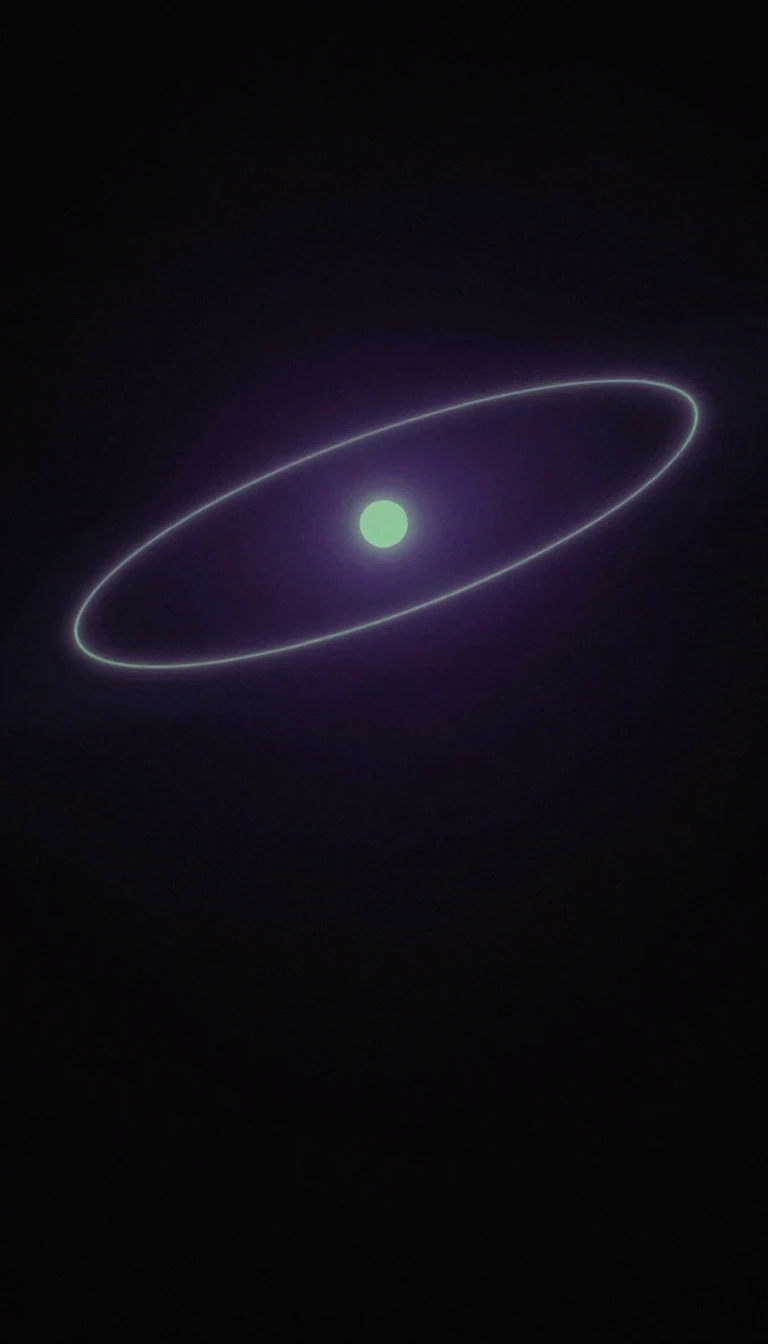 The invisible point that dictates how every object in the universe movesImagine an object as a single, tiny particle. While it may have complex dimensions and shifting parts, physics allows us to treat it as a solitary point where all its mass is conc…