 Intellect Plus
Science
17,267 cards. Each one is a 40-second story with a five-minute read behind it. Page 236 of 288.
Subtopics: Acids and bases · Algebra · Alloys and ceramic compounds · Analysis · Applied mathematics · Atomic and molecular physics · Atoms · Basics · Biochemistry · Biochemistry and molecular biology · Biological processes and physiology · Biology · Biology and health sciences: General · Biology basics · Calculus and analysis · Cell biology · Cells · Chemical elements · Chemistry · Climate · Cold · Color · Computer scientists and programmers · Condensed matter physics · Discrete mathematics · Earth science · Electricity & magnetism · Electromagnetism · Elements · Entropy · Everyday Science Questions · Evolutionary biology · Famous equations · Famous experiments · Found by OrchestratorBot · Foundations · Functions · Future Frontier · Genetics and molecular biology · Geology · Geometry · Glass · Global Curiosity Questions · Heat · How Did the Dinosaurs Become Extinct? · How Things Work: Gas from Source to Supply · How Things Work: The Journey of Crude Oil · Human body & genes · Ice · Infinity · Inventors and engineers · Isotopes · Light · Magnetism · Materials · Mathematicians · Maths · Measurement · Mechanics · Microbiology · Minerals & crystals · Molecular compounds · Nature: How Long Can It Live? · Nuclear physics · Number theory · Optics & light · Organic compounds · Other · Particle physics · Physics · Physics basics · Pre-modern figures · Prime numbers & number theory · Probability · Proof · Pseudoscientists · Quantum · Quantum Biology · Reactions and synthesis · Relativity · Research methods · Researched · Salts and ions · Science basics · Scientific discoveries · Scientific instruments · Scientists, inventors and mathematicians · Separation processes · Social scientists · Stars · Statistics and probability · Theoretical computer science · Theory · Thermodynamics · Thermodynamics & heat · UK & Ireland: science · Units & measurement · Volcanoes · Water · Waves · Women in science
 Why Hermitian matrices are the bedrock of quantum mechanics and modern signal processingA Hermitian matrix is a complex square matrix that equals its own conjugate transpose. Named after Charles Hermite, these structures are the complex-valued cousins of symmetric re…
 The Kronecker delta: a simple mathematical tool that simplifies complex systemsNamed after Leopold Kronecker, this function acts as a mathematical switch. It outputs one when its two variables are identical and zero otherwise. Far from a mere curiosity, this…
 Beyond its medieval roots, KU Leuven now hosts the world's largest banana genebank.While KU Leuven traces its academic lineage to 1425, the modern institution is a global powerhouse of innovation. From pioneering solar hydrogen technology that converts 15 percen…
 A vortex is not just a swirl, but a complex, self-organizing fluid structure.From the violent winds of a tornado to the quiet wake of a boat, vortices are fundamental to fluid motion. These swirling regions of energy and momentum can stretch, twist, and me…
 Why the hidden geometry of atoms dictates the physical world around usCrystals are far more than just gems; they are precise, repeating patterns of atoms that define the physical properties of matter. From the way a material breaks to how it conduct…
 Why some volcanoes grow into sticky, unstable mounds instead of explosive mountainsLava domes are the slow-motion architects of the volcanic world. Formed by thick, viscous magma that refuses to flow, these circular mounds can grow for centuries before suddenly …
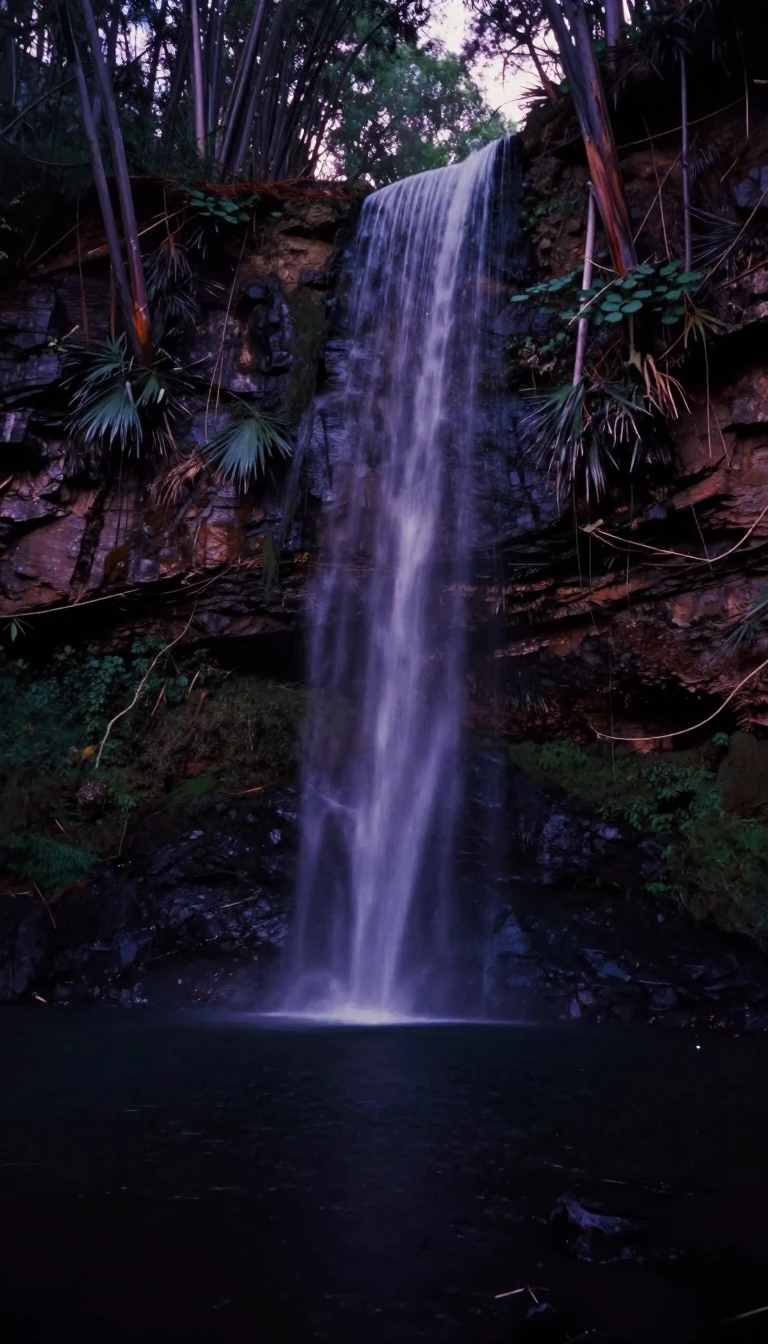 How melting glaciers in Chile revealed a hidden graveyard of ancient marine reptilesTorres del Paine National Park is famous for its granite spires and Patagonian winds, but its most startling discovery lies beneath the ice. In 2014, scientists uncovered nearly c…
 Electricity is not just a modern invention but a fundamental force of nature.Long before we harnessed it for light and computation, humans encountered electricity through the numbing shocks of electric fish. Today, we understand it as a core interaction of…
 Great Britain is a geological jigsaw puzzle formed by billions of years of collisions.Great Britain is not a static landmass but a dynamic collection of terrains that drifted across the globe. From ancient volcanic islands to tropical swamps and massive ice sheets,…
 Is the dormant volcano in the heart of Mauritius truly finished with its eruptions?Rising 605 meters above the town of Curepipe, Trou aux Cerfs is a striking cinder cone volcano. While it has remained quiet for 700,000 years, experts suggest its slumber might be…
 Is Iran's highest peak a dormant giant or a sleeping volcanic threat?Rising over the Alborz range, Mount Damavand is more than just Iran's tallest summit. While it dominates the landscape as a legendary symbol of resistance, beneath its snowy cone …
- Why Africa's most dangerous volcano is a race against liquid stoneMount Nyiragongo is a geological anomaly that defies the typical behavior of volcanoes. While most lava flows are sluggish, Nyiragongo produces exceptionally fluid, low-silica mag…
 Why the line between physical and life sciences is more arbitrary than you thinkPhysical science is defined as the study of non-living systems, yet this distinction is surprisingly porous. While we categorize fields like physics, chemistry, and astronomy as p…
 Biodiesel is not a modern invention but a nineteenth-century chemical breakthroughWhile often viewed as a contemporary climate solution, the roots of biodiesel reach back to 1853. Long before modern environmental mandates, scientists were experimenting with veg…
 From divine breath to dark energy: the enduring mystery of the fifth elementFor millennia, thinkers invoked aether to explain everything from the movement of stars to the transmission of light. Though modern physics eventually discarded this invisible med…
- Why Kīlauea’s recent fiery outbursts are baffling volcanologists and rewriting the rules of eruptionKīlauea is one of the world's most active volcanoes, but its recent behavior has taken an unexpected turn. Since December 2024, the summit has surged with intense, frequent lava f…
 Seven mathematical riddles carry a million-dollar bounty, but only one has been solved.In 2000, the Clay Mathematics Institute identified seven profound, unsolved problems, offering one million dollars for each correct solution. While these challenges aim to celebra…
 What determines how strongly a magnet reacts to an external magnetic field?The magnetic moment is a vector quantity defining the strength and orientation of a magnet's field. It dictates the torque an object experiences when placed in an external magneti…
 A massive volcanic plateau in British Columbia hides a history of continental riftingThe Mount Edziza volcanic complex is a sprawling, ice-capped landscape in northwestern Canada. Spanning over 1,000 square kilometres, this rugged terrain of stratovolcanoes and ci…
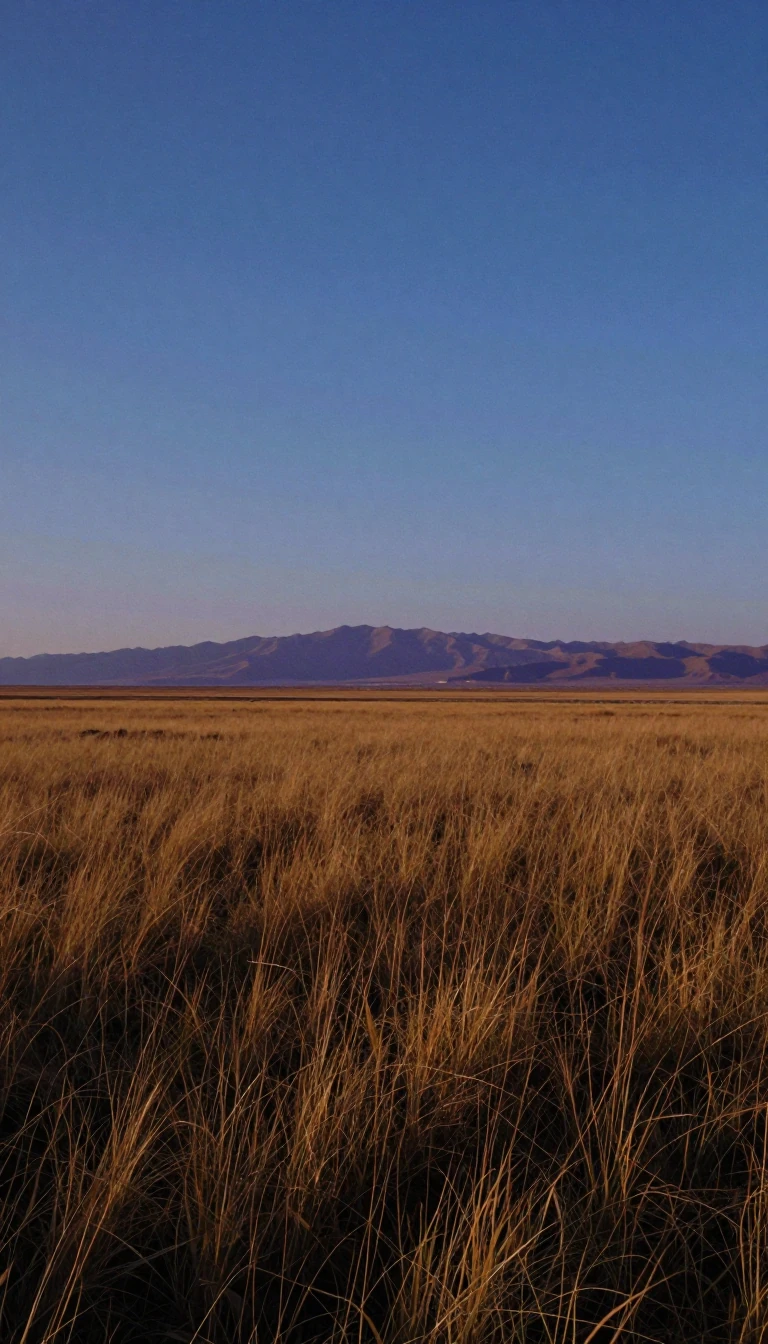 Why the High Plains rose a mile higher than the surrounding landscapeThe High Plains are not just a flat expanse before the Rocky Mountains. They are a geological anomaly, sitting a mile higher than they should. This elevation boost is not due to m…
 Why your calendar needs constant adjustment to keep pace with the spinning EarthTimekeeping was once a simple matter of watching the moon, sun, and stars. Today, we define time through the precise oscillations of atoms. Yet, because our natural celestial cycl…
- A massive volcanic scar reveals how the North American continent drifts over deep heatSpanning Washington, Oregon, and Idaho, the Columbia Plateau is more than a vast landscape. It is a geological record of a violent past, where millions of years of lava flows crea…
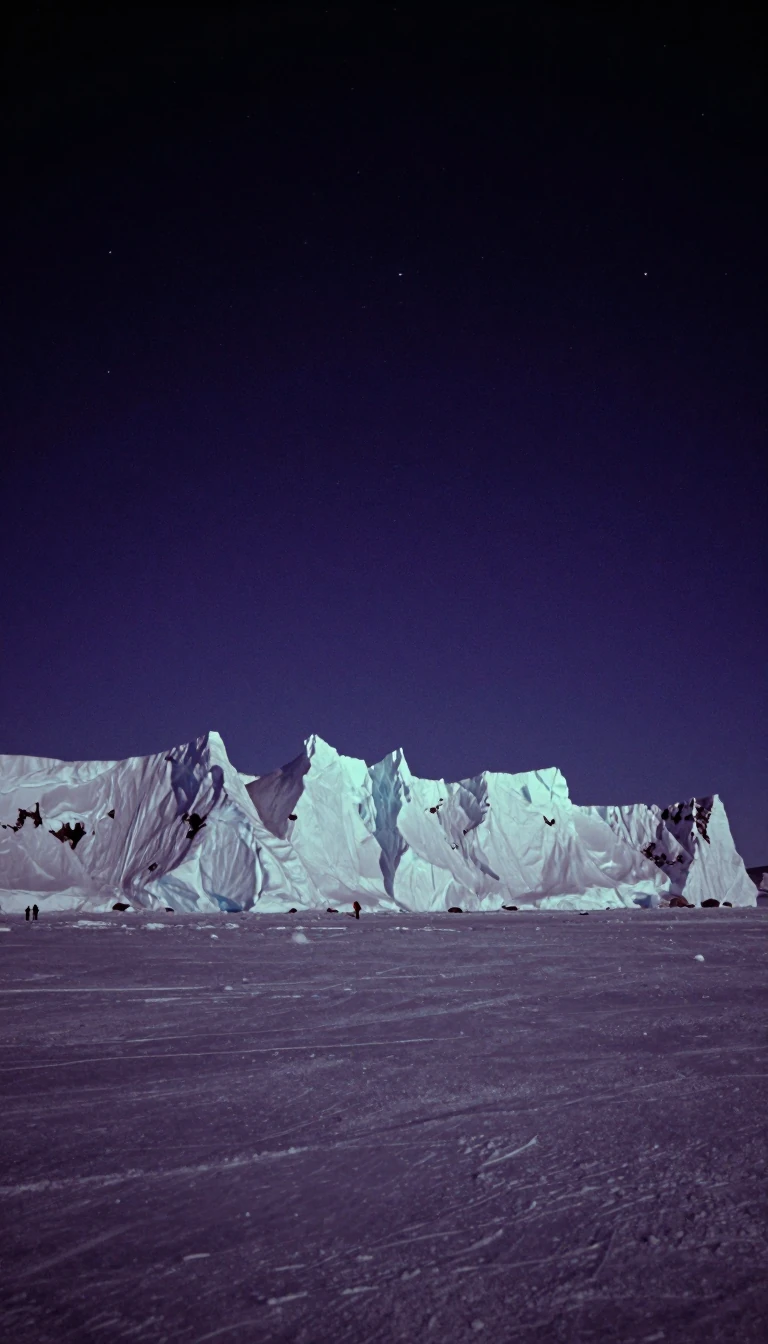 Are Earth's orbital wobbles the true architects of our planet's long-term climate history?For decades, scientists have debated whether subtle shifts in Earth's orbit—eccentricity, axial tilt, and precession—dictate our glacial cycles. While these Milankovitch cycles ex…
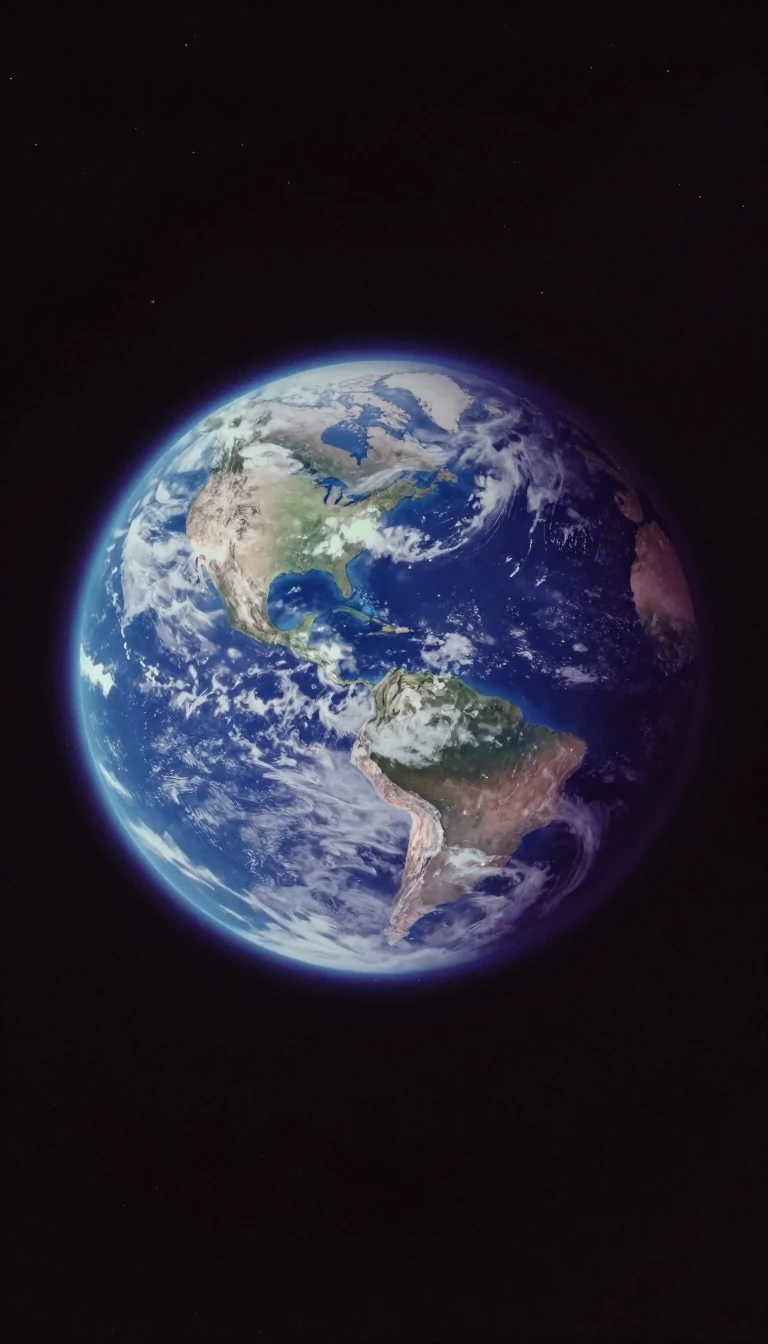 Earth's future is a slow-motion collision course with solar expansion and geological decayOur planet faces a predictable but dramatic timeline. While human activity currently reshapes the surface, long-term natural processes—from the inevitable drift of continents to t…
 Why nothing can travel faster than light, despite what you see in the sky.Physics dictates that nothing with mass can reach the speed of light, as it would require infinite energy. While phenomena like cosmic expansion or laser spots appear to break thi…
 How a self-taught Soviet physicist became the secret architect of the nuclear ageYakov Zeldovich was a brilliant autodidact who mastered everything from combustion to cosmology. While he secretly led the Soviet Union's nuclear weapons program, he simultaneousl…
 How a Soviet Physicist Helped Decode Superconductors While Challenging the StateVitaly Ginzburg was a titan of theoretical physics who helped design thermonuclear weapons for the Soviet Union before becoming a fierce critic of its successor's clericalism. His…
 Viktor Meyer: The brilliant chemist who defined the molecular weight of gasesBefore Viktor Meyer, determining the density of vaporized substances was a formidable challenge. His ingenious apparatus revolutionized chemistry, allowing scientists to measure m…
 How a Dutch engineer’s clever cooling technique unlocked the discovery of fundamental particlesSimon van der Meer was not a typical theoretical physicist. An engineer by training, his genius lay in solving the practical, mechanical hurdles of particle acceleration. His inve…
 The chemist who gave us the burner but refused to patent his inventionsRobert Bunsen is synonymous with the ubiquitous laboratory burner, yet he never patented it or any of his other discoveries. A brilliant experimentalist, he survived near-fatal ar…
 How a chemist’s obsession with stained glass unlocked the secret world of nanoparticlesRichard Zsigmondy began his career studying the vibrant colours of glass, but his curiosity led him to a Nobel Prize. By developing the slit-ultramicroscope, he finally made the i…
 Paul Walden: The chemist who inverted molecules and pioneered room-temperature ionic liquidsBorn into a peasant family, Paul Walden rose to become a giant of stereochemistry and electrochemistry. He discovered the Walden inversion, synthesized the first room-temperature …
 Was this pioneering physicist a radio genius or a victim of his own imagination?Sir Oliver Lodge was a titan of early radio, holding key patents for tuning and wireless transmission. Yet, this same brilliant mind spent his later years convinced he could commu…
 How a Russian chemist's discovery of aniline helped shape the modern chemical industryNikolay Zinin was an orphan who rose to become a titan of 19th-century organic chemistry. Beyond his academic leadership in Russia, his pioneering work on the reduction of nitro c…
 How Nikolay Bogolyubov revolutionized our understanding of complex systems and quantum mechanicsNikolay Bogolyubov was a titan of 20th-century physics who bridged the gap between abstract mathematics and the physical world. From pioneering non-linear mechanics to uncovering …
 How a simple stick and wire revealed the hidden secrets of the Earth's crustLoránd Eötvös, a Hungarian physicist, transformed geophysics with a device as simple as a flute. By refining the torsion balance, he created a tool capable of measuring gravity's …
 Lev Artsimovich: The Soviet physicist who sparked the global race for fusion energyKnown as the father of the Tokamak, Lev Artsimovich transformed nuclear fusion research. After early struggles in Soviet weapons programs, he pivoted to controlled thermonuclear p…
 How a Czech chemist turned liquid metal into a window for molecular discoveryIn 1922, Jaroslav Heyrovský pioneered polarography, a revolutionary electrochemical method using a dropping mercury electrode. This innovation allowed scientists to analyze chemic…
 How a Scottish physicist pioneered modern seismology and transformed our understanding of glacial flowJames David Forbes was a polymath whose curiosity spanned from the polarization of heat to the movement of ice. Though his early seismometer designs struggled to capture the earth…
 How a deaf French inventor laid the groundwork for modern thermodynamics and friction scienceGuillaume Amontons never attended university, yet he pioneered the study of friction and thermodynamics in the late 17th century. From inventing a precursor to the Stirling engine…
- George Gamow: The Ukrainian polymath who explained the Big Bang and the genetic codeGeorge Gamow was a towering figure in 20th-century science, moving effortlessly from the quantum mechanics of atomic nuclei to the origins of the universe. A charismatic émigré, h…
 How a Victorian chemist transformed explosives and made petroleum safer for the worldSir Frederick Abel was the leading British authority on explosives, yet his influence extended far beyond the battlefield. By refining guncotton and co-inventing cordite, he revol…
 Why the Green River carved through a mountain range instead of flowing around itThe Green River is a 730-mile-long waterway that defies conventional geography. Eight million years ago, it carved a path directly through the 13,000-foot-tall Uinta Mountains rat…
 Why simple averages often lie to you about the truthWhen calculating an average, assuming every data point carries equal importance can lead to significant errors. If one group is larger than another, a standard arithmetic mean ign…
 Why Spearman's rank correlation is the secret weapon for measuring non-linear relationshipsWhen you need to know if two variables move together without assuming they follow a straight line, you turn to Spearman's rank correlation. Unlike standard methods that demand lin…
 Why a brewery worker's secret identity changed the course of modern statistical scienceThe Student's t-distribution is a cornerstone of modern statistics, used to assess sample means and build confidence intervals. Yet, its creator, William Sealy Gosset, published h…
 How to compare apples and oranges using the power of the z-scoreEver wondered how to compare test scores from two completely different exams? The z-score is the statistical bridge that makes it possible. By converting raw data into a dimension…
 Why the Wilcoxon signed-rank test is the smarter alternative to the t-testWhen your data refuses to follow a normal distribution, the standard t-test can lead you astray. The Wilcoxon signed-rank test offers a robust solution by focusing on the magnitud…
 How mathematicians model the probability of success within fixed boundsWhen you need to predict a percentage or a proportion, standard tools often fall short. Enter the beta distribution: a versatile mathematical framework designed to capture random …
 Does X cause Y? Granger causality tests if X helps predict Y's future.Granger causality is a statistical method that determines if one time series provides unique information to forecast another. Despite its name, it does not prove true causation. I…
 Why your past failures do not change your odds of future successIn a world governed by the geometric distribution, every attempt is a fresh start. Whether you are rolling dice or monitoring a factory line, this statistical model reveals that p…
- The Dirichlet distribution is the secret engine behind modeling complex, multi-category probability distributions.Imagine trying to predict the outcome of a multi-sided event, like language modeling or topic classification. The Dirichlet distribution provides the mathematical framework to rep…
 Why botany uses precise language to describe the hidden lives of plantsPlants do not just grow; they abscise, acuminate, and adnate. To the uninitiated, botanical terminology can seem like an impenetrable thicket of Latinate jargon. Yet, these precis…
 The Dirac delta function is not a function, yet it solves impossible problems.In standard mathematics, a function must map inputs to outputs. The Dirac delta function breaks this rule by being zero everywhere except at one point, where it is infinitely tall…
 How to find a hidden signal by sliding one pattern across anotherCross-correlation is a mathematical technique used to measure how similar two signals are as one shifts relative to the other. By calculating the product of two functions at every…
 Why the cumulative distribution function is the ultimate map of probabilityEvery probability distribution, whether continuous or discrete, follows a unique blueprint known as the cumulative distribution function. By mapping the likelihood that a variable…
- Data analysis is more than just math; it is a rigorous, iterative, and human process.Data analysis is the systematic process of transforming raw information into actionable insights. Far from a simple calculation, it is an iterative journey involving collection, c…
- Why a single number is never enough to describe complex, multi-dimensional dataIn statistics, variance tells you how a single variable spreads out. But when you have multiple dimensions, that simple measure fails. To capture the full picture of how variables…
- Why knowing the odds changes when you learn new information about an eventConditional probability measures the likelihood of an event occurring, given that another event is already known to have happened. It is not just a theoretical result but a fundam…
 Why the color wheel is a mathematical tool, not just an artist's guideWhile artists use color wheels to mix paints, the concept originated as a rigorous scientific method for predicting light mixtures. Developed by Isaac Newton, the color circle map…