 Intellect Plus
History
21,004 cards. Each one is a 40-second story with a five-minute read behind it. Page 233 of 351.
Subtopics: 19th century · 20th century · Africa · Age of Exploration · Ages & eras · Ancient · Ancient China · Ancient egypt · Ancient greece · Ancient rome · Ancient trade · Archaeological discoveries · Archaeology · Astronomy · Australia · Auxiliary historical sciences · Babylon · Basics · Born on this day · Bronze age · Buddhism · Case studies · Chefs, bartenders and winemakers · China · Cities · Climate · Columbus · Contemporary (1945-) · Cosmetics people · Crime · Criminals · Decipherment · Deep time · Disasters · Early modern · Education · Egypt · Empires · Empires & civilisations · Exploration · Explorers · Extinction · Fandom, conventions and festivals · History by continent and large region · History by continent and region · History by country · History by country, small region and city · History by ethnicity · History by subject matter · History by topic · Inca · India · Industrial Revolution · Japan · Kings & queens · London · Mass hysteria · Medicine · Medieval kingdoms · Medieval life · Mediterranean · Mercedes-Benz History · Mesopotamia · Middle ages · Military leaders and theorists · Military leaders, personnel, and theorists · Ming dynasty · Misconceptions · Modern · Modern (1800-1945) · Napoleon · Navigation · North africa · Other · Pacific · Pharaohs · Philippines · Pirates · Post-classical · Prehistory · Propaganda · Public health · Rebels, revolutionaries and activists · Renaissance · Researched · Second world war · Shipwrecks · Silk Road · South america · Tradespeople · UK & Ireland: history · United states · Vikings · Volcanoes · Women in history
 The House of Bonaparte: From Italian Mercenaries to Emperors of the FrenchThe Bonaparte dynasty began as minor Italian patricians before Napoleon I transformed them into a sprawling European imperial house. While their reign was brief, their influence r…
 How a cadet branch of the Capetian dynasty ruled France for over two centuriesThe House of Valois ascended to the French throne in 1328, navigating centuries of dynastic conflict, religious upheaval, and the Hundred Years' War. Their reign, which lasted unt…
 How a family of palace bureaucrats seized the Frankish throne and built an empireThe Carolingian dynasty did not begin with kings, but with ambitious palace administrators. By mastering the art of political maneuvering and strategic marriage, these noble famil…
 How a banned order of warrior monks became Portugal's most prestigious national symbolWhen the Knights Templar were disbanded in 1312, King Denis of Portugal refused to persecute them. Instead, he reconstituted the survivors as the Order of Christ. This new entity …
 How a 12th-century abbot transformed a crumbling abbey into the birthplace of Gothic architecture.Abbot Suger did not just renovate a church; he pioneered a radical architectural language of light. By replacing heavy Romanesque walls with slender columns and soaring stained gl…
 Was the Seleucid King Antiochus IV a deranged tyrant or a misunderstood political visionary?Antiochus IV Epiphanes is remembered as a villainous persecutor of Jews and a prototype for the Antichrist. Yet, some modern historians argue his reputation was unfairly tarnished…
- Was the Fairy Tale King of Bavaria truly mad or just a misunderstood visionary?Ludwig II, Bavaria's reclusive monarch, is often remembered as the Mad King. Yet, his legendary extravagance was funded by his own private revenue, not state coffers. While his mi…
 The American Philosophical Society: Where Benjamin Franklin’s Intellectual Legacy Still Thrives TodayFounded in 1743 by Benjamin Franklin, this Philadelphia institution remains the oldest learned society in the United States. It has evolved from a colonial club into a prestigious…
 Why the length of a furrow still shapes the modern city gridThe furlong, a unit dating back to Anglo-Saxon agriculture, was once the distance oxen could pull a heavy plough before needing a rest. Though largely abandoned in official record…
 How a Los Angeles neighborhood transformed from a military outpost into a residential enclave.Brentwood began as a small community serving a 600-acre home for disabled soldiers in the 1880s. Today, this Westside district is defined by its dramatic topography, high-end comm…
 Born from volunteers and captured machines, the Finnish Air Force defied impossible odds.Emerging during the chaos of the 1918 Civil War, Finland’s air arm began with a handful of donated aircraft and foreign pilots. Despite being vastly outnumbered by the Soviet Unio…
 How a private collection of wealthy bibliophiles became a global public knowledge powerhouseThe New York Public Library is not a government creation, but a hybrid institution born from 19th-century private philanthropy. Today, it manages nearly 53 million items across 92…
 The world's largest gypsum dunefield hides a prehistoric secret beneath its shifting white sands.White Sands National Park in New Mexico contains 4.5 billion tons of gypsum sand, forming the largest dunefield of its kind on Earth. Beyond its striking landscape, the park prese…
 How a biblical judge became the ultimate symbol for small, elite military forcesGideon, an Israelite leader, famously defeated a massive Midianite army with only 300 men. His story, marked by divine signs and tactical deception, has transcended scripture to i…
 How a single province became the world's most critical source of nuclear materialKatanga was once a state within a state, holding the world's highest-grade uranium deposits. Its mineral wealth fueled the Manhattan Project and sparked a brutal secessionist cris…
 Mathura: How an Ancient Economic Hub Became the Sacred Birthplace of KrishnaMathura is more than a city; it is a spiritual anchor for millions. Once a thriving trade junction on the Indo-Gangetic Plain, it evolved into a holy site of immense architectural…
- The Kharijites: How the First Islamic Sect Challenged the Caliphate and Defined ExtremismEmerging during the First Fitna, the Kharijites were the first sect to break from the early Muslim community. Known for their radical egalitarianism and uncompromising stance on s…
 The Eye of Horus: How an Ancient Egyptian Myth Became a Symbol of ProtectionIn ancient Egypt, the Eye of Horus was more than a mere icon; it was a potent emblem of healing, restoration, and divine protection. Born from a violent mythological struggle, thi…
- Ancient Egyptian gods were not just idols but manifestations of the natural world order.Egyptian deities were far more than static icons. They were dynamic forces of nature, managed by pharaohs to maintain the cosmic balance known as maat. From animal-headed figures …
 Why your favorite historical drama is likely lying to you about the pastAnachronisms are chronological inconsistencies, from misplaced objects to modern ideas projected onto ancient lives. While sometimes used as a deliberate aesthetic choice to help …
 The daughter of a pioneer icon became a founding mother of American libertarianism.Rose Wilder Lane was more than just the daughter of Laura Ingalls Wilder. A prolific writer and war correspondent, she became a central figure in the American libertarian movement…
 Split is not just a city built inside a Roman palace; it is much older.While the iconic ruins of Diocletian's Palace define the city's skyline, Split existed centuries before the Roman emperor arrived in 305 CE. Originally a Greek colony named Aspála…
 The enduring evolution of the kurta: from nomadic tunic to modern global stapleTracing its lineage to Central Asian nomadic garments, the kurta has transformed from a functional, collarless tunic into a versatile icon of South Asian style. Whether crafted fr…
 The T-shirt evolved from 19th-century underwear into a global medium for self-expression.Once a humble, hidden layer for miners and sailors, the T-shirt has transformed into the world's most ubiquitous garment. From its utilitarian origins in the U.S. Navy to its stat…
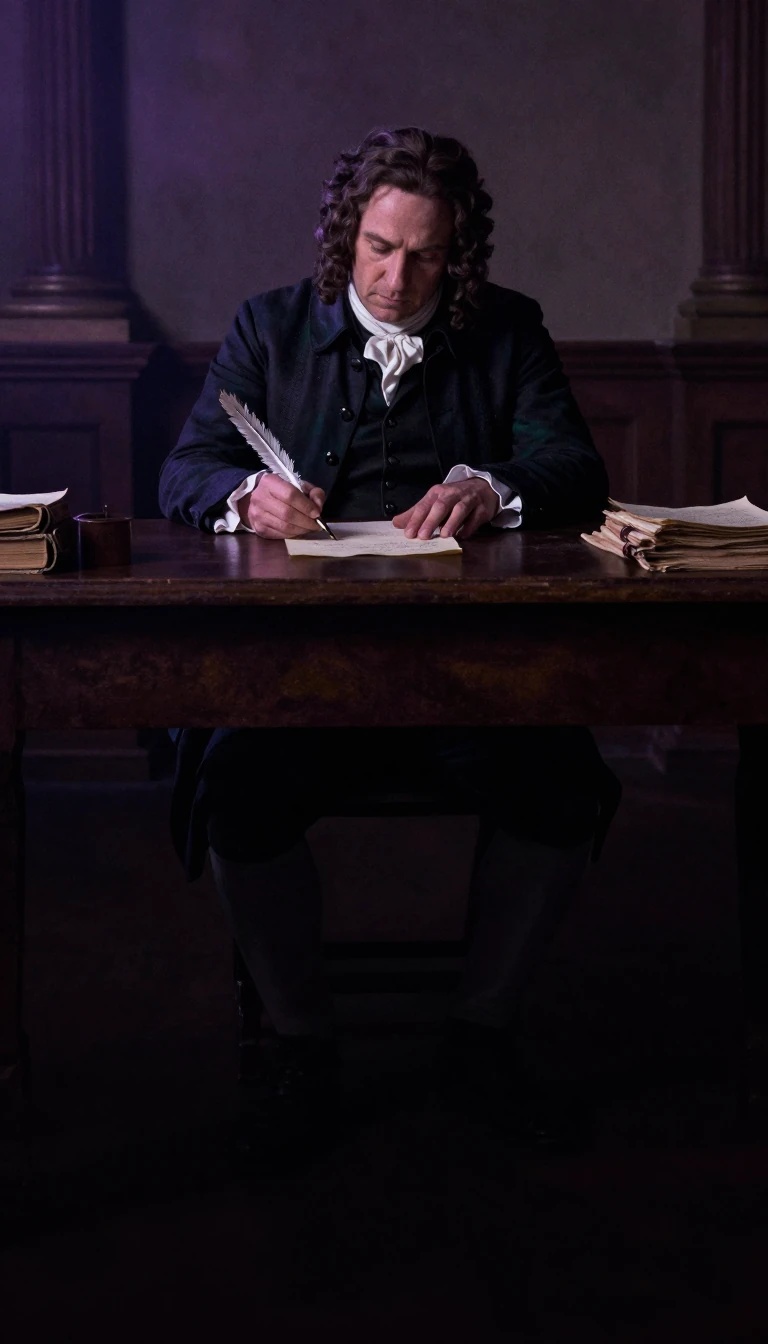 Abolitionism in America began long before the Civil War, rooted in colonial-era moral dissent.While the Thirteenth Amendment finally ended chattel slavery in 1865, the movement to abolish it spanned centuries. From 17th-century Quaker petitions to the radical immediatism o…
 How Denmark's youngest prime minister transformed from a skeptic into a geopolitical powerhouse.Mette Frederiksen, Denmark's youngest-ever prime minister, has navigated constitutional crises, a global pandemic, and the shifting tides of European security. Once a committed Eu…
 How Nazi Germany used the British Raj as a blueprint for occupying Czech lands.When Hitler established the Protectorate of Bohemia and Moravia in 1939, he sought to mask the violation of the Munich Agreement by emulating the British Raj. By appointing a Reic…
- Why do states risk war to annex territory they claim as their own?Irredentism is the volatile desire of a state to annex neighboring territory based on historical or ethnic ties. While often framed as a noble quest to unite kin, it frequently se…
- How a British wartime strategy created the modern Hashemite royal family across the Middle East.Following World War I, the British Empire attempted to stabilize the Middle East through the Sharifian solution. By installing the sons of Sharif Hussein bin Ali as monarchs acros…
 The House of Saud: How One Family Built an Absolute Monarchy on Desert OilThe House of Saud rules Saudi Arabia with absolute authority, commanding vast wealth estimated at up to 1.4 trillion dollars. From their 15th-century origins in Diriyah to the mod…
 How Germany’s complex electoral system evolved from democratic ideals to total state controlGerman federal elections are governed by a constitutional mandate for fairness, yet the system has a volatile history. From the proportional representation of the Weimar Republic …
- How a modern monarch balances absolute authority with the pressures of a volatile regionAbdullah II of Jordan, a 41st-generation descendant of the Prophet Muhammad, rules a constitutional monarchy that grants him significant executive power. Navigating the Arab Sprin…
 How the Christian Democratic Union transformed from a post-war coalition to a conservative vanguardFounded in 1945 to bridge religious divides, the Christian Democratic Union has dominated German politics for decades. From the pragmatic centrism of Angela Merkel to the traditio…
 How a Soviet satellite state maintained a command economy while suppressing its own citizensFrom 1948 to 1989, Czechoslovakia operated as a communist-led state under heavy Soviet influence. Behind the Iron Curtain, the government enforced a rigid command economy, maintai…
 The Ming Emperor who traded his throne for the life of a soldierThe Zhengde Emperor was a restless monarch who rejected Confucian ritual to live among soldiers, lamas, and eunuchs. He built a private city, led his own military campaigns, and f…
 Before he was a villain, Baal was the life-giving lord of the ancient world.Known as Hadad in the north and Baal in the Levant, this storm god was once the essential provider of rain and fertility. Far from the later biblical caricature, he was a cosmic k…
 The Renaissance Pope who balanced artistic indulgence with the start of the Counter-ReformationAlessandro Farnese, known as Pope Paul III, was a complex figure who bridged the gap between the opulent Renaissance and the disciplined Counter-Reformation. While he famously fat…
- The Roman Forum was not built by design but evolved from a marshy cemetery.Far from a planned architectural masterpiece, the heart of ancient Rome began as a soggy, low-lying burial ground between two hills. Over centuries, it transformed through organic…
 More than a racetrack, the Hippodrome was the beating heart of the Byzantine EmpireThe Hippodrome of Constantinople was a massive U-shaped arena where chariot racing fueled political rivalries and civil unrest. Holding up to 100,000 spectators, this social cente…
- The Roman dictator was a temporary emergency official, not a permanent autocrat.In the Roman Republic, a dictator was an extraordinary magistrate appointed for a specific, limited task—like winning a war or holding elections—before immediately resigning. Far …
- Sin was the Mesopotamian moon god, but his identity was a complex, shifting puzzle.Known as Nanna in Sumerian and Sin in Akkadian, this lunar deity was far more than a celestial body. He was a pastoral guardian of cattle, a judge of the dead, and occasionally, a…
- Was the God of the Bible originally a subordinate to a higher Canaanite deity?Long before monotheism defined Israelite religion, the ancient Near East worshipped El, the supreme father of the gods. Scholars suggest that the biblical Yahweh may have once bee…
 How a quiet Devon fishing village became the Victorian era's premier seaside retreatTorquay transformed from a minor settlement into the English Riviera, a fashionable Victorian destination defined by its mild climate and Italianate architecture. From its origins…
 From atomic secrets to global health, the hidden history of Los Alamos National Laboratory.Established in 1943 as a top-secret site for the Manhattan Project, Los Alamos evolved from the birthplace of the atomic bomb into a multidisciplinary powerhouse. Today, this New …
 How a Cambridge undergraduate became the Soviet Union's most effective mole in the West.Donald Maclean was a rising star in the British Foreign Office, yet he spent nearly two decades funneling classified secrets to Moscow. From atomic energy reports to top-level sum…
 Why the world's most luxurious wine was once called the devil's wineChampagne was not a refined invention but a dangerous accident. Early bottles frequently exploded, causing cellar workers to wear iron masks for protection. It took centuries of t…
 How a 16th-century stately home survived death duties, war, and modern structural decayChatsworth House, the seat of the Dukes of Devonshire, has evolved from a Tudor mansion into a Grade I listed landmark. Despite facing near-ruin from 80 percent death duties in 19…
 The strategic Baltic island that survived centuries of conflict and shifting bordersBornholm is a landscape of dramatic granite cliffs and sun-drenched figs, but its history is anything but peaceful. From medieval fortresses to Soviet landings and Cold War radar …
 How Britain transitioned from a global superpower to a post-war welfare stateAfter 1945, Britain faced bankruptcy and the loss of its empire. To survive, it built a comprehensive welfare state and a nationalized economy, underpinned by American loans. This…
 The ancient Germanic roots of a name that defined European royalty and modern nomenclatureFrom the battlefields of medieval Scotland to the common garden plant, the name Robert carries a legacy of fame and brilliance. Rooted in Proto-Germanic, it has survived centuries…
 How Viking invasions forced ancient rivals to unite as a single kingdomFor centuries, the Picts and Gaels were defined by conflict. But as Viking raids intensified in the 8th century, a desperate necessity emerged: survival through unification. This …
 How Britain navigated the turbulent interwar years between 1918 and 1939The interwar period in Britain was defined by economic stagnation, the rise of the Labour Party, and a fundamental shift in the monarchy's social role. While the nation avoided th…
- The Queen Who Ended a Dynasty and Changed a Nation's FaithIn 1384, Jadwiga was crowned "King" of Poland—a title chosen specifically to underscore her sovereign authority. Her marriage to a pagan Lithuanian prince didn't just unite two te…
 The landless knight who became the most powerful man in medieval EnglandWilliam Marshal rose from a minor, landless younger son to serve five English kings. A legendary tournament champion who bested 500 knights, he eventually became the protector of …
 How Germany’s U-boat fleet evolved from a desperate gamble into a global naval threat.U-boats were once dismissed by German naval command as expensive distractions from battleship supremacy. Yet, through secret treaty-breaking, innovative engineering, and ruthless …
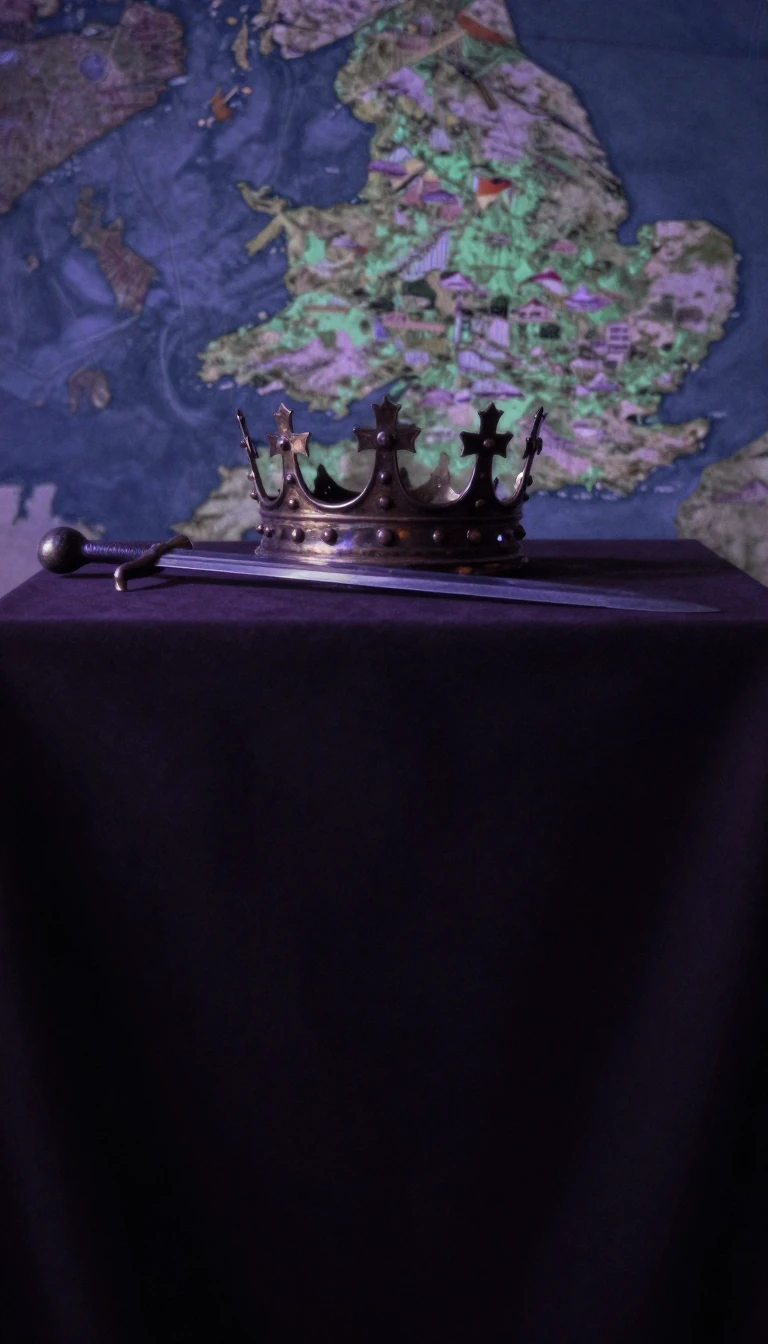 Northumbria: The volatile medieval kingdom that shaped the identity of Northern EnglandBetween 654 and 1066, Northumbria stood as a powerhouse of early medieval England. Yet, beneath its grand history of saints and scholars lay a brutal reality: a throne so unstable…
 Was Robert Dudley the secret husband of England's Virgin Queen?Robert Dudley was Elizabeth I's lifelong favorite, a man who occupied a role as her husband in all but name. Their bond survived imprisonment, political scandal, and the mysteriou…
 Why the nickname Silly Suffolk has nothing to do with being foolishSuffolk is a county defined by its deep history, from prehistoric hand axes to Anglo-Saxon royal ship burials. While its nickname Silly Suffolk is often assumed to mean foolish, i…
- A ghost ship buried in Suffolk reveals the lost power of Anglo-Saxon kingsIn 1939, archaeologists uncovered a 27-metre ship buried beneath an earthen mound in Suffolk. This silent vessel, filled with gold, gems, and Eastern Roman silver, offers a rare g…
- The first king of England was not who you think he wasHistory often simplifies the origins of the English monarchy, but the title of first king is fiercely debated. While Alfred the Great laid the foundation, it took his grandson Æth…