 Intellect Plus
History
21,006 cards. Each one is a 40-second story with a five-minute read behind it. Page 251 of 351.
Subtopics: 19th century · 20th century · Africa · Age of Exploration · Ages & eras · Ancient · Ancient China · Ancient egypt · Ancient greece · Ancient rome · Ancient trade · Archaeological discoveries · Archaeology · Astronomy · Australia · Auxiliary historical sciences · Babylon · Basics · Born on this day · Bronze age · Buddhism · Case studies · Chefs, bartenders and winemakers · China · Cities · Climate · Columbus · Contemporary (1945-) · Cosmetics people · Crime · Criminals · Decipherment · Deep time · Disasters · Early modern · Education · Egypt · Empires · Empires & civilisations · Exploration · Explorers · Extinction · Fandom, conventions and festivals · History by continent and large region · History by continent and region · History by country · History by country, small region and city · History by ethnicity · History by subject matter · History by topic · Inca · India · Industrial Revolution · Japan · Kings & queens · London · Mass hysteria · Medicine · Medieval kingdoms · Medieval life · Mediterranean · Mercedes-Benz History · Mesopotamia · Middle ages · Military leaders and theorists · Military leaders, personnel, and theorists · Ming dynasty · Misconceptions · Modern · Modern (1800-1945) · Napoleon · Navigation · North africa · Other · Pacific · Pharaohs · Philippines · Pirates · Post-classical · Prehistory · Propaganda · Public health · Rebels, revolutionaries and activists · Renaissance · Researched · Second world war · Shipwrecks · Silk Road · South america · Tradespeople · UK & Ireland: history · United states · Vikings · Volcanoes · Women in history
 The Thracian King who never fought a battle but became a legend of TroyRhesus of Thrace arrived at the Trojan War with legendary golden armor and the finest horses in the land. Yet, he never struck a blow. Before he could even join the fray, he was k…
 Was the primordial sea god Phorcys actually a defeated king of Sardinia?Phorcys is best known in Greek mythology as a terrifying primordial sea deity and the father of legendary monsters like the Gorgons. Yet, an ancient, alternative tradition suggest…
 Nike was not a brand, but a winged goddess of victory in ancient Greece.Long before the sportswear giant, Nike was the personification of victory in battle and sport. Often depicted as a winged figure moving at great speed, she served as a constant co…
 Why Ancient Greeks Invoked a Titan to Ensure Their Stories Remained AliveMnemosyne was the Titan of memory, a foundational figure in Greek culture. Before written literature dominated, poets relied on her to accurately recite epic poems. Far from a mer…
 The Thracian goddess whose nocturnal rites scandalized the ancient world with wild abandonKotys, a mysterious Thracian deity, commanded a cult defined by riotous, midnight celebrations. Often linked to the Phrygian Cybele, her worship involved elaborate purification ri…
 Why did ancient scholars link a Greek Titan to a biblical patriarch?Iapetus, a primordial Titan cast into Tartarus, occupies a strange space in history. While Greek mythology casts him as the father of humanity's ancestors, early modern scholars s…
 The ancient fruit that may have graced the Garden of EdenLong before modern agriculture, a resilient small tree produced a versatile drupe that traveled from Asia to Egypt and beyond. From being used as woodblocks for printing books to …
 Was Iacchus a god or just a ritual shout that took on a life?Iacchus was a central figure in the Eleusinian Mysteries, yet he lacked a clear mythology of his own. Many scholars believe he began as a simple ritual exclamation, Iacche, cried …
 The ancient goddess Ḫepat: from a Syrian city deity to a mysterious Orphic nurseOriginating in northern Syria during the third millennium BCE, Ḫepat evolved from a local city goddess into a central figure of Hurrian and Hittite religion. Her journey through h…
 Why the ancient Greeks worshipped peace as a living, breathing goddessIn the ancient world, peace was not merely a political state but a divine presence. Known as Eirene, she was one of the Horae, personified as a beautiful woman bearing symbols of …
 In ancient Athens, one altar stood apart as a sanctuary for the truly desperate.While the Greek pantheon was filled with gods of power and war, the city of Athens uniquely honored Eleos, the personification of compassion. This deity held no traditional temple…
- Why the ancient Greeks believed a buried giant caused Mount Etna to eruptIn Greek mythology, Enceladus was a formidable giant defeated by the gods and entombed beneath Sicily. Ancient observers interpreted the volcanic activity of Mount Etna as the res…
- How a Thracian Moon Goddess Became an Official Athenian State IconIn the fifth century BC, Athens took the unusual step of adopting a foreign deity into its state religion. Bendis, a Thracian huntress, was welcomed with open arms, eventually ins…
- Aristaeus: The forgotten Greek deity who taught humanity how to survive and thriveKnown as the best, Aristaeus was a master of rural arts, from beekeeping to viticulture. Born to Apollo and a huntress, he traveled the ancient world as a civilizing hero, teachin…
 Why the Greek god of medicine was killed for bringing the dead back to lifeAsclepius, the ancient Greek hero and god of medicine, was so skilled that he allegedly resurrected the dead. This power ultimately led to his demise at the hands of Zeus, who fea…
 How the Ancient Near Eastern Goddess Astarte Became a Hellenized Cultural IconAstarte was far more than a local deity. As the Hellenized version of the Semitic goddess Aṯtart, she traveled from the Bronze Age Levant to the Iberian Peninsula and Egypt. Her e…
- Alala: The Ancient Greek Personification of the War Cry That Echoed Into Modern HistoryIn Greek mythology, Alala was not merely a sound but a divine entity, the personification of the battle-cry. Daughter of the war god Polemos, she served as a terrifying prelude to…
 The six-month-old king who lost a throne before he could walkIn 1952, a revolution swept across Egypt, toppling the Muhammad Ali dynasty. The infant heir, Fuad II, was proclaimed King of Egypt and Sudan at just six months old. He would reig…
 Was the Holy Roman Emperor known as the Arch-Sleepyhead actually a strategic genius?Frederick III, who reigned for 41 years, was often mocked for his sluggish, indecisive style. Yet, this supposedly sleepy ruler laid the groundwork for the massive Habsburg Empire…
 How a Roman label for foreign tribes became the name of a modern nationThe term Germania was not a native identity but a Roman invention, used to categorize diverse peoples living beyond the Rhine. While Rome struggled to conquer these lands, the nam…
 How France attempted to rule Morocco without erasing its thousand-year-old traditionsUnlike the assimilationist approach used in Algeria, French colonial rule in Morocco sought to preserve traditional society. By enlisting the existing nobility and maintaining the…
 Was the Garden of Eden a literal place or a royal Persian garden?The Garden of Eden is a foundational biblical narrative, yet its physical location remains a mystery. Scholars debate whether it was a real Mesopotamian site, a symbolic reflectio…
 The Gepids: A Shadowy Germanic Tribe That Once Toppled the Hunnic EmpireLong considered a footnote in the migration period, the Gepids were a formidable Germanic power that rose from obscurity to dominate the Carpathian Basin. After helping to shatter…
- The Forgotten Sicilian Fire God Who Once Guarded His Temple With A Thousand DogsBefore the Greek pantheon dominated Sicily, the Sicels worshipped Adranus, a powerful fire deity associated with the volcanic intensity of Mount Etna. Though largely eclipsed by l…
 How a World War II Radar Base Transformed into a Modern Research PowerhouseFlorida Atlantic University rose from the remnants of a military airfield to become a major research institution. Today, this sprawling university system spans seven campuses, ser…
- How a refugee state in Anatolia kept the Byzantine dream alive for decadesAfter the 1204 Sack of Constantinople, the Byzantine aristocracy fled to Nicaea. This rump state became the most powerful successor, successfully navigating wars against Crusaders…
 How a desperate military outpost in Italy accidentally birthed the medieval Italian city-state.Established in 584 to defend Byzantine Italy against Lombard invaders, the Exarchate of Ravenna centralized military and civil power. Yet, as imperial authority waned, local milit…
 How a small group of British intellectuals shaped global politics through patient, gradual reform.Named after a Roman general who defeated Hannibal through attrition, the Fabian Society rejected violent revolution in favor of cautious, evolutionary change. By influencing the B…
 Ferdinand II: The Emperor Who Tried to Force an Entire Empire Into One FaithFerdinand II was a man of contradictions: a pious, music-loving hunter who believed his divine mission was to eradicate religious dissent. His uncompromising zeal for the Counter-…
 The Final Solution was not a single decision but a prolonged, incremental process of genocide.The Nazi plan to exterminate Europe's Jewish population was not born from one specific order. Instead, it evolved over 25 months of war, shifting from forced emigration and ghetto…
 How a dispute over language and compensation sparked a migration into independenceIn the 1830s, Dutch-speaking settlers abandoned the Cape Colony to forge their own destiny. Driven by British language laws and bitter disagreements over slavery compensation, the…
 How a fractured Carolingian empire birthed the medieval kingdom of GermanyWhen the Carolingian Empire split in 843, the eastern portion faced a unique challenge: it lacked the traditional royal regalia and symbols of power. Forced to innovate, its ruler…
 How a Warlord's Domain Transformed the Yangtze Delta into a Chinese PowerhouseEastern Wu began as a collection of regional military fiefdoms but evolved into a sophisticated imperial state. By mastering river transport and expanding trade across the seas, t…
 Eleftherios Venizelos: The Cretan Revolutionary Who Became the Maker of Modern GreeceFrom a hilltop rebel in Crete to an eight-term Prime Minister, Eleftherios Venizelos reshaped the Greek state. He navigated the collapse of the Ottoman Empire, survived internal c…
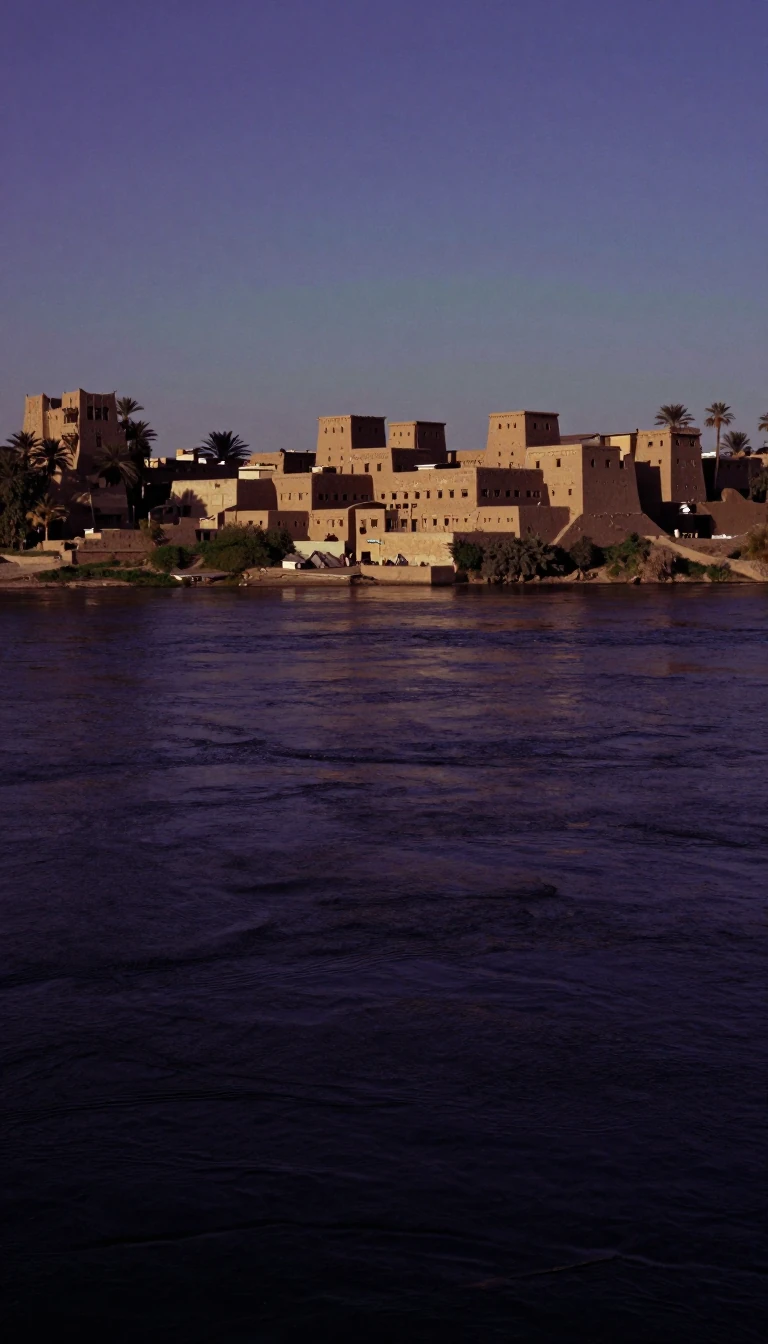 Why the Nile Valley's ancient inhabitants remain the most rooted people on EarthFor millennia, the Egyptian identity has been anchored to the fertile banks of the Nile. Despite waves of foreign rule, from Persians to Romans, this hinterland society maintained…
 Beyond inheritance: how elective monarchies have shaped global power for thousands of yearsWhile we often associate crowns with bloodlines, history reveals a different path. From ancient Roman assemblies to the modern Vatican, elective monarchies have frequently bypasse…
 Was Edgar the Peaceful actually a golden-age monarch or just a lucky opportunist?Edgar reigned as King of England from 959 to 975, a period later chroniclers mythologized as a golden age of peace. Yet, modern historians find him an elusive figure, debating whe…
 The Russian Emperor was more than a king; he was a divinely ordained father figure.From 1721 to 1917, the Russian monarch held a title that fused absolute political power with supreme religious authority. Unlike Western counterparts, the tsar was viewed as a lit…
- In 1915, China’s President declared himself Emperor, triggering a collapse that birthed the warlord era.Yuan Shikai, China’s president, attempted to restore the monarchy in 1915, rebranding himself as the Hongxian Emperor. He argued that republicanism was unsuitable for China’s cond…
 The last Habsburg emperor was a man of peace in a world at warCharles I of Austria inherited a crumbling empire during the First World War. While his contemporaries pursued total victory, he secretly sought a path to peace. His attempts to s…
 The government-in-exile that manages a diaspora without holding sovereign territoryBased in Dharamshala, India, the Central Tibetan Administration functions as a government-in-exile for roughly 100,000 Tibetan refugees. While it lacks international recognition a…
 Why this ancient jade-colored pottery was once the most coveted treasure in the worldCeladon is a ceramic marvel defined by its pale, jade-like glaze. Originating in China, this technique relies on precise iron oxide chemistry and high-temperature firing in a redu…
 Why Genghis Khan denied his own son the throne of the Mongol EmpireChagatai Khan was a master of Mongol law and a key architect of the empire's stability. Yet, his own father, Genghis Khan, deemed him too inflexible to rule. Discover the story of…
 Did a royal wedding massacre haunt the French King to his early grave?Charles IX of France ascended the throne at age ten, but his reign was defined by the brutal religious wars between Catholics and Huguenots. His attempt to broker peace through a …
- Did a simple door frame really end the reign of King Charles VIII?Charles VIII of France conquered Italy with revolutionary artillery, only to lose everything and die in a bizarre accident. While history long blamed a fatal collision with a door…
 Eadred, the King who solidified England by mastering the volatile Northumbrian frontier.Succeeding his brother in 946, Eadred inherited a kingdom defined by fragile borders and Viking rivals. While his health failed him in his final years, his reign marked a pivotal …
- The Boers: How a nomadic farming culture shaped the history of Southern AfricaThe Boers were not merely farmers; they were a restless, semi-nomadic people whose desire to escape colonial oversight defined their identity. From the Dutch East India Company to…
 Bosniaks are a South Slavic nation whose identity evolved from medieval subjects to modern citizens.The term Bosniak has shifted from a medieval territorial label to a modern ethno-national identity. While often associated with Sunni Islam, the roots of this group lie in the Sla…
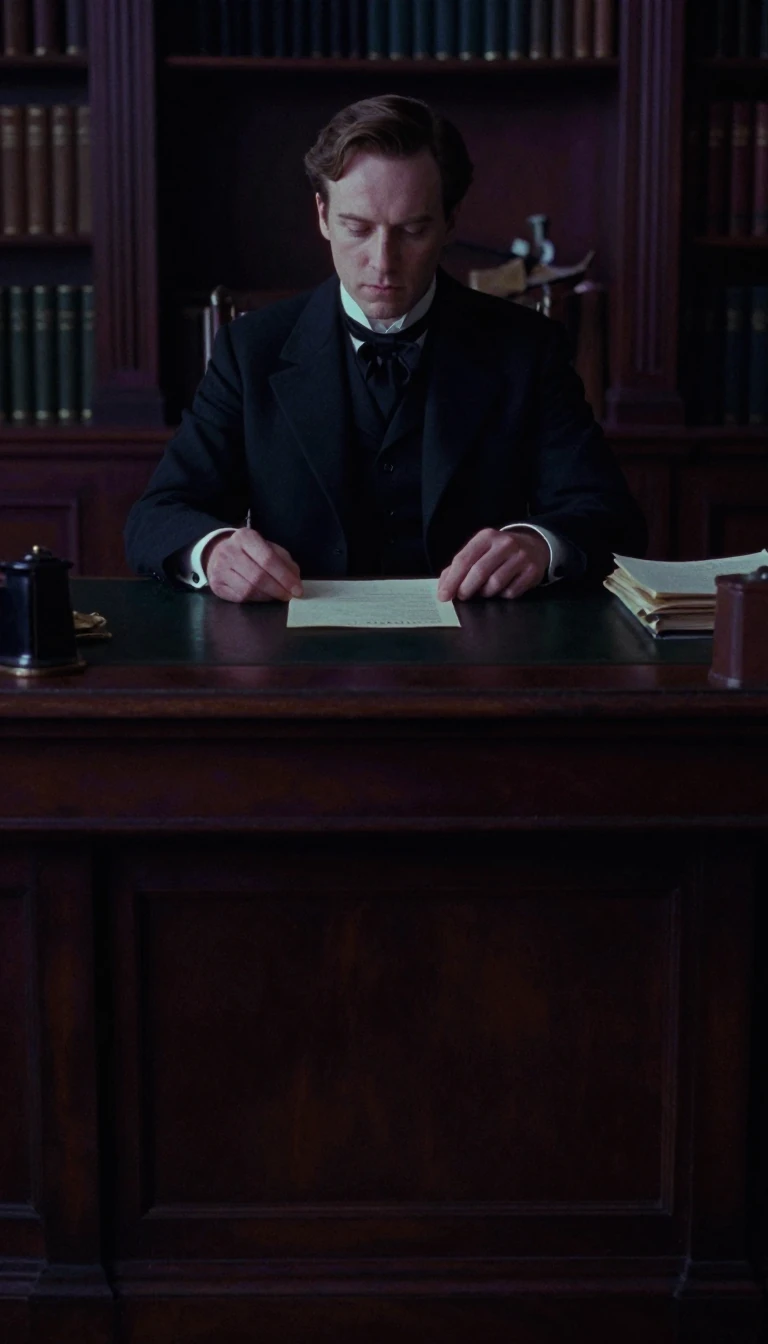 A Victorian military expedition spent nine million pounds to rescue hostages from a mountain fortress.In 1868, the British Empire launched an extraordinary rescue mission into the Ethiopian Highlands. Facing impossible terrain and a volatile Emperor, the army built railways, piers…
- How a Roman client king built the Mediterranean's largest artificial harbour in the open sea.Herod the Great transformed a modest Phoenician trading village into a monumental Roman capital. By importing thousands of cubic metres of volcanic ash from Italy, his engineers p…
 Why the brigade became the essential building block of modern military powerThe brigade emerged in the 17th century to solve a command crisis: armies had grown too large for a single general to manage independent regiments. By grouping diverse units into …
- How Nepalese soldiers became a legendary force within the British Army for two centuries.Renowned for their fierce tenacity and distinctive curved khukuri knives, the Brigade of Gurkhas has served the British Crown for over 200 years. From the 1814 war in Nepal to mod…
 Burgundy was once a European superpower that rivaled the French crown itselfLong before it became synonymous with fine wine, Burgundy was a formidable medieval state. Stretching from the Alps to the North Sea, the Valois-Burgundian realm operated as a wea…
 The Flying Fortress was a strategic gamble that nearly bankrupted its own creator.Boeing's B-17 prototype was a technological marvel that crashed during its debut, losing a major military contract. Yet, this failure birthed the modern pilot checklist and a lege…
- The man who held the center while Russia fell to revolutionIn 1917, Alexander Kerensky was the only leader to bridge the gap between the Duma and the Petrograd Soviet. Yet, despite his immense political reach, his refusal to exit World Wa…
- Why the name of an entire nation was once banned by a Russian TsarFor centuries, the people now known as Belarusians have navigated a shifting landscape of labels, from Ruthenians to White Russians. Their identity was forged through ancient Balt…
- How a Private Corporate State Became a Belgian Colony and a Global Resource EngineFrom 1908 to 1960, the Belgian Congo functioned as a massive, state-run extraction machine. Built on a colonial trinity of government, missionaries, and private firms, the territo…
 Was the Belle Époque a golden age of peace or a facade for impending catastrophe?The Belle Époque, spanning 1871 to 1914, is remembered as a French golden age of optimism, scientific innovation, and cultural flourishing. Yet, this era of prosperity and imperia…
- Did the Berlin Conference actually carve up Africa, or is that a myth?In 1884, fourteen nations gathered in Berlin to regulate trade and colonial claims in Africa. While often blamed for the continent's borders, the reality is more complex. The conf…
- Bessarabia: The contested Eastern European crossroads between the Dniester and the Prut riversBounded by the Dniester and the Prut, Bessarabia has spent centuries as a strategic prize. From the Principality of Moldavia to the Russian Empire, Romania, and the Soviet Union, …