 Intellect Plus
Nature
11,198 cards. Each one is a 40-second story with a five-minute read behind it. Page 114 of 187.
Subtopics: Ageing · Air · Animal behaviour · Animal breeds and hybrids · Animals · Arthropods · Atmosphere · Big cats · Bilateria, others · Birds · Botany · Cnidarians · Conservation · Coral reefs · Deep sea · Deserts · Dinosaurs · Earth science · Earth science and physical geography · Earth science basics · Earthquakes & tsunamis · Echinoderms · Ecology · Ecosystems · Endangered species · Extinct animals · Farming · Fish · Forests · Fungi · General classifications · Geology · Geomorphology · How Long Can It Live? · Ice · Individual animals · Insects · Lightning · Longevity · Mammals · Marsupials · Migration · Mollusks · Ocean · Organisms · Parasites · Physical geography · Plants · Porifera · Predators · Primates · Rainforest · Reptiles & amphibians · Researched · Sharks & rays · Spiders & arachnids · Symbiosis · Trees · UK & Ireland: nature · Vertebrates · Vision · Volcanoes · Water · Waves · Weather · Whales & dolphins · Zoology
 Urban expansion drives native species loss and biological homogenizationResearch reviewing urban-gradient studies found that urban development causes high local extinction rates, often eliminating most native species. As cities expand, widespread nonn…
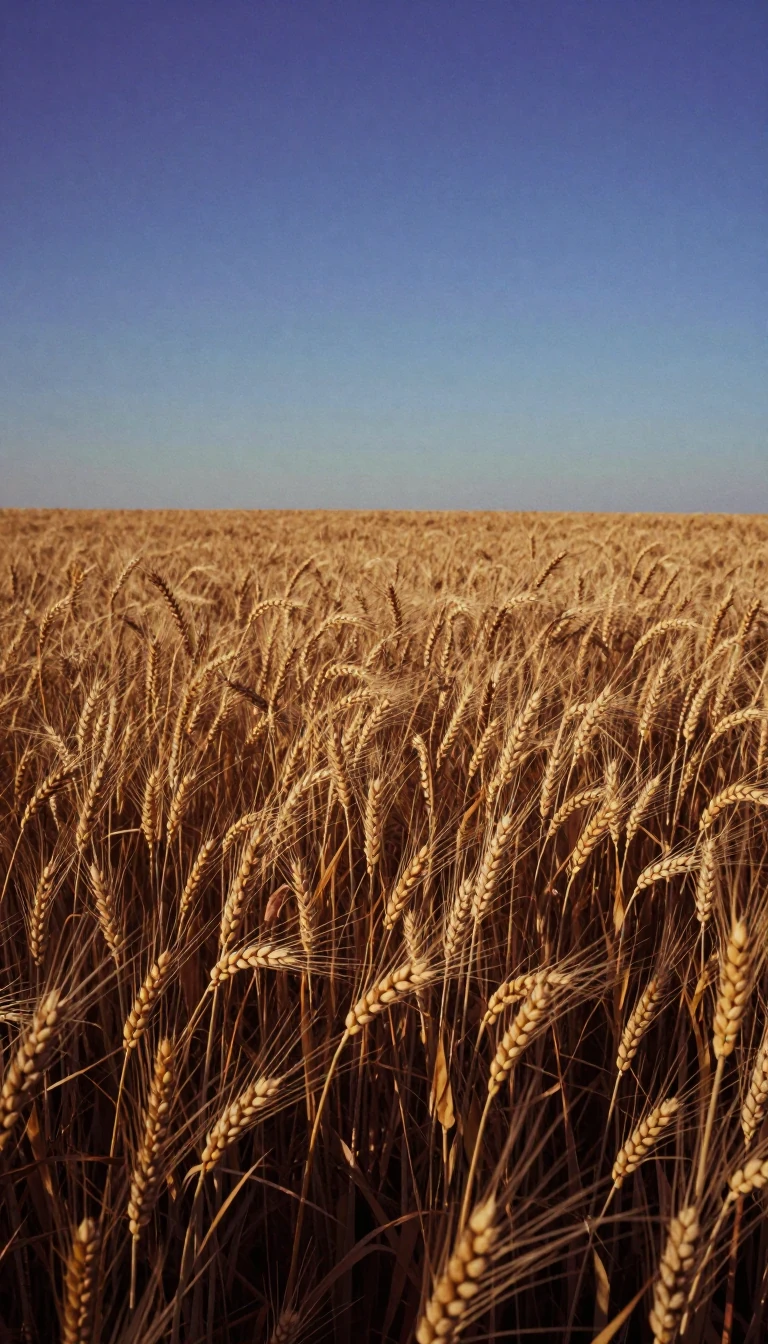 Ecological threats to wheat and maize production may destabilize food securityA review of cereal value chains in Africa and Asia found that environmental drivers like climate change and water scarcity are increasingly threatening the production of wheat and…
 Upstream heating fueled the record-breaking Pacific Northwest heatwave of 2021A study of the unprecedented June 2021 heatwave in the Pacific Northwest found that upstream diabatic heating was a primary driver of the extreme temperatures. The event saw many …
 High fluid pressure may drive deep-seated slow slip and tremorResearchers reviewing geophysical and geological data found that deep-seated slow slip and tremor (SST) events likely occur in environments with high fluid pressure. These events,…
 Ubiquitous microplastics may transport pollutants and disrupt biological processesA review of current environmental research found that microplastics are widespread in nature, appearing in drinking water, air, and various foods like honey and salt. These tiny p…
 Urban features filter bee communities toward specific functional traitsA review of pollinator research found that urban environments act as a filter for bee communities. The interacting local and landscape features of cities tend to favor certain tra…
 Moth population trends vary significantly across different global regions and habitatsResearchers observing global moth populations found that biodiversity trends are highly complex and inconsistent. While some regions like Europe show alarming decreases in abundan…
 Mantle plumes drive massive volcanic activity during continental riftingResearchers using a model of mantle rifting found that thermal anomalies beneath the lithosphere can trigger immense volcanic activity. By simulating the stretching of continents …
 New modeling technique improves how scientists simulate ocean mixing and heat transportResearchers who review oceanic vertical mixing found that current models often miss key physics in the upper ocean's boundary layer. By developing a new "K profile parameterizatio…
 Warming oceans drive massive shifts and restructuring in marine plankton communitiesResearchers using species distribution models for 336 phytoplankton and 524 zooplankton species found that global warming is fundamentally reshaping ocean life. Under high emissio…
 Global cooling and drying triggered a burst of turtle diversificationResearchers studying a massive molecular dataset of 591 turtles found that the group's evolutionary history was marked by a sudden threefold increase in diversification. This burs…
 Global water security requires integrating social, economic, and environmental systemsA narrative review of global water resources found that achieving water security is vital for sustainable development, yet faces unprecedented pressure from climate change, urbani…
 Environmental threats may be more severe than current global awareness suggestsA review of environmental evidence suggests that future ecological conditions could be far more dangerous than is currently recognized. The authors argue that the sheer magnitude …
 Accelerating greenhouse gas emissions could trigger a marine mass extinctionResearchers modeling the physiological limits of diverse marine animals found that rising greenhouse gas emissions could trigger a mass extinction event. The study suggests that t…
 Complex rupture patterns in Turkey's 2023 earthquake doublet revealed by modelingResearchers using seismic and space-geodetic data found that the destructive 2023 Kahramanmaraş earthquake doublet involved highly complex movements. By combining observations wit…
 A new community-based classification organizes thousands of lycophytes and fernsResearchers have developed a comprehensive new classification for lycophytes and ferns using a community-based approach. By using monophyly as a primary criterion, the framework o…
 Agriculture is the world's most water-intensive sectorResearchers who reviewed global water usage found that agriculture is responsible for nearly 70% of all freshwater withdrawals. This makes it the most water-intensive sector, crea…
- Plastic pollution has become pervasive across the Arctic ecosystemA review of Arctic plastic pollution found that debris and microplastics are now ubiquitous, infiltrating the atmosphere, the deep seafloor, and even areas with no visible human a…
 Global sediment patterns reveal how Earth recycles elements between crust and mantleResearchers evaluating global marine sediments found that subducting material plays a vital role in recycling elements between the Earth's crust and mantle. By analyzing the chemi…
 Global cropland expansion has accelerated over the last two decadesResearchers analyzing satellite data found that global cropland area grew by 9% between 2003 and 2019. This expansion has sped up recently, with the annual rate nearly doubling, d…
 Specific bacterial functions act as anchors for soil microbiome stabilityResearchers studying soil microbial communities found that higher bacterial phylogenetic diversity is linked to greater stability. By analyzing functional gene networks, the study…
- New methods for tracking global climate extremes through relative thresholdsResearchers reviewing climate indices found that moving from fixed physical thresholds to relative thresholds helps better describe extreme weather events globally. This shift all…
 Sulfate pollution has likely offset much of human-caused greenhouse warmingAn analysis of atmospheric sulfate aerosols — fine particles produced largely by human activity — found that they scatter sunlight and make clouds more reflective, which cools the…
 How evolutionary history shapes the way biological communities assemble and functionA review of recent research found that integrating phylogenetic data into community ecology helps resolve long-standing debates about how species interact. By looking at the evolu…
- Declining pollinator populations are linked to a drop in insect-dependent plant speciesResearchers studying bee and hoverfly populations in Britain and the Netherlands found that local bee diversity has decreased since 1980. This decline in pollinators appears to co…
 Microscopic prokaryotes hold a massive share of Earth's living carbon and nutrientsResearchers estimating global microbial populations found that prokaryotes represent a staggering portion of Earth's biological wealth. Their total cellular carbon is estimated to…
 A massive collage of islands and microcontinents formed the Central Asian Orogenic BeltResearchers evaluating the formation of the Central Asian Orogenic Belt found that the region grew through the accretion of diverse geological features, including island arcs, oph…
 A tiny fraction of tree species makes up half of Amazonian forestResearchers who analyzed data from over half a million trees across the Amazon Basin found that a small number of species dominate the landscape. While the region is famous for it…
 Amphibians are now the most threatened group of vertebrates on EarthA global assessment of 8,011 amphibian species found that 40.7% are currently threatened. The study observed that the overall status of amphibians is deteriorating globally, with …
 Food systems contribute up to nearly one third of global greenhouse gas emissionsA review of environmental data found that food systems released between 9,800 and 16,900 megatonnes of carbon dioxide equivalent in 2008. This represents approximately 19% to 29% …
 Satellite imagery of nighttime lights can help estimate economic growth in data-poor regionsResearchers developing a new statistical framework found that satellite data on lights at night can serve as a powerful proxy for measuring economic activity. By analyzing changes…
 What is a lightning strikeA lightning strike is an electric discharge event occurring between the atmosphere and the ground or other objects.
 How a heat wave worksA heat wave is a period of abnormally hot weather that lasts for multiple days, measured relative to the usual climate.
 What causes the East Asian monsoonThe East Asian monsoon is driven by temperature differences between the East Asian continent and the Pacific Ocean, creating seasonal wet and dry patterns.
- Climate change threatens global food security by increasing agricultural stressesA review of agricultural research found that climate change is a primary driver of both biotic and abiotic stresses. These environmental shifts, ranging from temperature fluctuati…
 Fiber-optic cables can be repurposed into dense arrays of seismic sensorsResearchers have developed a way to turn existing fiber-optic cables into massive networks of sensitive strain sensors. By sending laser pulses through the cables and measuring li…
- Rising temperatures may significantly reduce rice and wheat yields in PakistanResearchers using a combination of climate, crop, and economic models found that future climate shifts could threaten food security in Asia. By simulating conditions for the mid-c…
 Human activities and natural processes both drive the degradation of global water qualityA review of water quality research found that both human-driven activities and natural processes contribute to the decline of surface and groundwater systems. The researchers iden…
 Calcium superhydrides exhibit superconductivity at temperatures above 210 KResearchers have experimentally discovered superconductivity in calcium superhydrides at temperatures exceeding 210 K. By using a diamond anvil cell combined with laser heating, t…
- Global heatwave frequency and intensity are rising across nearly all regionsA systematic study using the Berkeley Earth temperature dataset found that heatwaves are increasing in frequency, duration, and intensity. Researchers observed that in almost all …
 The high-stakes standoff between domestic protectors and wild predatorsExperience a tense nocturnal confrontation captured via night vision. This footage reveals how guardian dogs coordinate to defend livestock against the coordinated pressure of an …
- Beyond the tough exterior of the 19th-century English Bull MastiffWhile originally bred to protect English country estates, these powerful dogs are surprisingly gentle. This footage captures a litter of Bull Mastiff puppies as they experience th…
 Soil erosion diminishes microbial variety and essential ecosystem functionsResearchers studying two different environments found that soil erosion significantly alters underground life. By comparing eroded and non-eroded plots, the study observed that er…
 A new quantum sensor enables high-resolution mapping of underground structuresResearchers have developed a practical quantum gravity gradient sensor capable of detecting small-scale underground features. By suppressing various forms of environmental noise, …
 Integrating physical laws into machine learning improves weather and climate forecastingResearchers who surveyed various machine learning applications in meteorology found that standard models often fail because they ignore the fundamental laws of physics. By systema…
- Microplastics are pervasive in the environment and linked to various toxic effects in modelsA review of existing literature found that microplastics are ubiquitous in the global environment and frequently detected in human samples. Researchers identified that humans may …
- Climate fluctuations drive roughly one third of global crop yield changesResearchers analyzing long-term statistics for 13,500 political units found that year-to-year climate variations account for approximately 32% to 39% of the fluctuations in global…
 Amazon forest degradation releases as much carbon as total deforestationResearchers found that degraded areas of the Amazon rainforest are contributing significantly to global climate change. While large-scale clearing of trees often receives the most…
 Plants use complex chemical metabolites to defend against various herbivore attacksA review of plant biology found that plants produce secondary metabolites (PSMs) as sophisticated defense tools. These chemicals are synthesized in response to injury, helping pla…
- New classification system uses geochemical fingerprints to trace ancient oceanic crust formationResearchers have developed a new way to classify ophiolites—fragments of ancient oceanic crust—by analyzing their unique chemical and structural signatures. By examining variation…
 Native forests outperform plantations in biodiversity and soil protectionA global synthesis of 264 studies across 53 countries found that different methods of forest restoration offer distinct trade-offs. While tree plantations are more effective for w…
- Half of the world's coasts may face annual extreme sea level events by 2100Using a multi-method modeling approach, researchers projected how various levels of global warming will impact coastal hazards across more than 7,000 locations. They found that ev…
 Estimating the annual number of microplastics humans consume through food and waterA review of 26 studies involving over 3,600 processed samples found that Americans may ingest between 39,000 and 52,000 microplastic particles annually through food alone. When ac…
 Ten essential rules for successful and sustainable large-scale reforestation effortsResearchers reviewing recent ecological studies have proposed ten golden rules to guide reforestation. They found that while tree-planting initiatives aim to capture carbon, poorl…
- North American bumble bee populations are shrinking and showing signs of diseaseA three-year study of bumble bees across the United States found that several species are experiencing dramatic population drops. By comparing over 73,000 historical museum record…
 The rhizosphere acts as a specialized microbial hub with distinct bacterial functionsResearchers analyzing 557 pairs of soil samples from diverse ecosystems found that the rhizosphere—the area surrounding plant roots—significantly alters microbial life. Compared t…
- Global marine heatwaves have become more frequent and longer over the last centuryResearchers analyzing a century of ocean temperature data found that marine heatwaves are increasing in both frequency and duration. By examining satellite records and various sea…
- Focusing only on average temperature changes may underestimate the true impacts of climate changeA review of climate impact research found that most studies focus on shifts in average temperatures rather than fluctuations in climate variability. The authors argue that by over…
- Global assessment of nitrate pollution in groundwater and current removal technologiesA comprehensive review of 292 global sites found that groundwater is increasingly contaminated by nitrates due to human activities. Researchers identified that while surface water…
- Most groundwater in Mahoba remains safe for drinking despite localized contaminationResearchers studying groundwater in the Mahoba district of India found that most of the region's water supply is safe and potable. By analyzing various chemical parameters, the st…