 Intellect Plus
Nature
11,198 cards. Each one is a 40-second story with a five-minute read behind it. Page 115 of 187.
Subtopics: Ageing · Air · Animal behaviour · Animal breeds and hybrids · Animals · Arthropods · Atmosphere · Big cats · Bilateria, others · Birds · Botany · Cnidarians · Conservation · Coral reefs · Deep sea · Deserts · Dinosaurs · Earth science · Earth science and physical geography · Earth science basics · Earthquakes & tsunamis · Echinoderms · Ecology · Ecosystems · Endangered species · Extinct animals · Farming · Fish · Forests · Fungi · General classifications · Geology · Geomorphology · How Long Can It Live? · Ice · Individual animals · Insects · Lightning · Longevity · Mammals · Marsupials · Migration · Mollusks · Ocean · Organisms · Parasites · Physical geography · Plants · Porifera · Predators · Primates · Rainforest · Reptiles & amphibians · Researched · Sharks & rays · Spiders & arachnids · Symbiosis · Trees · UK & Ireland: nature · Vertebrates · Vision · Volcanoes · Water · Waves · Weather · Whales & dolphins · Zoology
 High land-use intensity significantly reduces pollinator biodiversity in urban and pasture areasResearchers who modeled the global impact of land use on pollinators found that while low-intensity changes can sometimes benefit biodiversity, high-intensity human activity gener…
 Soil moisture fluctuations drive most global variations in land carbon uptakeResearchers using climate model simulations found that changes in soil moisture are responsible for 90 per cent of the year-to-year variability in how much carbon land ecosystems …
 Key barriers and training needs for agricultural extension agents in northeastern GhanaA study of 32 agricultural extension agents in northeastern Ghana found that while radio and television are primary sources of climate information, significant hurdles remain for …
 Modeling the future of karst water resources under a changing climateA review of hydrological modeling approaches highlights that one-quarter of the global population relies on drinking water from karst aquifers. As climate simulations project risi…
 Protecting half of Earth's land requires a focus on specific ecoregionsResearchers using a map of 846 terrestrial ecoregions found that only 12% of these areas currently meet the goal of being half protected. While 37% of ecoregions have enough unalt…
- Rapid data expansion reveals complex shifts in global plant growing seasonsResearchers reviewing recent progress in plant phenology found that while climate change has historically advanced the start of leaf unfolding and delayed leaf coloring, these tre…
- Climate change acts as a powerful amplifier for the environmental footprint of agricultureA review of agricultural impacts found that climate change is intensifying the environmental damage caused by farming. Beyond the pressures of a growing global population, rising …
 Mathematical models reveal how tidal currents drive salt circulation in estuariesResearchers using a set of coupled partial differential equations found that tidal-driven turbulent mixing creates distinct circulation modes in estuaries. By applying similarity …
- Global glacier mass loss is projected to increase alongside rising temperaturesA modelling study of global glaciers found that mass loss is linearly related to temperature increases. Researchers projected that glaciers could lose between 26% and 41% of their…
 Climate change is driving economic hardship and food insecurity for Cambodian smallholdersA study of smallholder farmers in Northwest Cambodia found that rising climate vulnerability is causing significant financial strain. Researchers observed that most participants e…
 Soil microbial diversity helps maintain multiple essential ecosystem functionsResearchers analyzing large-scale global databases found that microbial diversity in soil is positively linked to multifunctionality. By examining data from 78 global drylands and…
 Digital efforts struggle to capture the living essence of intangible cultural heritageA review of recent digital heritage research found that most technological advancements remain focused on physical objects. While digital tools are increasingly used to safeguard …
- Severity of crop losses from heatwaves and droughts has tripled in EuropeResearchers analyzing five decades of European agricultural data found that the impact of extreme weather on crops is intensifying. By combining weather disaster databases with ag…
 Evaluating the true sustainability of biodegradable plastics through life cycle assessmentsResearchers reviewing the landscape of biodegradable plastics found that while these materials aim to reduce environmental footprints, their success depends heavily on proper wast…
 New perspective views volcanoes as part of much larger transcrustal magmatic systemsResearchers reviewing decades of volcanic evidence found that magmatic processes extend far beyond shallow magma chambers. Their review suggests that instead of focusing only on t…
 Global mountain warming does not show a universal pattern of amplificationA comprehensive analysis of temperature and precipitation data since 1900 found that while some regions experience accelerated warming at higher altitudes, there is no consistent …
 Tiny plastic particles may act as vehicles for other environmental pollutantsA critical review of current environmental knowledge found that microplastics and nanoplastics can aggregate, deposit, and potentially enhance the transport of other contaminants.…
 Climate change exerts pervasive upward pressure on global wildfire frequency and intensityResearchers reviewing decades of climate data found that human-caused warming is making fire weather—the conditions that allow wildfires to ignite and spread—more frequent and ext…
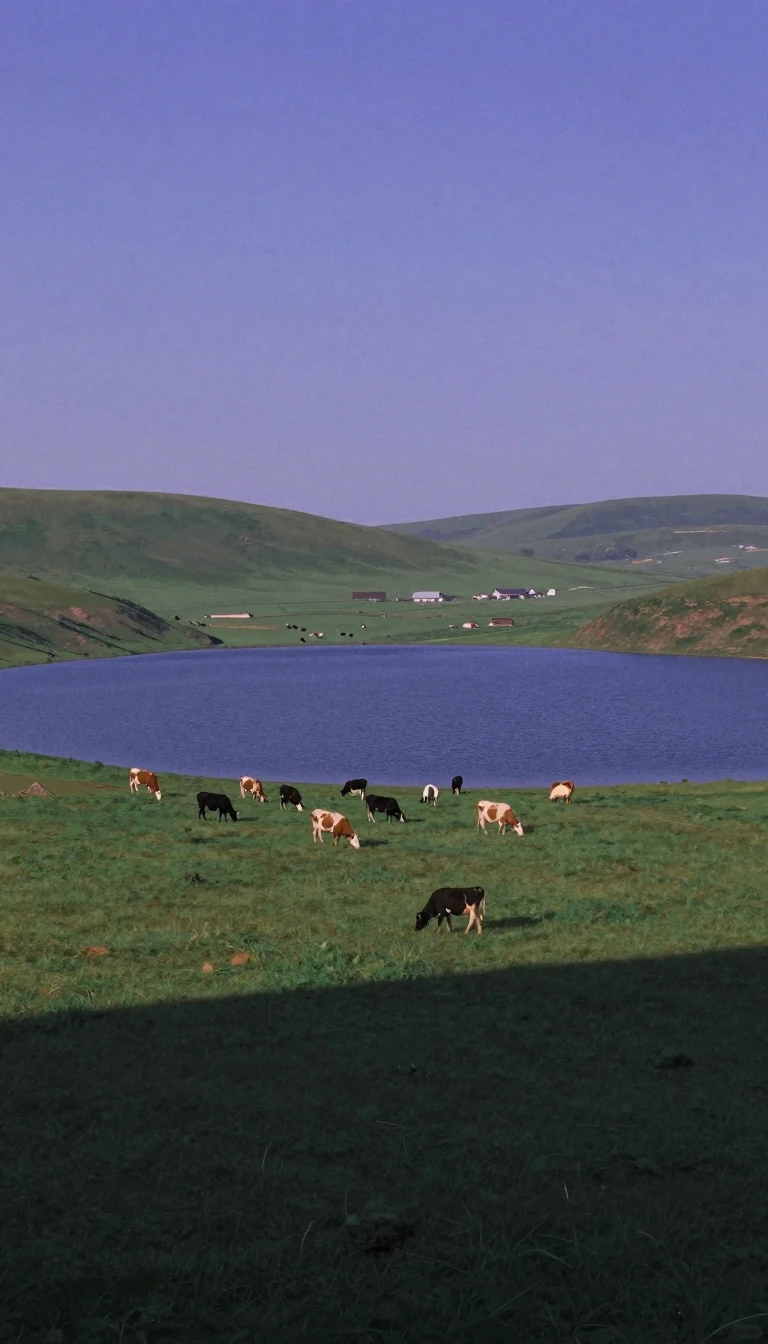 Integrated crop and livestock systems may boost food security and sustainabilityA review of agricultural practices found that integrated crop-livestock systems (ICLS) can be more productive and climate-resilient than intensive, specialized farming. By combini…
 Microplastics and fibres were detected in human lung tissue samplesResearchers examining human lung tissue obtained during autopsies found evidence of airborne microplastics. The study identified various plastic fragments and fibres within 13 of …
 iPhone LiDAR sensors offer a cost-effective way to map small geological featuresResearchers testing the LiDAR sensors in the iPhone 12 Pro and iPad Pro found they can create highly accurate 3D models of landscapes. By testing the technology on a coastal cliff…
- Satellite data reveals declining resilience in tropical, arid, and temperate forestsResearchers using machine learning and satellite imagery to track vegetation found that many forest ecosystems are losing their ability to recover from disturbances. Between 2000 …
- The chemical breakdown of common marine plastics depends on their molecular structureResearchers reviewed the degradation pathways of the six most common plastic types used in Europe to understand how they break down in the ocean. They found that the specific chem…
 High-quality surrounding habitats and diverse farming help sustain wild bee populationsA global synthesis of 39 crop systems found that wild bee abundance and richness are influenced by both local farm management and the broader landscape. The research showed that b…
- Global coastal phytoplankton blooms are expanding and becoming more frequentResearchers analyzing satellite data from 2003 to 2020 found that the spatial extent of coastal algal blooms has increased by 13.2% globally. The study, which examined 153 coastal…
- The Pacific oyster genome reveals complex mechanisms for shell formation and stress adaptationResearchers who sequenced the Pacific oyster genome found that this species possesses an expanded set of defense genes. By analyzing the genome, transcriptomes, and shell proteome…
 How we define success shapes the future of climate change adaptationA review of climate adaptation research found that how we define 'effectiveness' varies significantly depending on one's perspective. Researchers identified that different discipl…
- Global land use changes are four times larger than previous estimates suggestResearchers using a new high-resolution assessment found that land use change has affected nearly one-third of the world's land area between 1960 and 2019. This scale of change is…
 Understanding the complex drivers behind the global spread of invasive plantsResearchers reviewing decades of ecological theory found that plant invasions are driven by a complex interplay of factors. Rather than looking at simple geography, the review hig…
- Detecting tiny plastic pollutants is like searching for a needle in a haystackA review of chemical analysis methods highlights the immense difficulty in tracking microplastics and nanoplastics. Because these particles vary wildly in size, shape, and polymer…
 The 2022 Hunga eruption produced atmospheric waves comparable to the Krakatau explosionResearchers analyzing global geophysical data found that the January 2022 climactic eruption of the Hunga volcano in Tonga produced an atmospheric explosion of unprecedented moder…
 The harmful impact of treating nature as a human-free wildernessResearchers examining global conservation practices found that the ideal of protecting 'pristine' wilderness—landscapes untouched by humans—can actually harm the environment. By v…
- The environmental challenges and management strategies for global plastic wasteA review of various plastic types highlights how their widespread use in food packaging, cosmetics, and pharmaceuticals creates significant environmental risks. The researchers ex…
 Building a unified global platform for monitoring the planet's largest freshwater resourceResearchers outlining a vision for global groundwater management found that while progress is being made, groundwater has historically been simplified or excluded from global mode…
 Generative AI improves the accuracy of short-term rainfall forecastsResearchers have developed a deep generative model that produces realistic, high-resolution precipitation forecasts. By analyzing radar data, this new method provides probabilisti…
 Balancing global energy demands with sustainable climate change mitigationA review of renewable energy sources found that while transitioning to green power is essential for meeting modern social and economic needs, significant hurdles remain. The resea…
 Rising ocean temperatures may increase global populations of key marine bacteriaResearchers using niche models based on over 35,000 ocean observations found that warming sea surface temperatures could boost the abundance of two vital Cyanobacteria. The study …
- Climate change threatens every stage of the global livestock supply chainA review of existing evidence found that climate change poses significant risks to the entire livestock food supply chain. Researchers observed that these impacts extend far beyon…
 Climate change poses a pervasive threat to the structural basis of coastal ecosystemsA review of marine foundation species, such as corals, kelps, and mangroves, found that climate change is already severely impacting the organisms that provide the structural habi…
 New model updates improve how weather simulations handle atmospheric stabilityResearchers updating the Weather Research and Forecasting (WRF) model found that revising how the surface layer is calculated improves weather accuracy. By adjusting similarity fu…
- Microplastics may pose a growing threat to the stability of terrestrial ecosystemsResearchers reviewing environmental data suggest that microplastics—plastic fragments smaller than 5 mm—could act as a significant agent of global change. While much focus has bee…
- Increasing water scarcity is limiting vegetation growth across the Northern HemisphereResearchers analyzing three decades of environmental data found that water constraints on vegetation growth have significantly increased between 1982 and 2015. By studying the ext…
 Genetic material from other species can accelerate adaptation to new environmentsA review of genomic data found that introgression—the movement of genes between different species—serves as a significant source of genetic diversity. While hybrid offspring are o…
- Global plastic production reaches 370 million tons with very low recycling ratesA review of plastic pollution trends found that in 2019, global plastic production reached 370 million tons. However, the study highlights a massive management gap, noting that on…
 New estimates reveal much larger silicon exchanges in the modern oceanA review of 49 field studies and 18 models found that silicon inputs and outputs in the world ocean are significantly higher than previously thought. Specifically, total silicon i…
 Repeated droughts create a microbial memory that helps soil maintain its functionsA long-term field study in an Austrian mountain grassland found that recurrent droughts leave a lasting legacy on soil health. By comparing areas exposed to ten years of repeated …
 Navigating the complexities of global energy transition in a post-pandemic worldResearchers analyzed how the COVID-19 pandemic influenced the global shift toward low-carbon energy. While many feared that economic recovery efforts would stall environmental pro…
- Land and sea use change are the primary drivers of global biodiversity lossResearchers who synthesized empirical comparisons of environmental impacts found that land and sea use change is the leading cause of recent global biodiversity loss. The study ra…
- Global wastewater production and treatment levels are significantly higher than previously estimatedResearchers compiled a comprehensive global database to estimate the scale of domestic and manufacturing wastewater. They found that while 359.4 billion cubic meters of wastewater…
- European butterfly populations and species richness have faced significant declinesA review of long-running monitoring data across Europe reveals a troubling trend for butterflies. Researchers found that in parts of the United Kingdom and the Netherlands, overal…
 Genetic material from the environment offers a new way to track biodiversityResearchers reviewing the use of environmental DNA (eDNA) found that collecting genetic material from soil, sediment, or water provides a non-invasive way to monitor species. This…
- Most marine life shifts are moving in line with climate change trendsA large-scale meta-analysis of 1,735 marine biological responses found that between 81% and 83% of observations align with the predicted impacts of a changing climate. The study t…
- Agricultural intensification and climate change are driving rapid insect biodiversity lossA review of documented declines since the end of World War II found that the spread and intensification of agriculture is directly related to massive losses in insect biomass and …
- A new global model tracks how humans use and deplete Earth's waterResearchers have introduced WaterGAP v2.2d, a global hydrological model designed to quantify how humans use groundwater and surface water. By simulating water flows and storage ac…
 New tectonic reconstruction reveals how continental fragments assembled the Indonesian regionResearchers developing a new plate tectonic reconstruction have mapped the complex assembly of the Sundaland region. The study shows how various continental blocks, including frag…
 Seismic data from Mars reveals a crust with varying possible thicknessesResearchers analyzing seismic data from the InSight lander have determined the internal structure of the Martian crust beneath its landing site. By studying marsquake recordings a…
 How a cold wave worksA cold wave is a weather phenomenon distinguished by a cooling of the air, often involving a rapid fall in temperature.
 What is ball lightning?Ball lightning is a rare and unexplained phenomenon described as luminescent spherical objects.
 How atmospheric electricity worksAtmospheric electricity describes the electrical charges in the Earth's atmosphere.
 What is an Atlantic hurricane?An Atlantic hurricane is a type of tropical cyclone that forms in the Atlantic Ocean, primarily between June and November.