 Intellect Plus
Space
9,120 cards. Each one is a 40-second story with a five-minute read behind it. Page 112 of 152.
Subtopics: Apollo · Asteroids · Astronauts · Astronomical objects · Astronomical technology · Astronomy · Astronomy and geodesy · Astronomy basics · Big bang · Black holes · Celestial mechanics · Celestial sphere · Comets · Constellations · Cosmology · Dark energy · Dark matter · Deep time · Exoplanets · Exploration · Future Frontier · Galactic and extragalactic astronomy · Galaxies · Gravity · Impacts · Interstellar · Jupiter · Light · Mars · Mars exploration · Meteorites & asteroids · Moon · Moon exploration · Moons · Navigation and timekeeping · Nebulae · Observational astronomy · Observatories · Physical cosmology · Physics · Planetary science · Planets · Quantum · Relativity · Rockets & launch vehicles · Satellites · Saturn · Seti · Space · Space agencies · Space probes · Space stations · Space telescopes · Spacecraft · Spaceflight · Stars · Stellar astronomy · Sun & solar physics · Supernovae · Telescopes · Volcanoes · Weather
 The Sun's core is surprisingly inefficient, producing less power per unit than a human.The solar core is a furnace of extreme density and heat, yet its actual power density is remarkably low. Despite generating 99% of the Sun's energy, its output per cubic meter is …
 The Sun's outer atmosphere is millions of degrees hotter than its surface layer.The solar corona is a vast, superheated halo of plasma extending deep into space. While the Sun's surface is relatively cool, this outermost layer reaches temperatures exceeding o…
- Why the Sun's missing particles forced us to rethink the nature of matterFor decades, astrophysicists were baffled by a massive discrepancy: the Sun produced far fewer neutrinos than our best models predicted. This mystery, known as the solar neutrino …
 When the Sun snaps, it sends a billion-bomb explosion toward our planet's magnetic shield.Solar storms are violent eruptions of energy and plasma that can disrupt our modern infrastructure. While Earth's atmosphere and magnetic field keep us safe on the ground, these s…
 A colossal wall of galaxies has been hiding in our cosmic backyard all alongSpanning over 1.37 billion light-years, the South Pole Wall is a massive filament of galaxies that remained hidden until 2020. Located behind the Milky Way's obscuring dust, this …
- Beyond the clouds, solar storms create a volatile environment for our modern technological infrastructure.Space weather describes the shifting conditions across the solar system, driven by solar winds and flares. Much like terrestrial weather, these phenomena impact Earth's atmosphere…
 Why astronomers map the energy of light to decode the secrets of the universeA spectral energy distribution is more than just a picture of light. By plotting energy against frequency or wavelength, astronomers transform raw radiation into a diagnostic tool…
 Spectral indices are the secret language used to decode our planet from spaceBy combining specific bands of light, scientists create mathematical shortcuts called spectral indices. These tools filter out noise to reveal hidden details about Earth, from the…
 How we map the heavens: the ancient geometry behind our view of the starsSpherical astronomy is the oldest branch of science, turning the chaotic night sky into a precise map. By projecting Earth's own dimensions onto the heavens, we track galaxies, st…
 Spica is a cosmic grain of wheat that helped humanity discover the Earth's wobble.Spica is one of the brightest stars in the night sky, yet it hides a complex, violent life. This triple star system, located 250 light-years away, features stars so close they are…
 Are spiral galaxies just cosmic infections spreading through a rotating sea of gas?The SSPSF model suggests that star formation is not a static process but a chain reaction. Like a biological contagion, shock waves from supernovae trigger new stellar births in n…
- Why some galaxies are burning through their fuel at an unsustainable, frantic paceA starburst region is a cosmic nursery operating at breakneck speed. While typical star formation is a slow, steady process, these regions ignite stars at rates that threaten to e…
 The universe was once thought to be eternal, unchanging, and constantly creating new matter.Before the Big Bang theory became the standard, the steady-state model offered a radical alternative: an expanding universe that never had a beginning and never will have an end. …
 Stellar associations are the fleeting, unbound nurseries where most Milky Way stars are bornUnlike tight star clusters held together by gravity, stellar associations are loose, temporary collections of stars that drift apart over millions of years. First identified in 19…
 Beyond the visible surface: the complex, layered structure of a star's atmosphereWe see the Sun as a glowing sphere, but that is merely its photosphere—the lowest, coolest layer of a much deeper, stratified atmosphere. Above this surface, temperatures paradoxi…
- The Sun's crown: Why the outermost layer of stars remains a cosmic mysteryA stellar corona is a tenuous, superheated plasma layer structured by magnetic fields. While we study our own Sun's corona closely, the coronae of distant stars remain largely eni…
 Stars are the cosmic furnaces that forge the periodic table from simple hydrogen gas.Every atom in your body was once manufactured inside a star. Through a complex sequence of nuclear reactions, stars transform light elements into heavy ones, eventually scattering…
 Why the stars appear to shift as Earth orbits the Sun each yearThe night sky looks static, but it is a dynamic, three-dimensional map. By using Earth's orbit as a massive baseline, astronomers measure the tiny, annual shifts of nearby stars a…
 Why stars are not perfect spheres and how they lose their spin over timeStars are dynamic, spinning bodies that defy the ideal of a perfect sphere. Through centrifugal force, they develop equatorial bulges, while complex magnetic interactions and stel…
- Stars are constantly shedding their mass into space through powerful, invisible stellar windsA stellar wind is a continuous flow of gas or plasma ejected from a star's upper atmosphere. While the Sun's own wind is relatively modest, other stars blast material into space a…
- How did the uniform, hot early universe evolve into today's complex web of galaxies?The universe began as a nearly uniform, hot soup of particles. Today, it is a vast, intricate web of galaxies and voids. This transformation was driven by tiny density fluctuation…
 Subdwarfs are ancient stellar relics that reveal the early history of our galaxySubdwarfs are not just small stars; they are cosmic time capsules. Defined by their low metallicity and ancient origins, these objects belong to the Milky Way's oldest structures.…
 Subgiants are the fleeting middle-aged stars caught between their main sequence and giant phases.A subgiant is a star that has outgrown its main sequence life but has not yet fully blossomed into a giant. These stars are brighter than their main sequence counterparts yet dimm…
- Why astronomers search for the coldest, dustiest corners of the universeSubmillimetre astronomy captures the invisible glow of cold gas and dust, revealing the hidden mechanics of star birth and galaxy evolution. By peering through the electromagnetic…
 Why some cosmic objects are too small to ever become true starsA substellar object is a celestial body that lacks the mass required to sustain hydrogen fusion. These objects, which include brown dwarfs and planetary-mass bodies, occupy a stra…
- The summer solstice is a celestial alignment, not just a date on the calendar.The summer solstice marks the moment Earth’s axis reaches its maximum tilt toward the sun. While we often view it as the start of summer, this astronomical event is a global pheno…
 Why satellites in Sun-synchronous orbit always see the world under the same lightA Sun-synchronous orbit keeps a satellite in perfect step with the Sun. By carefully tuning its altitude and inclination, the craft uses the Earth's own equatorial bulge to rotate…
 Why some comets choose to dance with the sun and risk total destructionSungrazing comets are celestial daredevils that swing within 850,000 miles of the sun. This proximity subjects them to intense radiation, solar winds, and crushing gravitational s…
 Why the Sun you see at sunrise is actually a ghost of the pastSunrise is a daily optical illusion. Because Earth’s atmosphere bends light, you witness the Sun before it physically clears the horizon. What you perceive as a rising star is act…
- Why the sun appears to set, and why its colors are never the sameSunset is not just the sun disappearing; it is a complex interplay of atmospheric physics, planetary rotation, and optical illusions. While we perceive a sinking orb, we are actua…
- Dark freckles on the Sun are actually massive magnetic storms larger than our planetSunspots appear as dark, cool blemishes on the solar surface, but they are far from quiet. These regions are caused by intense, tangled magnetic fields that block heat from escapi…
 Super-Earths are a diverse class of planets that do not exist in our solar system.These mysterious worlds are larger than Earth but smaller than Neptune, ranging up to ten times our planet's mass. Because we have no local examples to study, their true nature re…
- Westerlund 1 is a galactic factory, offering a window into our galaxy's ancient past.Most stars in the Milky Way formed billions of years ago in massive, dense environments known as super star clusters. Today, these structures are rare, but Westerlund 1—the larges…
- How massive stars carve out vast, empty voids in the heart of galaxiesIn the Large Magellanic Cloud, a sprawling nebula named N44 hides a massive, empty void. This superbubble, stretching over 200 light-years, was not always a vacuum. It was hollowe…
- Could a wobbling magnetar be the secret engine behind the universe's brightest stellar explosions?Superluminous supernovae shine ten times brighter than standard stellar explosions, defying traditional radioactive decay models. Recent observations of oscillating light-curve bu…
 Why the moon appears to swell in size and intensity during a supermoonA supermoon occurs when a full lunar phase aligns with the moon reaching its nearest orbital point to our planet. While often described as a spectacular event, the visual differen…
- Supernovae are the cosmic furnaces that forge the elements essential for life and matterWhen massive stars exhaust their fuel, they do not simply fade away. Instead, they collapse and explode, acting as violent, high-energy factories. These cataclysmic events synthes…
- Supernova remnants are the cosmic engines that forged the very atoms of your body.A supernova remnant is the violent, expanding debris cloud left behind after a star explodes. These remnants are not just space junk; they are the primary source of heavy elements…
 Why a galaxy with the same magnitude as a star is harder to seeIn astronomy, total magnitude measures an object's brightness as if it were a single point. However, extended objects like galaxies spread their light across a wide area. Surface …
- Before stars reach maturity, they pass through a volatile, planet-forming phase called T Tauri.T Tauri stars are the restless adolescents of the cosmos. Less than ten million years old, these infant stars are not yet powered by nuclear fusion. Instead, they glow from the he…
 Why astronomers are baffled by the erratic dimming of a distant, mysterious starTabby's Star, located 1,470 light-years away, exhibits bizarre, irregular light fluctuations that defy standard astronomical models. While some once speculated about alien megastr…
- Why the Tarantula Nebula is our best window into the universe’s early star-forming eraLocated 161,000 light-years away, the Tarantula Nebula is the most intense stellar nursery in our galactic neighborhood. By peering through its thick, dusty veils with infrared te…
- Is Tau Ceti a cosmic cradle for life or a graveyard of shattered worlds?Just 12 light-years away, Tau Ceti is a Sun-like star that has captivated astronomers for decades. While its stability and proximity make it a prime target for the search for extr…
- Telescopium is a southern constellation born from the Enlightenment's obsession with scientific instruments.Named for the tool that transformed astronomy, Telescopium was mapped in the 18th century by Nicolas-Louis de Lacaille. Though once larger, the constellation was later trimmed by …
- Why Earth's own atmosphere acts as a persistent filter for deep space observationsWhen astronomers peer into the cosmos, they are not just looking through a window; they are looking through a veil. Earth's atmosphere constantly absorbs and emits its own light, …
- The terminator is the invisible, moving boundary between day and night on any planet.This shifting line, where the sun is tangent to a planetary surface, dictates everything from radio signals to satellite battery life. On Earth, it races at supersonic speeds at t…
 Tethys is a frozen, water-ice moon of Saturn scarred by a colossal ancient impact.This airless, icy world orbits deep within Saturn's E ring, acting as a cosmic mirror that reflects nearly all visible sunlight. Dominated by a massive crater and a global-scale v…
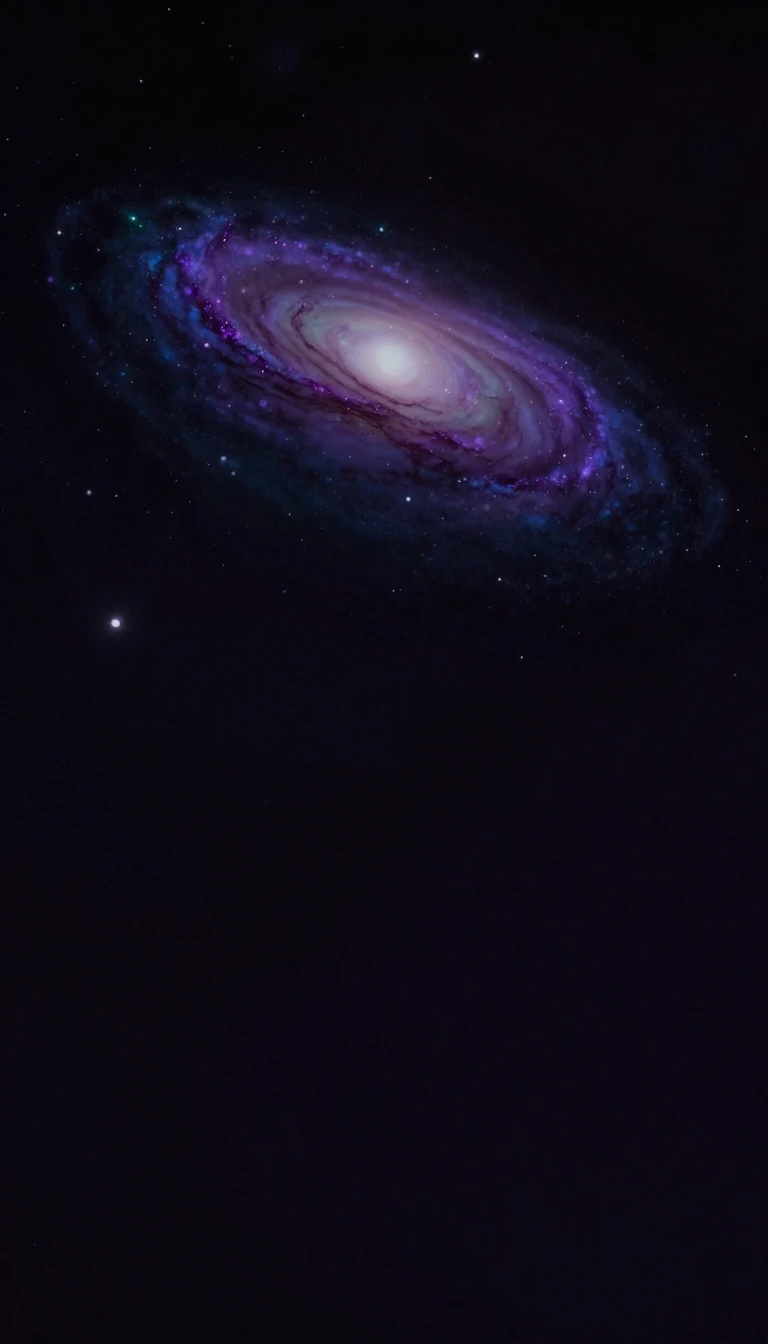 Why do some galaxies contain two distinct layers of stars stacked like pancakes?Many disk galaxies, including our own Milky Way, feature a dual-layered structure: a thick, expansive outer region and a thinner, embedded disk. New observations from the James We…
- Why do spiral galaxies like our Milky Way possess two distinct, nested stellar disks?Most spiral galaxies, including our own, are not uniform. They contain a thick, older outer disk and a younger, embedded thin disk. Recent observations from the James Webb Space T…
 The Moon is slowly spiraling away from Earth, and our days are getting longer.Tidal forces are quietly reshaping our cosmic neighborhood. As Earth’s oceans bulge, they exert a gravitational torque that pushes the Moon into a higher orbit while simultaneousl…
- The universe is not static: why astronomers are obsessed with things that go bumpFor centuries, we viewed the night sky as a permanent, unchanging backdrop. Today, time-domain astronomy reveals a violent, dynamic cosmos. By tracking everything from fleeting ga…
- How astronomers use the death of small stars to measure the vast cosmic distanceTo map the universe, astronomers need reliable yardsticks. They have found one in the predictable death throes of aging stars. By identifying the exact moment a star exhausts its …
- Titania is the largest moon of Uranus, named for a Shakespearean fairy queen.Discovered in 1787, Titania remains the most massive satellite orbiting Uranus. This icy world, locked in a synchronous dance with its parent planet, features a surface scarred by…
- Beyond Neptune lie thousands of mysterious, icy worlds waiting to be discovered by astronomers.Most trans-Neptunian objects are so small and faint that they remain hidden in the deep cold of our solar system. These craggy remnants of planetary formation are millions of time…
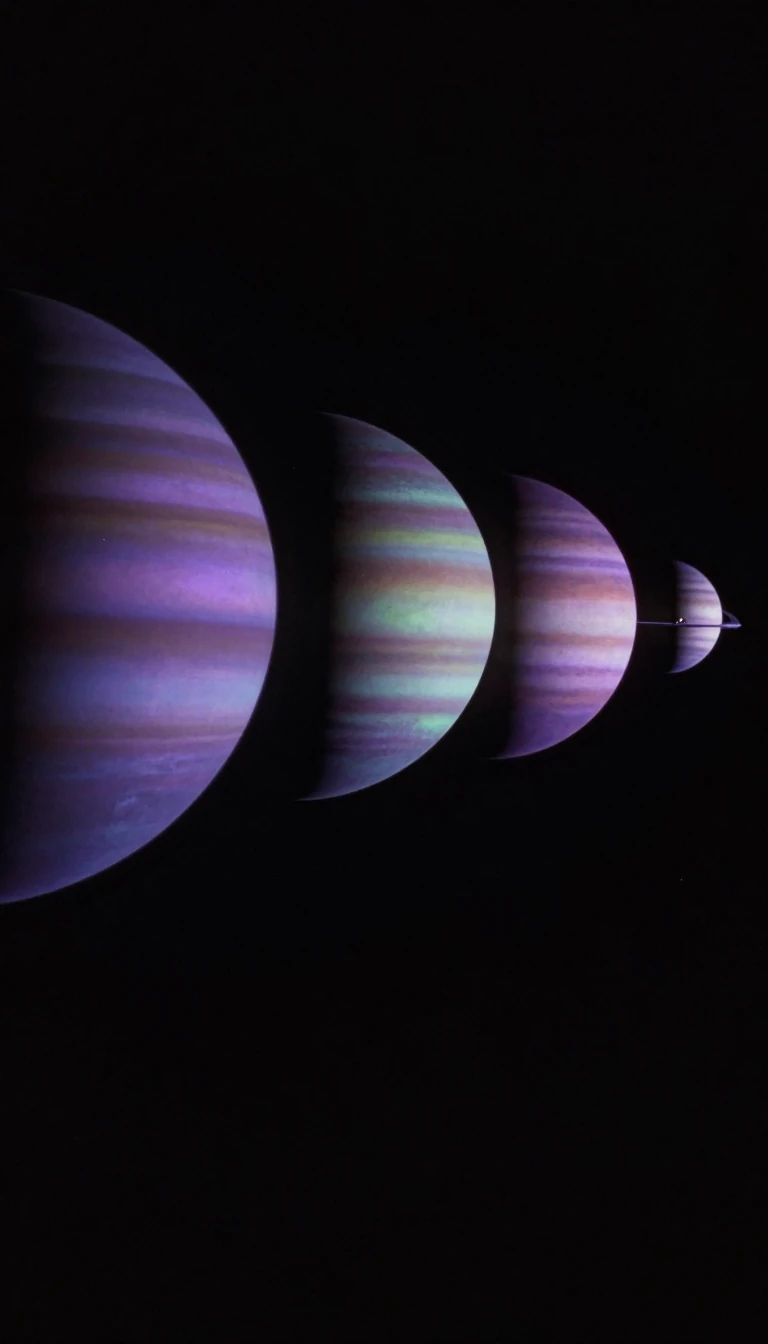 When a tiny planet crossed the Sun, it changed our understanding of gravity forever.For centuries, astronomers were baffled by the strange, shifting orbit of Mercury. They even invented a phantom planet, Vulcan, to explain the discrepancy. It took Albert Einstein…
 Why the rare transit of Venus is a masterclass in celestial timing and measurementA transit of Venus occurs when the planet passes directly between Earth and the Sun, appearing as a small silhouette against the solar disk. These events are exceptionally rare, f…
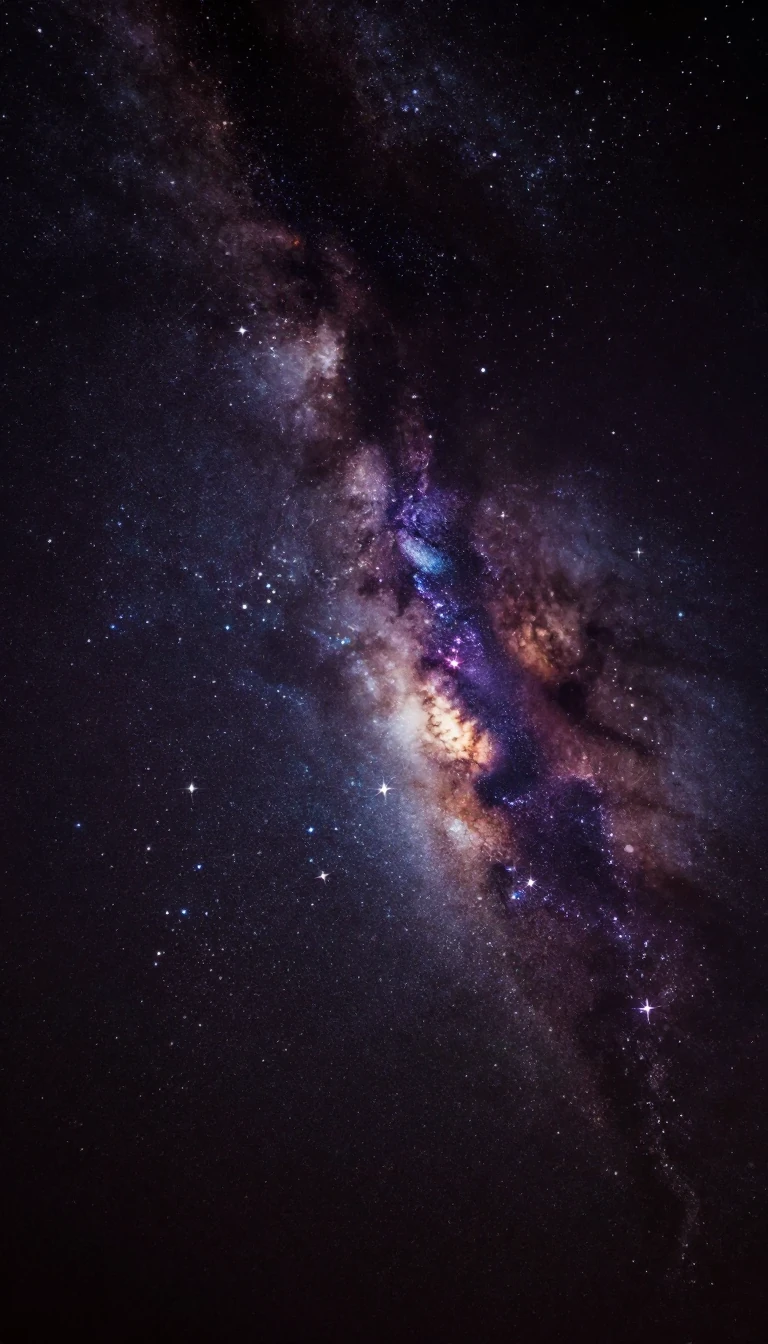 The Trapezium Cluster is a stellar nursery hidden in the heart of OrionDeep within the Orion Nebula lies the Trapezium, a dense, youthful cluster of stars that illuminates its surroundings. Discovered by Galileo in 1617, this cluster is far more comp…
- Could a tiny, ancient red dwarf star harbor seven Earth-sized worlds in its orbit?Located 40 light-years away, the TRAPPIST-1 system features seven rocky, Earth-sized planets orbiting an ultracool dwarf star. With three to four worlds residing in the habitable …
 Triangulum Australe is a celestial triangle that anchors the southern sky's geometry.Hidden in the southern celestial hemisphere, this small, equilateral constellation is more than just a geometric curiosity. From its role as a mythical serpent's tail in Indigenou…
- The Trifid Nebula is a cosmic nursery currently sculpting its own future in SagittariusLocated 5,000 light-years away, the Trifid Nebula is a vibrant star-forming region that resembles a sea slug gliding through space. By comparing Hubble images from 1997 to the pre…