 Intellect Plus
Space
9,120 cards. Each one is a 40-second story with a five-minute read behind it. Page 109 of 152.
Subtopics: Apollo · Asteroids · Astronauts · Astronomical objects · Astronomical technology · Astronomy · Astronomy and geodesy · Astronomy basics · Big bang · Black holes · Celestial mechanics · Celestial sphere · Comets · Constellations · Cosmology · Dark energy · Dark matter · Deep time · Exoplanets · Exploration · Future Frontier · Galactic and extragalactic astronomy · Galaxies · Gravity · Impacts · Interstellar · Jupiter · Light · Mars · Mars exploration · Meteorites & asteroids · Moon · Moon exploration · Moons · Navigation and timekeeping · Nebulae · Observational astronomy · Observatories · Physical cosmology · Physics · Planetary science · Planets · Quantum · Relativity · Rockets & launch vehicles · Satellites · Saturn · Seti · Space · Space agencies · Space probes · Space stations · Space telescopes · Spacecraft · Spaceflight · Stars · Stellar astronomy · Sun & solar physics · Supernovae · Telescopes · Volcanoes · Weather
 How astronomers map distant worlds by watching stars flicker in the darkWhen a star dims or an asteroid rotates, it leaves a signature in the light it emits. By plotting these changes over time, astronomers create light curves—graphs that reveal the h…
 Why spacecraft dance in complex, non-repeating loops around empty points in spaceLissajous orbits allow spacecraft to hover near Lagrangian points, the gravitational sweet spots between celestial bodies. Unlike simple circles, these trajectories trace complex,…
 How Ancient Chinese Astronomers Mapped the Heavens into Imperial Palaces and Mythical BeastsAncient Chinese astronomy organized the night sky into a sophisticated system of enclosures, mansions, and asterisms. Far from just mapping stars, this framework mirrored the impe…
 Space is full of complex chemistry, but we struggle to see the most common molecules.The vast, cold reaches of space are surprisingly rich in molecules, yet our inventory is heavily biased by the limitations of our telescopes. While we have identified a wide array…
 How astronomers measure the edge of the observable universe using light from ancient galaxiesPeering into the deep cosmos requires more than just a powerful telescope. Astronomers rely on cosmological redshift to map the most distant objects, but distinguishing between co…
 Our solar system is currently drifting through a massive, empty cosmic crime scene.For millions of years, our sun has been traveling through the Local Bubble, a vast, low-density cavity in space. This region was carved out by a violent series of supernovas. We o…
 Is the Milky Way drifting through a massive, empty bubble in the cosmos?Astronomers have proposed that our galaxy resides within the Local Hole, an immense, nearly empty region of space spanning two billion light-years. This controversial void might e…
 Our Solar System is currently drifting through a mysterious, magnetized cloud of interstellar gas.We are sailing through the Local Interstellar Cloud, a 30-light-year-wide region of space that our Sun entered roughly 10,000 years ago. While it sounds dense, this cloud is actua…
- Our cosmic neighborhood is a thin, flat wall of galaxies called the Local SheetWe live in a vast, flat structure known as the Local Sheet, a galaxy filament that defines our immediate cosmic surroundings. Spanning millions of light-years, this region acts as…
- A massive, empty abyss sits right next to our own cosmic neighborhood.Our galaxy resides on the edge of a colossal, near-empty expanse known as the Local Void. While the universe is typically defined by matter clumping into clusters, this region def…
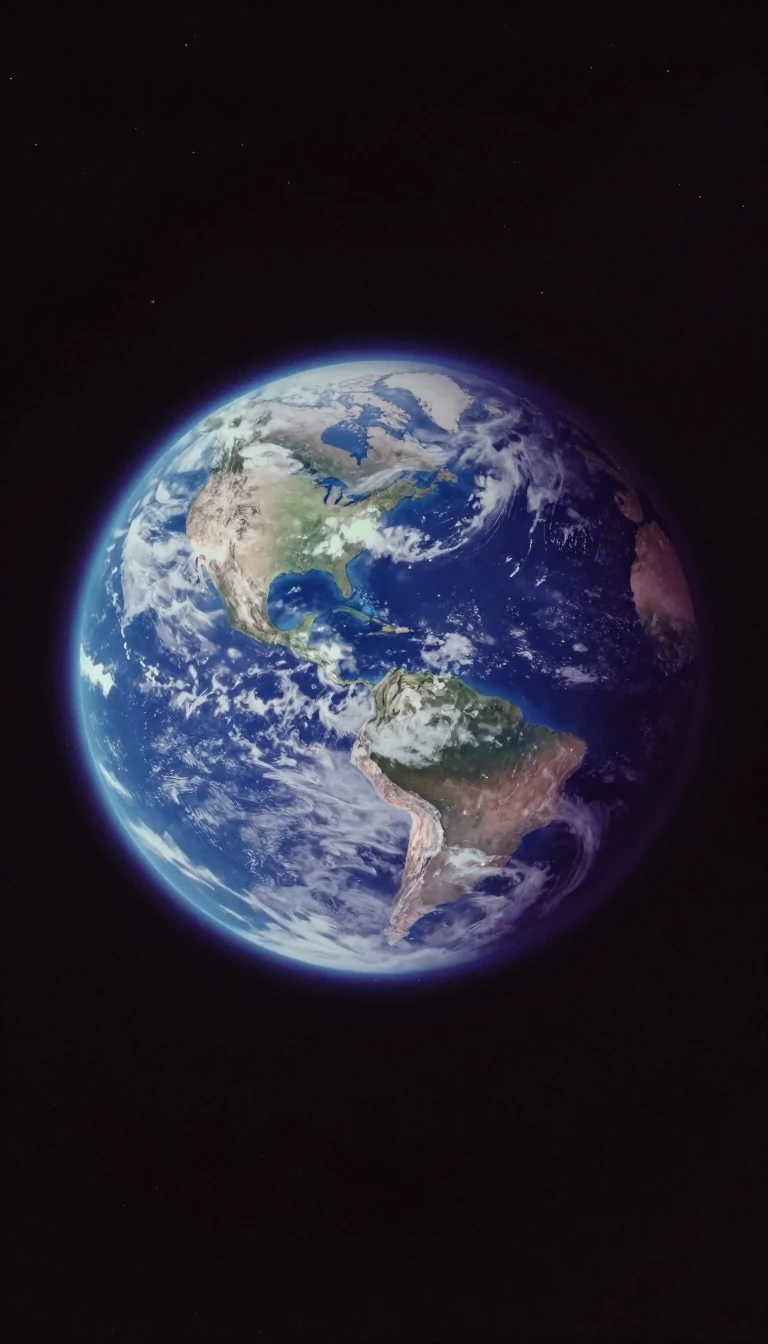 Why Earth is the only planet in our solar system without a mythological nameWhile every other planet in our neighborhood bears the title of a Greek or Roman deity, Earth stands alone. Its name is a simple, thousand-year-old Germanic term for the ground be…
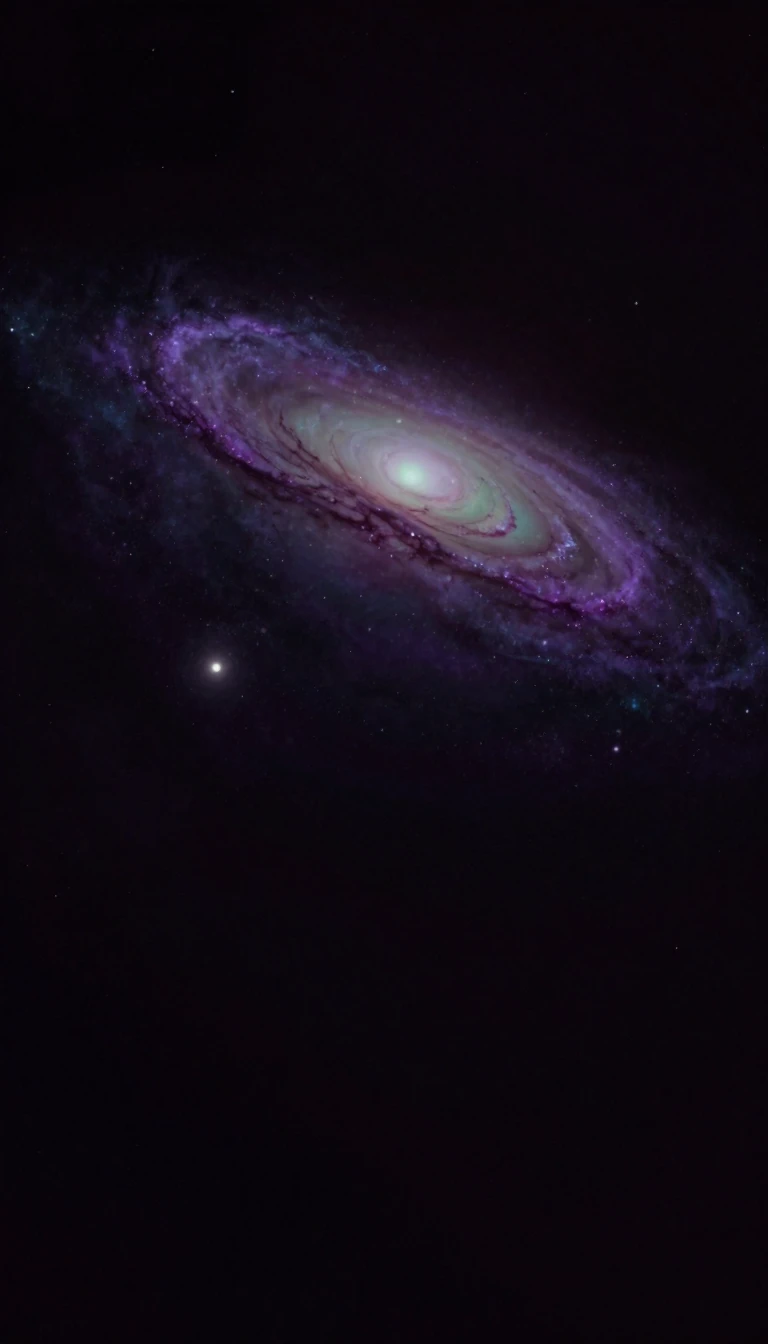 Why do one-third of nearby galaxies host these mysterious, weakly ionized nuclear regions?A low-ionization nuclear emission-line region, or LINER, is a galactic nucleus defined by its unique spectral signature. While common in the local universe, these regions remain a…
- Why these massive, ghostly galaxies remain the universe's most elusive dark matter laboratoriesLow surface brightness galaxies are diffuse, faint systems that defy standard galactic evolution. While they can be as massive as the Milky Way, their stars are spread so thin the…
- Why measuring the distance to a star is not as simple as it seemsLuminosity distance links an object's intrinsic brightness to how dim it appears from Earth. While this works perfectly for nearby stars within our own galaxy, the math becomes si…
 Luminous blue variables are massive, unstable stars that occasionally mimic the death of supernovae.Luminous blue variables are rare, massive stars that undergo dramatic, unpredictable outbursts. These events are so violent that astronomers have historically mistaken them for su…
- A remote galaxy shines with the light of more than 300 trillion suns.Astronomers have discovered a new class of cosmic giants called extremely luminous infrared galaxies, or ELIRGs. These dazzling objects are so distant that their light has travele…
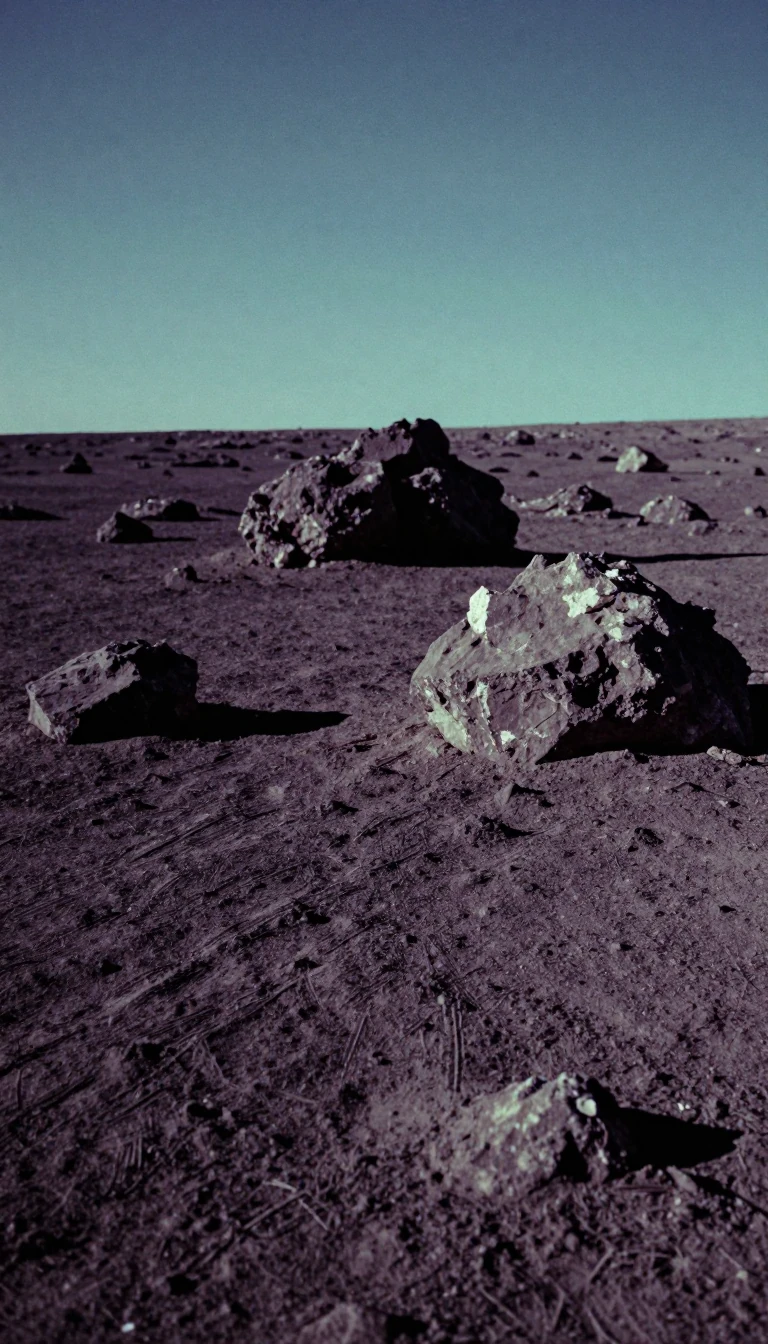 The Moon's South Pole is a landscape of extreme light and eternal, freezing shadow.The lunar South Pole is a rugged, cratered frontier where the Sun barely rises above the horizon. This creates a bizarre environment: some peaks enjoy nearly constant sunlight for…
 Why the constellation Lupus was once a wineskin, a beast, and a mad dogLupus, the wolf of the southern sky, has worn many faces throughout history. Long before it became a lupine figure in European star charts, ancient observers saw it as a hybrid cr…
- Why do some galaxies shine with Lyman-alpha light during the early, opaque Universe?Lyman-alpha emitters are distant galaxies that should be invisible due to neutral hydrogen scattering their light. Yet, the James Webb Space Telescope has captured these elusive s…
 Why distant quasars look like they are hiding behind a cosmic forestWhen astronomers look at the light from distant quasars, they often see a dense series of absorption lines that resemble a forest. These lines are not part of the quasar itself, b…
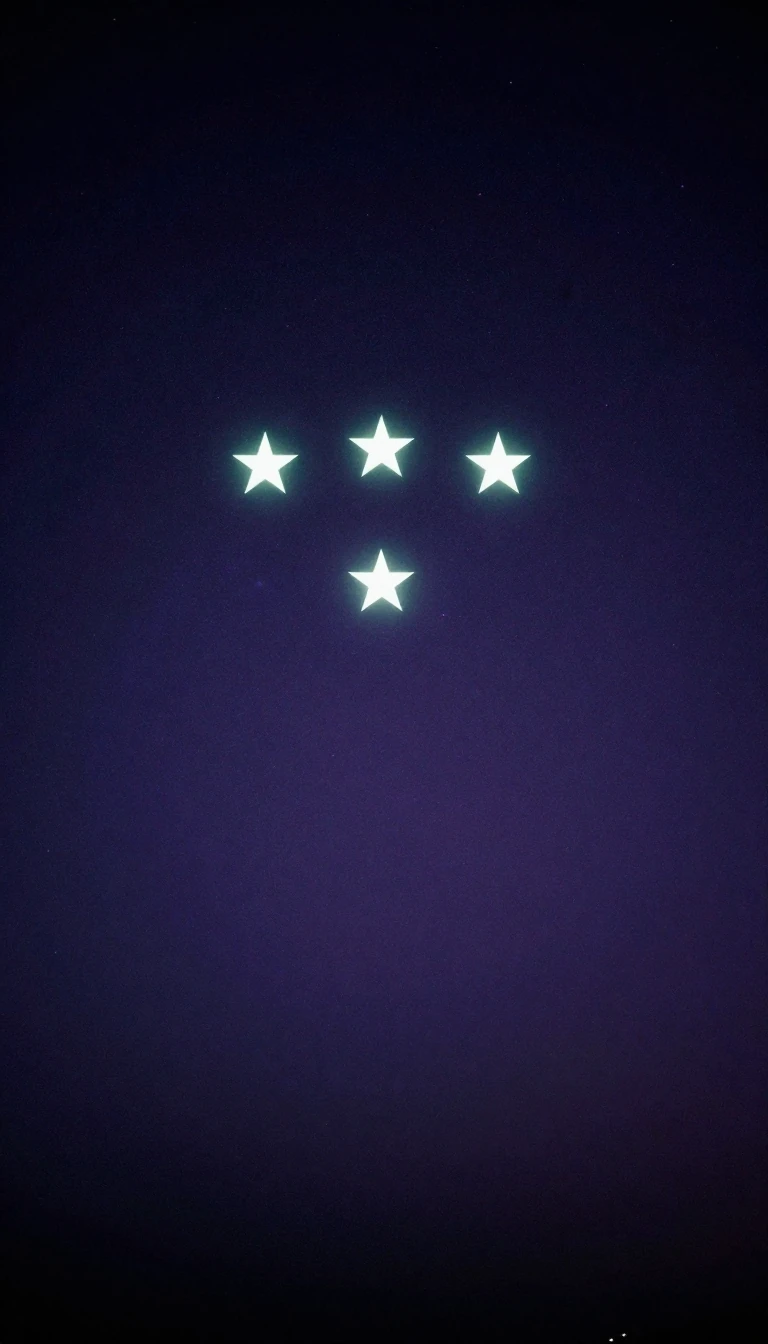 Why this faint northern constellation requires the sharp eyesight of a lynx to spotIntroduced in 1687 by Johannes Hevelius, the Lynx constellation is notoriously difficult to discern. Composed of faint stars scattered between Ursa Major and Auriga, Hevelius name…
 Beyond the myth of Orpheus, Lyra is a cosmic laboratory of extreme stellar physics.While ancient legends cast Lyra as the lyre of Orpheus, modern astronomy reveals a far more dynamic reality. This small northern constellation serves as a premier celestial labora…
- The Magellanic Clouds are two satellite galaxies dancing around our own Milky Way.Visible to the naked eye from the Southern Hemisphere, the Large and Small Magellanic Clouds appear as detached fragments of the Milky Way. These irregular dwarf galaxies are not …
 Why do stars in the Small Magellanic Cloud move in a giant, cosmic spiral?Astronomers have discovered that stars and gas in the massive cluster NGC 346 are spiraling toward its center. This river-like motion acts as a highly efficient delivery system fo…
 Magnetars are the most powerful magnetic objects in the universe, capable of lethal destruction.Imagine a star only 20 kilometers wide, yet so dense a single tablespoon of its material weighs over 100 million tons. These are magnetars, neutron stars with magnetic fields a tr…
- Earth is protected by a vast, comet-shaped magnetic bubble that sustains life itself.Our planet sits inside a dynamic, invisible shield called the magnetosphere. Generated by the churning of molten iron in Earth's core, this magnetic environment deflects solar rad…
 Saturn is a giant magnetic bubble, but its true rotation remains a persistent mystery.Saturn is encased in a massive, invisible magnetic shield that deflects solar winds and shapes the space environment around it. While Cassini revealed how the moon Enceladus fuels…
- The mantle is the hidden engine that defines the scale of our solar systemBeneath the thin crust of every terrestrial planet lies a massive, viscous layer of rock or ice. These mantles are the largest components of planetary bodies, driving geological e…
- Why the March equinox is a celestial anchor for human history and timekeepingThe March equinox is more than a seasonal marker; it is the zero point of our astronomical coordinate system. While it signals spring in the north, its true significance lies in h…
 A distant blazar's jet reveals a hidden, spiraling magnetic field structureMarkarian 421, a blazar located 400 million light-years away, has long fascinated astronomers. Recent data from NASA’s IXPE satellite captured a shockwave moving through its jet, …
- Markarian 501: A violent galactic engine firing high-energy plasma directly at our planetDeep in the constellation Hercules, an elliptical galaxy known as Markarian 501 acts as a cosmic lighthouse. As a blazar, it hosts a supermassive black hole that launches a relati…
 Mars is losing its northern ice cap through constant, massive, and widespread ice avalanches.For years, scientists believed the Martian north polar ice cap eroded primarily through slow sublimation. New high-resolution imagery reveals a more violent reality: the ice is ac…
- How massive galactic discs use water to reveal the secrets of black hole growthDeep within the nuclei of active galaxies, water molecules are doing something extraordinary. They are acting as natural amplifiers, creating intense microwave beams known as mega…
- Why the invisible line above your head is the key to mapping the universeEvery observer on Earth carries an invisible, personal circle across the sky. This celestial meridian acts as a cosmic anchor, defining where objects reach their peak and providin…
- Why this spiral galaxy hides a pair of ghostly, gas-filled armsMost spiral galaxies display a single pair of elegant, star-studded arms. Messier 106 defies this convention, sporting an additional set of mysterious, red wisps. These anomalous …
 Inside the Hercules Cluster, stars are so crowded they occasionally collide and create new ones.Messier 13 is a glittering metropolis of over 100,000 stars packed into a space 25,000 light-years away. In this dense stellar environment, stars are forced into such close proxim…
- Why this dense swarm of stars hides a rare intermediate-mass black holeMessier 15 is one of the densest globular clusters ever discovered, packing over 100,000 stars into a tight, ancient swarm. Located 33,600 light-years away in the constellation Pe…
 Messier 22 is a cosmic time capsule hiding black holes and rogue planetary drifters.Discovered in 1665, Messier 22 remains one of the most intriguing globular clusters in our galaxy. Located 10,000 light-years away, this dense stellar collection defies expectatio…
- Messier 49 is a massive, featureless galaxy hiding a giant black hole at its core.Located 60 million light-years away in the Virgo constellation, Messier 49 is a giant elliptical galaxy containing 200 billion stars. Unlike the structured spiral arms of our own …
- Ptolemy’s ancient nebula is actually a massive, sprawling star cluster in the southern skyKnown since antiquity, Messier 7 is a brilliant open cluster near the stinger of Scorpius. While early observers mistook this collection of stars for a simple nebula, modern astro…
- Is the Squid Galaxy hiding a monster at its heart?Messier 77, a barred spiral galaxy in the constellation Cetus, is far more than its elegant, swirling arms. Beneath its dusty exterior lies an intensely active galactic nucleus po…
- Messier 81: A Galactic Giant With a Massive Black Hole at Its CoreLocated 11.6 million light-years away in Ursa Major, Messier 81 is one of the brightest spiral galaxies in our night sky. Beyond its stunning spiral arms, this celestial neighbor …
- The Cigar Galaxy is currently undergoing a violent, self-limiting burst of star creationLocated 12 million light-years away, Messier 82 is a starburst galaxy where new stars are born ten times faster than in the Milky Way. This intense activity is fueled by gravitati…
- The Southern Pinwheel is a stellar nursery hiding nearly three hundred supernova remnantsLocated 15 million light-years away, the Southern Pinwheel galaxy is one of the brightest spiral galaxies visible from Earth. Beyond its striking appearance, this massive structur…
 Millions of meteors strike our atmosphere daily, yet most remain entirely unseen by us.A meteor is a glowing streak created when a small body, often just a grain of sand, hits Earth's atmosphere at high speed. While these events occur constantly, most go unnoticed b…
 Could a tiny, repeating pattern in spacetime be the secret to creating black holes?Physicists have mathematically modeled a bizarre state where spacetime organizes into a crystalline structure. This delicate, repeating pattern acts as a tipping point: with just …
 Why did an Enlightenment astronomer place a microscope in the southern night sky?In the mid-1700s, Nicolas-Louis de Lacaille mapped the southern heavens, populating them with symbols of scientific progress. Among these was Microscopium, a faint constellation r…
 Why the stroke of midnight is a scientific and linguistic headache for everyoneMidnight is the official transition between days, yet it remains a persistent source of confusion. Because our clocks are regularized by time zones, the moment the date flips rare…
- Is Saturn’s smallest major moon a frozen relic or a hidden ocean world?Mimas looks like a scarred, icy relic of the early solar system, famously resembling the Death Star. Yet beneath its cratered, frozen exterior lies a surprising secret: a liquid w…
 Mimosa is a massive, blue-white star destined to end in a brilliant supernova explosion.Known as Beta Crucis, this triple star system is a cornerstone of the Southern Cross. While it appears as a single point of light to the naked eye, it is a complex, evolving engin…
 Are asteroids lonely? Far from it, hundreds of minor planets have their own moons.We once thought of asteroids as solitary rocks drifting through the void. Today, we know that hundreds of minor planets host their own satellites, ranging from tiny moonlets to ma…
- Mira is a dying star that leaves a thirteen light-year trail of cosmic debrisMira is not just a pulsating red giant; it is a high-speed traveler shedding its own substance across the galaxy. As this six-billion-year-old star hurtles through space, it leave…
- These dying red giants pulse with a rhythm that reveals their final cosmic actMira variables are red giants in their twilight years, pulsating with dramatic shifts in brightness. These stars are shedding their outer layers to eventually become white dwarfs.…
- Miranda is a celestial Frankenstein, pieced together from mismatched geological terrains.Uranus's smallest major moon looks like a moth-eaten coat stitched from disparate parts. With canyons 12 times deeper than the Grand Canyon and a surface of chaotic ridges, Mirand…
 Cosmologists have finally located the universe's missing matter, but its true nature remains elusive.For years, the universe seemed to be missing over half of its ordinary matter. While early calculations predicted a specific abundance of baryons, a census of the observable cosmo…
 Why Russia and Canada rely on a lightning-fast orbit to stay connectedGeostationary satellites are perfect for the equator, but they fail at high latitudes. To solve this, engineers created the Molniya orbit. By using a highly elliptical path that l…
- Monoceros is a faint, modern constellation hiding some of the universe's most violent phenomena.Though it lacks bright stars visible to the naked eye, the constellation Monoceros is a treasure trove for astronomers. From a nearby black hole and massive binary systems to nebu…
 A violent ancient collision likely birthed the two moons orbiting the dwarf planet Haumea.Haumea is a rapidly spinning, football-shaped dwarf planet located in the distant Kuiper Belt. Beyond its strange shape, it hosts two moons, Hi'iaka and Namaka. Astronomers believ…
- Are the moons of Mars captured asteroids or fragments of a shattered ancient world?Mars hosts two tiny, enigmatic moons: Phobos and Deimos. Discovered in 1877, these lumpy satellites defy simple classification. While some scientists argue they are captured aster…
- Neptune’s largest moon is a cosmic intruder that may one day destroy itself.Neptune hosts 16 known moons, but the giant Triton stands apart. Unlike the planet's other satellites, Triton orbits in the opposite direction of Neptune’s rotation, suggesting it…