 Intellect Plus
Nature
11,198 cards. Each one is a 40-second story with a five-minute read behind it. Page 41 of 187.
Subtopics: Ageing · Air · Animal behaviour · Animal breeds and hybrids · Animals · Arthropods · Atmosphere · Big cats · Bilateria, others · Birds · Botany · Cnidarians · Conservation · Coral reefs · Deep sea · Deserts · Dinosaurs · Earth science · Earth science and physical geography · Earth science basics · Earthquakes & tsunamis · Echinoderms · Ecology · Ecosystems · Endangered species · Extinct animals · Farming · Fish · Forests · Fungi · General classifications · Geology · Geomorphology · How Long Can It Live? · Ice · Individual animals · Insects · Lightning · Longevity · Mammals · Marsupials · Migration · Mollusks · Ocean · Organisms · Parasites · Physical geography · Plants · Porifera · Predators · Primates · Rainforest · Reptiles & amphibians · Researched · Sharks & rays · Spiders & arachnids · Symbiosis · Trees · UK & Ireland: nature · Vertebrates · Vision · Volcanoes · Water · Waves · Weather · Whales & dolphins · Zoology
 The ancient Jewish community that migrated to Georgia over two millennia agoGeorgian Jews are one of the world's oldest Jewish communities, with roots tracing back to the Babylonian captivity in the 6th century BCE. While they lived in Georgia for over 2,…
 How a Hong Kong startup navigated fierce competition to launch a new airlineGreater Bay Airlines emerged from a decade of corporate restructuring and regulatory hurdles to become a key player in Asian aviation. Founded in 2010, the carrier faced intense s…
 How truck-mounted radar revolutionized our understanding of the most violent storms on EarthBefore 1995, meteorologists struggled to capture the internal mechanics of tornadoes and hurricanes. By mounting high-resolution Doppler radar onto mobile flatbed trucks, research…
 Global wildfire risk is rising as climate change dries out vegetation fuelResearchers analyzing global fire data found a widespread drying trend in vegetation moisture across various regions. By examining burned areas and weather patterns from 1979 to 2…
 Why England holds the vast majority of the world's rare, crystal-clear chalk streamsFed by underground aquifers rather than surface runoff, chalk streams are geological anomalies. Their water remains remarkably stable in temperature and clarity, creating a unique…
 On April 10, 1996, a cyclone produced the strongest non-tornadic winds ever recorded on Earth.During the passage of Cyclone Olivia over Barrow Island, Western Australia, an anemometer captured a three-second wind gust of 408 kilometers per hour. This staggering measurement…
 How a marshy Philippine trading hub became the undisputed milkfish capital of the worldDagupan began as a swampy, mangrove-filled gathering place for ancient traders. Today, this independent city serves as the commercial heart of Pangasinan. Beyond its bustling fina…
 A polarizing figure who shifted from libertarian politics to a conviction for hate-motivated intimidation.Born Austin Mitchell Gillespie, Augustus Sol Invictus transformed himself into a far-right activist and legal provocateur. From ritualistic animal sacrifice to high-profile crimin…
 Why did one Mississippi county once record the second-lowest male life expectancy in America?Bolivar County, Mississippi, sits in the heart of the Yazoo Basin, a region defined by its history of plantation agriculture and persistent economic struggle. Once home to extreme…
 How a Hollywood film crew accidentally sparked a surfing revolution in a remote Philippine provinceIsolated by the rugged Sierra Madre mountains, the Philippine province of Aurora spent centuries as a forgotten coastal outpost. Yet, in the 1970s, the arrival of a film crew shoo…
 The Bengal fox is a resilient, crepuscular survivor of the Indian subcontinent's open plains.Endemic to the Indian subcontinent, the Bengal fox is a small, adaptable predator that thrives in semiarid grasslands. Despite its ability to live near human settlements, this elu…
 The Philippines is organized into four distinct tiers of local government and administrative unitsBeyond the three major island groups, the Philippines operates through a complex hierarchy of administrative divisions. From the national level down to the smallest neighborhood, …
 Does the internet algorithmically radicalize users, or does it simply reflect their existing preferences?The alt-right pipeline describes a model where users are gradually funneled from mainstream political commentary toward extremist ideologies via social media recommendations. Whil…
 The Ainu of Russia are a people officially declared extinct by their own government.Despite an estimated 1,000 people holding significant Ainu ancestry today, the Russian Federation refuses to recognize them as a living ethnic group. Caught between historical imp…
 How a century-old organization became the gatekeeper of the world's public music performancesThe American Society of Composers, Authors and Publishers acts as a massive intermediary between music creators and the public. By collecting licensing fees from venues and broadc…
 Antique is a rugged Philippine province named after the large black ants of PanayOccupying the western coast of Panay Island, Antique is a land of steep mountains, hidden rice terraces, and ancient traditions. Once known as Hantik, the province takes its name …
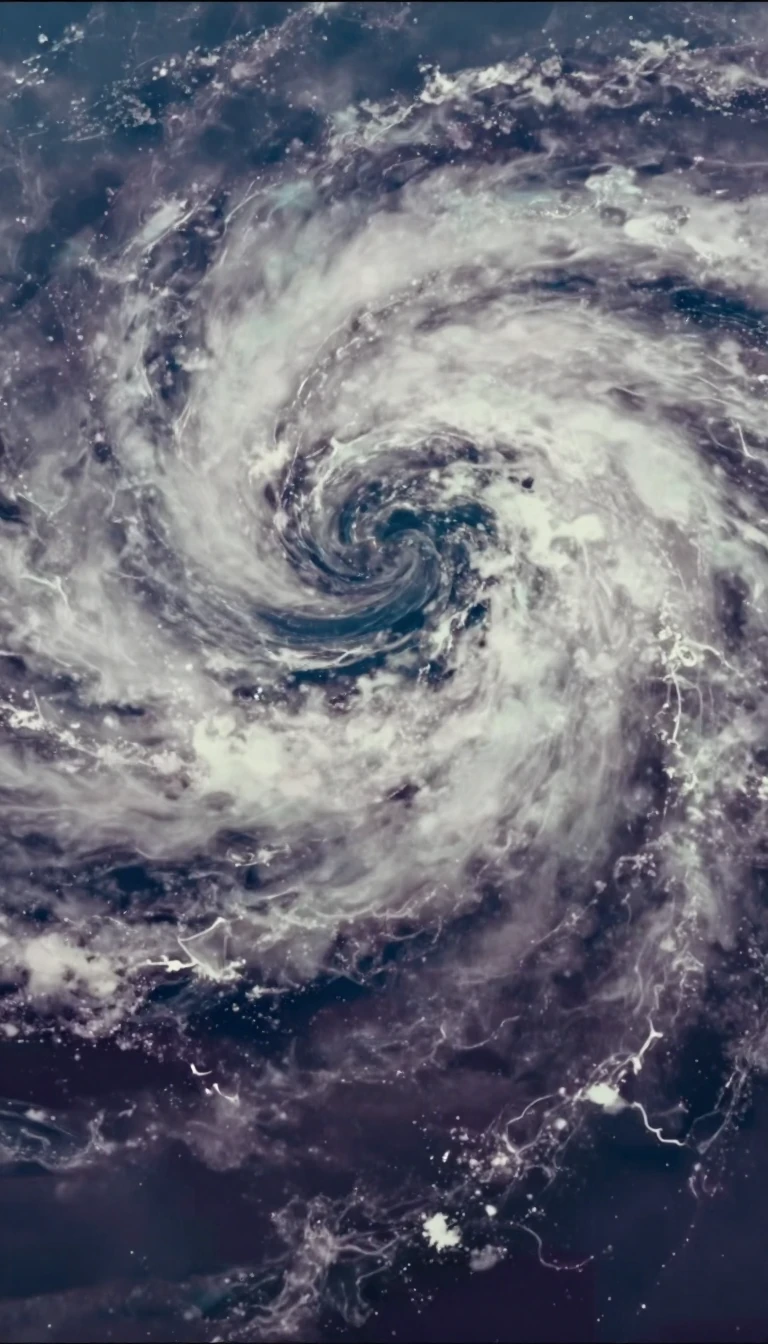 Why the 2021 Pacific typhoon season was surprisingly quiet despite a powerful startThe 2021 Pacific typhoon season defied expectations, marking the second consecutive year of below-average activity. While the year produced twenty-two named storms, it was the lea…
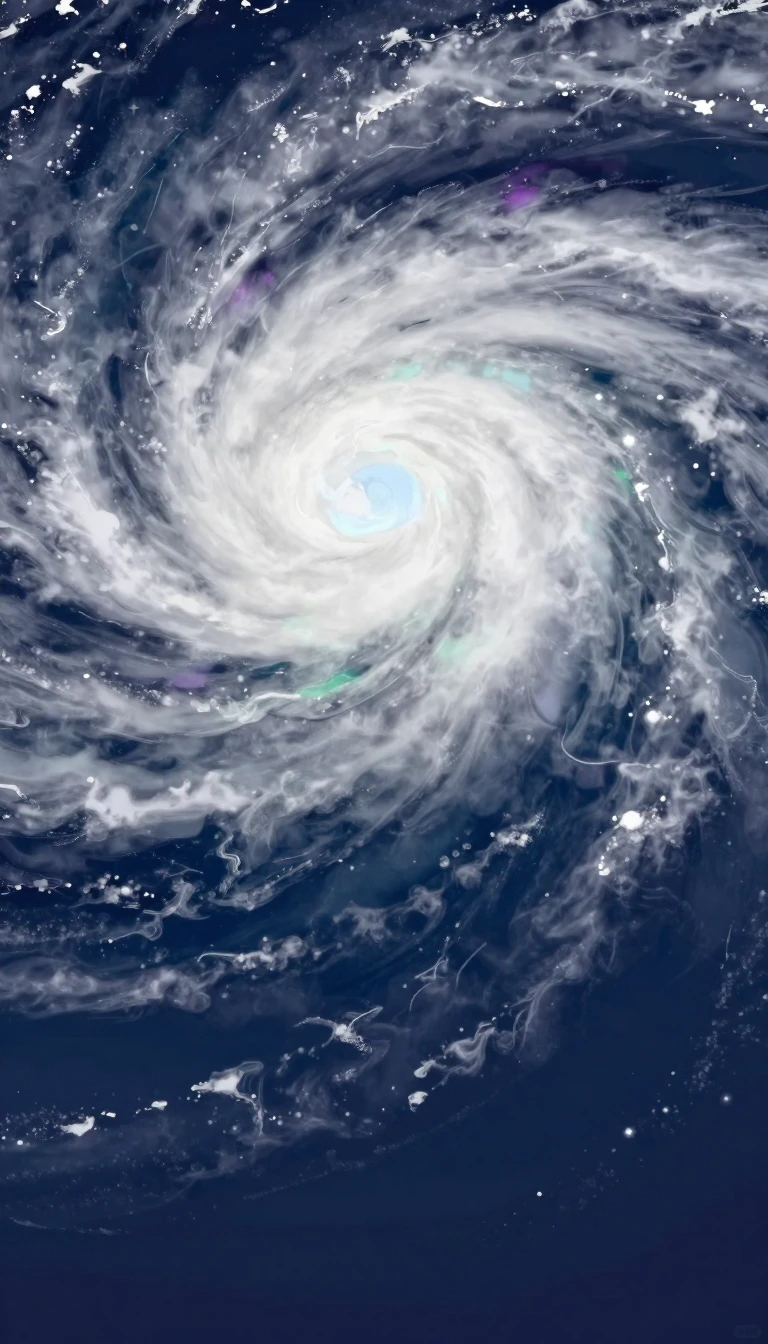 Why the 2023 Pacific typhoon season defied expectations with record-low activityThe 2023 western North Pacific typhoon season was a paradox. While El Niño conditions typically supercharge storm formation, the basin saw record-low activity. New research reveal…
- How a massive volcanic eruption turned a saltwater inlet into a unique freshwater lake.Taal Lake was once a navigable saltwater inlet connected to the sea. A catastrophic volcanic eruption in 1754 permanently altered its geography, sealing the outlet and trapping ma…
 A 25-kilometer volcanic chain in California hides a complex history of rhyolitic eruptions.Stretching between Mono Lake and the Long Valley caldera, the Mono-Inyo Craters form a sickle-shaped volcanic chain. This landscape of lava domes, tephra rings, and explosion pits…
 A high-altitude Sri Lankan plateau holds secrets of ancient cultures and modern ecological mysteries.Perched 2,100 meters above sea level, Horton Plains is a rare cloud forest sanctuary. Once a colonial hunting ground, this biodiversity hotspot now faces unique threats, from myst…
 Why this common garden daisy carries the strange name of an early old manThe genus Erigeron, known as fleabane, hides a linguistic puzzle in its name. Derived from Ancient Greek, it translates to early old man, referencing the plant's appearance after …
 The bank vole is a resilient rodent that serves as a vital ecological reservoir.This small, chestnut-brown creature is more than just forest prey. Beyond its agility in climbing trees and navigating dense undergrowth, the bank vole acts as a critical reservoi…
 Why these rodents have teeth that never stop growing throughout their entire livesVoles, lemmings, and muskrats are the most populous rodents in the Northern Hemisphere. To survive on abrasive plants, they evolved unique molar teeth with prismatic, alternating …
- Natural zeolites offer a versatile and effective way to purify heavy metal pollutionA review of environmental treatment materials found that natural zeolites are highly effective at removing heavy metals like lead, mercury, and arsenic from contaminated water. Th…
 How a Cold War chemical weapons plant became a sanctuary for endangered bald eagles.The Rocky Mountain Arsenal, once a secretive hub for manufacturing sarin and mustard gas, now serves as a protected wildlife refuge. After decades of toxic contamination and indus…
 Modifying biochar improves its ability to capture heavy metals from soil and waterResearchers have identified that modifying biochar—a low-cost, eco-friendly material—significantly enhances its effectiveness at removing toxic heavy metals from the environment. …
- Human activity and geography shape how microplastics move through freshwater systemsA global review of 75 research papers found that microplastic concentrations in freshwater are not uniform but are shaped by human activity and physical geography. The study ident…
 Snow depth in the European Alps is declining across most regionsA comprehensive study of over 2,000 stations across six Alpine countries found that snow depth is decreasing in 87% of the monitored locations. By analyzing data from 1971 to 2019…
 High biological productivity drives organic carbon buildup more than oxygen levelsResearchers investigating the formation of organic-rich rocks found that high primary production, rather than a lack of oxygen in the water, is the primary driver of carbon accumu…
 New tracer methods improve how we measure gases moving between ocean and airResearchers conducted two experiments in the North Sea to better understand how gases move between the ocean and the atmosphere. By using a combination of volatile gases and a non…
 Egypt's complex border rules: where a visa is a necessity, not a choiceNavigating Egyptian borders requires more than just a valid passport. Depending on your destination, age, or even the specific resort you visit, the requirements shift from a simp…
- The precise logistics of entering Vietnam without a visaWhile many travelers assume visa rules are universal, Vietnam’s policy is a complex web of nationality-based exemptions, specific port restrictions, and unique geographic privileg…
- A language where gender dictates how you pronounce every wordIn the easternmost reaches of Siberia, the Chukchi language creates a unique phonetic landscape. Here, a single word can sound entirely different depending on whether a man or a w…
- Record-breaking costs were incurred during the 2025 North Indian Ocean cyclone periodA season of unprecedented destruction, the 2025 North Indian Ocean cyclone cycle shattered records for economic loss and human tragedy. From the first-ever cyclone in the Strait o…
 The evolution of the radula: nature's multi-purpose biological raspMost mollusks possess a specialized anatomical structure called a radula. Far from being a simple tongue, this chitinous ribbon of teeth functions as a versatile biological tool. …
 The evolutionary secret hidden within a snail's shellWhy does a common garden snail display such a dizzying array of colors and patterns? Beyond simple aesthetics, these variations serve as a living laboratory for understanding how …
 A river born from a prehistoric dam burst in daysThe Illinois River is a geological anomaly. While most rivers carve paths over millennia, this one was shaped in a matter of days by a catastrophic glacial event. It now serves as…
 The world's most trafficked mammal is a shy, scaly rollerImagine an animal that rolls into a ball to hide its belly, using scales made of the same keratin as your fingernails. The Sunda pangolin is a master of defense and a specialist i…
 The Illinois town that became the face of a fictional Pennsylvania villageDespite being the primary filming location for the 1993 classic Groundhog Day, Woodstock, Illinois, is not actually located in Pennsylvania. Producers chose its quintessentially A…
 The ostrich mimic that could outrun its own shadowsImagine a dinosaur built for pure velocity. Struthiomimus, the "ostrich mimic," was a long-legged, toothless biped that traded heavy armor for extreme speed. It navigated the Late…
- A prairie indicator species once nearly erased by predator controlThe swift fox is more than a small, cat-sized predator of the Great Plains. It serves as a biological barometer for the health of grassland ecosystems. Once pushed to the brink of…
- The 'white dodo' of Réunion was actually a lonely ibisFor centuries, naturalists debated the identity of a mysterious white bird from the island of Réunion. Was it a dodo relative or a phantom of the imagination? The truth, unearthed…
- The ghost of the prairie: a wolf that refused to vanishOnce thought extinct in 1926, the Great Plains wolf was a formidable predator capable of bringing down massive bison. While it appeared to disappear from the wild, genetic secrets…
- The 'Children of India' who shaped the Hungarian cultural fabricFrom the northwestern regions of India to the heart of Central Europe, the Romani people have navigated a complex history of migration, labor, and cultural synthesis. While they c…
- The bird that uses falcons as bodyguards to raise its youngIn a bizarre twist of interspecies cooperation, the red-billed chough has learned to nest near predatory falcons. While most birds flee from these raptors, the chough thrives in t…
 The geological layers that preserved a dinosaur worldDeep beneath the Alberta landscape lies a 40-meter thick record of the Late Cretaceous. These light-colored sandstones aren't just rocks; they are the preserved remnants of ancien…
- The only pinniped species to move deep into forestsWhile most sea lions remain tethered to the shoreline, the New Zealand sea lion behaves differently. To protect their young from predators and harsh weather, females lead their pu…
 The 'Large Thief' that defied dinosaur classification for decadesFor years, scientists struggled to place Megaraptor on the tree of life. Was it a giant dromaeosaur, a cousin to the spinosaur, or a relative of the tyrannosaur? This 8-meter pred…
- How a shifting climate sculpted the evolution of the African antelopeThe hartebeest is more than just a large antelope; it is a living map of Africa's climatic history. By tracing its genetic lineage, scientists have uncovered how ancient rainfores…
 The puffin's name was originally stolen from a fatty snackThe iconic name 'puffin' didn't start with these birds. It began as a culinary term for salted meat. Only later did the Atlantic puffin claim the title, and the horned puffin join…
 The owl that vanished for a century due to a stolen birdFor over 100 years, the forest owlet was considered a ghost of the Indian wilderness. Its disappearance wasn't just a natural tragedy; it was fueled by a museum heist and a delibe…
 The bird that sees everything but hides in plain sightThe Eurasian woodcock is a master of woodland stealth. With eyes positioned far back on its head, it possesses 360-degree monocular vision, allowing it to scan for predators while…
 The botanical puzzle of the willowherbs and fireweedsNature often blurs the lines between species, creating a botanical labyrinth where plants hybridize and shift categories. The genus Epilobium showcases this complexity, moving bet…
 The botanical family that conquered the world's temperate gardensFrom the frost-touched fields of Europe to the extreme edges of Antarctica, the Caryophyllaceae family has mastered diverse climates. These plants possess a unique structural blue…
 A 40-foot dinosaur that might have been a herbivoreImagine a massive theropod that might have spent its days grazing instead of hunting. This extinct dinosaur from Cretaceous North Africa challenges our assumptions about meat-eate…
- The biological engineering that lets sloths sleep upside downMost mammals would struggle to breathe while hanging inverted, as gravity pulls internal organs against the lungs. The brown-throated sloth has evolved a unique internal architect…
 The sacred site where life after death was first promisedFor centuries, the people of Eleusis held a secret: a belief in an afterlife that could be unlocked through initiation. This wasn't just mythology; it was a profound spiritual tec…
- The wolf-sized ancestors of whales once waded through freshwater streamsLong before they became ocean giants, whales were terrestrial mammals with functional legs and ears designed for air. These primitive ancestors, dating back roughly 48.5 million y…
- The deep-sea diving strategy of the long-nosed fur sealWhile most fur seals stay near the surface, the long-nosed fur seal is a master of the deep. They can plunge into the ocean to depths of 380 metres, executing a complex foraging s…