 Intellect Plus
Space
9,120 cards. Each one is a 40-second story with a five-minute read behind it. Page 104 of 152.
Subtopics: Apollo · Asteroids · Astronauts · Astronomical objects · Astronomical technology · Astronomy · Astronomy and geodesy · Astronomy basics · Big bang · Black holes · Celestial mechanics · Celestial sphere · Comets · Constellations · Cosmology · Dark energy · Dark matter · Deep time · Exoplanets · Exploration · Future Frontier · Galactic and extragalactic astronomy · Galaxies · Gravity · Impacts · Interstellar · Jupiter · Light · Mars · Mars exploration · Meteorites & asteroids · Moon · Moon exploration · Moons · Navigation and timekeeping · Nebulae · Observational astronomy · Observatories · Physical cosmology · Physics · Planetary science · Planets · Quantum · Relativity · Rockets & launch vehicles · Satellites · Saturn · Seti · Space · Space agencies · Space probes · Space stations · Space telescopes · Spacecraft · Spaceflight · Stars · Stellar astronomy · Sun & solar physics · Supernovae · Telescopes · Volcanoes · Weather
 Why a simple slice of silicon dioxide became the world's most accurate timekeeperQuartz clocks rely on the piezoelectric effect, where a crystal vibrates at a precise frequency when electrified. By dividing these rapid oscillations into a one-second pulse, the…
 Why the world's most powerful telescopes rely on mirrors instead of glass lensesReflecting telescopes dominate modern astronomy, bypassing the limitations of traditional lenses. By using curved mirrors to focus light, these instruments avoid chromatic aberrat…
- How a simple lens design unlocked the secrets of the Moon and distant planets.Refracting telescopes use glass lenses to bend light, bringing celestial wonders into focus. From the early spyglasses of the 17th century to the massive instruments of the Victor…
- Why the world's most powerful telescopes share a complex, hyperbolic secret designMost modern professional telescopes rely on the Ritchey–Chrétien configuration to capture the cosmos. By using two hyperbolic mirrors instead of traditional parabolic ones, this d…
 Did a Cold War-era cyber-attack cripple the pioneering ROSAT X-ray space telescope?Launched in 1990, the German-led ROSAT satellite revolutionized X-ray astronomy by mapping over 150,000 cosmic sources. Yet, its final years were marred by technical failures and …
 Why the most advanced drivers in the solar system are millions of miles away.Mars rovers are not remote-controlled in real-time. Because radio signals take up to 21 minutes to travel between Earth and Mars, these robotic explorers must navigate, analyze ro…
 Salyut 1: The Soviet Union’s Tragic, Pioneering Leap Into Permanent Human SpaceflightLaunched in 1971, Salyut 1 was humanity’s first space station. It proved that long-term orbital living was possible, but the mission ended in a harrowing tragedy that fundamentall…
 How a Cold War military project became the invisible compass in your pocketSatellite navigation began as a multibillion-dollar military endeavor to track submarines. Today, it is a ubiquitous utility, with signals so faint they are weaker than thermal no…
 Why Saturday is named after a Roman god, a bath, and the SabbathSaturday is a linguistic and cultural paradox. While English ties the day to the Roman god Saturn, other languages trace it to ancient bathing rituals, the Hebrew Sabbath, or even…
- How a wartime optical experiment became the world's most popular amateur telescope designThe Schmidt–Cassegrain telescope is a masterclass in engineering efficiency. By blending the compact nature of a reflector with the precision of a corrector plate, it offers long-…
- The 25-pound robot that bounced onto Mars and changed space exploration foreverIn 1997, NASA landed the Sojourner rover on Mars using a revolutionary airbag system instead of traditional rockets. This small, microwave-sized vehicle spent 83 days exploring th…
 Why your calendar is a constant battle against the Earth's orbital driftA solar calendar tracks the Earth's journey around the Sun, but the math is notoriously messy. Because a year isn't exactly 365 days, ancient civilizations and modern popes have s…
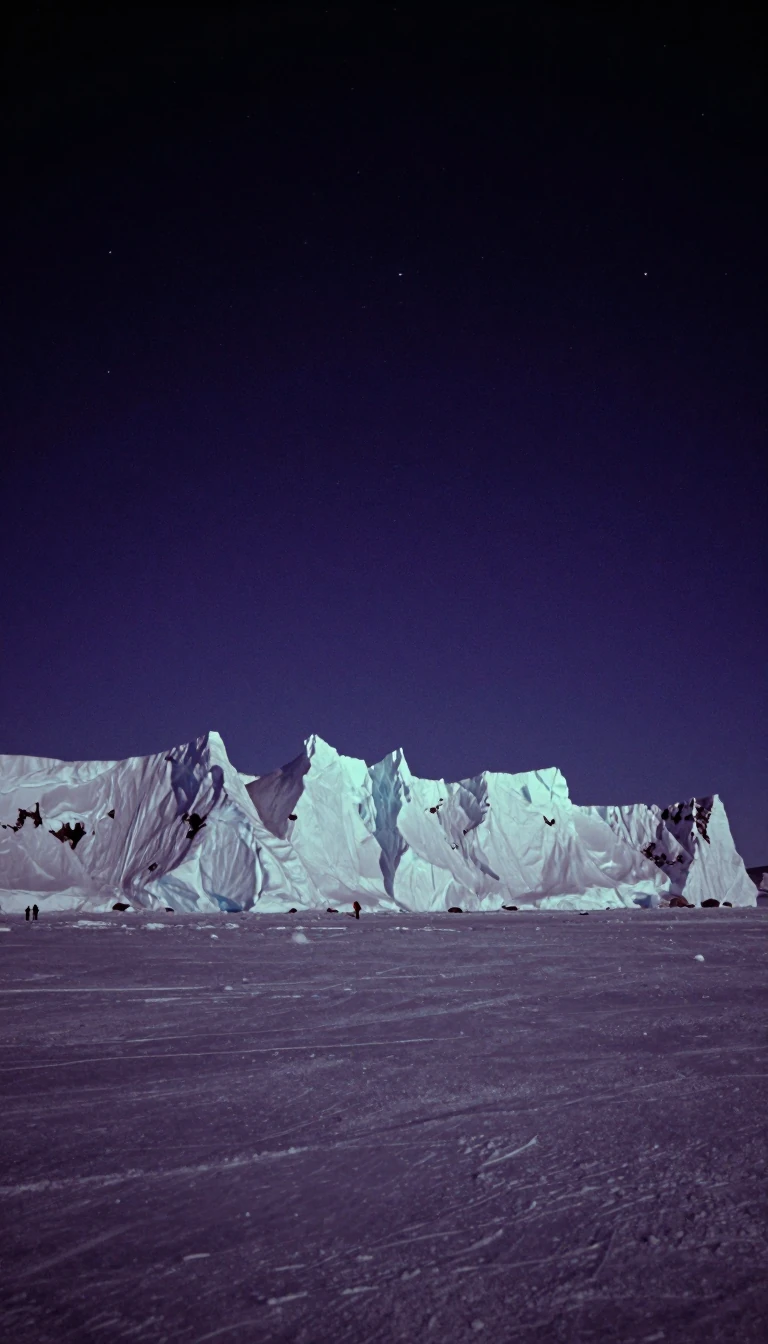 Why scientists travel to the world's coldest desert to study the baby universeThe South Pole Telescope sits in an environment so harsh that researchers face biting temperatures and constant daylight. Yet, this frozen, dry landscape provides the clearest win…
 The Soyuz spacecraft is the longest-running human spaceflight programme in historyConceived by the Soviet Union during the early 1960s, the Soyuz programme remains a cornerstone of space exploration today. Despite its age, this iconic vehicle has evolved throug…
- Why the blunt, wingless shape is the ultimate design for surviving space reentrySpace capsules are defined by their ability to endure the brutal heat of atmospheric reentry. Unlike spaceplanes, they lack wings and rely on a blunt, aerodynamic profile to prote…
 Is space colonization a necessary insurance policy or a dangerous distraction from Earth's crises?Humanity stands at a crossroads: should we become an interplanetary species to ensure our long-term survival, or are we merely exporting our terrestrial conflicts and resource mis…
 Is living on a planet the most logical path for our expanding technological civilization?In the 1970s, physicist Gerard K. O'Neill challenged his students to rethink human expansion. Instead of staying tethered to Earth, he proposed building massive, independent habit…
 A space suit is not just clothing; it is a complete, self-contained miniature world.Beyond mere protection from the vacuum of space, a modern space suit functions as a personal spaceship. It must regulate temperature, provide breathable oxygen, manage waste, and …
 Beyond the Atmosphere: How NASA's Newest Observatories Are Unlocking the Universe's Deepest SecretsSpace telescopes bypass the distortion of Earth's atmosphere to capture light invisible to the human eye. From the James Webb Space Telescope's infrared gaze to the newly launched…
- How a golf-cart-sized robot survived 25 times longer than its planned Martian missionNASA's Spirit rover was designed for a 90-day sprint across Mars, but it became a resilient workhorse that operated for over six years. By overcoming memory faults, mechanical fai…
 The Square Kilometre Array is a massive radio telescope spanning two continentsThe Square Kilometre Array is not a single dish, but a vast, multi-purpose radio telescope network split between South Africa and Australia. Designed to survey the sky at unpreced…
 Humanity has been mapping the night sky for over thirty thousand yearsLong before modern telescopes, early humans were already charting the heavens. From ivory carvings in Ice Age caves to the sophisticated star maps of the Song dynasty, these celes…
 Why your thumb is the weakest link in measuring a record-breaking sprintA stopwatch is designed for precision, yet human reaction time introduces a persistent margin of error. While we rely on manual button presses to capture elapsed time, our biologi…
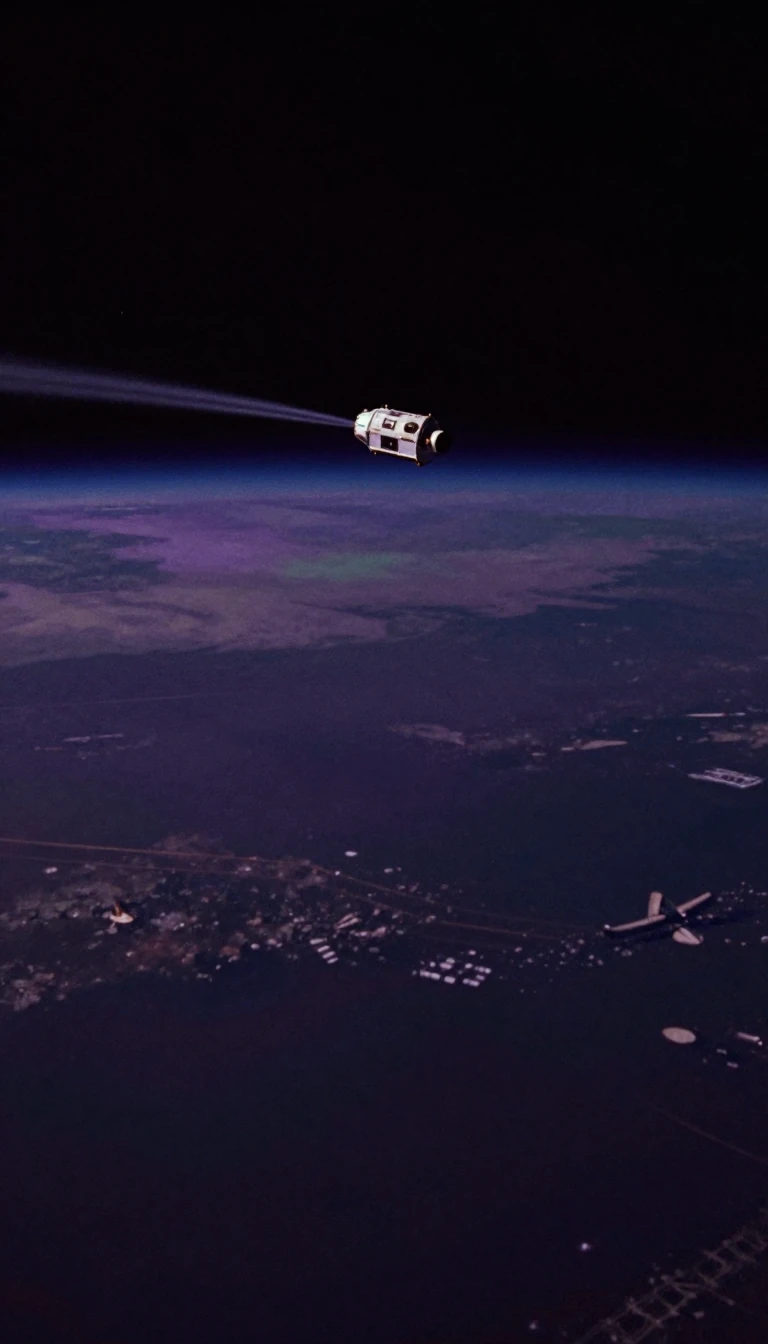 Why a sub-orbital flight is a journey to space that never quite arrivesA sub-orbital flight reaches the edge of space but lacks the speed to stay there. Unlike an orbital mission, these vehicles follow a trajectory that inevitably intersects the Eart…
- How a massive Hawaiian telescope uses 261 robotic fingers to see the cosmosPerched atop the dormant Mauna Kea volcano, the 8.2-metre Subaru Telescope is a marvel of precision engineering. To capture the faint light of distant stars, it employs a sophisti…
- Why Sunday is the first day of the week for some and seventh for othersSunday is a global constant, yet its position in the week is a matter of intense debate. While ISO 8601 defines it as the seventh day, many cultures and religious traditions insis…
 Why modern giant telescopes have abandoned the classic equatorial mount for simpler designsFor decades, the equatorial mount was the gold standard for tracking stars. By tilting an axis to match Earth's rotation, it made following the night sky intuitive. Yet, as telesc…
 Why Thursday is named after thunder gods, teachers, and the planet JupiterThursday is a linguistic battlefield between ancient deities and simple arithmetic. While Germanic cultures honor thunder gods like Thor and Thunor, others define the day by its n…
 Why the Earth is a terrible clock and how we fixed it with atomsFor centuries, humanity relied on the Earth’s rotation to track time. But the planet is a fickle timekeeper, slowing down due to tidal friction and irregular core movements. To ke…
 Why the humble timeline is a surprisingly deceptive map of human historyWe treat timelines as objective records of the past, but they are actually sophisticated visual metaphors. From ancient king lists to modern digital interfaces, the way we arrange…
 Why does the world associate Tuesday with war, fire, and the planet Mars?Across cultures, Tuesday is rarely just a calendar entry. From the Norse god of combat to the red planet Mars, this day carries heavy symbolic weight. Whether viewed as an unlucky…
- How a massive Y-shaped array of radio telescopes scans the secrets of the cosmos.Deep in the New Mexico desert, 27 massive radio antennas move along railroad tracks to act as a single, colossal telescope. By reconfiguring their positions, astronomers can zoom …
- How Chile's Atacama Desert hosts the world's most precise ground-based optical eye on space.Perched 8,645 feet above sea level, the Very Large Telescope is not just one instrument, but a sophisticated array of eight telescopes. By combining their light, astronomers can p…
- Ten radio telescopes spanning thousands of kilometers create the world's largest interferometry systemThe Very Long Baseline Array is a massive scientific instrument consisting of ten 25-meter antennas scattered across vast distances. By synchronizing these dishes with atomic cloc…
 The Virgo interferometer uses 3-kilometre arms to detect the universe's most elusive ripples.Located near Pisa, Italy, the Virgo interferometer is a massive scientific instrument designed to detect gravitational waves. By measuring minuscule length variations in its perpe…
- The Soviet space mission that launched during a secret government coupIn 1964, the Soviet Union rushed a modified, cramped spacecraft into orbit to beat the United States in the space race. While three cosmonauts conducted experiments in microgravit…
- Why Wednesday is named after a Germanic god, a Roman planet, and a fastWednesday is a linguistic and cultural crossroads. While English speakers honor the god Woden, Romance languages invoke Mercury, and others simply count the days. From the Eastern…
 How a retired space telescope spent a second life as Earth’s planetary defenderLaunched in 2009 to map the infrared universe, the Wide-field Infrared Survey Explorer was meant to go dark after its coolant ran out. Instead, NASA reactivated the spacecraft in …
 How a space probe mapped the baby picture of our 13.77 billion-year-old universeLaunched in 2001, the Wilkinson Microwave Anisotropy Probe transformed cosmology by capturing the first fine-resolution map of the cosmic microwave background. By measuring tiny t…
 Could this mysterious, spherical asteroid be the solar system's smallest dwarf planet?Hygiea, the fourth-largest object in the main asteroid belt, is a nearly spherical world that defies traditional classification. Once thought to be a jagged fragment, recent high-…
- Pallas is a battered, tilted protoplanet hiding in the asteroid beltDiscovered in 1802, Pallas is the second asteroid ever found and a rare survivor from the dawn of our solar system. Unlike its neighbors, this massive rock orbits at a steep, unus…
 Is it an asteroid or a comet? The identity crisis of 2060 ChironDiscovered in 1977, 2060 Chiron was initially labeled an asteroid, then a minor planet, and finally a comet. This icy body, orbiting between Saturn and Uranus, behaves like a shap…
 The asteroid with a secret: How 243 Ida changed our view of the beltWhen NASA's Galileo spacecraft flew past the asteroid 243 Ida in 1993, it revealed something astronomers had long suspected but never confirmed: asteroids could have their own moo…
- A rogue visitor from another star system is currently racing through our solar neighborhood.In 2019, amateur astronomer Gennady Borisov spotted a faint object streaking toward our Sun at 110,000 miles per hour. It was 2I/Borisov, the first confirmed interstellar comet. U…
- How astronomers mapped the entire sky using infrared light to see through cosmic dustBetween 1997 and 2001, the Two Micron All-Sky Survey captured the heavens in short-wavelength infrared. By peering through the obscuring dust of our own galaxy, this ambitious pro…
 Why this early asteroid discovery was once mistaken for a full-sized planetDiscovered in 1804, 3 Juno was initially classified as a planet alongside Ceres and Pallas. Though it is merely a large, stony asteroid in the main belt, its unusual reflectivity …
- Vesta is a rare, differentiated protoplanet hiding in plain sight within our asteroid belt.Vesta is not just another space rock. As the second most massive body in the asteroid belt, it behaves more like a miniature planet than a typical asteroid. It possesses a distinc…
- Before we landed on it, Eros helped us measure the distance to the SunDiscovered in 1898, 433 Eros was the first near-Earth asteroid ever identified. Long before spacecraft visited, astronomers used this rocky wanderer to calculate the astronomical …
 Inside 47 Tucanae, a dense ancient swarm of up to one million starsFloating 16,700 light-years away in the constellation Tucana, 47 Tucanae is a massive, ancient globular cluster. Spanning 120 light-years, this dense stellar metropolis contains u…
 Arrokoth is a frozen, snowman-shaped relic from the dawn of our solar systemDeep in the Kuiper belt, 486958 Arrokoth orbits the Sun as a pristine time capsule. Visited by NASA’s New Horizons probe in 2019, this contact binary reveals how the building bloc…
- The first planet found orbiting a Sun-like star shattered our understanding of planetary systems.In 1995, astronomers discovered 51 Pegasi b, a gas giant so close to its star that it defied every existing model of how planets form. This discovery launched the era of hot Jupit…
- Janssen is a scorching super-Earth where a year lasts less than one dayOrbiting its host star in under 18 hours, 55 Cancri Ae is a blistering world of extremes. Once thought to be a simple rocky planet, recent data suggests a complex environment defi…
- From cosmic dust to massive stars, gravity is the architect of the universe.Accretion is the fundamental process by which matter accumulates to build everything from planets to galaxies. While we understand the broad strokes of gravitational collapse, the…
 Why do black holes and stars grow by spinning in a cosmic dance?An accretion disk is a swirling, flattened flow of gas and dust orbiting a central object. Because this material possesses too much angular momentum to fall straight inward, it fo…
 Why the ninth brightest star in our sky is shaped like a flattened pancakeAchernar is a celestial anomaly. Spinning at a breakneck pace, this massive blue star has warped into an extreme oblate spheroid, making it the least spherical star in the Milky W…
 Acrux is not just one star, but a complex family of seven celestial bodies.To the naked eye, Acrux appears as a single, brilliant point of light in the Southern Cross. In reality, it is a massive, seven-star system located 348 light-years away. This cele…
- Why stars look dimmer near the horizon than they do directly overheadWhen you gaze at a star, you are looking through a column of air. As that star moves toward the horizon, the light must travel through a much thicker layer of atmosphere. This phe…
 Earth is perpetually glowing, but you need a sensitive camera to see it.High above our planet, the upper atmosphere emits a constant, faint light known as airglow. Unlike the fleeting, polar-bound aurora, this multi-colored luminescence encases the en…
 Aldebaran is a cosmic wanderer that once outshone every other star in our sky.Though it appears to anchor the bull's-head asterism in Taurus, Aldebaran is a solitary giant drifting in the foreground of a much more distant star cluster. This red giant, curre…
- Why the Demon Star, Algol, holds a secret that defies standard stellar evolution.Known for millennia as the Demon Star, Algol is a triple-star system that regularly dims as its components eclipse one another. Beyond its ominous reputation in ancient folklore, …