 Intellect Plus
Space
9,120 cards. Each one is a 40-second story with a five-minute read behind it. Page 105 of 152.
Subtopics: Apollo · Asteroids · Astronauts · Astronomical objects · Astronomical technology · Astronomy · Astronomy and geodesy · Astronomy basics · Big bang · Black holes · Celestial mechanics · Celestial sphere · Comets · Constellations · Cosmology · Dark energy · Dark matter · Deep time · Exoplanets · Exploration · Future Frontier · Galactic and extragalactic astronomy · Galaxies · Gravity · Impacts · Interstellar · Jupiter · Light · Mars · Mars exploration · Meteorites & asteroids · Moon · Moon exploration · Moons · Navigation and timekeeping · Nebulae · Observational astronomy · Observatories · Physical cosmology · Physics · Planetary science · Planets · Quantum · Relativity · Rockets & launch vehicles · Satellites · Saturn · Seti · Space · Space agencies · Space probes · Space stations · Space telescopes · Spacecraft · Spaceflight · Stars · Stellar astronomy · Sun & solar physics · Supernovae · Telescopes · Volcanoes · Weather
 Why amateur astronomers are still vital to our understanding of the vast night skyWhile professional observatories dominate headlines, amateur astronomers remain a critical force in space science. By monitoring variable stars, tracking asteroids, and discoverin…
 The Andromeda constellation is more than a myth; it is a gateway to deep space.Spanning 722 square degrees, Andromeda is one of the largest constellations in the night sky. While it bears the name of a chained princess from Greek mythology, its true fame lie…
 Is the Milky Way really destined to collide with the Andromeda galaxy?For years, astronomers were certain that our galaxy and Andromeda were on a collision course, destined to merge into a single elliptical giant. However, recent data from the Gaia …
 Why the Moon and Sun look the same size despite their massive physical differenceIn the night sky, our eyes deceive us. We perceive celestial objects not by their true physical scale, but by their angular diameter—the tiny slice of our field of vision they occ…
- Why your telescope cannot see everything: the physical limits of capturing the cosmosAngular resolution defines a telescope's ability to distinguish fine details in the night sky. While we often blame atmospheric blur, the true constraint is the wave nature of lig…
 Antares: The Red Supergiant Rivaling Mars in the Heart of the ScorpionAntares, the brightest star in Scorpius, is a massive red supergiant that has captivated cultures for millennia. Often mistaken for the planet Mars due to its fiery hue, this bina…
 A cosmic collision is currently birthing thousands of new stars in the Antennae Galaxies.Two spiral galaxies are locked in a violent, multi-million-year embrace. This celestial wreckage, known as the Antennae Galaxies, offers a rare, front-row seat to the chaotic proc…
 Why the universe appears perfectly calibrated for our existenceThe universe seems suspiciously fine-tuned for life, with physical constants balanced on a knife's edge. If gravity were stronger or the carbon nucleus energy levels slightly diff…
 Antlia: The 18th-century air pump floating in the Southern Celestial HemisphereNamed for an air pump, the constellation Antlia is a faint collection of stars in the southern sky. Established during the Enlightenment, this celestial machine represents the sci…
 Why your zodiac sign no longer matches the constellation in the night skyIf you were born in late January, you might identify as an Aquarius. Yet, due to a 26,000-year wobble in Earth's axis, the Sun no longer aligns with the constellations as it did w…
 Aquila: The Celestial Eagle Carrying Ancient Myths and Massive Cosmic Structures Across Our SkyLocated along the Milky Way, the constellation Aquila is a treasure trove of stellar history and mythology. From the rapid rotation of its brightest star, Altair, to the massive H…
 Ara: The Ancient Altar That Once Bound the Greek Gods in Celestial AllegianceDeep in the southern sky lies Ara, a constellation representing the altar where Zeus and his allies swore their oaths before battling the Titans. Though it lacks brilliant stars, …
 The largest constellation in history was so massive it had to be dismantledArgo Navis was once a celestial titan, a sprawling ship of stars 28% larger than any modern constellation. It was so unwieldy that astronomers eventually carved it into three sepa…
 Aries was once a farmhand before it became the ram we know today.Long before it was the zodiac ram, the stars of Aries were known to Babylonians as the Agrarian Worker. This mid-sized constellation has been reimagined across cultures, from a po…
 Arp 220 is a cosmic collision radiating the power of a trillion sunsLocated 250 million light-years away, Arp 220 is not a single galaxy but two spiral galaxies locked in a violent, 700-million-year-old merger. This chaotic union has triggered an …
 Stars are singing, and astronomers are finally learning how to listen to themSpace is a vacuum, so sound cannot travel through it. Yet, stars create their own music by expanding and contracting, causing rhythmic brightness variations. By measuring these ti…
 How do complex molecules form in the harsh, empty vacuum of deep space?Space is not just a void; it is a vast laboratory where atoms and molecules collide to build the foundations of planets and life. By studying how these particles interact under ex…
 Modern astronomers rarely look through telescopes, preferring data analysis over late-night stargazing sessions.The image of a lone astronomer peering into a night sky is a relic of the past. Today, professionals spend most of their time analyzing data and building astrophysical models. The…
- From the Milky Way to the edge of time, the universe hums in radioIn 1931, a radio engineer discovered static coming from the center of our galaxy, revealing that space is not silent. Today, we know the cosmos is filled with radio waves emitted …
 Why the Earth's atmosphere is the ultimate enemy of the world's largest telescopesAstronomical seeing is the atmospheric turbulence that blurs starlight into a distorted mess. By shifting the refractive index of air, our own sky limits the resolution of ground-…
- How a simple prism unlocked the chemical secrets of the distant, expanding UniverseBy splitting starlight into its constituent colors, astronomers can determine the composition, temperature, and motion of celestial bodies. This technique, known as spectroscopy, …
 When a distant world crosses its star, we can finally see the invisible.An astronomical transit occurs when a smaller body passes directly between a larger object and an observer. While rare in our solar system, this alignment is the primary tool astr…
- Capturing the night sky requires more than just a camera and a clear view.Astrophotography is a blend of technical precision and artistic patience. While modern gear makes it accessible, success relies on mastering manual settings, understanding light, …
 Astrophysical jets are cosmic beams of matter fired across millions of light-years of space.Across the universe, black holes and neutron stars launch narrow, high-velocity streams of ionized matter into the void. These astrophysical jets can span millions of parsecs, cha…
- Space is filled with natural masers that amplify light across the cosmosAstrophysical masers are naturally occurring sources of stimulated microwave emission found in molecular clouds, comets, and near black holes. Unlike laboratory lasers, these cosm…
- Why must astronomers launch telescopes into space to study the high-energy universe?Earth's atmosphere is a protective shield, but it is also an opaque barrier to the most energetic phenomena in the cosmos. Because our air absorbs X-rays with extreme efficiency, …
- As stars reach their final act, they shed their mass to seed the universe.Late in life, low- to intermediate-mass stars enter the Asymptotic Giant Branch phase. During this brief, volatile period, they swell to immense sizes, undergo explosive internal …
 Jupiter's atmosphere is a chaotic, fluid engine that lacks any solid ground to land on.Jupiter is not a solid world, but a vast, swirling tapestry of gas and liquid. Its atmosphere is a dynamic, high-pressure machine where jet streams move at hundreds of miles per h…
 Mars breathes in and out, shifting trillions of tons of gas every single year.The Martian atmosphere is a thin, carbon-dioxide-heavy shell that undergoes a dramatic seasonal transformation. As temperatures plummet at the poles, massive amounts of gas freeze…
 Pluto's atmosphere is a fleeting, seasonal phenomenon that may soon vanish into frost.As Pluto drifts further from the Sun on its 248-year orbit, its thin nitrogen atmosphere is beginning to collapse. Astronomers tracking the dwarf planet through stellar occultatio…
 Uranus is a frigid, sideways-spinning world where winds howl at 560 miles per hour.Uranus is an ice giant defined by extreme conditions, from its nearly 90-degree tilt to its methane-rich atmosphere. While it appears as a calm blue-green sphere, it hides a volat…
 Why Venus is a hellish twin with a sky that moves faster than its groundVenus possesses the most massive atmosphere of any terrestrial planet, creating a runaway greenhouse effect that pushes surface temperatures above the melting point of lead. While…
 Auriga is a celestial crossroads where charioteers, goats, and emperors collide in the sky.Spanning 657 square degrees, the constellation Auriga has been interpreted as everything from a Mesopotamian scimitar to a Roman charioteer. While modern astronomy defines it by p…
 Why does the universe contain matter instead of just empty, radiation-filled space?Our universe is a cosmic anomaly. According to standard physics, matter and antimatter should have annihilated each other long ago, leaving only light behind. Yet, we exist. Baryo…
- Echoes of the Big Bang: How sound waves shaped the distribution of all galaxiesLong before stars ignited, the infant universe was a roiling sea of plasma. Within this dense fluid, a cosmic tug-of-war between gravity and intense heat generated sound waves. Wh…
 Why do some stars wear a glowing ring of gas around their equator?Be stars are a fascinating class of celestial objects defined by their mysterious, transient emission lines. These stars spin so rapidly that they eject material into space, formi…
 The Beehive Cluster is a swarm of a thousand stars hiding in plain sight.Known since antiquity as a nebulous mist, the Beehive Cluster is one of the closest star clusters to Earth. While it appears as a faint blur to the naked eye, this celestial swarm…
- The pink arch appearing at twilight is not actually named after the planet VenusDuring twilight, a soft pink band often emerges in the sky opposite the setting or rising sun. Known as the Belt of Venus, this atmospheric display is a result of backscattered su…
- Hadar is a triple star system that guides navigators across the Southern HemisphereKnown as Hadar or Agena, this triple star system in the constellation Centaurus shines as the eleventh brightest star in our night sky. Beyond its visual brilliance, it serves as …
 Why a longer, three-step journey through space can sometimes burn less fuelThe Hohmann transfer is the standard way to move between orbits, but it is not always the most efficient. By adding an extra engine burn and swinging far out into space, a bi-elli…
- The first twenty minutes of the universe determined the chemical makeup of everything today.In the chaotic, searing heat of the early universe, a brief window of nuclear fusion forged the primordial elements. Before stars existed, Big Bang nucleosynthesis created the hyd…
- New evidence suggests our universe may eventually reverse course and collapse into nothingnessFor decades, cosmologists assumed the universe would expand indefinitely. However, fresh data from major observatories suggest a dramatic shift. Rather than growing forever, the c…
- Could a mysterious force eventually tear the very atoms of our universe apart?The Big Rip is a chilling cosmological hypothesis suggesting that dark energy might one day grow so powerful it overcomes gravity, shredding galaxies, planets, and even subatomic …
- A newly discovered pulsar completes a full orbit in just fifty-three minutes.Deep in the globular cluster M71, astronomers have identified a binary pulsar that defies conventional classification. With an orbital period of only 53.3 minutes, this object, kn…
- Why astronomers once mistook these powerful galactic cores for simple variable starsBL Lacertae objects are among the most enigmatic phenomena in the cosmos. Originally misidentified as stars due to their rapid brightness fluctuations, these active galactic nucle…
- Why the universe is currently too young to host a single black dwarf starA black dwarf is the theoretical final stage of a white dwarf, a dead star that has exhausted its fuel. Because these remnants cool at an agonizingly slow pace, it would take at l…
- Why the brightest stars in our night sky are actually fleeting cosmic transientsBlue giants are not a single type of star, but a diverse collection of evolved objects sharing a specific region on the Hertzsprung-Russell diagram. Because they develop from mass…
 Blue stragglers are the galaxy's weirdest stars, acting young despite their ancient origins.In old star clusters, most stars follow a predictable path, cooling and reddening as they age. Yet, blue stragglers defy this rule. These stars appear hot, bright, and youthful, s…
- Are the universe's brightest stars actually the result of a violent cosmic merger?Blue supergiants are among the most luminous and massive stars in the cosmos, yet they remain a persistent mystery. While conventional models struggle to explain their prevalence,…
 Boötes is a vast celestial herdsman guarding one of the universe's emptiest voids.Known as the herdsman, Boötes is a massive constellation that dominates the northern spring sky. While it contains the brilliant star Arcturus, it is equally famous for what it la…
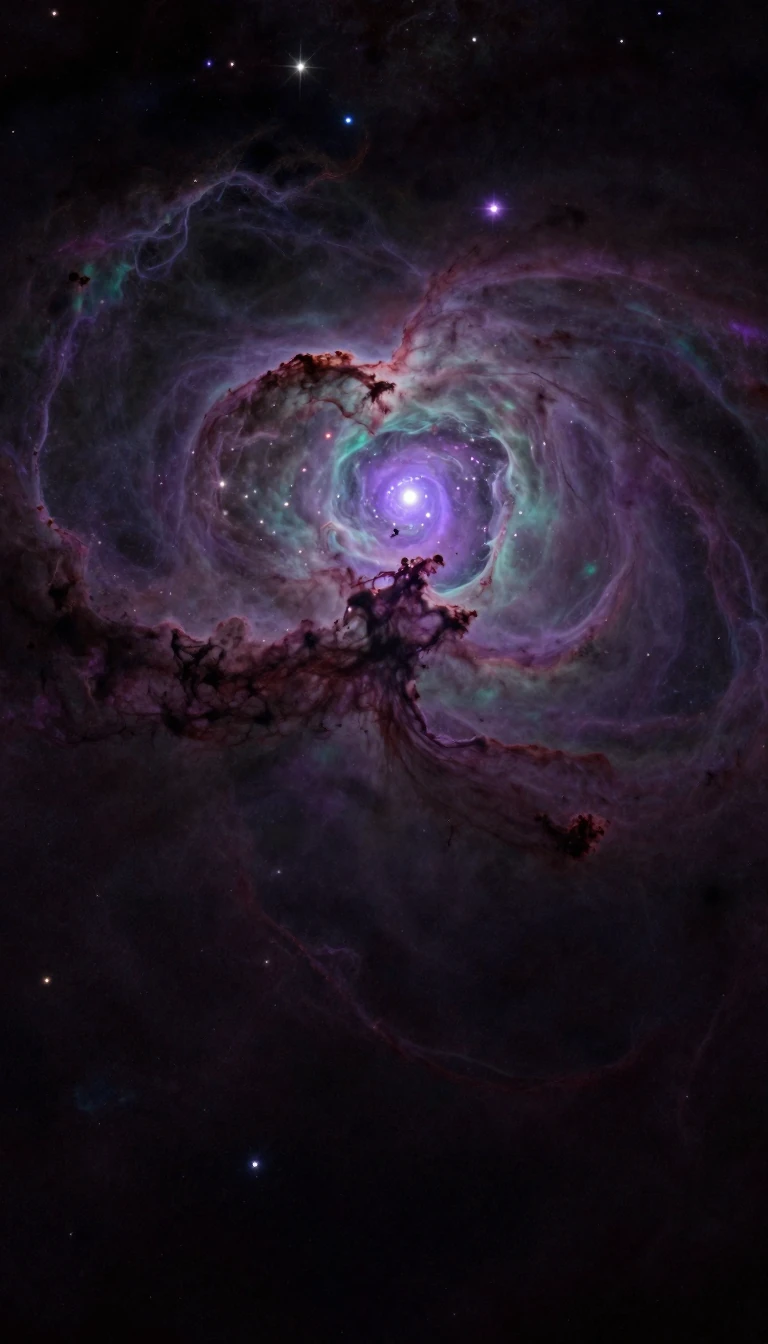 Are these mysterious holes in the heavens actually the birthplaces of new stars?Once dismissed as empty voids in the night sky, these dense, frigid clouds of gas and dust are now recognized as active stellar nurseries. Astronomers call them Bok globules, and …
 Is a bolide a flash in the sky or a world-ending impact?The term bolide is a linguistic chameleon. To an astronomer, it is an exceptionally bright, exploding meteor. To a geologist, it is a massive, crater-forming projectile capable of…
 Is the BOSS Great Wall truly the largest structure in the known universe?Astronomers have identified a colossal supercluster complex spanning one billion light years. Named after the survey that mapped it, this structure contains 830 galaxies and posse…
- In the Bullet Cluster, dark matter and ordinary gas have parted ways entirely.When two massive galaxy clusters collide, they don't just smash together like cars. Instead, their components behave differently. While hot gas slows down due to friction, dark ma…
- Caelum is a faint, chisel-shaped constellation hiding in the southern sky's quietest corners.Introduced in the 1750s, Caelum is one of the smallest and most barren constellations in the night sky. Far from the Milky Way's glow, this celestial chisel contains few bright st…
- Camelopardalis: The massive, faint giraffe hiding in the northern skySpanning the northern heavens, Camelopardalis is the 18th largest constellation, yet it remains notoriously difficult to spot. Introduced in the early 17th century, this celestial…
- A constellation born from a medieval translation error, Canes Venatici hides cosmic giants.Canes Venatici, the hunting dogs, exists today because a medieval translator misread a Greek word for a staff as a word for dogs. Despite its accidental origins, this small northe…
- Canis Minor is a celestial 'Lesser Dog' with a history spanning ancient civilizations.Often overshadowed by its neighbor Canis Major, the constellation Canis Minor is a small but significant pattern in the northern sky. While modern astronomy identifies it by its t…
- Why the sea-goat constellation still dictates the geography of our planet todayCapricornus, the faint zodiac constellation, has been depicted as a hybrid goat-fish since the Middle Bronze Age. Though the winter solstice has long since drifted out of its boun…
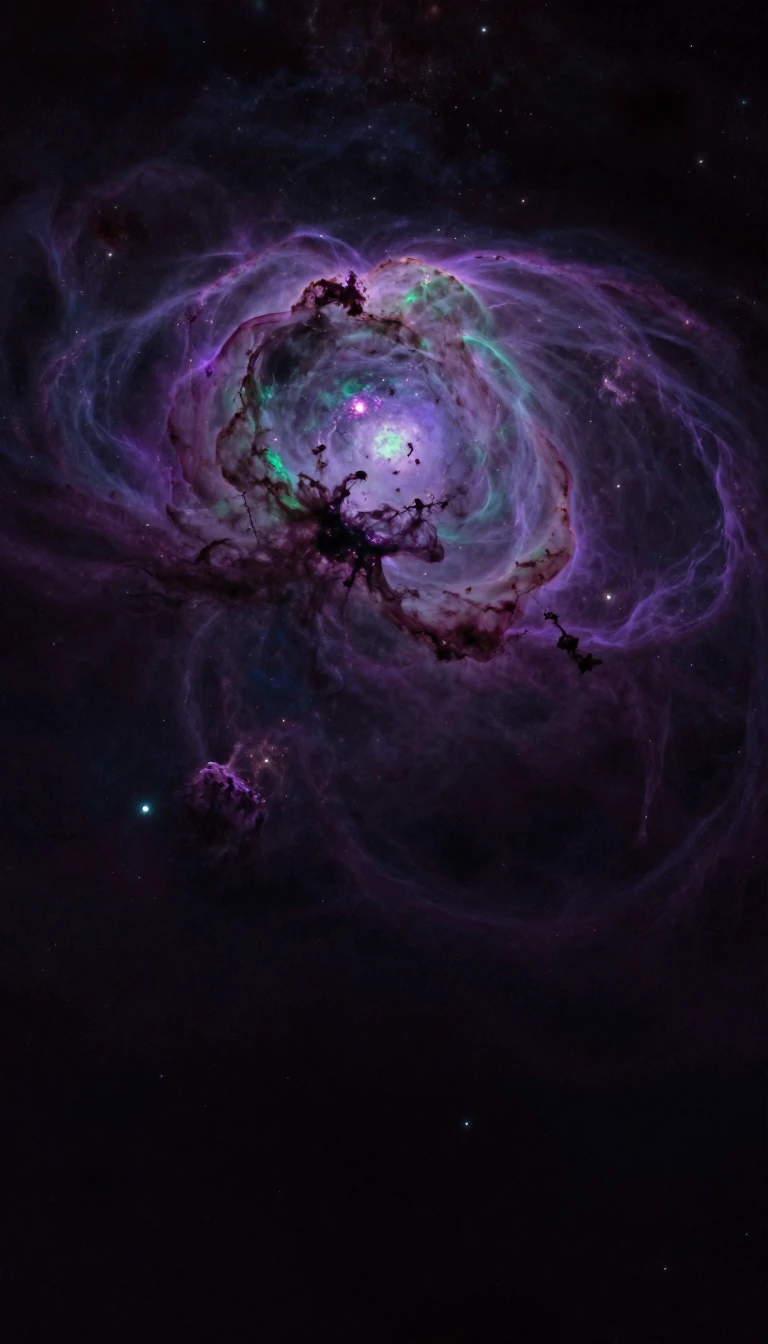 Why massive stars burn through their final fuel in a cosmic blink of an eyeCarbon burning is the high-stakes engine of massive stars, requiring extreme temperatures and densities to fuse carbon into heavier elements. This process is a race against gravit…